

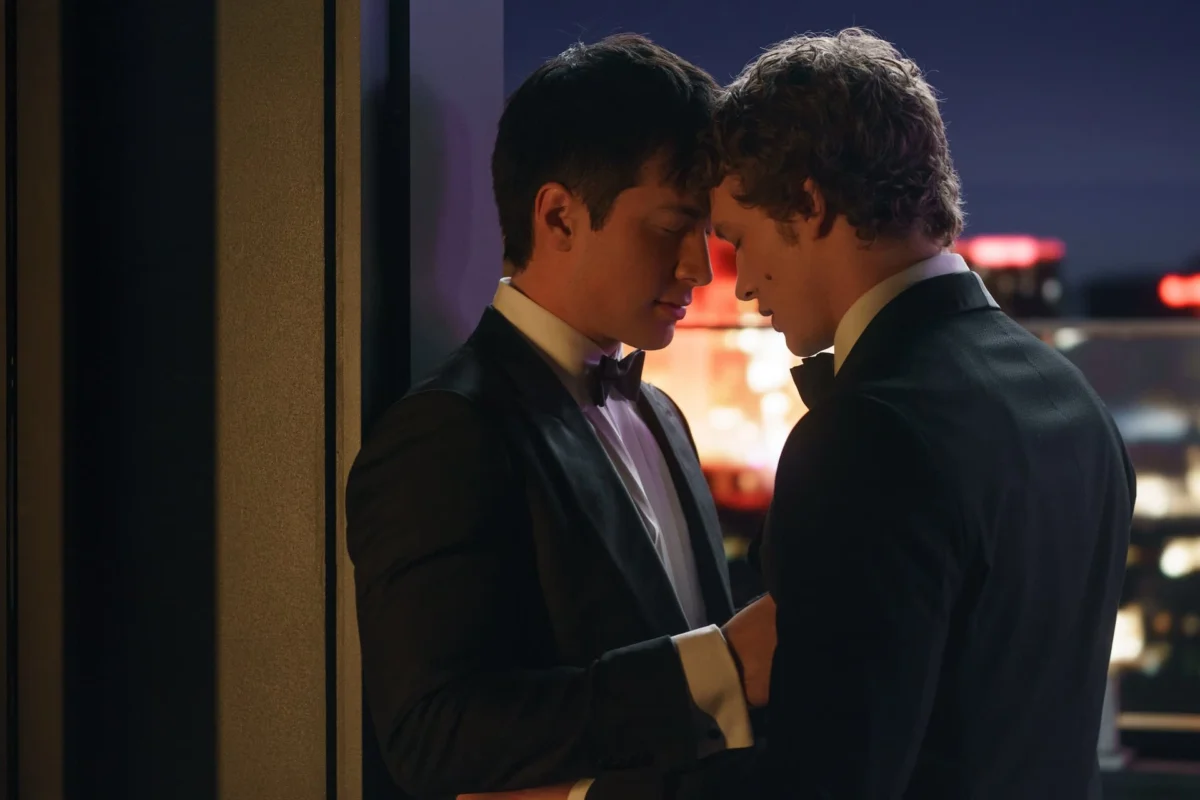
When the holiday season arrived last year, Margaret Hecox, a 23-year-old viewer, found an unconventional way to bond with her grandmother: sharing the breakout Canadian television series "Heated Rivalry." The show, which premiered on HBO Max, depicts a clandestine and high-stakes love story between two professional male hockey players who are ostensibly rivals on the ice. While the premise centers on a gay romance within the hyper-masculine world of professional sports, the audience demographic for the series has revealed a significant cultural shift. Hecox is part of a massive and growing cohort of women—both straight and queer—who have become the primary drivers of success for male-to-male (M/M) romance content in Western media.
The success of "Heated Rivalry" is not an isolated incident but rather the tip of a demographic iceberg. Industry experts and data analysts suggest that the "Boy Love" (BL) subgenre, once a niche market primarily rooted in East Asian media, has officially entered the American mainstream. This shift is reshaping how streaming platforms greenlight content, how publishers market romance novels, and how Hollywood perceives the "female gaze." As major studios like HBO, Amazon, and Sony see record-breaking engagement from women in this space, the entertainment industry is grappling with a new reality: the most potent audience for gay romance may not be the LGBTQ+ community alone, but women seeking a specific brand of emotional depth and "yearning" rarely found in traditional heteronormative media.
The Evolution of a Subgenre: From Yaoi to Mainstream Success
The phenomenon of women consuming stories about romance between men is not a new development, though its visibility in Western markets has reached an all-time high. For decades, this type of content has flourished in Japan and other parts of Asia under the labels "yaoi" or "Boy Love." Historically, these stories were created by women, for women, focusing on the emotional intricacies and power dynamics of male-male relationships.
In recent years, digital platforms have accelerated the migration of these tropes into the U.S. market. On TikTok, the hashtag "fujoshi"—a Japanese term used to describe female fans of M/M romance—has garnered more than 900,000 video posts. Google Trends data from late last year indicated that search interest for terms related to the yaoi fandom and M/M romance hit historic peaks in the United States. Shampaigne Graves, a consumer consultant and podcast host, notes that this is less a "new" phenomenon and more of a "coming out" for a demographic that has long existed in the shadows of fan fiction and niche bookstores.
"It’s not that the interest wasn’t there; it’s that women now feel comfortable talking about and sharing this genre with one another," Graves said. This newfound transparency has transformed a subculture into a formidable market force that major entertainment conglomerates can no longer ignore.
Data-Driven Insights: Who is Watching and Why?
The demographic data surrounding recent M/M hits provides a clear picture of the genre’s appeal. HBO reported that approximately two-thirds of the viewership for "Heated Rivalry" was female. This trend is mirrored across other major releases in the same vein. According to Nielsen data, nearly 70% of viewers for the 2017 film "Call Me By Your Name," starring Timothée Chalamet, were women during the first quarter of 2026. On the movie review platform Letterboxd, the film ranked 46 slots higher among female users than among male users, underscoring a distinct gender divide in appreciation for the narrative.
Other titles have shown similar patterns:
- "Red, White & Royal Blue" (Amazon MGM): The 2023 political rom-com, based on the novel by Casey McQuiston, saw a 61% female viewership. Amazon reported that the film was one of its highest-watched romantic comedies ever and a primary driver for new Prime subscriptions.
- "The Perks of Being a Wallflower" (Lionsgate): Despite being released over a decade ago, the film—which features a prominent same-sex romance involving a football player—maintained a 60% female viewership throughout last year.
- "The Song of Achilles": This 2011 reimagining of Greek mythology by Madeline Miller has seen a massive resurgence on platforms like Fable and Scribd, largely driven by female readers who have exhausted the catalog of modern M/M sports romances.
Kim Allee, the marketing director for the book discussion platform Fable, suggests that M/M romance has effectively unseated "romantasy" (a blend of romance and fantasy) as the most popular subgenre on their platform. "This feels like something much more significant than a passing trend," Allee noted.
The Psychology of the "Yearning" and the Female Gaze
The primary question facing producers and marketers is why women are so drawn to stories where they are not represented as the protagonist or the love interest. According to readers and cultural critics, the answer lies in the emotional architecture of the stories. In many M/M romances, the plot focuses heavily on "yearning"—a buzzword among the fandom that describes the prolonged emotional tension and deep vulnerability between characters.
Gianna Saad, a 30-year-old fan of authors like TJ Klune and Scarlett Drake, argues that these books offer a "deeper level" of emotional exploration. "It’s showing people the types of love and romance that they deserve to have, regardless of gender," Saad said.
Psychologically, some experts suggest that M/M romance allows women to consume romantic content without the baggage of traditional gender roles or the "male gaze." In these stories, women are not subjected to the often-problematic tropes of female submissiveness or the specific societal pressures placed on women in heterosexual romances. By removing the female character entirely, female readers can project themselves onto the emotional journey of the characters without the interference of gendered expectations.
A Chronology of the M/M Mainstream Breakthrough
To understand the current dominance of "Heated Rivalry," it is necessary to look at the timeline of how gay male narratives transitioned from "tragedy" to "romance" in the eyes of the general public:
- 2005 – "Brokeback Mountain": While a critical success, the film established the "tragic gay" trope in the mainstream. It reached a wide audience but was framed primarily as a prestige drama rather than a romance for women.
- 2017 – "Call Me By Your Name": This film marked a shift toward the "aesthetic of yearning." It became a viral sensation among female audiences on social media, particularly on Tumblr and Instagram.
- 2019 – "Red, White & Royal Blue" (Novel): The publication of Casey McQuiston’s novel proved there was a massive, untapped market for "fluffy," optimistic M/M romance.
- 2021-2023 – The "BookTok" Era: TikTok’s book community began heavily promoting authors like Rachel Reid (author of the "Heated Rivalry" book series), leading to a surge in sales that caught the attention of TV producers.
- 2024 – "Heated Rivalry" (TV): The series successfully adapted the "enemies-to-lovers" trope within a sports setting, proving that high-production-value M/M content could sustain a streaming audience.
Industry Implications: The "Twilight" of a New Generation
The commercial fervor surrounding "Heated Rivalry" has drawn comparisons to some of the biggest young adult franchises in history. Jennifer Bokal, president-elect of the Romance Writers of America (RWA), noted that the level of fan engagement—including merchandise, conventions, and social media obsession—puts the series in the same league as "Fifty Shades of Grey" and "Twilight."
"I saw women donning ‘Heated Rivalry’ merchandise everywhere at BookCon," Bokal said. This level of brand loyalty is a goldmine for studios. Consequently, second installments for both "Red, White & Royal Blue" and "Heated Rivalry" are already in development.
Tom Nunan, a former network executive and current lecturer at the UCLA School of Theater, Film and Television, believes Hollywood will look to replicate this "playbook." He notes that producers are now actively seeking out original, genuine stories that can tap into this specific female demographic. "When shows like ‘Heated Rivalry’ take off, it reminds us what a rich part of life this is to explore," Nunan said. He emphasized that the industry’s historical pursuit of female audiences—who typically account for the majority of scripted entertainment consumers—will now likely involve more diverse and authentic LGBTQ+ plots.
The Paradox of Representation: Advocacy and Reality
Despite the commercial success of M/M romance, the broader picture for LGBTQ+ representation in media is more complex. While a few "breakout" hits are dominating the charts, advocacy groups warn that overall inclusion is actually on the decline.
According to a 2025 report from GLAAD, the share of LGBTQ-inclusive scripted films from major distributors dropped by approximately 14% between 2023 and 2024. Furthermore, the number of LGBTQ+ characters on television plummeted by 23% in the 2024-2025 season compared to three years prior. This creates a paradox: while "Boy Love" as a genre is thriving as a commercial product for women, the broader representation of the LGBTQ+ community in diverse roles is shrinking.
Katherine Sender, a professor at Cornell University who researches LGBTQ+ media, suggests a cautious approach to the current trend. "On one hand, it’s encouraging to see this level of excitement," Sender said. "But on the other hand, we shouldn’t be too optimistic that this translates to a better media landscape for the entire LGBTQ+ community."
There is also the consideration that not all M/M stories follow this female-skewing trend. Netflix’s "Heartstopper" and Disney’s "Love, Simon" both showed a slightly more male-heavy audience in early 2026, according to Nielsen. This suggests that while the "Boy Love" tropes specifically designed for the female gaze are booming, other forms of queer storytelling continue to serve different segments of the audience.
Conclusion: A Permanent Fixture in the Media Landscape
The "Heated Rivalry" phenomenon signals a maturation of the entertainment market. What was once considered a "fringe" interest of internet fan-fiction writers has become a multi-million dollar industry backed by the world’s largest streaming platforms. For women like Margaret Hecox and her grandmother, these stories provide a bridge—a way to explore complex emotions, vulnerability, and romance through a lens that feels fresh and authentically moving.
As Hollywood looks to the future, the lesson of the past year is clear: authenticity and emotional depth are the most valuable currencies in the streaming era. By catering to a female audience that is hungry for "yearning" and diverse narratives, the industry has unlocked a genre that shows no signs of cooling down. Whether in the form of a hockey rink rivalry or a royal romance, the M/M subgenre has secured its place as a cornerstone of modern mainstream entertainment.