


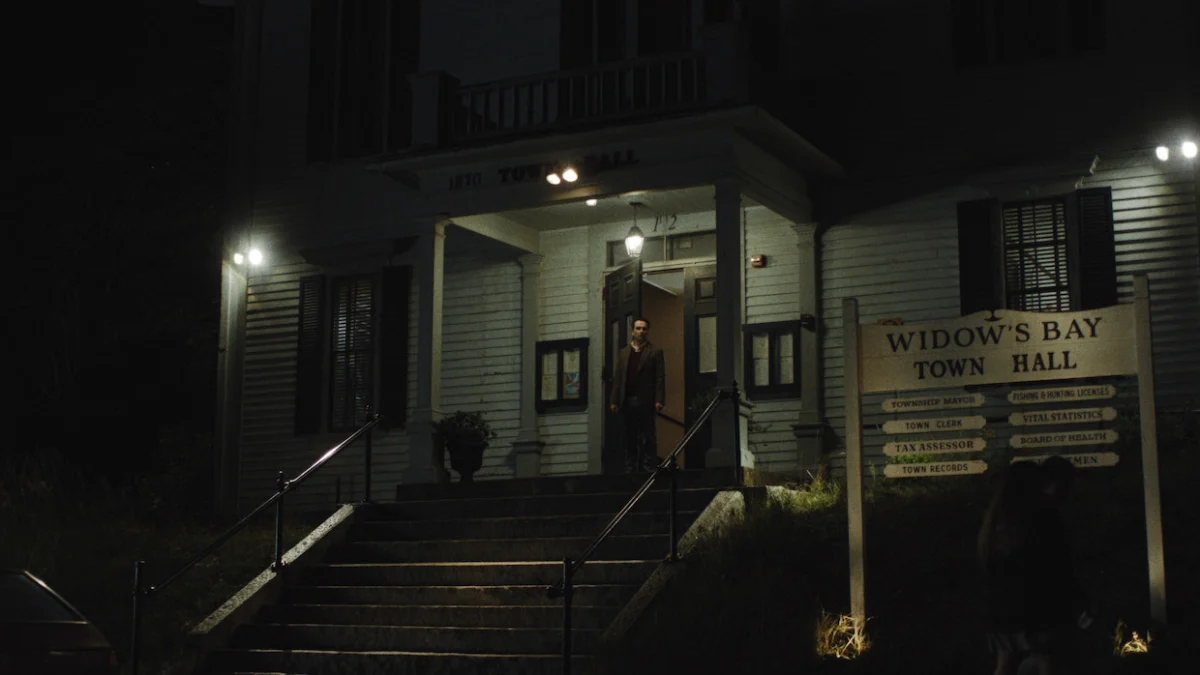
Widow’s Bay and the Evolving Landscape of the Comedy-Horror Genre on Television represents a significant milestone in the ongoing convergence of high-concept horror and sophisticated character comedy, marking a pivot for Apple TV+ into the increasingly popular "prestige genre-blend" market. Created by Katie Dippold, a veteran of the American comedy circuit with foundational credits on Mad TV and Parks and Recreation, the series serves as a case study for a broader industry trend: the migration of sketch-comedy auteurs into the realm of psychological and supernatural horror. This shift, popularized by figures such as Jordan Peele and Zach Cregger, suggests a fundamental structural overlap between the mechanics of a punchline and the mechanics of a jump scare, both of which rely on the meticulous management of audience tension and the subversion of expectation.
The Architectural Symmetry of Comedy and Horror
The emergence of Widow’s Bay follows a decade of critical and commercial successes that have blurred the lines between the terrifying and the absurd. The narrative follows Tom Loftis, portrayed by Emmy-winner Matthew Rhys, who serves as the relentlessly optimistic mayor of a New England island plagued by a diverse array of supernatural phenomena. Unlike traditional horror protagonists who meet the unknown with unmitigated dread, Loftis approaches the island’s hauntings with a bureaucratic pragmatism reminiscent of Leslie Knope, the protagonist of Parks and Recreation. This stylistic choice is intentional; Dippold has stated that the series began as a spec script for that very sitcom nearly 18 years ago.
The evolution from a sitcom premise to a high-budget Apple TV+ production mirrors the career trajectories of other modern horror masters. Jordan Peele, formerly of the sketch duo Key & Peele, redefined the genre with the 2017 release of Get Out, which secured the Academy Award for Best Original Screenplay. Similarly, Zach Cregger, a founding member of the comedy troupe The Whitest Kids U’ Know, transitioned from low-budget comedy to directing Barbarian (2022) and the upcoming Weapons. Industry analysts suggest that the "comedy-to-horror pipeline" is rooted in the shared requirement for precise timing. In both genres, the director must guide the audience through a build-up of anticipation—referred to in comedy as the "set-up"—before delivering a "payoff" that releases the built-up energy through either laughter or a physical startle response.
Development History and Production Chronology
The journey of Widow’s Bay from a conceptual draft to a streaming flagship spans nearly two decades of development. Katie Dippold’s career serves as the backdrop for this evolution. After establishing herself as a writer for Mad TV and Parks and Recreation, Dippold moved into feature films, co-writing the 2016 Ghostbusters reboot and the 2023 Disney production Haunted Mansion. Throughout this period, the concept for Widow’s Bay remained in a state of constant refinement, moving away from a broad, joke-heavy format toward a more nuanced, atmospheric horror series that retains its comedic soul through character-driven reactions.
A pivotal moment in the production’s timeline was the attachment of Hiro Murai as executive producer. Murai, known for his work on FX’s Atlanta, The Bear, and the post-apocalyptic drama Station Eleven, brought a specific visual language to the project. Murai directed five of the season’s ten episodes, establishing a brooding, cinematic aesthetic that contrasts sharply with the show’s lighter dialogue. This "visual gravity" was inspired by Dippold’s own teenage experiences at a lawless haunted house attraction in Long Branch, New Jersey, during the 1980s. The goal was to capture the specific sensation of being genuinely frightened while simultaneously enjoying the adrenaline-fueled thrill of the experience.
Casting Strategy and the Theory of "Truth in Performance"
One of the most notable aspects of Widow’s Bay is its casting philosophy, which prioritizes dramatic actors for leading roles and comedic veterans for supporting characters. This strategy was designed to ground the supernatural elements in a sense of reality. Matthew Rhys, celebrated for his intense performance in The Americans, plays the lead role of Tom Loftis with a "straight-man" dedication. According to Dippold, casting a recognizable comedian in the lead role might have signaled to the audience that the horror elements were not to be taken seriously. By casting Rhys, the production ensures that the stakes feel genuine, even when the scenarios involve "killer clowns" or "amorous sea hags."
The cast is bolstered by other dramatic heavyweights, including Dale Dickey and Kevin Carroll, while the supporting ensemble features a "who’s who" of the alternative comedy scene, including Jeff Hiller, Tim Baltz, and Connor Ratliff. Stephen Root serves as the bridge between these two worlds; as the town crank Wyck, Root utilizes the same skill set that earned him acclaim in both the comedy NewsRadio and the dark drama Barry.
This approach is frequently compared to the production of the 1982 film Tootsie. Director Sydney Pollack famously noted that the film’s humor was derived from the fact that the actors played the scenes as if they were in a serious drama. Dippold has cited this "Pollack Method" as a secret influence on Widow’s Bay. When actors focus on the "truth" of a scene rather than "hunting for the joke," the humor emerges naturally from the absurdity of the situation. This methodology prevents the show from devolving into a parody and allows the horror elements to maintain their visceral impact.

Navigating the Supernatural: Plot and Setting
The setting of Widow’s Bay is a fictional New England island that serves as a magnet for the macabre. The plot centers on Mayor Loftis’s attempts to revitalize the town’s economy by turning it into a premier vacation destination, a task made difficult by the fact that the island is demonstrably cursed. The series utilizes a "monster of the week" structure while maintaining a serialized narrative arc concerning the deeper origins of the island’s malevolence.
Key supernatural entities introduced in the first season include:
- The Ominous Fog: A recurring atmospheric phenomenon that precedes various disappearances.
- The Killer Clown: A traditional horror trope subverted through the town’s mundane reactions to its presence.
- The Sea Hag: A creature that smothers victims, leading to sequences that blend physical comedy with genuine peril.
- The Haunted Inn: An establishment so dangerous that even the staff refuses to remain on the premises after dark.
The conflict between Tom’s optimism and the reality of the island is personified in his rivalry with Wyck (Root), who serves as the town’s Cassandra-like figure, constantly warning of impending doom. The tension between civic duty and supernatural survival provides the engine for the show’s narrative.
Industry Implications and Award Prospects
As Widow’s Bay enters the awards conversation, it faces the perennial challenge of genre classification. Apple TV+ has confirmed that the series will be submitted for Emmy consideration in the Comedy categories. This decision places the show in a complex position within the television landscape. Traditionally, the Television Academy has been hesitant to recognize genre-heavy shows in comedy categories, with recent exceptions like FX’s What We Do in the Shadows and Netflix’s Wednesday.
In contrast, the Drama categories have become increasingly inclusive of high-fantasy and horror-adjacent programming, with Game of Thrones, The Last of Us, and Stranger Things receiving numerous nominations and wins. The submission of Widow’s Bay as a comedy suggests a push to expand the Academy’s definition of the genre. If the series succeeds, it could pave the way for more "gruesome comedies" to be recognized for their technical and narrative complexity.
From a commercial perspective, the success of Widow’s Bay reinforces the viability of the "horror-comedy" as a cornerstone of streaming content. Horror is a consistently high-performing genre with a loyal fanbase, and by infusing it with the character-driven appeal of a workplace sitcom, Apple TV+ is positioning itself to capture a broad demographic. The collaborative nature of the show’s production—balancing the visions of a comedy-trained showrunner, a drama-focused cast, and a visually inventive director—reflects a modern standard for high-end television.
Conclusion: The Future of Hybrid Storytelling
The significance of Widow’s Bay extends beyond its immediate entertainment value. It represents the maturation of a creative movement where the boundaries between "prestige drama," "broad comedy," and "genre horror" are increasingly porous. By leveraging the skills of creators like Katie Dippold and Hiro Murai, the industry is discovering that the most effective way to unsettle an audience is often to make them laugh first.
As the series continues to rollout, its impact on the cultural zeitgeist will likely be measured by how well it maintains this delicate equilibrium. Whether it is viewed as a horror show with jokes or a comedy with teeth, Widow’s Bay stands as a testament to the idea that the most compelling stories are those that refuse to stay within the lines of a single genre. The series not only highlights the talent of its cast and crew but also underscores a fundamental truth about human psychology: that fear and laughter are two sides of the same coin, both requiring a total surrender to the moment.