

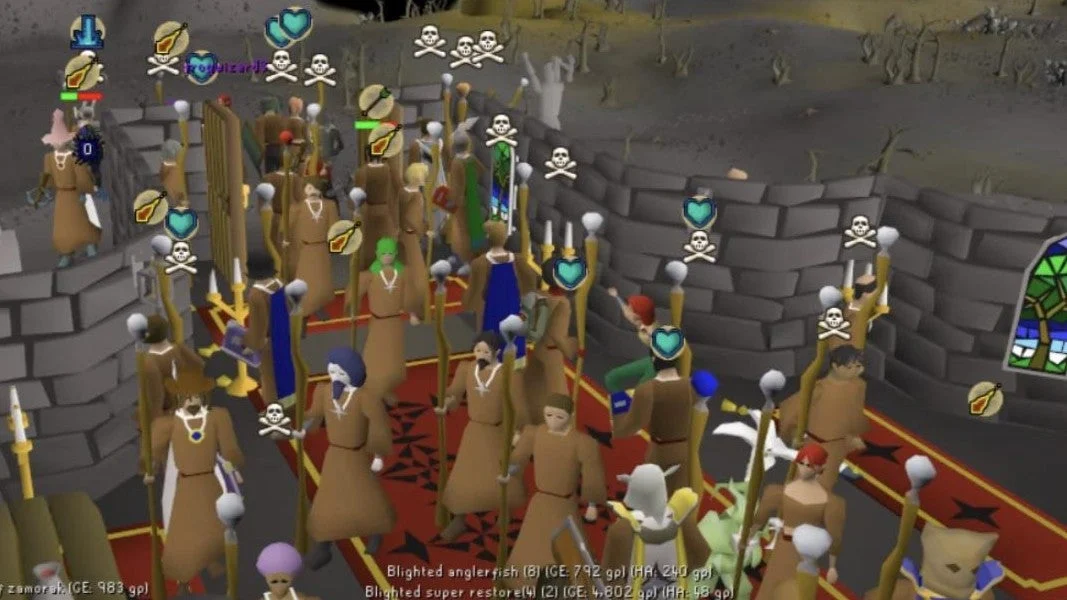
A significant resurgence of community-led roleplaying has taken hold within the virtual world of Gielinor, as players of the long-running MMORPG Old School RuneScape (OSRS) have begun organizing large-scale religious conflicts. These events, which are not dictated by developer-led quests or official seasonal updates, represent a shift toward organic, player-driven narrative content. Centered on the ancient rivalry between the game’s primary deities—Saradomin and Zamorak—these "religious wars" have transformed the high-risk Wilderness zone into a theater of massive, coordinated skirmishes involving hundreds of participants.
The Rise of the Saradominist Pilgrimage
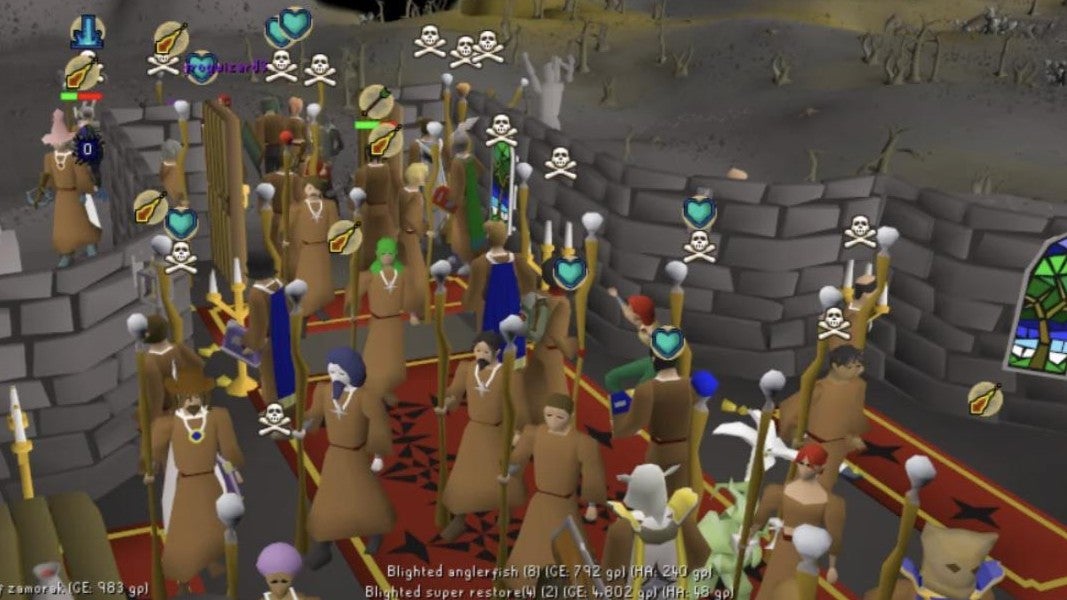
The current wave of activity began with the followers of Saradomin, the god of order and wisdom. In a display of collective action, players have been coordinating through social media platforms such as Reddit and Discord to assemble in massive "monk raids." These participants typically don traditional monk robes, equip basic air staves, and stock their inventories with cooked lobsters—a staple mid-level healing item in the game.
The aesthetic choice is deliberate. By wearing low-cost, non-optimal gear, the participants emphasize the roleplaying aspect of the event over the competitive "meta" of Player-versus-Player (PvP) combat. However, the sheer volume of players involved creates a unique tactical challenge. In Old School RuneScape, even high-level players can be overwhelmed by a "mass" of lower-level characters using coordinated attacks. This phenomenon, often referred to as "piling," allows the Saradominist monks to exert control over specific territories within the Wilderness despite their lack of high-tier armor or weaponry.
Chronology of the Edgeville Monastery Breach
The most recent escalation occurred over the previous weekend, following a predetermined schedule circulated among various community hubs. The event followed a specific chronological path that tested the resolve and coordination of the participants:
- The Assembly at Edgeville: Hundreds of players gathered at the Edgeville Monastery, a location dedicated to Saradomin situated just south of the Wilderness border. This served as the staging ground for the "crusade."
- The March into the Wilderness: The group crossed the "ditch," the physical barrier separating the safe zones of Gielinor from the PvP-enabled Wilderness. By entering this zone, every participant accepted the risk of losing their items upon death.
- The Siege of the Revenant Caves: The procession moved toward the Revenant Caves, one of the most lucrative and dangerous areas in the game. The caves are a hotspot for "ganking"—the act of high-level players preying on those training skills or fighting monsters. The Saradominist mass effectively cleared the caves of hostile players, temporarily disrupting the local economy of "Rev" weapon farming.
- The Occupation of the Chaos Temple: The pilgrimage concluded at the Chaos Temple in the deep Wilderness. In a symbolic act of religious conquest, the Saradominist followers claimed the altar for their god, performing emotes and "preaching" in the game’s public chat.
The Zamorakian Counter-Reformation
The success of the Saradominist raids has triggered a reactionary movement among the followers of Zamorak, the god of chaos and destruction. Following the occupation of the Chaos Temple—a site historically aligned with Zamorakian lore—an opposing faction has issued a formal "call to arms."
Adorned in distinctive red robes and wielding unholy symbols, the Zamorakian faction has announced plans to defend the Chaos Temple against future incursions. This has set the stage for a massive clash scheduled to take place on World 331, a designated server for the next major event. Unlike the initial unopposed march, the upcoming raid is expected to feature organized resistance, effectively turning a community parade into a full-scale tactical war.
The mobilization of the Zamorakian forces introduces a new layer of complexity to the event. Observers expect the use of "scouts" and "snaring" spells to break up the Saradominist formations, leading to a more traditional PvP experience disguised as a lore-heavy battle.
Historical Context: The God Wars and the Ruination of Forenthry
To understand the significance of these player-driven events, one must look at the foundational lore of Old School RuneScape. The game’s history is defined by the "God Wars," a catastrophic conflict that occurred during the Second Age of Gielinor. During this era, the gods Saradomin, Zamorak, Armadyl, and Bandos fought for supremacy, leading to the near-total destruction of the northern kingdom of Forenthry.
This conflict was eventually halted by the intervention of Guthix, the god of balance, who established the Edicts of Guthix to banish the warring deities from the mortal realm. The scorched, barren landscape now known as the Wilderness is the direct result of this ancient warfare. By staging battles in this specific region, players are effectively reenacting the most pivotal chapter of the game’s history.
While Jagex, the developer of Old School RuneScape, has introduced official content such as the "God Wars Dungeon" where players fight the generals of these gods, the current player-led "wars" offer a more immersive experience. They bridge the gap between the static lore found in quest books and the dynamic gameplay of the modern era.
The Economics of Low-Risk Warfare
From a technical and economic standpoint, these events are fascinating because they bypass the usual incentives of the game. In a standard PvP scenario, players seek "splits" or "pks" (player kills) that yield high-value items like Dragon Claws or God Swords.
In the "monk raids," the economic stakes are remarkably low:
- Monk Robes: These items have a negligible value on the Grand Exchange (the game’s central market) and can be obtained for free at the Edgeville Monastery.
- Air Staves: These are low-tier magical implements with a value of approximately 1,500 gold pieces.
- Consumables: The cost of lobsters and basic prayer potions represents the only real investment for participants.
The lack of financial reward ensures that participants are involved for the social and roleplaying experience rather than greed. However, this "low-risk" environment ironically attracts "predatory" players—high-level PKers who see the mass of monks as easy targets for "XP drops" or the occasional hidden valuable item. This creates a secondary layer of conflict between the roleplayers and the "efficiency-minded" PvP community.
Emergent Gameplay and the MMORPG Tradition
The "Religious War" in OSRS is a prime example of emergent gameplay—behavior that arises from the game’s mechanics but was not explicitly designed by the creators. While Jagex provides the tools (robes, staves, a PvP zone, and an altar), the narrative and the organization are entirely organic.
Industry analysts point out that such events are vital for the longevity of MMORPGs. In an era where many games are criticized for being overly "on rails" or driven by microtransactions, the ability for a community to self-organize a "holy war" demonstrates a high level of player agency. It fosters a sense of belonging and "world-permanence" that scripted events often fail to achieve.
Furthermore, these events serve as a powerful marketing tool. Clips of hundreds of players marching in unison through the Wilderness often go viral on platforms like TikTok and X (formerly Twitter), drawing former players back to the game through nostalgia and the desire to be part of a historical community moment.
Future Implications and the Upcoming World 331 Clash
As the community prepares for the clash on World 331, several questions remain regarding the stability of the event. Large gatherings in the Wilderness often attract "griefers" who use area-of-effect spells like "Ice Barrage" to maximize casualties among the low-level participants.
If the Zamorakian defense is successful, it could lead to a protracted "occupation" of the Chaos Temple, forcing the Saradominist forces to rethink their strategy or seek alliances with other factions, such as the followers of Guthix or the desert deity Icthlarin.
Jagex has historically remained hands-off during such events, though they have been known to highlight community achievements in their weekly newsletters or social media posts. The developers’ "Fourth Raid," which was recently teased in a trailer, focuses on the "Varlamore" region and new mechanical challenges; however, for many players, the true "end-game" content is currently being written by the players themselves in the dusty trenches of the Wilderness.
The "Religious War" of 2024 stands as a testament to the enduring appeal of Old School RuneScape’s sandbox design. By leaning into the lore of the God Wars, the community has found a way to make the game feel alive, dangerous, and profoundly social, proving that in the world of Gielinor, the players are the most powerful forces of all.