
The landscape of 1990s independent cinema was largely defined by gritty aesthetics, countercultural subjects, and a distinct rejection of Hollywood gloss. Within this vibrant movement, director Mary Harron carved out a unique space with her 1996 biographical drama, I Shot Andy Warhol. Long before she adapted Bret Easton Ellis’s controversial novel American Psycho into a satirical masterpiece in 2000, Harron turned her lens toward another potent symbol of New York pathology and radical outsiderdom: Valerie Solanas. As the film returns to contemporary screens in a striking new 4K restoration, its complex examination of gender politics, cultural marginalization, and artistic exploitation resonates with renewed urgency.
Main Facts and the 4K Restoration Process
The newly minted 4K restoration of I Shot Andy Warhol breathes fresh life into the gritty texture of 1960s downtown Manhattan. Recently, filmmaker and critic Elissa Suh sat down with Harron to discuss the film’s arduous production history, the technical achievements of the restoration, and the enduring cultural footprint of its subject.
When reviewing the newly graded footage—supervised by acclaimed cinematographer Ellen Kuras—Harron noted that watching the film without sound revealed the sophisticated layers of naturalistic lighting and color design. Rather than treating Andy Warhol’s Factory as a purely surreal dream world, Kuras utilized colored light purposefully within a grounded, realistic framework. The resulting visual palette strikes a delicate balance between gritty realism and subtle magic, capturing the decay and allure of the era without tipping into excessive stylization.
Chronology and Production Background
The genesis of I Shot Andy Warhol dates back to Harron’s early days working as a researcher on documentaries, including a major project dedicated to Andy Warhol. During her tenure at the BBC, where she directed satirical and comedic short films, Harron developed a distinct aesthetic sensibility that favored available light and documentary source material over conventional dramatic formulas.
Securing financing for a project centered on a radical feminist who attempted to murder a prominent pop artist proved to be a formidable five-year hurdle. Harron initially secured backing from a BBC producer sympathetic to radical politics, providing an early seed fund of £100,000. She then brought the project to New York, where she eventually partnered with pioneering independent producers Christine Vachon and Tom Kalin during the foundational era of the American indie film renaissance.
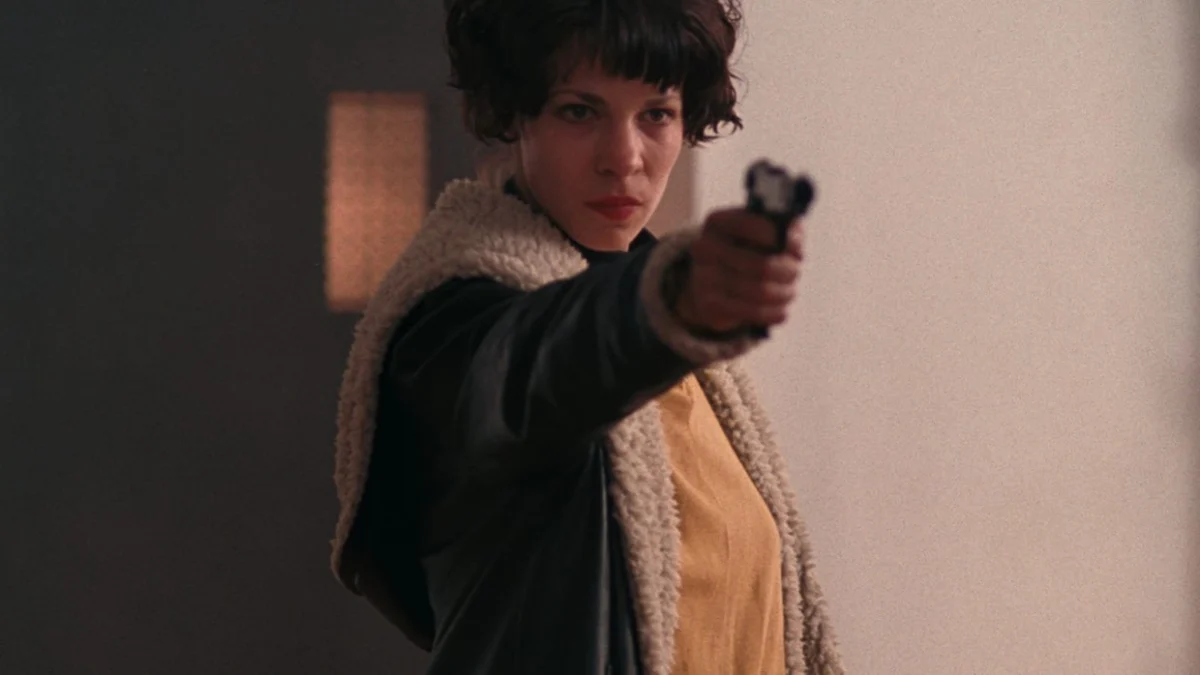
Upon its release in 1996, the film featured Lili Taylor in a career-defining lead performance as Valerie Solanas, supported by an ensemble cast that included Martha Plimpton, Michael Imperioli, and Stephen Dorff as Factory icon Candy Darling. Because Lou Reed denied permission to use Velvet Underground tracks, composer John Cale stepped in to craft an original score, anchoring the film firmly in the pulse of its historical moment.
Historical Context of the SCUM Manifesto
At the core of the narrative is Solanas’s 1967 SCUM Manifesto, a foundational yet controversial document of 20th-century radical feminism. In the late 1980s and early 1990s, when Harron first encountered the text in a left-wing bookstore, the manifesto was largely viewed as an eccentric outlier rather than part of mainstream feminist discourse.
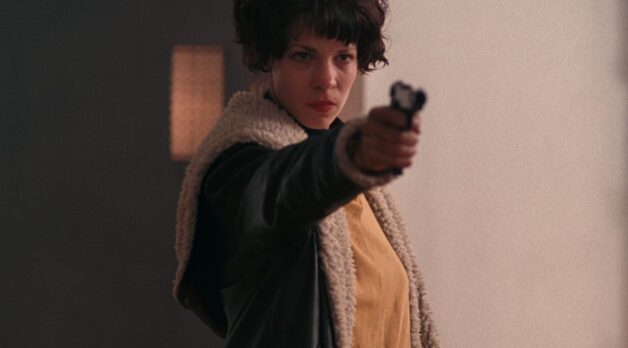
Harron recalls being struck by the text’s literary sophistication, comparing its irony and elegance to the prose of Evelyn Waugh. Despite its intellectual rigor, the manifesto’s extreme positions—ranging from a rejection of modern societal boredom to radical separatism—defy easy categorization. Solanas formed an organization called SCUM, of which she was famously the sole member, and hawked copies on the streets of New York for two dollars for men and one dollar for women.
In the film, Solanas’s interactions with the male-dominated cultural infrastructure—including Warhol and publisher Maurice Girodias—highlight an economy of artistic exploitation. While Warhol was celebrated for identifying and elevating countercultural talents such as Ondine, Jackie Curtis, and Candy Darling, his dynamic with marginalized figures was frequently transactional. Figures who relied on the Factory for validation often faced abrupt alienation once they fell out of favor, a psychological vulnerability that Harron sought to portray without assigning simple hero-and-villain binaries.
Supporting Data and Aesthetic Choices
Harron’s deliberate avoidance of conventional biopic tropes distinguishes I Shot Andy Warhol from standard historical dramas. Rather than relying on previous cinematic representations of the 1960s, the production team drew heavily from photographic archives, including Diane Arbus prints and Magnum photo collections, to reconstruct hotel interiors and streetscapes with negative space and stark authenticity.
Jared Harris’s portrayal of Andy Warhol broke new ground by capturing the artist’s underlying fragility, elusiveness, and sensitivity, moving past simplistic caricatures of coldness. This nuanced characterization generated critical debate upon the film’s initial release, with some reviewers faulting Harron for refusing to deliver a clear moral verdict on the conflict between Solanas and Warhol. However, Harron defends this ambiguity, asserting that forcing viewers’ sympathies to oscillate creates a more authentic and intellectually engaging cinematic experience.
Broader Impact and Contemporary Relevance
As the film enjoys its theatrical rerelease, its themes intersect sharply with contemporary discussions surrounding feminist rage, online subcultures, and the mechanics of modern fame. Harron observes that in the current digital landscape, an artist like Solanas might have found a direct route to an audience and built a platform in ways that were entirely impossible in the pre-internet era.
At the same time, the discourse surrounding Solanas’s essentialist philosophy—which linked gender roles strictly to biological chromosomes—continues to evolve. While modern critics and scholars debate whether the SCUM Manifesto can be interpreted through a trans-inclusive lens, Harron maintains that historical texts are inevitably re-examined and reclaimed by successive generations to suit their contemporary political and cultural needs.
Ultimately, the 4K restoration of I Shot Andy Warhol invites both longtime cinephiles and a new generation of viewers to re-examine a complex chapter of New York cultural history. By refusing to sanitize its central figures, Harron’s debut feature endures as a vital, provocative document of artistic ambition, alienation, and the enduring complexities of radical expression.