



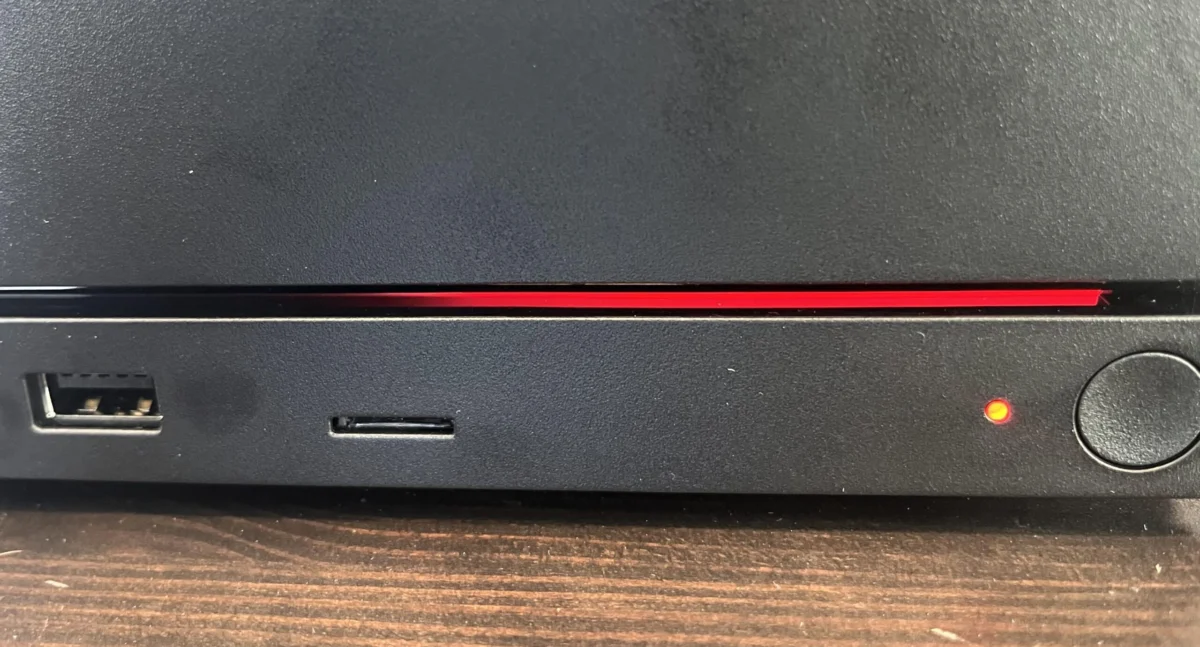
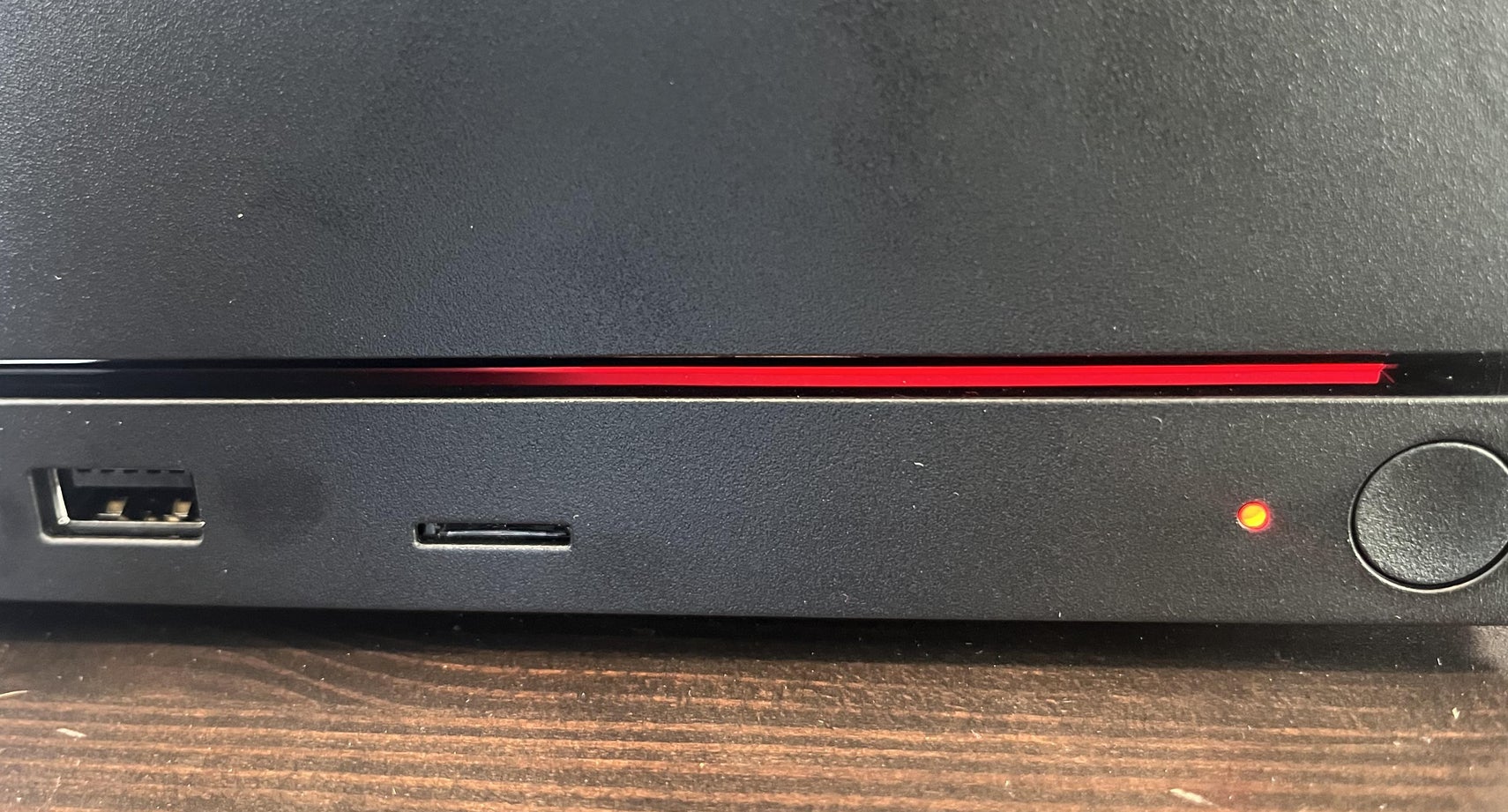
The long-anticipated rollout of Valve’s Steam Machine hardware has encountered a significant setback as early adopters report critical hardware failures shortly after unboxing their devices. These reports, which have surfaced on community forums and social media platforms, describe a catastrophic system failure that renders the console unusable, characterized by a distinct red illumination on the front-facing light bar. Enthusiasts and tech analysts have already dubbed the phenomenon the "Red Line of Death," a moniker that invokes the memory of previous generation console failures and raises questions about the long-term reliability of Valve’s foray into living-room gaming hardware.
The First Reports of System Instability
The hardware failure first gained mainstream attention through a series of reports on the Steam Machine subreddit. One of the most detailed accounts came from a user identified as me_hill, who was among the first wave of consumers to receive their unit this week. According to the user’s testimony, the device functioned for only a brief window before becoming permanently unresponsive. The failure occurred following a standard sequence of events: unboxing, initial setup, a brief gaming session, and a mandatory firmware update.
Specifically, the user reported playing the procedurally generated space exploration title No Man’s Sky for approximately five minutes. Following this session, the system prompted for a firmware update. Upon the completion of the installation and subsequent reboot, the Steam Machine failed to output a video signal. Instead, it displayed a solid red line on the right-hand side of the integrated light bar. This sequence of events—a high-intensity graphical load followed by a system-level software update—suggests a potential conflict between the hardware’s thermal management and the new firmware’s operating parameters.
The user’s experience has served as a warning to those still waiting in the distribution queue. "Got five minutes of No Man’s Sky in, then I installed the update the machine had available and it bricked itself," the user noted in a public post. They further advised others to remain optimistic that Valve would "iron this crap out" before the hardware reaches a wider audience.
Diagnostic Analysis and the GPU Failure Code
Technical analysis of the "Red Line of Death" indicates that the error is not a generic system crash but a specific diagnostic signal. Digital Foundry, a publication specializing in gaming hardware performance and forensics, noted that the placement of the red light is intentional. Valve’s official support documentation for the Steam Machine confirms that a red light appearing on the right half of the front light bar is a specific error code indicating a GPU (Graphics Processing Unit) failure.
A GPU failure in a compact console often stems from one of three primary issues: a manufacturing defect in the silicon, a failure in the solder joints (often caused by thermal cycling), or a catastrophic power delivery failure. In the case of the Steam Machine, the fact that the failure occurred immediately following a firmware update has led to speculation regarding "overvolting" or a change in fan profiles that may have allowed the GPU to exceed safe operating temperatures during its first major load.
The affected user confirmed that the console provides no display output to monitors or televisions, even when swapping cables or trying different HDMI ports. This lack of video output is the hallmark of a dead graphics processor, as the system is unable to initialize the primary display engine required to boot the SteamOS interface.
Historical Parallels: The Legacy of Hardware Failure
The emergence of the "Red Line of Death" has drawn immediate and unfavorable comparisons to the Xbox 360’s "Red Ring of Death" (RRoD). During the mid-2000s, Microsoft faced a multi-billion dollar crisis when a significant percentage of Xbox 360 units failed due to overheating and lead-free solder issues. The RRoD became a cultural touchstone for hardware unreliability, eventually forcing Microsoft to extend warranties and set aside over $1 billion for repairs and replacements.
Similarly, the PlayStation 3 era saw the "Yellow Light of Death" (YLoD), which also signaled a general hardware failure, often related to the GPU or power supply. For many gamers, the sight of a red light on a new console triggers a sense of "hardware PTSD." The user who reported the first Steam Machine failure, me_hill, noted the irony of their situation, stating they had also been a victim of the original Xbox 360 RRoD years prior.
While it is too early to determine if the Steam Machine’s GPU issues are as widespread as the Xbox 360’s defects, the optics of a failure so early in the product’s lifecycle are challenging for Valve. Unlike Microsoft or Sony, who have decades of experience in mass-market hardware manufacturing, Valve is still establishing its reputation as a hardware vendor, following the niche success of the Steam Controller and the more recent mainstream hit, the Steam Deck.
Valve’s Hardware Strategy and Production Constraints
The impact of these hardware failures is exacerbated by the limited availability of the Steam Machine. Unlike the Steam Deck, which saw a massive, streamlined production run, the current iteration of the Steam Machine has been released in relatively small quantities. This scarcity complicates the standard RMA (Return Merchandise Authorization) process.
Industry analysts suggest that because so few units are currently in circulation, Valve may not have a large surplus of "replacement stock" readily available. This could lead to long wait times for affected users, who must wait for new production batches to be completed before receiving a functioning unit.
The Steam Machine project represents Valve’s broader ambition to decouple PC gaming from the Windows ecosystem. By utilizing SteamOS—a Linux-based operating system—Valve aims to provide a console-like experience with the power and flexibility of a PC. However, the hardware must be as reliable as a traditional console for this transition to be successful. A "plug-and-play" device that bricks itself within ten minutes of use undermines the core value proposition of the platform.
Community Response and Troubleshooting Efforts
In the absence of an immediate official statement from Valve regarding a widespread recall or a specific fix, the Steam Machine community has taken to crowdsourcing potential solutions. Users on Reddit and other gaming forums have suggested various troubleshooting steps, including:
- Power Cycling: Attempting to drain the capacitors by unplugging the unit for extended periods.
- BIOS Recovery: Checking if the device allows for a low-level BIOS flash via a USB drive.
- External GPU Testing: For advanced users, investigating if the failure is limited to the internal discrete GPU or if the integrated graphics on the CPU (if applicable) can still function.
Despite these efforts, the consensus among technical experts is that a red light indicating GPU failure is almost always a hardware-level issue that cannot be resolved through software tweaks. The recommendation remains for users to contact Valve Support immediately to document the failure and initiate a warranty claim.
Implications for the Future of the Platform
The coming weeks will be critical for the Steam Machine. If the "Red Line of Death" remains an isolated incident affecting only a fraction of a percent of units—the typical "infant mortality" rate for new electronics—the platform will likely recover. However, if more reports surface as the shipping queue progresses, Valve may be forced to halt distribution to investigate the root cause.
The timing is particularly sensitive given the competitive landscape of gaming hardware. With mid-generation refreshes from other console manufacturers and the rising popularity of handheld gaming PCs, the Steam Machine needs a flawless launch to capture the "living room" segment of the market.
Furthermore, this incident highlights the risks associated with firmware updates on new hardware. In modern computing, firmware controls everything from voltage regulators to fan speeds. If a firmware update contains a bug that incorrectly manages these components, it can cause physical damage to the silicon in a matter of seconds. Valve’s engineering team is likely currently scrutinizing the telemetry data from the failed units to determine if the software update was the "executioner" or if the hardware was already predisposed to failure.
As the situation develops, the gaming community remains watchful. The Steam Machine represents a bold step toward an open-platform future for home consoles, but as history has shown, even the most innovative software cannot overcome the hurdles of a failing GPU. For now, early adopters are advised to proceed with caution and keep a close eye on their light bars.