




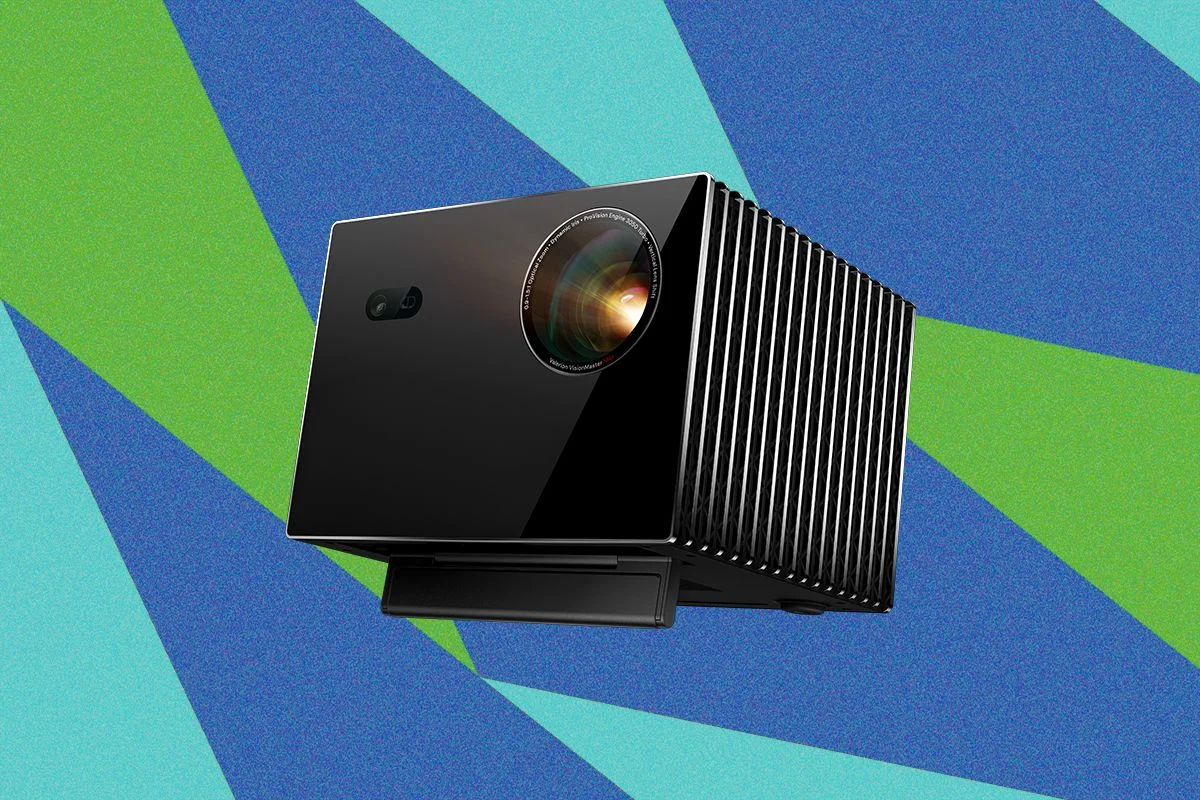
The contemporary home entertainment landscape has witnessed a remarkable paradigm shift over the past half-decade, transitioning rapidly from traditional flat-panel televisions to high-performance laser projection systems. Among the emerging heavyweights in this competitive arena is Valerion, a brand that has quickly captured the attention of audio-visual enthusiasts and industry analysts alike. With the release of its flagship model, the Valerion VisionMaster Max 4K projector, the company aims to redefine consumer expectations for brightness, color accuracy, and processing flexibility. Positioned as a premier all-in-one cinematic hub, the VisionMaster Max combines advanced RGB triple-laser architecture with comprehensive smart-TV capabilities, targeting discerning home theater architects who demand uncompromising picture fidelity. However, as the device enters a crowded marketplace populated by established audio-visual titans and innovative lifestyle brands, industry observers are closely examining whether its robust technical specifications justify its premium positioning.
Main Facts and Technical Specifications
At its core, the Valerion VisionMaster Max is engineered to deliver a theatrical experience within a residential footprint. Operating on an advanced RGB triple-laser light engine, the projector achieves exceptional color saturation and luminance, addressing historical weaknesses associated with traditional lamp-based and single-laser projection units. The device supports native 4K resolution, ensuring that intricate details are rendered with razor-sharp precision across expansive display surfaces.
Beyond its cinematic prowess, the VisionMaster Max boasts an impressive array of specifications tailored for high-performance applications, including competitive video gaming. The projector supports remarkable refresh rates of up to 240 Hz at 1080p resolution, accompanied by a claimed ultra-low input lag as minimal as 4 milliseconds (ms). For users operating at standard 4K resolutions with a 60 Hz refresh rate, the input lag is rated at a respectable 15 ms. Connectivity is anchored by dual HDMI 2.1 ports equipped with Auto Low Latency Mode (ALLM), facilitating seamless integration with modern gaming consoles such as the PlayStation 5 and Xbox Series X, though it notably omits Variable Refresh Rate (VRR) support.
Despite its stellar optical and gaming performance, the device presents a mixed profile regarding onboard audio architecture. Outfitted with dual 12-watt integrated speakers, the VisionMaster Max produces clean, highly detailed sound with clear separation between dialogue and background effects. Nevertheless, industrial design limitations inherent to its compact box form factor constrain its acoustic power. While sufficient for casual viewing at moderate volumes, pushing the internal amplification beyond 25 percent of its maximum range results primarily in elevated sound pressure rather than expanded dynamic depth. To fully complement its pristine visual output, the projector incorporates support for advanced audio codecs including DTS and Dolby Atmos, enabling seamless integration with external 5.1 or 7.1 surround sound systems via HDMI eARC or optical configurations.
Background Context and Evolution of Laser Projection
The trajectory of consumer projection technology over the last ten years has been defined by the miniaturization of laser diodes and significant advancements in solid-state illumination. Historically, front projectors were relegated to dedicated, darkroom-style basement cinemas due to low lumen output that rendered daytime viewing virtually impossible. The advent of ALPD (Advanced Laser Phosphor Display) and RGB triple-laser technologies fundamentally altered this dynamic, permitting high-brightness projection suitable for ambient-lit living rooms.

Valerion entered this evolving ecosystem with a clear mandate: democratize high-end optical features previously reserved for commercial-grade installations or ultra-luxury consumer units costing upwards of ten thousand dollars. By introducing features such as motorized optical zoom, electronic black level (EBL) adjustments, and sophisticated mechanical irises into a more accessible product tier, the manufacturer sought to capture market share from legacy projection giants like Epson, JVC, and Sony, as well as modern lifestyle competitors such as Anker Nebula and Leica.
Chronology of the Product Ecosystem and Market Rollout
The development and commercial release of the VisionMaster series reflect a carefully calculated strategy by Valerion to segment the high-end projection market effectively. The timeline leading to the current market availability of the VisionMaster Max highlights the company’s methodical expansion:
- Initial R&D and Concept Phase: Valerion engineers focused on refining RGB triple-laser light engine efficiency, aiming to solve thermal management and speckle reduction challenges common in high-output lasers.
- Product Line Announcement: The brand introduced a tiered lineup, anchored by the premium VisionMaster Max and complemented by more cost-effective iterations such as the VisionMaster Pro 2, designed to appeal to different consumer price points.
- Global Distribution and Bundle Strategy: Upon official market launch, Valerion implemented aggressive promotional bundling strategies. Recognizing the financial barrier of complete home theater setups, the company offered comprehensive promotional packages pairing the flagship projector with specialized ambient light-rejecting (ALR) screens and versatile mounting hardware—including tripods and ceiling mounts—at no additional cost.
- Critical Evaluation and Consumer Reception: Early reviews from specialized technology and home theater publications highlighted the projector’s exceptional optical performance and black levels, while simultaneously drawing attention to the limitations of its onboard audio system and the necessity of external sound reinforcement.
Comparative Analysis and Competitive Landscape
When evaluated against its immediate competitors, the Valerion VisionMaster Max occupies a unique space between dedicated cinema equipment and lifestyle electronics. Direct rivals in this tier include the Nebula X1, which leverages a Google TV interface and a 3,500-lumen output alongside modular, removable satellite speakers to deliver an adaptable lifestyle experience. Similarly, the Leica Cine Play 1 bridges the gap between high-end optics and contemporary interior design aesthetics, earning critical acclaim for its sophisticated engineering.
Within Valerion’s own internal ecosystem, the VisionMaster Pro 2—priced significantly lower at $2,999—serves as a compelling alternative for budget-conscious cinephiles. While the Pro 2 retains fundamental technologies such as the Google TV operating system, RGB triple-laser projection, optical zoom, and EBL, it omits the Max’s advanced mechanical iris and vertical lens shift capabilities. Industry analysts note that for average movie consumers, these compromises represent a pragmatic value proposition, leaving the VisionMaster Max targeted squarely at enthusiasts with dedicated viewing spaces and rigorous calibration requirements.
Industry Statements and Expert Perspectives
Audio-visual integration specialists and consumer electronics analysts have widely discussed the shifting expectations surrounding all-in-one entertainment systems. Industry experts point out that as projectors increasingly adopt smart-TV operating systems like Google TV, consumer demand for integrated, high-fidelity sound has intensified.

"Consumers investing in four-thousand-dollar projection systems rightfully expect a holistic entertainment solution," notes a leading home theater installation consultant who requested anonymity. "While manufacturers like Valerion excel at pushing the boundaries of laser light engine efficiency and contrast ratios, the physical constraints of projector enclosures continue to present acoustic hurdles. The industry standard is shifting toward treating internal speakers as a convenience feature, with the clear expectation that users will pair these devices with dedicated discrete audio gear."
Conversely, Valerion representatives have emphasized that the VisionMaster Max is designed with modularity in mind. By providing extensive connectivity options—including Bluetooth audio streaming and robust HDMI eARC support—the brand encourages users to customize their acoustic environments rather than relying solely on restricted cabinet acoustics. Furthermore, the inclusion of granular picture control software empowers professional calibrators and advanced users to fine-tune gamma, color space, and white balance to exact industry standards.
Broader Impact and Market Implications
The launch and commercial reception of the Valerion VisionMaster Max carry significant implications for the broader consumer electronics market. As high-end 4K laser projection becomes increasingly viable for residential environments, traditional large-format flat-panel televisions face heightened competition in the ultra-large screen category—specifically for displays exceeding 100 inches.
Furthermore, the aggressive promotional strategies adopted by emerging brands like Valerion indicate an intensifying race for consumer acquisition in the post-pandemic home entertainment sector. By bundling hardware essentials such as projection screens and mounting accessories, manufacturers are effectively lowering the friction associated with complex home theater installations, encouraging mainstream consumers to venture beyond traditional television formats.
Ultimately, while the VisionMaster Max may represent a substantial investment and a degree of operational overkill for casual weekend streaming enthusiasts, its technical capabilities establish a new benchmark for performance-to-value ratios in the high-end projection category. For dedicated home theater hobbyists willing to invest in a properly calibrated screen and external surround sound infrastructure, the Valerion VisionMaster Max delivers a cinematic experience that rivals commercial screening rooms, signaling a mature and highly competitive future for consumer laser projection technology.