


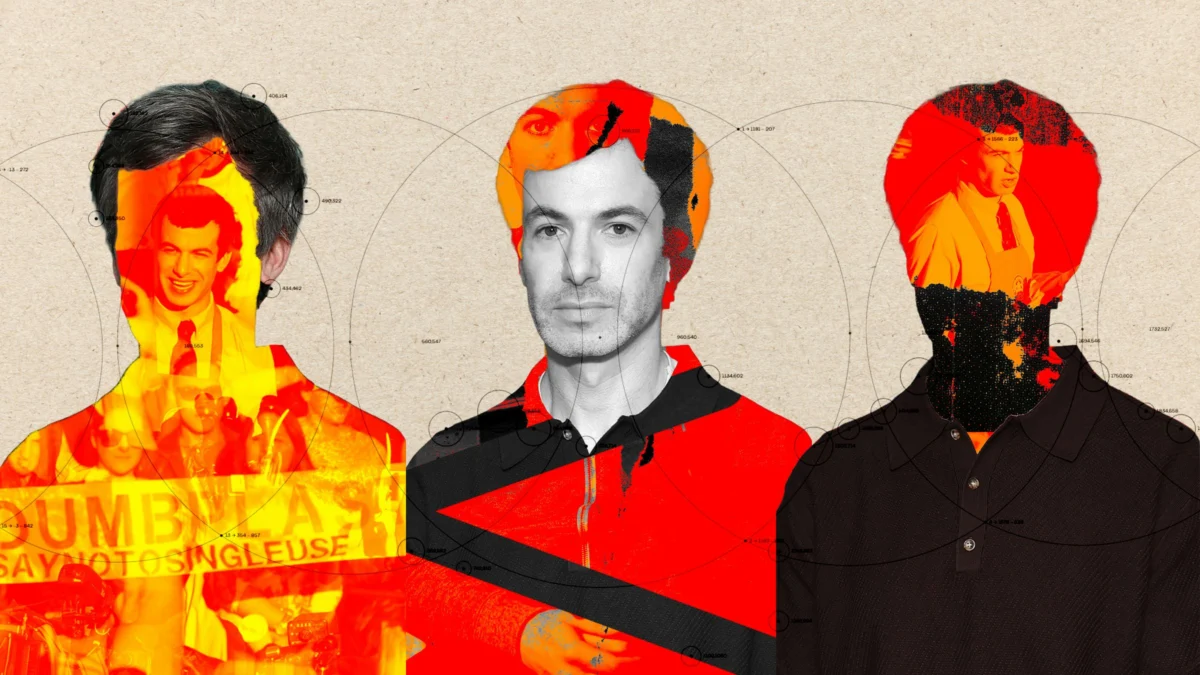
The impending release of You Can See Everything, a three-hour documentary codirected by acclaimed television auteur Nathan Fielder and filmmaker Lance Oppenheim, has generated significant anticipation within the global film and technology communities. Focusing on Elizabeth Holmes, the disgraced founder of the defunct blood-testing startup Theranos who is currently serving an 11-year federal prison sentence, the film promises an unconventional examination of modern corporate fraud. Unlike traditional true-crime exposés, the project arrives with heightened expectations due to Fielder’s distinct artistic methodology, which consistently blurs the lines between reality, performance art, and documentary journalism.
Background Context of the Theranos Scandal
To understand the cultural significance of Fielder and Oppenheim’s project, it is necessary to examine the trajectory of Theranos, once valued at $9 billion at its peak in 2014. Promoted as a revolutionary biotechnology enterprise, the company claimed it could run a comprehensive suite of laboratory tests using only a few drops of capillary blood drawn from a finger prick via its proprietary "Edison" device. Holmes systematically cultivated an image reminiscent of tech luminaries like Steve Jobs, donning black turtleneck sweaters and promising to upend the diagnostic healthcare market.
However, investigative reporting by Wall Street Journal journalist John Carreyrou in 2015 revealed that the technology was largely non-functional and that the company relied on commercially available third-party machines to process patient samples. Subsequent federal investigations led to criminal charges against Holmes and her former romantic and business partner, Ramesh "Sunny" Balwani. In January 2022, a federal jury convicted Holmes on four counts of wire fraud and conspiracy to defraud investors. Following multiple legal appeals and a brief delay to give birth to her second child, Holmes surrendered to federal custody at the Federal Prison Camp in Bryan, Texas, in May 2023, beginning her 11-year sentence.
Chronology of the Documentary’s Production
The genesis of You Can See Everything dates back to early 2023, prior to Holmes’s surrender. Reports surfaced that Fielder had engaged with Holmes and her partner, Billy Evans, in Southern California. In a departure from standard journalistic protocols, Fielder and Oppenheim embedded themselves within the household shared by Holmes and Evans in Del Mar, California, living alongside them for more than a month leading up to Holmes’s imprisonment.
Initially, the directors did not have a guaranteed distribution deal or a finalized format for the footage they were capturing. According to statements made by Fielder at the New York Film Festival, the project evolved organically as the filmmakers encountered profound discrepancies in their own interpretations of the household dynamics and Holmes’s psychological state. The production culminated in a three-hour runtime, subsequently acquired by A24 for theatrical and streaming distribution.
Methodological Parallels Between Fielder and Corporate Fraud
Fielder’s previous work in television—notably the Comedy Central series Nathan for You (2013–2017) and the HBO series The Rehearsal (2022–present)—established his reputation for orchestrating elaborate, reality-bending social experiments. Academic analysts have frequently drawn comparisons between Fielder’s fictionalized corporate consultancy stunts and the systemic deception practiced by high-profile startup executives.
Andrew Bricker, an associate professor of English at the University of Ghent whose research focuses on humor and cultural literacy, notes that Fielder’s public persona consistently occupies an ambiguous space between authenticity and fabrication. By positioning himself as an unconventional problem-solver who approaches complex social and business challenges with literal, hyper-rationalized frameworks, Fielder mirrors the engineering mindset often weaponized by Silicon Valley entrepreneurs to justify economically unviable or fraudulent business models.
In Nathan for You, Fielder routinely navigated regulatory loopholes and engineered complex media hoaxes—such as establishing a legally distinct coffee shop named Dumb Starbucks to skirt trademark laws—to achieve specific, highly contrived outcomes. This capacity to manipulate media narratives and public perception closely aligns with the public relations strategies employed by Holmes to maintain investor confidence despite a nonexistent product.
Interviews and Academic Perspectives
The intersection of Fielder’s deadpan, reality-testing performance style and Holmes’s history of absolute detachment from verifiable facts has drawn commentary from academic circles. Kate Rennebohm, a film scholar at Lawrence University who has written extensively on The Rehearsal, characterizes Holmes as an ultimate test case for Fielder’s investigative methodology. Rennebohm observes that Holmes’s public notoriety stems entirely from an extraordinary ability to disregard objective reality, presenting a formidable subject for Fielder’s performance-based approach.
Academics have described the upcoming documentary as a modern, inverted iteration of the historic Frost/Nixon interviews. In this dynamic, the interviewer operates through a semi-fictionalized, deadpan persona characterized by lingering silences and literal interpretations of conversational statements, while the subject maintains an unwavering commitment to a self-constructed narrative of innocence and visionary entrepreneurship.
Broader Impact and Implications
The release of You Can See Everything arrives at a time of heightened cultural fatigue regarding standard true-crime media formats. By injecting Fielder’s trademark anxiety over the nature of truth and authenticity into the well-documented narrative of the Theranos collapse, the film transcends standard investigative journalism to offer a broader critique of contemporary social structures.
Critics and media analysts have frequently debated the ethical implications of Fielder’s work, particularly regarding his use of ordinary, unsuspecting participants in elaborate simulations. However, applying this methodology to a convicted federal felon accused of mass deception offers a distinct ethical framework. Rather than exploiting working-class individuals, Fielder and Oppenheim turn their analytical lens toward a figure who successfully co-opted the highest levels of finance, politics, and journalism.
Furthermore, scholars suggest that Holmes serves as an avatar for a broader tech industry ethos that frequently prioritizes narrative-driven disruption over tangible, verifiable outcomes. By examining the domestic and psychological reality of Holmes in the weeks prior to her incarceration, You Can See Everything seeks to interrogate the mechanisms of human belief, institutional gullibility, and the persistent human desire to construct comforting fictions in the face of undeniable objective failure.