


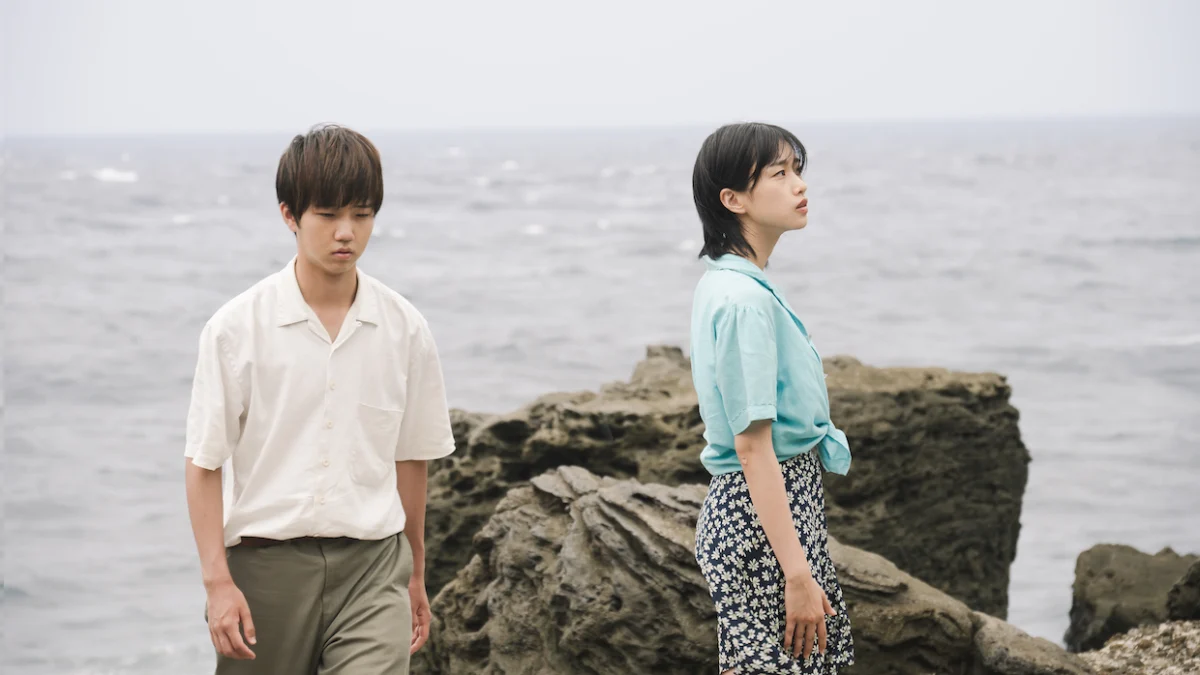
Sho Miyake’s latest feature film, Two Seasons, Two Strangers, has solidified his standing as a leading figure in the global landscape of contemporary auteur cinema following its prestigious win of the Golden Leopard at the Locarno Film Festival. The film, which recently completed high-profile screenings at Lincoln Center and the Museum of Modern Art’s (MoMA) New Directors/New Films festival, marks a significant milestone in Miyake’s career, transitioning him from a respected indie filmmaker to a recognized master of the medium. As Western audiences show an increasing appetite for Japanese narratives that move beyond traditional tropes, Miyake’s work offers a "quietly considered" alternative that prioritizes atmosphere, gesture, and the intricacies of human connection over conventional plot-driven structures.
A Chronological Retrospective of Sho Miyake’s Career
Born in Hokkaido, Sho Miyake’s journey into the cinematic arts began at the Film School of Tokyo, an institution known for fostering directors who balance technical proficiency with a deep understanding of film history. Miyake’s early career was characterized by low-budget, high-concept explorations of youth and memory. In 2012, he released two features that showcased his versatility: Playback and Good for Nothing. Playback, an experimental dive into the subjectivity of memory, earned comparisons to the works of Alain Resnais for its non-linear structure and philosophical weight. Conversely, Good for Nothing focused on the gritty reality of high school students in Hokkaido, establishing Miyake’s career-long interest in group dynamics and the socioeconomic environments that shape identity.
The director’s breakthrough came with the 2018 film And Your Bird Can Sing, a summer romance that was lauded for its naturalistic performances and evocative use of urban space. However, it was his 2022 feature, Small, Slow But Steady, that brought him widespread international acclaim. The film, shot on 16mm, followed a deaf female boxer and was praised for its rhythmic editing and tactile visual style. By the time Miyake released All the Long Nights in 2024—a study of loneliness and professional camaraderie at a science toy company—his reputation for "refining himself into a master" was firmly established within the international festival circuit.
The Source Material: Yoshiharu Tsuge and the Gekiga Movement
Two Seasons, Two Strangers is an ambitious diptych adaptation of two stories by the legendary and cult-favorite manga artist Yoshiharu Tsuge: "A View of the Seaside" and "Mister Ben of the Igloo." To understand the significance of this adaptation, one must look at Tsuge’s role in Japanese cultural history. Tsuge was a pioneer of the "Gekiga" movement, which introduced mature, somber, and often surreal themes to the manga medium in the 1960s and 70s. His work often appeared in the avant-garde magazine Garo, and he is credited with creating the "I-manga" or semi-autobiographical comic.
In his discussions regarding the film, Miyake noted that he first encountered Tsuge’s work as a university student. Despite Tsuge’s status as a "subcultural" rather than mainstream figure, his influence on Japanese art is profound. Miyake observed that Tsuge’s protagonists were often projections of the artist himself, struggling with creative block or existential malaise. By adapting these stories, Miyake sought to find a "new form of expression" through filmmaking that mirrored Tsuge’s unique artistic ambition. The choice to frame the stories through the eyes of a contemporary screenwriter allows the film to bridge the gap between the mid-century source material and the modern cinematic experience.
Narrative Innovation: The Screenwriter’s Lens
The film employs a nested narrative structure. It begins with Li, portrayed by the acclaimed actress Shim Eun-kyung, a screenwriter struggling to complete a script. The audience is then transported into the "movie within the movie," which depicts two young people whose lives intersect at a seaside resort. This segment is characterized by a vibrant, almost romantic aesthetic that contrasts sharply with the film’s second half.
When the internal film reaches its climax, the narrative shifts back to a contemporary classroom setting. Here, Li and her director participate in a Q&A session, a scene that serves as a meta-commentary on the creative process. Disturbed by her own creative stagnation, Li embarks on a journey to a snowy, rural town, seeking the kind of "travel inspiration" that fueled Tsuge’s own travelogues. Her arrival at a dilapidated inn run by the brusque Benzo, played by Shinichi Tsutsumi, shifts the film’s tone from the vibrancy of summer to the stark, grounded reality of a Japanese winter.

The Cinematic Philosophy of Gestures and Influence
Miyake’s directorial style in Two Seasons, Two Strangers has been described as an elegant blend of Tsuge’s surrealism and the formal staging of Yasujirō Ozu. This visual precision is partly attributed to Miyake’s relationship with the influential film critic and scholar Shiguéhiko Hasumi. Miyake collaborated with Hasumi on the essay film John Ford and Throwing, a project that examined the importance of physical gestures in cinema.
Miyake has stated that his foundational understanding of film history and the "love of watching films for what they are" came from Hasumi’s teachings. This influence is evident in the way Two Seasons, Two Strangers prioritizes visual storytelling over dialogue. The director focuses on the "dual meanings" of simple objects—such as a dead fish, which appears as an ominous symbol in the summer sequence but becomes a source of humor when grilled in a fire pit during the winter sequence. This attention to detail reflects Miyake’s belief that the richness of film expression lies in the interpretation of mundane realities.
Thematic Contrasts: From Collective Harmony to Solitary Travel
A recurring theme in Miyake’s previous works, such as And Your Bird Can Sing and All the Long Nights, has been the exploration of groups and how individuals find happiness through cooperative living or working. Two Seasons, Two Strangers represents a departure from this theme, focusing instead on the "happenstance" of travel.
Miyake noted that travel and tourism present a unique challenge for a filmmaker interested in human connection. Unlike a workplace or a shared neighborhood, travel often involves "shallow interactions" or total solitude. In this film, Miyake challenged himself to see if characters meeting through chance could share "special and deep moments." The awkward, Friction-filled conversations between Li and the innkeeper Benzo highlight the difficulty of connecting with strangers. These interactions, while serious in their performance, provide the source of the film’s subtle humor, staying true to the spirit of Tsuge’s original stories.
Industry Impact and the Global Reach of Japanese Independent Film
The success of Two Seasons, Two Strangers comes at a time when Japanese cinema is experiencing a renaissance on the international stage. Following the global success of Ryusuke Hamaguchi’s Drive My Car and Hirokazu Kore-eda’s consistent festival presence, Sho Miyake represents a new wave of directors who are successfully navigating the transition from domestic independent success to international prestige.
Data from the Locarno Film Festival suggests that the Golden Leopard win has significantly increased the film’s marketability in European and North American markets. Historically, the Golden Leopard has served as a springboard for directors such as Jim Jarmusch and Ang Lee. For Miyake, this accolade ensures that his future projects will likely receive broader distribution and higher production budgets. The film’s run at Metrograph in New York and its inclusion in the New Directors/New Films series indicate a strong critical consensus that Miyake is one of the most vital voices in contemporary cinema.
Broader Implications and Future Outlook
The release of Two Seasons, Two Strangers suggests a maturing of the "travelogue" genre in Japanese film. Rather than presenting a sanitized or purely aesthetic view of rural Japan, Miyake uses the landscape to reflect the internal states of his characters. His decision to move from the urban sprawl of Tokyo to a rural area in his personal life mirrors the protagonist Li’s journey, suggesting a shift in his own creative focus toward the relationship between environment and inspiration.
As Miyake continues to refine his craft, his work stands as a testament to the power of "slow cinema"—films that demand patience but offer profound emotional and intellectual rewards. Two Seasons, Two Strangers is not merely an adaptation of a manga; it is a complex meditation on the act of creation, the necessity of solitude, and the unexpected beauty found in the most awkward of human encounters. With its delicate mise-en-scène and nuanced performances, the film ensures that Sho Miyake will remain a central figure in cinematic discussions for years to come.