


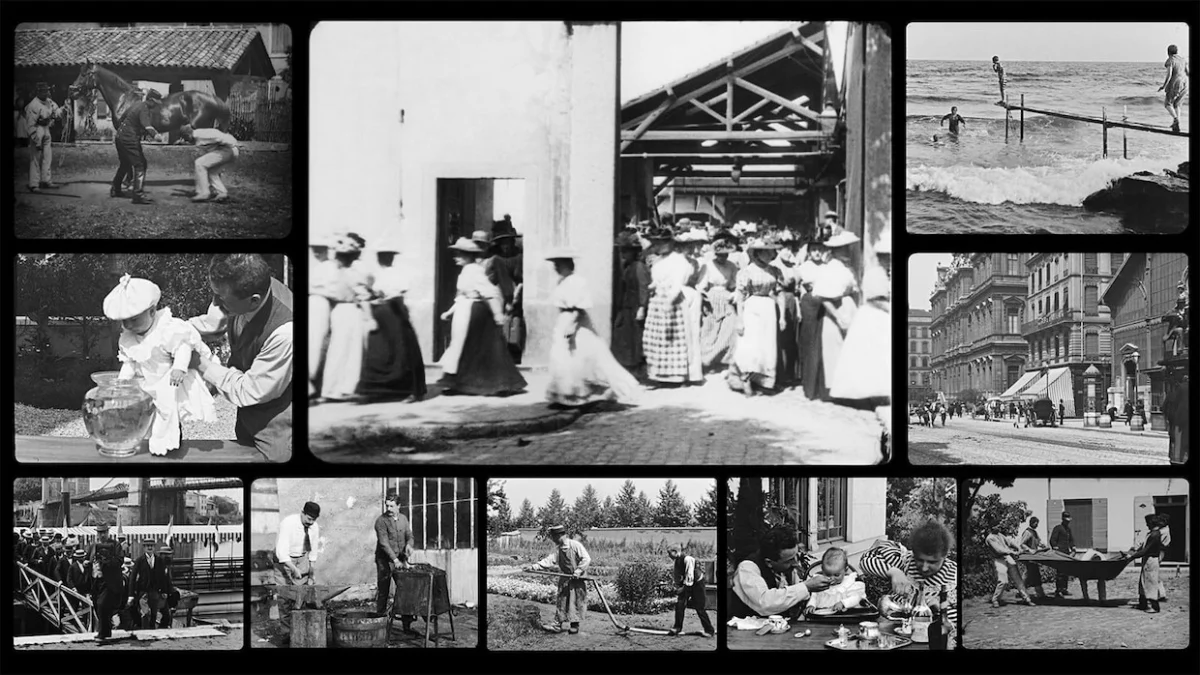
The dual role of Thierry Frémaux as both the general delegate of the Cannes Film Festival and the director of the Lumière Institute in Lyon places him at a unique crossroads of cinematic history and its contemporary evolution. As he prepares for the 79th edition of the world’s most prestigious film festival, Frémaux has released a new essayistic documentary titled Lumière, Le Cinema! This project serves as a critical examination of the work of Auguste and Louis Lumière, the French brothers whose 1895 invention of the Cinématographe fundamentally altered the course of human communication and artistic expression. Utilizing approximately 100 meticulously restored short films from the Lumière archive, the documentary provides a scholarly yet accessible look at the origins of the medium, narrated by Frémaux himself.
This new release functions as a spiritual and technical successor to Frémaux’s 2016 project, Lumière!, which similarly curated selections from the brothers’ vast catalog of over 2,000 films. By focusing on the inherent "simplicity" of the early cinematic shot, Frémaux argues that the Lumières did not merely invent a machine; they established a universal visual language that persists in every frame of modern cinema, from high-budget Hollywood productions to the ephemeral content of social media platforms.
The Historical Chronology of the Lumière Legacy
The history of the Lumière brothers is inextricably linked to the birth of the film industry. In 1895, the brothers debuted their Cinématographe, a device that was significantly more portable and versatile than the Kinetoscope developed by Thomas Edison in the United States. While Edison’s invention was designed for individual viewing through a peep-hole cabinet, the Lumières focused on projection, allowing for a collective audience experience.
The timeline of their contribution began with the first private screening in March 1895, followed by the legendary public screening at the Grand Café in Paris on December 28, 1895. This event is widely cited by film historians as the birth of commercial cinema. Over the following decade, the Lumière company dispatched "operators" across the globe—to Russia, Japan, the Americas, and Africa—to capture images of the world, effectively creating the first global documentary archive.
Frémaux’s latest film highlights this era of rapid expansion, showing how the brothers moved from simple "actualities"—recordings of daily life like workers leaving a factory—to choreographed fiction. A prime example featured in the documentary is L’Arroseur Arrosé (The Waterer Watered), an 1895 comedy that is considered one of the earliest examples of narrative storytelling and slapstick humor in film. By the time the brothers ceased production around 1905 to focus on color photography (the Autochrome process), they had laid the groundwork for every genre of film known today.
The Philosophy of the Shot vs. the Image
A central thesis in Lumière, Le Cinema! is the distinction between an "image" and a "shot." In his commentary, Frémaux posits that modern digital culture is saturated with images—fleeting, often disconnected visual data—whereas the Lumière brothers mastered the "shot." A shot, in the classical sense, requires a specific choice of framing, duration, and intent.
Frémaux draws a parallel to the fine arts, citing Pablo Picasso’s famous ambition to "draw like a child." He suggests that the Lumières possessed an intuitive understanding of composition that many modern filmmakers, burdened by complex technology and narrative tropes, often struggle to replicate. For Frémaux, the effectiveness of a single, well-placed camera in a 50-second Lumière film contains more "cinema" than many contemporary feature-length works. This perspective informs his curatorial work at Cannes, where he seeks films that demonstrate a rigorous understanding of visual language rather than mere technical proficiency.
Economic and Cultural Implications: Edison vs. Lumière
The documentary also delves into the historical rivalry between the French and American models of film exhibition. Thomas Edison viewed film as a commodity to be sold to individuals, a "pay-per-view" model that Frémaux likens to the modern "American way of life." In contrast, the Lumières bet on the social necessity of the screening room.

Edison famously doubted the French model, believing that once a crowd had seen a film together, they would have no reason to return. The Lumières countered this by producing a high volume of content—2,000 films—to ensure a constant stream of new material for theaters. Frémaux argues that the current tension between streaming platforms and theatrical exhibition is a modern iteration of this 19th-century debate. Platforms like Netflix and YouTube, which prioritize individual consumption on small screens, represent the "revenge of Edison," while the persistence of the cinema theater remains the lasting legacy of the Lumière brothers.
Supporting Data on the State of Global Cinema
The release of Lumière, Le Cinema! comes at a time when the theatrical industry is navigating a complex recovery period. According to data from Gower Street Analytics, the global box office reached approximately $33.9 billion in 2023, a significant increase from the pandemic lows but still below the 2017-2019 average of $42.5 billion. In France, however, the industry remains robust due to strong state support and a deeply ingrained cinema culture.
The Centre National du Cinéma et de l’image animée (CNC) reported that French cinemas saw 181 million admissions in 2023, a 18.9% increase from 2022. This resilience is often attributed to the "cultural exception" policy, which treats film as a cultural asset rather than a mere commercial product. Frémaux’s work at the Lumière Institute and the Cannes Film Festival is a vital part of this ecosystem, ensuring that film history is not just preserved in archives but is actively integrated into the public consciousness.
Industry Reactions and the Human Element in the Age of AI
The discourse surrounding Frémaux’s project has naturally expanded to include the impact of Artificial Intelligence (AI) on the future of filmmaking. During recent industry events, figures such as Sony Pictures Motion Picture Group Chairman Tom Rothman and Oscar-winning director Sean Baker have echoed Frémaux’s sentiments regarding the irreplaceable nature of human creativity and the theatrical experience.
Frémaux maintains a firm stance on the technological evolution of the medium. While acknowledging that AI can assist in the technical aspects of production or restoration, he asserts that it cannot replicate the "brain" of the artist. He cites literary giants like James Joyce and Marcel Proust to illustrate that great art stems from human intent and the unique spark of an idea. For Frémaux, cinema begins when an artist decides where to place the camera—a decision that remains a human prerogative.
Broader Impact and Curatorial Influence at Cannes
As the head of the Cannes Film Festival, Frémaux’s deep dive into film history directly influences the selection process for the world’s most influential film market. He notes that while today’s filmmakers are more likely to have had their first cinematic experiences on a television or a tablet rather than a big screen, the desire to participate in the "history of film" remains strong.
The practice of adding films to the Cannes lineup at the last minute—a common occurrence that distinguishes Cannes from other festivals—is a reflection of Frémaux’s commitment to the artist’s process. In the digital age, filmmakers can continue to edit and refine their work until days before a premiere. Frémaux views this flexibility as a necessary adaptation to modern production realities, ensuring that the festival showcases the most realized version of an artist’s vision.
Ultimately, Lumière, Le Cinema! is more than a historical retrospective; it is a manifesto for the survival of cinema as a collective, big-screen experience. By reconnecting with the "simplicity" of the Lumière brothers, Frémaux challenges the industry to look past the noise of "content" and return to the fundamental power of the shot. As the 79th Cannes Film Festival approaches, the lessons of the past serve as a roadmap for the future of the medium, reinforcing the idea that while technology changes, the human need to gather in the dark and watch the world unfold on a screen remains constant.