


Versant Media Group, the independent media entity recently established through the spinout of Comcast Corporation’s cable television networks and select digital assets, released its inaugural earnings report on Tuesday, offering a comprehensive look at its financial health as it navigates a rapidly shifting media landscape. The report, which covers the full fiscal year of 2025 and the fourth quarter ending December 31, serves as a baseline for the company’s performance during its final year under the NBCUniversal umbrella. While the figures highlight the ongoing challenges facing traditional linear television, they also underscore management’s aggressive strategy to pivot toward digital platforms and direct-to-consumer services.
For the full year 2025, Versant reported total revenue of approximately $6.69 billion, representing a 5% decline compared to the previous year. This contraction was largely driven by a downturn in the company’s core linear distribution and advertising segments. Specifically, linear distribution revenue fell 5.4% to $4.1 billion, while advertising revenue saw a sharper decline of nearly 9%, settling at $1.58 billion. Despite these top-line headwinds, the company maintained significant profitability, reporting net income attributable to Versant of $930 million and a stand-alone adjusted EBITDA (earnings before interest, taxes, depreciation, and amortization) of $2.18 billion.
A Strategic Separation: The Road to Independence
The formation of Versant Media Group marks one of the most significant structural shifts in the media industry in recent years. The process began in earnest in November 2024, when Comcast announced its intention to spin off its suite of cable networks into a separate, publicly traded company. Throughout 2025, Versant’s management team worked to untangle these assets from the broader NBCUniversal ecosystem, preparing for a standalone debut that finally occurred in early January 2026, when the company began trading on the Nasdaq under the ticker symbol VSNT.
The spinout was designed to allow Comcast to focus on its core growth engines—including the Peacock streaming service, NBC broadcast, and its theme parks—while giving the cable networks the autonomy to manage their own cash flows and strategic destiny. By separating these high-margin but declining linear assets, Comcast aimed to provide investors with a "pure-play" vehicle that could either consolidate other mid-sized cable players or transition into a digital-first enterprise.
Versant’s portfolio is a mix of legacy powerhouses and niche digital properties. Its television lineup includes CNBC, MS Now (formerly MSNBC’s digital-leaning identity), USA Network, Golf Channel, Syfy, E!, and Oxygen. On the digital and transactional side, the company holds valuable brands such as Fandango, Rotten Tomatoes, GolfNow, and Sports Engine.
Fourth Quarter Performance and Segment Analysis
The financial results for the fourth quarter of 2025 further illustrated the pressures on the traditional media model. Total revenue for the three-month period ending December 31 reached $1.61 billion, a nearly 7% decrease from the $1.73 billion reported in the same period a year earlier. Linear distribution revenue—the fees paid by cable and satellite providers to carry Versant’s channels—dropped nearly 6% to $997 million. Advertising revenue for the quarter also suffered, declining 9% to $370 million, as marketers continued to shift budgets toward social media and streaming platforms.
However, the "platforms" segment provided a silver lining. Revenue in this category, which includes Fandango’s movie ticketing and the GolfNow booking service, remained roughly flat at $202 million for the quarter. While not explosive, this stability stood in stark contrast to the declines seen in the television segments. For the full year, the platforms business was the only segment to record year-over-year growth, contributing $826 million in revenue and accounting for 19% of the company’s total intake.
Stand-alone adjusted EBITDA for the fourth quarter was $521 million, a 19% drop from the prior year. This decrease reflects both the lower revenue and the one-time costs associated with the separation from Comcast and the establishment of independent corporate functions.
Capital Allocation and Shareholder Returns
Despite the revenue declines, Versant’s management emphasized the company’s robust cash-generation capabilities and "asset-light" debt profile. Because the spinout was structured to leave Versant with a manageable debt load relative to its peers, the company is in a unique position to return capital to investors even while its legacy business shrinks.
On Tuesday, the board of directors declared a quarterly dividend of 37.5 cents per share. This represents an annualized dividend of $1.50 per share, positioning Versant as a high-yield option for value-oriented investors. Furthermore, the board authorized a $1 billion share repurchase program, a move intended to support the stock price and signal confidence in the company’s long-term valuation.
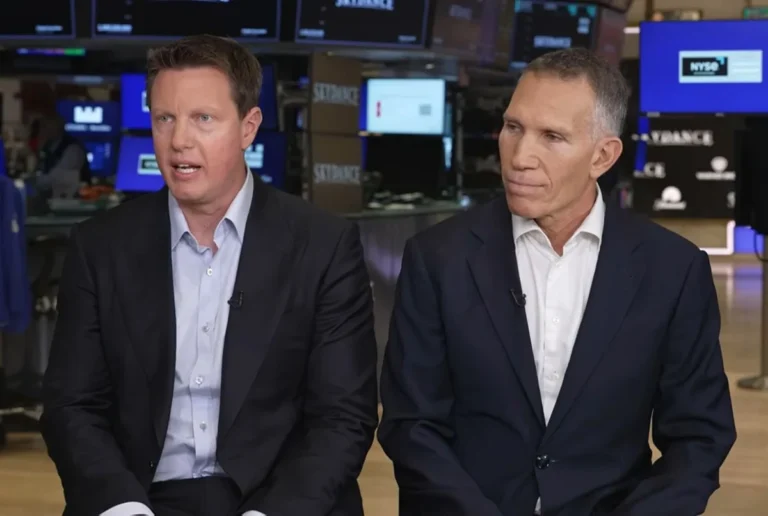
"Returning capital to shareholders remains a top priority for us, alongside disciplined investing to support long-term growth," said Anand Kini, Versant’s Chief Operating Officer and Chief Financial Officer, during the earnings call. Kini noted that the company’s financial flexibility allows it to weather the transition of the television industry without compromising its commitment to shareholder value.
The 2026 Transition: A Pivot to Digital and DTC
As Versant enters its first full year as an independent entity, 2026 is being framed by executives as a "year of transition." The company has set an ambitious goal to diversify its revenue streams, aiming to eventually generate 50% of its income from digital, platform, subscription, and transactional businesses, moving away from its current 80% reliance on the traditional pay TV bundle.
CEO Mark Lazarus outlined a three-to-five-year roadmap to reach a 33% digital revenue share, with the ultimate goal of 50% shortly thereafter. "We are leaning into our brands that have high affinity and transactional potential," Lazarus stated. "We aren’t just a collection of channels; we are a platform for enthusiasts in finance, sports, and entertainment."
Key drivers for this growth include:
- MS Now: The upcoming launch of a direct-to-consumer (DTC) product for the news brand, aimed at capturing audiences who have moved away from traditional cable news.
- CNBC Pro and Retail Products: Expanding the subscription-based CNBC Pro service and launching new tools for retail investors to capitalize on the brand’s authority in financial markets.
- Fandango at Home: The planned 2026 launch of an ad-supported version of the Fandango at Home service (formerly Vudu), which will leverage the company’s deep library and Rotten Tomatoes’ influence to capture digital ad dollars.
- Transactional Ecosystems: Further integrating GolfNow and Sports Engine to create a seamless "utility" experience for hobbyists and amateur athletes.
Market Context and Industry Implications
The challenges facing Versant are not unique. The entire media industry is grappling with "cord-cutting," as millions of households cancel traditional cable subscriptions in favor of streaming services like Netflix, Disney+, and YouTube. According to industry data, the pay TV universe has shrunk from over 100 million households at its peak to fewer than 70 million today, with the pace of decline showing few signs of slowing.
For a company like Versant, which owns several "tier-one" cable networks, the strategy is a delicate balancing act. Channels like USA Network and Golf Channel still command high carriage fees because of their live sports content, and CNBC remains a "must-have" for corporate offices and trading floors. However, as the total pool of cable subscribers diminishes, Versant must find ways to extract more value from each viewer through digital subscriptions and targeted advertising.
Wall Street analysts are watching Versant closely as a test case for whether a focused cable-network group can successfully reinvent itself. Some analysts argue that by shedding the overhead of a massive conglomerate like Comcast, Versant can be more nimble in pursuing mergers and acquisitions. There has been persistent speculation that Versant could serve as a consolidator for other "orphaned" cable networks from companies like Warner Bros. Discovery or Paramount Global, seeking to achieve greater scale and bargaining power with distributors.
Looking Ahead
As Versant Media Group moves forward, its success will likely depend on its ability to manage the decline of its linear "cash cow" while scaling its digital "growth engines." The $2.18 billion in adjusted EBITDA provides a significant cushion to fund these new ventures, but the 9% drop in advertising revenue serves as a stark reminder of the urgency of the task.
The company’s focus on 2026 as a pivot point suggests that investors should expect continued volatility in the short term as the business model is retooled. However, with a clear mandate to return capital and a roadmap for digital expansion, Versant is attempting to prove that there is a profitable life after the cable bundle.
"We’re going to continue to report with good visibility in the platforms revenue line," Kini told analysts, "which we think provides a meaningful indicator of how that business is scaling." For now, the market will be watching those numbers closely to see if Versant can indeed bridge the gap between the golden age of television and the digital future.
Disclosure: Versant Media Group is the parent company of CNBC.