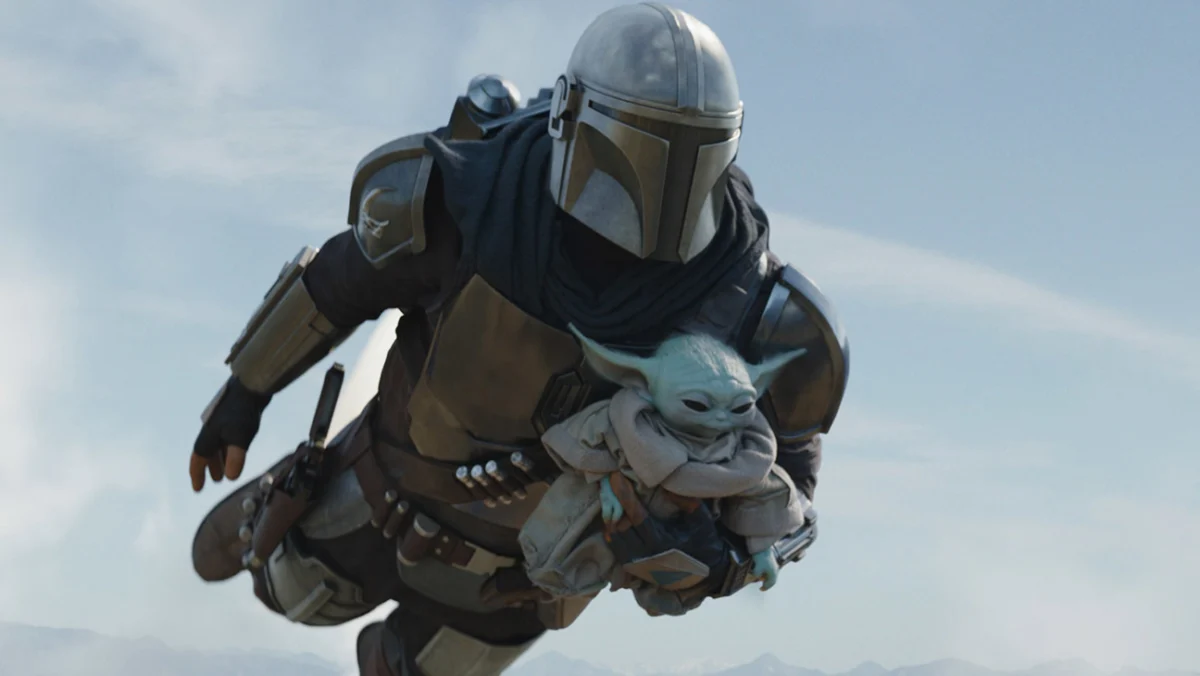
The cinematic journey for Star Wars: The Mandalorian and Grogu has officially commenced, wrapping up its inaugural Memorial Day weekend with a domestic box office performance that prompts both celebration and cautious analysis within the industry. Lucasfilm and Disney’s latest theatrical offering, a big-screen adaptation of the highly popular Disney+ series, debuted to an estimated $98 million over the four-day holiday period, with its traditional three-day weekend gross settling at $82 million after a slight deceleration in audience traffic towards the close of the extended holiday frame. These figures position the film at a critical juncture for the venerated Star Wars franchise, inviting inevitable comparisons and sparking discussions about its trajectory and the evolving nature of cinematic releases in the post-pandemic era.
Domestic Opening and Historical Context
The domestic opening for The Mandalorian and Grogu immediately drew parallels to a pivotal moment in the Disney-era Star Wars saga: the 2018 release of Solo: A Star Wars Story. That standalone film, which explored the origins of the iconic Han Solo, opened over Memorial Day weekend to $103 million domestically across four days, including $84.4 million for its three-day stretch. Solo notoriously marked the lowest debut for a Star Wars film since Disney’s acquisition of Lucasfilm in 2012, a distinction that The Mandalorian and Grogu now inherits, albeit by a narrow margin. While Solo‘s performance was widely considered a significant disappointment, triggering a public admission from Disney that the franchise was at a "tipping point" amid escalating fan discontent, Mando‘s slightly lower numbers arrive in a markedly different industry landscape.
The comparison, however, is not entirely straightforward. Solo was conceived as a traditional theatrical blockbuster, a high-stakes origin story for a beloved character. The Mandalorian and Grogu, conversely, originates from a television series that has already achieved massive success and cultural penetration on Disney+. This distinction is crucial, as Disney executives have been keen to emphasize that Mando represents a different strategic proposition within the Star Wars pantheon, introducing new characters and narratives not directly tied to the sprawling Skywalker saga or previous standalone features.
International Performance and Global Totals
Beyond North American shores, the sci-fi genre frequently encounters varying degrees of success, often struggling in several key international markets. Jon Favreau’s cinematic expansion of his acclaimed Disney+ series secured an opening gross of $63 million overseas through Sunday. Including Monday’s earnings, the film’s global cumulative total reached $167 million by May 25. This figure places The Mandalorian and Grogu‘s worldwide debut just ahead of its reported net production budget of $165 million, excluding the substantial costs associated with global marketing and distribution.
This global performance also brings Solo back into focus. The 2018 film opened to $65 million internationally, resulting in a global debut approximately in the $168 million range. While the initial global receipts are comparable, a significant divergence lies in their respective production costs. Solo carried a hefty price tag exceeding $265 million to produce, a factor that amplified its financial losses when it experienced a dramatic drop-off in its second weekend, ultimately topping out at a global total of $393 million. The higher budget meant Solo needed to perform significantly better to break even, let alone turn a profit, and its failure to do so contributed to tens of millions in losses for Disney. The Mandalorian and Grogu‘s more modest budget, while still substantial, offers a different break-even point and a potentially less perilous path to profitability, especially when factoring in its broader ecosystem value.
Disney’s Projections and Audience Reception
Disney, known for its historically conservative mid-weekend box office estimates, initially projected a four-day domestic opening of $102 million for The Mandalorian and Grogu on Sunday morning. This optimism was largely fueled by exceptionally strong audience exit polling, highlighted by an impressive 89 percent Rotten Tomatoes audience score. This score stands out as one of the highest for any Star Wars film released under the Disney banner, signaling robust viewer satisfaction and potentially strong word-of-mouth. By Monday morning, however, the estimate was slightly revised downwards to $100 million, and the final audited number settled at $98 million.
The discrepancy between initial projections and final figures is not uncommon in the box office world, particularly for holiday weekends where audience behavior can be less predictable. However, the consistent praise from audiences, as reflected in the Rotten Tomatoes score, is a significant asset. A high audience score often correlates with better "legs" – a film’s ability to maintain strong ticket sales beyond its opening weekend – which could be crucial for Mando to build momentum and achieve a respectable final gross. In an era where online reviews and social media sentiment heavily influence moviegoing decisions, such a positive reception is invaluable.
The Post-Pandemic Box Office Landscape
The theatrical box office landscape has been irrevocably altered by the COVID-19 pandemic, leading to a recalibration of what constitutes a successful opening. In this transformed environment, a $98 million four-day debut is generally met with industry-wide appreciation. Openings exceeding $100 million domestically have become increasingly rare, making the performance of Star Wars: The Force Awakens in 2015, which shattered records with a $257 million three-day opening, seem almost unfathomable by current standards. That film, the first Star Wars title under Disney’s ownership, represented a cultural phenomenon that has been difficult to replicate.
Despite not reaching the heights of the pre-pandemic era’s biggest blockbusters, The Mandalorian and Grogu secured the fourth-best Memorial Day debut in the post-COVID period. It notably surpassed the $79 million four-day opening of Mission: Impossible – Dead Reckoning Part One from the previous year. While Dead Reckoning Part One went on to achieve a respectable global gross, Mando‘s initial performance in a similar holiday frame suggests a solid foundation. The challenge for Mando, like all films in this new era, will be sustained performance in a competitive market.
Benchmarking Against Recent Hits and Audience Demographics
In the current calendar year, only a handful of films have managed to open north of $100 million domestically. One standout success has been Universal and Illumination’s The Super Mario Bros. Movie, which debuted to $131.7 million and has since amassed over $980 million in global ticket sales. This animated juggernaut serves as a prime example of a film that successfully tapped into a broad, all-ages audience, including crucial Gen Z and family demographics.
Other notable successes include the sleeper hit Project Hail Mary, which opened to $80.5 million and is on track to gross over $675 million globally, and Lionsgate’s Michael biopic, which garnered $97 million domestically and is nearing the $800 million mark worldwide. A common thread uniting these successful films is their PG-13 rating (or family-friendly equivalent), indicating a broad appeal across various demographics, from younger audiences to families. The Mandalorian and Grogu, also a PG-13 film, possesses the inherent potential to replicate this pattern, leveraging its existing multi-generational fanbase from the Disney+ series. Jon Favreau’s film has demonstrated its ability to draw a diverse audience, a crucial factor for long-term box office success.
The "Mandalorian" Strategy: Beyond the Box Office
Disney’s strategy for The Mandalorian and Grogu extends far beyond its theatrical box office receipts. The studio consistently highlights that the film’s origins as a small-screen series distinguish it from previous Star Wars theatrical releases. This perspective allows Disney to evaluate its performance through a broader lens, emphasizing its significant value across the entire Disney ecosystem.
The Mandalorian series is already a colossal success, holding the distinction of being the most-watched original series in Disney+ history, with over 1.3 billion hours streamed globally. Bringing it to the big screen is not merely about maximizing ticket sales but also about reinforcing the brand, attracting new subscribers to Disney+, and driving consumer product sales. The film’s release was strategically synchronized with a major integration across other Disney ventures: a new Mandalorian and Grogu mission debuted within the Millennium Falcon: Smugglers Run attraction at Disney’s parks, marking a first-ever day-and-date synergy for the company. Furthermore, a substantial integration with the popular video game Fortnite aims to capture a massive and engaged gaming audience, extending the film’s reach and enhancing its cultural footprint. This multi-platform approach underscores Disney’s commitment to leveraging its intellectual property across all available channels, creating a synergistic feedback loop where each component reinforces the others. This strategy will be particularly interesting to observe as future Star Wars films, such as Shawn Levy’s Star Wars: Starfighter starring Ryan Gosling, prepare for their own theatrical debuts, likely facing immense pressure as traditional, star-led cinematic releases.
Implications for the Star Wars Franchise and Future Releases
The performance of The Mandalorian and Grogu provides valuable insights for the future direction of the Star Wars franchise under Disney. The mixed reception to previous films, particularly segments of the sequel trilogy and the underperformance of Solo, had led to a perception of "fan discontent." Mando‘s strong audience score suggests a pathway to re-engaging a broad segment of the fanbase, perhaps by capitalizing on narratives and characters that have proven successful in other media.
The decision to elevate a Disney+ series to theatrical release is a bold experiment. If Mando demonstrates strong legs and ultimately achieves a profitable run, it could pave the way for similar adaptations of other successful streaming properties, blurring the lines between television and film. Conversely, a weaker overall performance might lead Disney to re-evaluate which Star Wars stories are best suited for the big screen versus those that remain on Disney+. All eyes will undoubtedly be on the film’s second-weekend drop, a crucial indicator of its staying power and whether its initial audience enthusiasm translates into sustained box office momentum. The coming weeks will reveal whether The Mandalorian and Grogu can defy the gravity of its predecessor’s struggles and chart a more prosperous course for the galaxy far, far away on the silver screen.