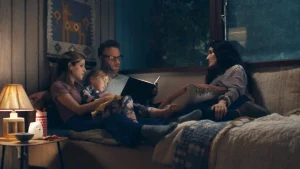



The landscape of high-end dating is undergoing a significant ideological shift as wealthy, high-achieving men increasingly prioritize traditional gender roles and conservative values in their search for long-term partners. Blaine Anderson, the founder of the elite matchmaking service Dating by Blaine, has observed a marked increase in hyper-specific requests from her clientele, many of whom are willing to pay tens of thousands of dollars to secure a partner who fits a very specific, traditional mold. This trend, which matchmakers suggest is accelerating in the current political and social climate, reflects a growing desire among the ultra-wealthy for a domestic life that mirrors mid-20th-century ideals, often referred to in contemporary digital culture as the "tradwife" aesthetic.
Among the most striking examples of this phenomenon is a client Anderson refers to by the pseudonym Daniel. A tech founder in his early 40s who recently exited his company for a substantial sum, Daniel engaged Anderson’s services with a payment of $49,000. Despite never having been married, Daniel’s primary objective was to start a family with a woman who met a rigorous list of criteria. His requirements extended beyond personality or shared interests into the realm of granular physical and professional specifications. Daniel sought a younger woman from the American Midwest—despite not living there himself—who worked in a "caregiving" profession, such as teaching or nursing. Crucially, he explicitly excluded doctors from his search, citing a concern that a medical career would render a woman too focused on her professional life to prioritize a family.
Daniel’s search also included aesthetic requirements that Anderson described as "very, very, very specific." These included precise facial measurements, such as the degree of the slope of her eyes and the exact distance in centimeters between her nose and upper lip. While Daniel’s case represents an extreme in terms of physical metrics, matchmakers argue that his underlying desire for a "traditional" partner is becoming the new standard for elite male clients.
The Aesthetic of the Tradwife and Its Cultural Momentum
The "tradwife" (traditional wife) movement has gained significant traction on social media platforms like TikTok and Instagram, characterized by an aesthetic that celebrates stay-at-home motherhood, scratch-made meals, and a rejection of modern "hustle culture." Influencers such as Hannah Neeleman, known as Ballerina Farm, and Nara Smith have become the faces of this movement, showcasing a life of bucolic domesticity that emphasizes 1950s-style femininity.
While the tradwife aesthetic is often critiqued by feminist scholars as a regressive step that erases decades of progress in gender equality, it has found a receptive audience among high-net-worth men. These men are increasingly looking for what Anderson describes as "the values of a wife and mother." This shift is not necessarily rooted in the man’s own religious or political identity; Anderson notes a rise in applications from non-religious men who are specifically seeking traditional, Christian women. The appeal appears to lie in the perceived stability and "softness" of a partner who is willing to take on a submissive or domestic-centric role, providing a counterpoint to the high-stress, competitive environments of the tech and finance sectors.
The Geography of Tradition: A Shift in Urban Centers
The demand for traditional partners is not confined to culturally conservative regions of the United States. Erika Kaplan, vice president of membership at Three Day Rule—a national matchmaking service with VIP packages ranging from $25,000 to $100,000—reports that this trend is prominent in major liberal hubs like New York City. Kaplan observes that "high-achieving" men in the finance sector are becoming more vocal about their desire for "faith-based" or "family-oriented" matches.
According to Kaplan, the current political climate, particularly following the 2024 U.S. presidential election, has made men feel more comfortable explicitly stating these preferences. There is a growing emphasis on how children will be raised, with many clients seeking a partner who will ensure a specific type of household environment. The use of coded language—terms like "traditional," "values," and "homemaker"—serves as a signal for men who want to move away from the egalitarian dating models that have dominated the last several decades.
The Economics of Elite Matchmaking
The business of matching the ultra-wealthy is a lucrative industry that operates on the periphery of the mainstream dating app market. While apps like Tinder or Hinge rely on algorithms and high-volume swiping, boutique services like Dating by Blaine and Three Day Rule offer a curated, human-led approach. The fees for these services reflect the intensive labor required to find "the needle in the haystack."
- Standard Packages: Often start between $5,000 and $15,000 for basic coaching and limited searches.
- VIP/High-End Services: Range from $25,000 to over $100,000. These services often include international searches, background checks, and extensive vetting of potential matches.
- Target Demographic: Men aged 30 to 55, often in the top 1% of earners, who feel "burnt out" by the digital dating landscape.
The willingness of clients like Daniel to pay nearly $50,000 for a search that ultimately proved unsuccessful highlights the desperation some high-net-worth individuals feel in finding a partner who fits an increasingly narrow and idealized profile. For these men, the "tradwife" is seen as a luxury good—a status symbol that represents a successful return to a perceived "natural order" of the family unit.
Sociological Drivers and the Loneliness Epidemic
Sociologists point to several factors driving this return to traditionalism among successful men. One theory suggests that in an era of extreme global volatility and rapid technological change, the domestic sphere is being reimagined as a sanctuary of predictability. For a tech founder whose life is defined by disruption, a "traditional" home life offers a sense of control and legacy.
Furthermore, the "loneliness epidemic" identified by the U.S. Surgeon General has hit high-achieving professionals particularly hard. Many of these men have spent their 20s and 30s focused exclusively on wealth accumulation, only to find themselves in their 40s with significant resources but no one to inherit them. This creates a sense of urgency to find a partner who is "ready" for immediate family life, leading them to seek out women who have already signaled a preference for domesticity over career advancement.
Implications for the Future of Dating and Marriage
The rise of the "tradwife" aspiration among wealthy men suggests a deepening divide in the dating market. On one side is a movement toward greater gender fluidity and career-focused egalitarianism; on the other is a retrenchment into rigid, traditional roles fueled by wealth and conservative cultural signals.
This trend also raises questions about the "commodification" of traditionalism. When a man pays $49,000 to find a woman who fits a specific physical and professional profile, the relationship begins with an inherent power imbalance. Matchmakers like Anderson admit that finding matches for clients with such "hyper-specific" demands is often impossible because the women they are looking for—frequently described as "unicorns"—may not actually exist in the way the men imagine them.
Daniel, for instance, never found his match. Anderson noted that while his requests were singular in their precision, they were representative of a broader, unattainable fantasy. The "tradwife" influencers seen on social media are often performing a curated version of domesticity that is supported by unseen staff, significant wealth, and the very "hustle culture" (via content creation and brand deals) that the movement claims to reject.
Conclusion: A Polarized Romantic Landscape
As elite matchmaking continues to evolve, the tension between modern professional realities and traditional romantic aspirations is likely to grow. The demand for "traditional" women in liberal enclaves like New York and San Francisco suggests that the "tradwife" phenomenon is less about geography and more about a psychological response to the modern world.
For the matchmakers tasked with fulfilling these requests, the challenge lies in balancing the client’s idealized vision with the reality of modern womanhood. While the "tradwife" aesthetic may continue to flourish on social media, the transition from a digital fantasy to a real-world marriage remains a complex and often unsuccessful endeavor for those seeking to purchase a traditional life through high-end services. The shift toward conservative values in elite dating is a clear indicator that for a certain segment of the population, the future of the family looks remarkably like the past.