
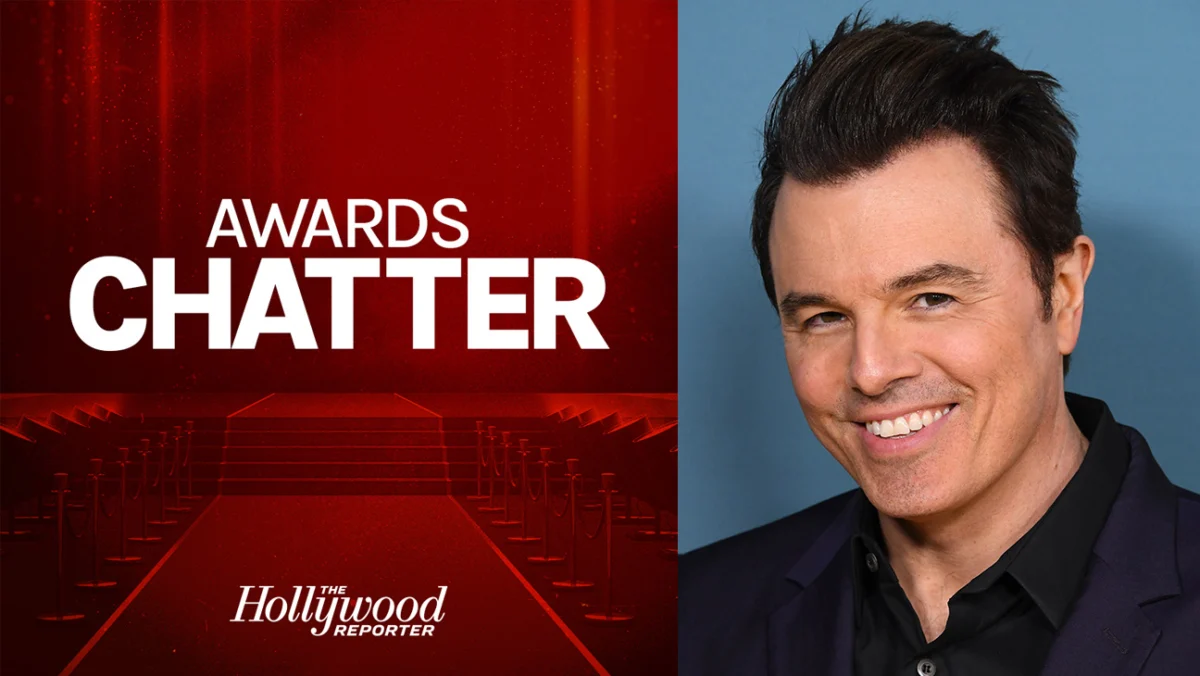
Seth MacFarlane, the prolific creator, actor, voice artist, animator, writer, director, producer, singer, and songwriter, recently offered candid insights into his remarkable nearly 30-year career during an appearance on The Hollywood Reporter’s Awards Chatter podcast. The episode, recorded last Sunday before a live audience at the Newport Beach TV Fest, coincided with MacFarlane being honored with the festival’s prestigious Maverick Award, a testament to his groundbreaking contributions and consistent challenging of industry norms. His discussion covered a broad spectrum of topics, from the seminal influence of The Simpsons on his artistic trajectory to his frustrations with the Primetime Emmy Awards, and the future prospects of his iconic franchises, Ted and Family Guy.
MacFarlane’s journey in Hollywood began remarkably early, establishing him as a power-player by his mid-twenties. At just 24, he achieved the distinction of becoming the youngest executive producer in television history with the debut of Family Guy in 1999. This milestone marked the beginning of an empire built on distinctive humor, pop culture savvy, and a keen understanding of animated storytelling. Through his production company, Fuzzy Door Productions, MacFarlane continues to oversee a diverse portfolio of successful shows currently on air, solidifying his status as one of Hollywood’s most multi-talented and enduring figures. The Maverick Award itself recognizes individuals who have demonstrated exceptional creativity, independence, and a willingness to push boundaries, qualities that have defined MacFarlane’s career from its inception. The Newport Beach TV Fest, now a significant event in the industry calendar, provides a platform for celebrating television excellence and fostering dialogue among creators and audiences.
A Creative Genesis: The Shadow of The Simpsons
During the podcast, MacFarlane unequivocally acknowledged the profound impact of The Simpsons on his creative development and career path. He articulated how the groundbreaking animated sitcom fundamentally altered the landscape of television comedy for an entire generation, including his own. "The Simpsons was a show that made us all laugh out loud," MacFarlane recalled. He contrasted this visceral reaction with earlier animated series like The Flintstones and Looney Tunes, which, while recognized for their comedic value, didn’t elicit the same guttural laughter. "Prior to that, there were animated shows in which you could recognize comedy that was good comedy… but you weren’t necessarily laughing out loud. You could acknowledge it, but it wasn’t really hitting you in the gut."
The Simpsons, which debuted as a series of shorts on The Tracey Ullman Show in 1987 before becoming a standalone series in 1989, revolutionized primetime animation. It proved that animated shows could tackle complex social commentary, pop culture satire, and sophisticated humor while appealing to both children and adults. Its immense success paved the way for a new wave of adult-oriented animated programming, directly influencing creators like MacFarlane. "Then The Simpsons came along and, at least for our generation, just changed everything. Suddenly we’re all sitting there howling with laughter. It was like nothing we’d seen in our lives. That was 100 percent an influence that shifted my trajectory from the Disney path toward the path of doing something more primetime oriented." This shift from a more traditional, family-friendly animation style to a edgier, primetime approach became the hallmark of MacFarlane’s early work, evident in the irreverent humor and satirical bite of Family Guy. The cultural phenomenon of The Simpsons not only demonstrated the commercial viability of such ventures but also set a high bar for comedic writing and character development in animation.
The Emmy Conundrum: A Critic’s Eye on Industry Recognition
MacFarlane expressed deep-seated frustrations with the Primetime Emmy Awards, particularly regarding the perceived inconsistencies and biases within the voting process. His comments resurfaced long-standing debates within the industry about how animated series are recognized, or often overlooked, in major categories. In 2009, Family Guy made history by becoming the first animated show since The Flintstones (48 years prior) to be nominated for the coveted Outstanding Comedy Series Emmy. This nomination was a significant moment, briefly breaking what many in the animation community refer to as the "animation ghetto," where animated shows are often relegated to their own separate, less prominent categories.
However, MacFarlane views this historical nomination with a mix of bemusement and critique. "The Emmys are so up fucked up. So much of it is nonsense," he stated plainly. He highlighted the irony of Family Guy receiving a Best Comedy Series nod when The Simpsons, a show he reveres and acknowledges as infinitely more influential, had never received such a nomination. The Simpsons has won numerous Emmys in the Outstanding Animated Program category, but its consistent exclusion from the main comedy series race has long been a point of contention for fans and industry insiders alike, suggesting a lingering prejudice against animation in broader recognition. "First of all, it’s nonsense that we would get nominated for best comedy when The Simpsons had not gotten nominated ever. That’s weird."
Furthermore, MacFarlane pointed out another perceived oversight: "It’s also weird that Family Guy never won best animated comedy in the 25 years." Despite its consistent popularity and critical acclaim, Family Guy has often been runner-up in its own category, which further fuels his skepticism. "There’s a lot of things that are weird about the Emmys that make me think, ‘Is anybody watching anything, or is this people just checking boxes while they’re fucking shaving?’ And you start to not care a little bit, which is a healthy place to be." He even confessed that the 2009 nomination was unexpected, as the show wasn’t actively campaigning for it, and he didn’t necessarily consider that season to be their strongest. This sentiment underscores a broader industry frustration with awards shows, often seen as influenced by campaigns, industry politics, and subjective taste rather than purely artistic merit. MacFarlane’s comments resonate with many who believe that animated works, despite their complex production and storytelling, are frequently undervalued by mainstream awards bodies.
The Enduring Legacy of Family Guy
Now in its 24th season, Family Guy stands as one of television’s longest-running animated series, a testament to its enduring popularity and MacFarlane’s foundational vision. While he long ago stepped back from the day-to-day operational oversight of the show, MacFarlane remains intrinsically linked to its core, continuing to provide the distinctive voices for iconic characters such as Peter, Stewie, and Brian Griffin, among others. His vocal performances are integral to the show’s identity, ensuring a consistent creative thread even as the series has evolved over more than two decades.
The show’s longevity is a remarkable feat in the ever-shifting landscape of television. Family Guy has survived cancellation (twice, famously resurrected by strong DVD sales and Adult Swim reruns), network changes, and shifting comedic tastes, maintaining a dedicated global fanbase. Its cultural impact is undeniable, from its controversial humor and cutaway gags becoming mainstream comedic tropes to its characters becoming household names. MacFarlane expressed his continued surprise at its sustained success: "I think it can go as long as there’s an appetite for it. I’m consistently shocked at the numbers for the show, that they continue to be very, very high. I don’t know why that is. It’s been so long. It’s been a quarter of a century that this thing has been on the air!" This enduring appeal speaks volumes about the show’s ability to reinvent itself, stay relevant, and consistently deliver its signature brand of humor.
Beyond the series, the prospect of a Family Guy feature film has been a long-gestating idea that continues to occupy MacFarlane’s thoughts. He revealed that a clear concept for such a film has always been "in the back of my head." However, he views it not as an immediate project, but as a strategic asset. "It’s that arrow in the quiver that I keep for when everything else goes to shit," he candidly remarked. This suggests a calculated approach, positioning a Family Guy movie as a potential "palette cleanser" or a guaranteed hit for a moment when his other professional endeavors might face challenges. "I always kind of assume that if I have a really dismal professional failure, like I produce a movie or a show that just fails so badly, the only thing that can cleanse the palette of the audience is the Family Guy movie. That’s when I’ll do it." This perspective highlights the immense commercial power and audience loyalty that Family Guy commands, making a theatrical release a potentially lucrative venture whenever MacFarlane deems the timing right. The economic implications of such a film are considerable, promising a significant box office return given the show’s global recognition.
From Big Screen to Small: The Evolution of Ted
The Ted franchise, which began with two highly successful live-action/CGI films in 2012 and 2015, recently made a seamless transition to the small screen with a prequel television series on Peacock. MacFarlane detailed the origin of the TV series, revealing that it wasn’t initially his idea but rather a proposition from former NBCUniversal content chief Susan Rovner. "I got the call from Susan Rovner, who was running NBC at the time, asking me, ‘Would you want to do a Ted TV series?’ So it wasn’t my idea to do this, it was something that they came to me with."
The decision to pursue the series was influenced by a substantial overall deal offered by NBCUniversal, prompting MacFarlane to explore the concept. His primary concern, however, was maintaining the high production quality synonymous with the films, particularly concerning the titular CGI teddy bear. "I said, ‘Is this something that you guys could commit to doing with the same level of quality as the films? I’m not talking about car chases and whatnot, but the bear himself, will you be willing to put the same resources into this, so it doesn’t look like the diet soda version of Ted?’" The financial commitment required was significant, with MacFarlane revealing an estimated $10 million per episode for a half-hour sitcom, largely due to the extensive computer-generated imagery required for Ted. NBCUniversal’s willingness to invest at this level was the key factor in his agreement. "And they said, ‘Yeah, we’re willing to do that.’ And I was like, ‘Great, then let’s give it a shot.’" This substantial budget underscores the network’s confidence in the franchise and its commitment to delivering a premium streaming experience.
MacFarlane not only created the TV series but also wrote several episodes, served as an executive producer and director on every installment, and once again provided the voice and motion capture for Ted. The first season was well-received, and the second season dropped just a few months ago, indicating a positive response from Peacock subscribers. Looking ahead, MacFarlane discussed the future of the Ted universe, emphasizing the character’s inherent flexibility. "I mean, the bear is CGI, so he can go as long as there’s an appetite for him. It’s up to Universal. It’s up to Peacock." While a third season in the immediate future isn’t confirmed ("I don’t know that there are any plans for that"), MacFarlane floated an intriguing alternative: "I’ve thrown the idea out that maybe we do a direct-to-Peacock Ted feature with this cast. That might be something that’s kind of fun." This strategy highlights the evolving nature of content distribution, where streaming platforms can host feature-length productions directly, bypassing traditional theatrical releases. The fact that a decade passed between the last Ted movie and the first episode of the series, with audiences still engaged, reinforces the character’s timeless appeal: "He’s a character we can bring back at any time."
Fuzzy Door Productions: A Multifaceted Empire
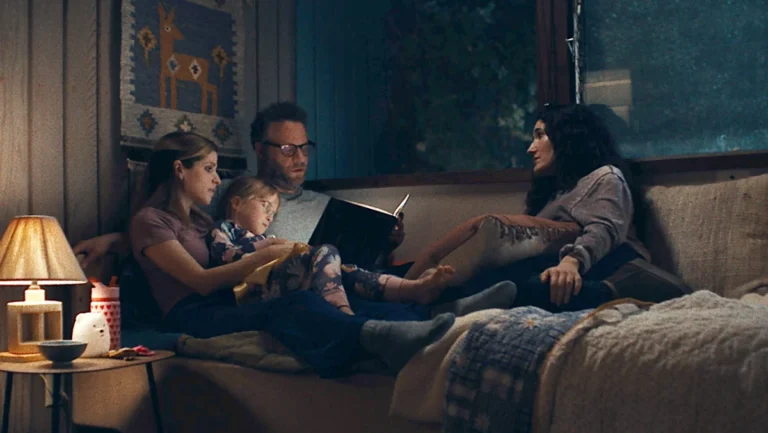
Beyond Family Guy and Ted, MacFarlane’s Fuzzy Door Productions continues to be a hub of creative activity. Another long-running animated series he co-created with Mike Barker and Matt Weitzman, American Dad, is currently in its 22nd season, demonstrating the consistent demand for his distinctive brand of humor. The production company also executive produced The ‘Burbs, a well-received first season on Peacock this year, showcasing its expansion into live-action series and its collaborative ventures within the streaming ecosystem. Fuzzy Door’s ability to manage multiple successful projects across different genres and platforms underscores MacFarlane’s entrepreneurial spirit and his deep understanding of the entertainment business. The company serves as the engine for his diverse creative output, from animation to live-action, and across various roles as a writer, director, and producer.
The Future Landscape: MacFarlane’s Strategic Vision
Seth MacFarlane’s reflections at the Newport Beach TV Fest painted a picture of a creator who is deeply invested in his work but also pragmatic about the industry’s realities. His openness about the influence of The Simpsons provides a rare glimpse into the formative experiences of a comedic genius, while his criticisms of the Emmys offer a candid, unvarnished perspective on industry accolades. His strategic approach to the Family Guy movie and the adaptable future of the Ted franchise reveal a keen business acumen alongside his creative drive.
MacFarlane’s career trajectory, from a young executive producer breaking barriers to a seasoned multi-hyphenate managing an entertainment empire, exemplifies the evolution of modern media. His ability to launch and sustain multiple long-running series, coupled with his ventures into film and streaming, positions him as a significant force in Hollywood. As animation continues to gain broader acceptance and streaming services offer new avenues for content, MacFarlane’s insights into production values, audience appetite, and the strategic deployment of beloved intellectual property offer valuable lessons for the entire entertainment industry. Whether through the continued irreverence of Family Guy, the evolving adventures of Ted, or new projects from Fuzzy Door Productions, Seth MacFarlane remains a pivotal figure shaping the landscape of comedic storytelling. His enduring influence and willingness to challenge conventions ensure that his "Maverick" status will continue to define his significant contributions to popular culture for years to come.