


In the sprawling landscape of American casual dining, few brand loyalties run as deep or as culturally entrenched as the affinity for Olive Garden. Founded in 1982 by General Mills, the Italian-American restaurant chain grew rapidly into a ubiquitous fixture of suburban strip malls and highway exits across the United States. Today, parent company Darden Restaurants manages over 900 locations, serving millions of guests annually with a familiar menu of unlimited soup, salad, and breadsticks. Yet, among the tens of millions of patrons who walk through its doors each year, a microscopic fraction holds an elite status that elevates casual dining fandom to legendary proportions: the Olive Garden Lifetime Pasta Pass.
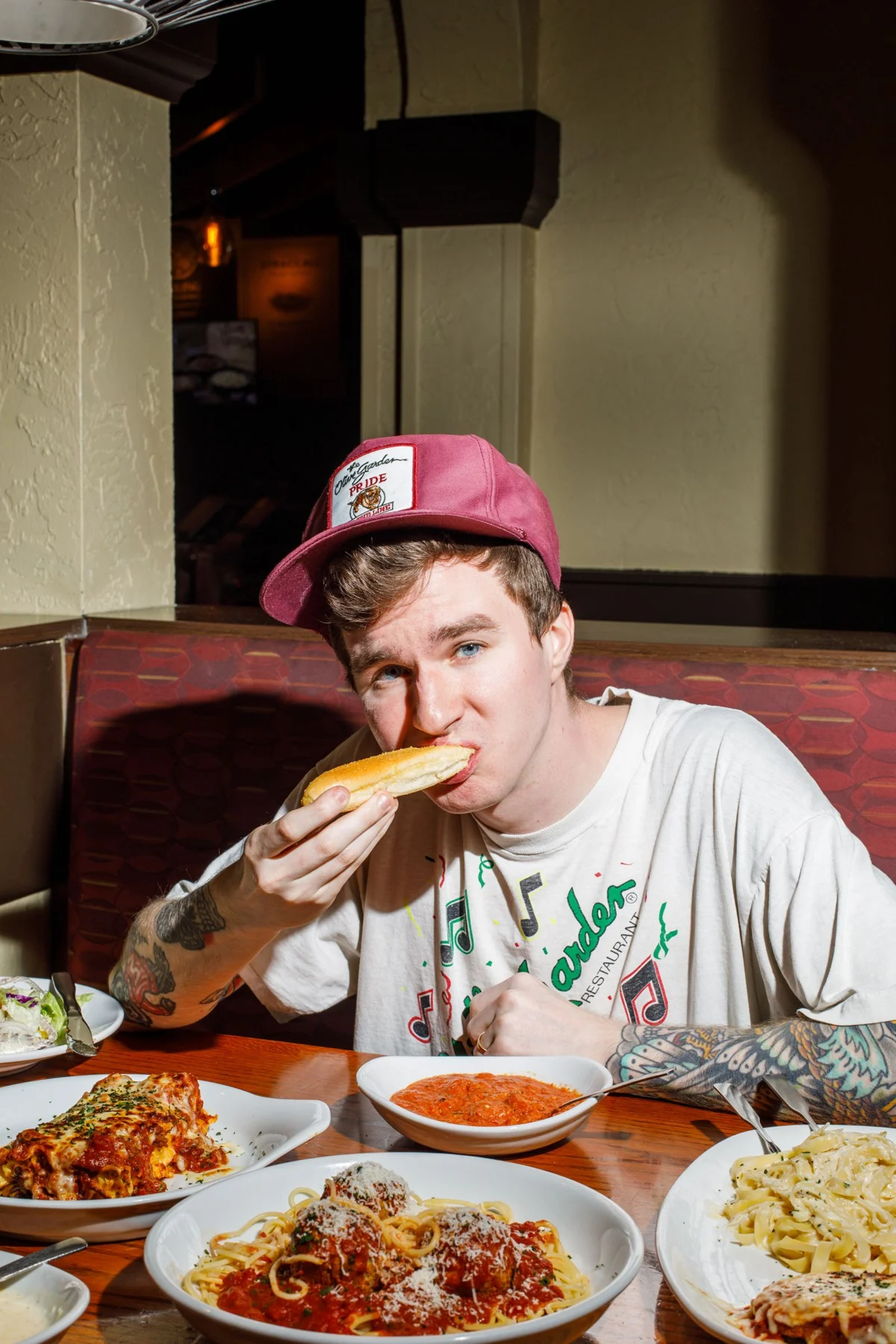
At the center of this exclusive phenomenon is Braden Sinclair, a 33-year-old data analyst and father of two residing in South Portland, Maine. Sinclair is one of only 50 individuals worldwide to possess the coveted, heavy gold-plated credential, which grants the bearer perpetual, complimentary access to the restaurant’s dine-in pasta menu for the duration of the promotion’s operational lifespan and the customer’s lifetime. Far from treating the card as a mere novelty, Sinclair has transformed his rare gastronomic privilege into a meticulous data science project, complete with a dedicated public dashboard that tracks his caloric intake, financial savings, and culinary explorations.
The Origin of an Unlikely Culinary Monicker
Sinclair’s relationship with Olive Garden predates his digital fame by decades, tracing back to his childhood in Maine and a temporary family relocation to Wisconsin. For Sinclair, the restaurant served as a comforting culinary anchor during a period of transition. His devotion deepened organically through frequent visits, eventually cementing itself in local lore during his Little League baseball days.
According to Sinclair, a childhood coach dubbed him "Breadsticks" after a particularly memorable birthday celebration that required an Olive Garden visit and resulted in an entire game missed due to overindulgence. Combined with his initials, B.S., and jersey number 11—which his coach noted resembled a pair of breadsticks—the moniker stuck for the remainder of the season.
Over the years, Sinclair’s integration with the brand evolved from casual patronage to active digital engagement. He maintained a lighthearted, humorous rapport with Olive Garden’s corporate social media accounts, trading remarks back and forth on Instagram. This playful digital footprint would ultimately intersect with a high-profile corporate marketing campaign in a way that neither party could have anticipated.
Chronology of the Never-Ending Evolution
To understand the rarity of Sinclair’s position, one must examine the history of Olive Garden’s promotional marketing. In 2014, the chain introduced the "Never Ending Pasta Pass," a limited-release ticket that allowed holders to consume unlimited pasta for a fixed duration of seven weeks. Priced at $100, the initial batch of 1,000 passes sold out in less than a second, establishing a precedent of viral scarcity.
Over the next several years, Olive Garden incrementally adjusted the promotion, expanding the pass duration to 13 weeks and gradually increasing the inventory to accommodate surging consumer demand. By the summer of 2019, batches of 10,000 passes routinely sold out in seconds, crashing servers and generating massive earned media coverage across mainstream news outlets.
However, the 2019 iteration included a pivotal, high-stakes twist that changed the trajectory of Sinclair’s life. Olive Garden announced that the first 50 customers to secure a standard Never Ending Pasta Pass would be given the exclusive opportunity to upgrade their passes to a lifetime credential for an additional fee of $400.
Capitalizing on his digital fluency and fortunate timing, Sinclair successfully navigated the digital queue to secure his initial pass, subsequently wiring the additional funds to claim the lifetime upgrade. Shortly thereafter, an Olive Garden vice president of marketing contacted him via FaceTime to confirm his status as one of the inaugural 50 lifetime passholders globally. Sinclair describes the moment as a surreal intersection of digital connectivity and divine intervention, bridging years of casual brand engagement with tangible, permanent reward.
Quantifying the Infinite: Data, Metrics, and Public Engagement
Armed with a professional background in data analytics and visualization spanning a decade, Sinclair chose to document his ongoing culinary journey rather than consume his meals in obscurity. In 2023, he launched Lifetimepastapass.com, an analytical portal designed to catalog every facet of his infinite tour of Italian-American dining.
The platform provides granular transparency into the practical application of a lifetime pass. Since claiming his card in 2019, Sinclair has logged 112 restaurant visits, consuming 152 bowls of pasta totaling 154,817 calories. From a purely economic standpoint, these meals represent a cumulative retail value of $1,878.87. Crucially, Sinclair maintains a strict ethical code regarding gratuity, having contributed $607.00 in tips to service staff across his visits, ensuring that his zero-dollar bill for food does not adversely impact the earnings of front-of-house employees.

The website also tracks geographic distribution, mapping his visits across the Eastern Seaboard with his primary home base remaining at the South Portland, Maine, location. Statistical breakdowns reveal distinct culinary preferences: rigatoni reigns as his preferred pasta shape, alfredo serves as his foundational sauce of choice, and crispy chicken fritta acts as his standard protein topping. Temporal charts illustrate his dining frequency, noting a personal record of 20 visits in October 2019 following the pass acquisition, contrasted with a more sustainable cadence of monthly visits in subsequent years.
Crowdsourcing the Menu: The Public Dashboard
Beyond static data visualization, Sinclair incorporated an interactive element designed to foster public participation. The website features a live voting module that allows internet users to dictate the ingredients of his next Olive Garden order.
Initially conceived as an inside joke intended to entertain a small circle of friends for a few days, the project gained unexpected traction after Sinclair shared the link on niche online forums. Within hours, the dashboard accumulated over 700 votes, forcing him to adapt to the collective will of the internet. This crowdsourcing experiment successfully disrupted his routine orders of rigatoni with alfredo and crispy chicken, introducing him to unexpected flavor combinations such as angel hair pasta paired with spicy alfredo sauce and crispy shrimp fritta, as well as a newly discovered affinity for meatballs mixed into alfredo sauce.
Operational Realities and Restaurant Reception
Wielding a physical gold card that explicitly states the bearer requires no bill introduces unique operational challenges within standard restaurant environments. Employee reactions vary considerably depending on staff tenure and familiarity with corporate promotions.
According to Sinclair, newer or frontline servers frequently express confusion, routinely taking the card back to the kitchen to consult with colleagues or management. While rare instances have required him to politely verify the legitimacy of the pass, management personnel generally recognize the artifact after brief internal verification. Sinclair expresses total empathy for the staff, noting that encountering a customer presenting a solid-gold corporate dining waiver naturally invites administrative inquiry.
Furthermore, Sinclair consciously adopts a low-impact philosophy to ensure his presence remains harmonious with daily restaurant operations. Mindful of viral internet videos depicting extreme passholders exploiting promotional terms with excessive, wasteful orders—such as bowls overflowing with grated parmesan cheese solely for shock value—Sinclair exercises restraint. He avoids demanding excessive refills or making unreasonable demands of the kitchen staff, viewing the privilege as an institutional trust that requires respectful stewardship.
The Social and Familial Implications of Endless Dining
Despite the novelty and statistical fascination surrounding the Lifetime Pasta Pass, the lifestyle introduces distinct social dynamics. Navigating a lifetime dining commitment as an adult with familial responsibilities requires careful calibration. Now a 33-year-old father of two, Sinclair acknowledges that his personal dietary habits have evolved to counteract the sheer density of carbohydrate-heavy meals, maintaining overall health through strict moderation outside of his Olive Garden excursions.
Moreover, social fatigue presents a recurring logistical hurdle. Persuading friends to repeatedly join him at a restaurant where he eats for free can strain social calendars. Because he prefers not to dine alone on every outing, he relies on a small circle of accommodating friends who are willing to accompany him, even if their own participation occasionally stops at sharing an order of breadsticks.
While his wife has supported his fixation since their high school dating years—even jokingly incorporating a promise to accompany him to Olive Garden into their wedding vows—family date nights without the children are typically reserved for alternative culinary venues. However, the lineage appears secure: Sinclair’s four-year-old eldest son displays a pronounced affinity for pasta, suggesting a second-generation devotee in the making, though Sinclair insists such visits will continue to be scheduled far away from competitive youth athletics schedules.
Broader Cultural Context and Industry Impact
The phenomenon of the Olive Garden Lifetime Pasta Pass underscores the profound power of gamified customer loyalty in the modern restaurant industry. By transforming a temporary marketing stunt into a permanent, highly restricted tier of membership, Darden Restaurants successfully cultivated an intense, decades-long brand evangelism that traditional advertising dollars struggle to purchase.
For Sinclair, the pass represents more than just free carbohydrates; it is a tangible piece of corporate history that intertwines personal nostalgia, digital data culture, and community interaction. As he continues to log his visits, refine his statistical dashboards, and allow internet strangers to choose his evening meals, Sinclair remains an anomalous figure in the annals of fast-casual dining: a single data point proving that sometimes, brand loyalty truly does last a lifetime.