



The passing of legendary actor Sam Neill at the age of 78 has marked the end of an extraordinary career that spanned over five decades, bridging the worlds of independent art-house cinema, high-concept blockbuster franchises, and dark psychological horror. Across an expansive filmography that included critical milestones such as My Brilliant Career, Possession, The Piano, and Jurassic Park, Neill established a reputation not only as a formidable screen presence but also as one of the film industry’s most grounded and universally respected figures. Following the announcement of his death, tributes from major cinematic institutions, longtime collaborators, and fans worldwide highlighted an artistic legacy defined by intellectual rigor, self-deprecating humor, and a rare ability to elevate genre material into high art.
Early Life and the Ascent of a Modern Everyman
Born in Northern Ireland in 1947 and raised in New Zealand, Michael John Neill adopted the stage name Sam before embarking on a career that would redefine the cinematic everyman. His early training in theater and documentary filmmaking in New Zealand laid the groundwork for an understated acting style that relied heavily on internal psychological realism. Unlike many of his contemporaries who relied on overt theatricality, Neill possessed a distinct knack for playing rational, deeply human characters thrust into extraordinary, often terrifying circumstances.
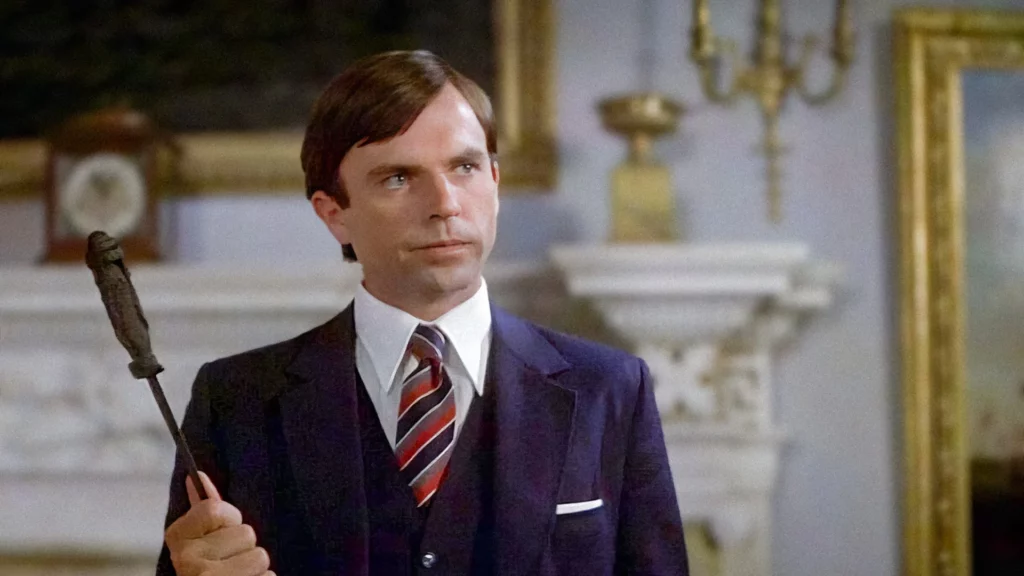
His breakthrough in international cinema arrived at the turn of the 1980s, a pivotal period that firmly established his range across diametrically opposed cinematic traditions. In 1979, he starred in Gillian Armstrong’s landmark Australian coming-of-age drama My Brilliant Career, captivating audiences alongside Judy Davis. His performance as a wealthy, charming suitor displayed a classic, romantic screen magnetism that drew favorable comparisons to mid-century Hollywood icons like Montgomery Clift and James Mason.

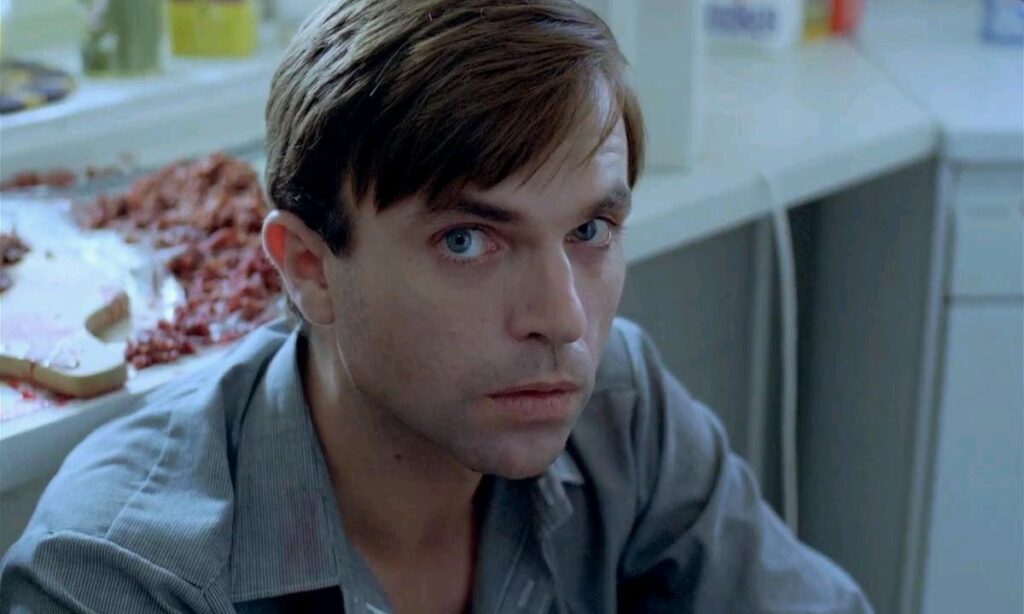
Yet, this conventional leading-man appeal was immediately subverted by his adventurous choices in the horror genre. In 1981, Neill took on two contrasting yet career-defining roles in horror cinema. He portrayed the adult Damien Thorn, the literal Antichrist, in the Hollywood studio sequel The Omen III: The Final Conflict. Simultaneously, he delivered a harrowing, visceral performance in Polish auteur Andrzej Żuławski’s deeply unsettling marital psychodrama Possession, opposite Isabelle Adjani. These disparate projects underscored an early refusal to be pigeonholed, setting a precedent for a career characterized by artistic fearlessness.
From Art-House Acclaim to Global Stardom
Throughout the 1980s and early 1990s, Neill cemented his status as a premier international actor through a series of critically lauded performances. He collaborated with eminent directors across the globe, starring in Fred Schepisi’s historical drama A Cry in the Dark (1988) alongside Meryl Streep, and Phillip Noyce’s tense psychological thriller Dead Calm (1989), where his stark, physical performance opposite a young Nicole Kidman garnered widespread critical acclaim. These roles demonstrated his exceptional chemistry with female costars, regularly anchoring complex dramatic narratives with quiet authority.
Despite his aversion to high-pressure commercial formulas—evidenced by his famously mortifying screen test for the James Bond franchise during the development of The Living Daylights (1987)—Neill achieved unprecedented global recognition in 1993 when he was cast as paleontologist Dr. Alan Grant in Steven Spielberg’s groundbreaking blockbuster Jurassic Park.
As the cautious, pragmatic scientist forced to confront living dinosaurs, Neill anchored the film’s state-of-the-art visual effects with a grounded, highly relatable sense of awe and terror. His performance directly shaped the commercial and critical success of the film, which grossed over $1亿元 globally upon its initial release and spawned a multi-billion-dollar franchise. Neill would later reprise the iconic role in Jurassic Park III (2001) and Jurassic World Dominion (2022), demonstrating a gracious willingness to return to the character that defined his mainstream legacy while maintaining a healthy sense of humor about his blockbuster status.

Exploration of Genre and Directorial Endeavors
Beyond mainstream franchises, Neill carved out a distinct niche in speculative fiction and psychological horror. In 1994, he delivered one of his most memorable lead performances in John Carpenter’s cosmic horror masterwork In the Mouth of Madness, playing an insurance investigator unraveling a descent into Lovecraftian madness. Three years later, he collaborated with director Paul W.S. Anderson on the sci-fi horror film Event Horizon (1997), portraying a brilliant scientist whose descent into psychosis results in some of the most grotesque and striking imagery in modern genre cinema.
Neill’s intellectual engagement with the medium extended behind the camera. In 1995, he co-directed the feature-length documentary Cinema of Unease: A Personal Journey by Sam Neill alongside Judy Rymer. The film offered a critical, introspective examination of New Zealand’s cinematic history, exploring themes of national identity, geographical isolation, and the lingering psychological impact of religious fundamentalism on the country’s artistic output. Through this project, Neill demonstrated a sophisticated understanding of cultural critique, cementing his status as a vital voice within his adopted homeland’s artistic community.
Environmental Activism, Agriculture, and Public Persona
Away from the film set, Neill cultivated a profoundly different life as an agriculturalist and environmental activist. Operating under the banner of TwoPaddocks, his celebrated organic wine estate in Central Otago, New Zealand, Neill became an enthusiastic proponent of sustainable farming. His public persona, particularly on social media platforms prior to his departure from X (formerly Twitter) in 2023, was defined by candid, humorous dispatches from his farm, frequently featuring interactions with livestock, fowl, and domestic animals.
Industry colleagues frequently noted that Neill’s off-screen demeanor mirrored his on-screen authenticity. In a public statement following his passing, director John Carpenter remembered him not only as a remarkable actor but as a dedicated father, farmer, and loyal friend. Neill’s commitment to environmental causes and various philanthropic endeavors remained a constant throughout his life, balancing the demands of international stardom with a grounding connection to the land.
Health Battles and Final Years
In March 2023, Neill publicly revealed that he had been diagnosed with stage-three angioimmunoblastic T-cell lymphoma, a rare form of non-Hodgkin lymphoma, during the promotion of Jurassic World Dominion. Rather than retreating from public life, Neill approached his diagnosis with characteristic candor and resilience, detailing his medical journey in his memoir, Did I Ever Tell You This?, published later that year.
Despite undergoing rigorous chemotherapy treatments that initially proved unsuccessful before transitioning to a successful maintenance regimen, Neill continued to work in television and film, maintaining an active professional schedule well into his seventies. In various interviews, he expressed a pragmatic and deeply appreciative outlook on mortality, famously stating that his primary concern was simply continuing to experience the joys of daily life.
Broader Implications and Industry Impact
The death of Sam Neill closes a significant chapter in contemporary cinema, reminding critics and audiences alike of the value of the reliable, versatile character actor who can effortlessly transition between micro-budget art-house productions and global tentpoles. His ability to maintain creative integrity while participating in some of the most commercially successful films of the late 20th century serves as a masterclass in modern screen acting.
As film historians and fans reflect on his extensive catalogue, Neill’s legacy remains anchored in the intellectual depth, emotional resonance, and unwavering humanity he brought to every role. Whether confronting primeval predators, navigating psychological labyrinths, or tending to his vineyards in Central Otago, Sam Neill embodied a rare synthesis of professional dedication and personal humility—qualities that will ensure his enduring presence in the cultural landscape for generations to come.