

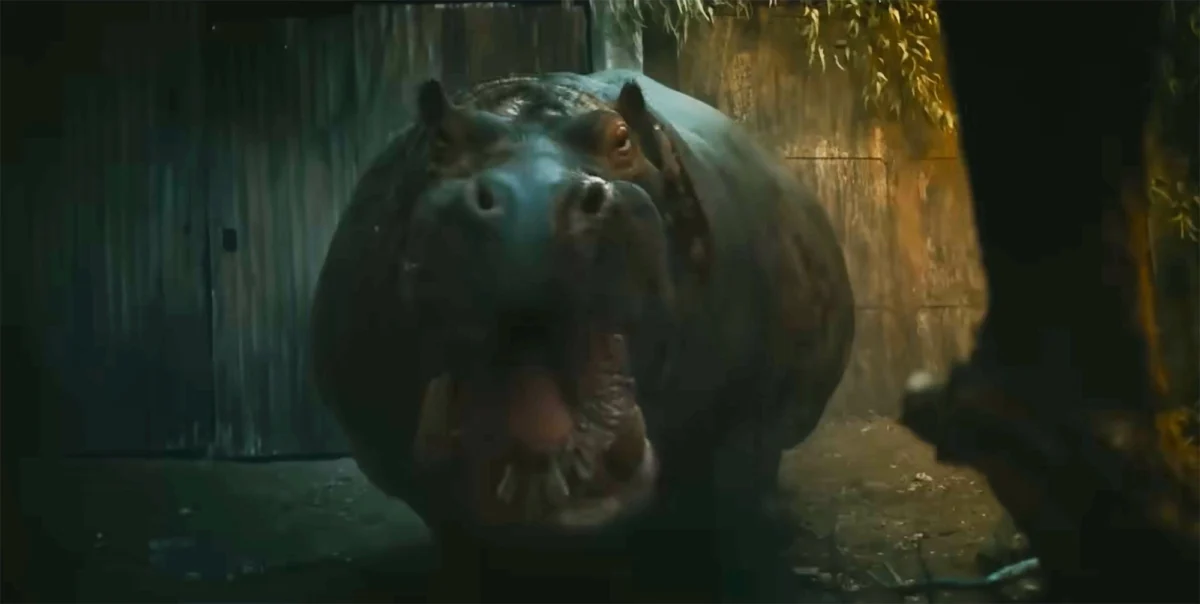
Aura Entertainment has officially unveiled the trailer for Hungry, a new animal horror film set to unleash a ravenous hippopotamus upon unsuspecting tourists in the treacherous Louisiana swamplands. The film, directed by genre veteran James Nunn, promises a brutal and entertaining creature feature, with its first official trailer making its debut on April 20, 2026, ahead of a direct-to-VOD release scheduled for June 23, 2026. This announcement immediately generated buzz within the horror community, particularly due to the film’s tongue-in-cheek, unofficial nod to the popular board game Hungry Hungry Hippos, positioning itself as a "bonkers dumb extra wild" take on the creature feature subgenre.
Synopsis and Premise: A Riverboat Tour to Hell
The core narrative of Hungry centers on a group of thrill-seeking tourists who embark on a riverboat tour through the perilous bayous of Louisiana. Their quest for an "exclusive adventure" leads them off the well-trodden path, where they soon find themselves in a desperate fight for survival against a monstrous, territorial hippopotamus. The tagline, "You’re safe as long as you stay out of the water," succinctly encapsulates the immediate threat posed by this aquatic predator. The film is described as a tense survival thriller, pitting human ingenuity and desperation against one of nature’s most formidable and often underestimated animals. The Louisiana swamp setting itself acts as a character, providing a claustrophobic, murky, and inherently dangerous backdrop that amplifies the sense of isolation and dread for the protagonists. This choice of location is critical, as the bayou’s dense foliage, winding waterways, and hidden depths create an ideal hunting ground for a massive, aggressive creature, making escape routes ambiguous and rescue improbable.
The film’s premise capitalizes on the primal fear of being hunted by a powerful, unreasoning force of nature. While many creature features opt for more conventional predators like sharks or crocodiles, Hungry distinguishes itself by choosing a hippopotamus – an animal notoriously aggressive and responsible for more human fatalities in Africa than any other large mammal. This real-world danger lends an unexpected layer of credibility to the fantastical horror premise, making the "hippo from hell" a genuinely terrifying prospect. The trailer hints at intense, visceral encounters, promising a relentless pursuit that will keep audiences on the edge of their seats as the tourists struggle to outwit and outlast the rampaging beast.
The Unofficial Board Game Homage and Marketing Strategy
One of the most intriguing aspects of Hungry‘s initial marketing is its playful, albeit unofficial, connection to the beloved children’s board game, Hungry Hungry Hippos. While Aura Entertainment explicitly states that the film does not hold the rights to the game and is not officially connected, the deliberate echoing of the title and the concept of a "hungry hippo" serves as a clever and effective marketing strategy. This approach taps into a collective cultural memory, instantly creating a memorable hook and a sense of ironic anticipation. It suggests a film that doesn’t take itself too seriously, yet is committed to delivering genuine horror and thrills.

The decision to lean into this unofficial homage without securing intellectual property rights highlights a growing trend in genre filmmaking. By referencing a widely recognized brand, even informally, filmmakers can generate significant buzz and curiosity without the substantial costs and complexities associated with official adaptations. This strategy leverages public familiarity and nostalgia, prompting viewers to imagine the outlandish premise of a childhood game twisted into a gruesome reality. It positions Hungry as a horror-comedy hybrid in spirit, even if the on-screen action is purely terrifying. This subtle yet impactful marketing choice is designed to cut through the crowded horror market, ensuring that Hungry stands out with its unique, if slightly absurd, premise. It also invites immediate discussion and speculation among potential viewers, further amplifying its reach through social media and word-of-mouth.
Behind the Camera: Director James Nunn’s Genre Expertise
At the helm of Hungry is English genre filmmaker James Nunn, a director with a well-established track record in crafting action-packed and suspenseful thrillers, often within the direct-to-VOD and streaming markets. Nunn’s filmography includes titles such as Tower Block, Eliminators, The Marine 5: Battleground and The Marine 6: Close Quarters, One Shot, Shark Bait, One More Shot, and most recently, Wildcat. His extensive experience across these various projects demonstrates a consistent ability to deliver high-octane narratives with tight pacing and effective action sequences, making him a fitting choice for a creature feature like Hungry.
Nunn’s previous work, particularly Shark Bait, indicates his familiarity with aquatic horror and the challenges of creating tension in water-based settings. His filmography suggests a director who understands the mechanics of genre filmmaking, excelling at delivering marketable, entertaining films within specific budgetary constraints. This experience is crucial for Hungry, where the effectiveness of the central threat – the hippo – will largely depend on convincing special effects and dynamic direction. His repeated collaboration with production companies focusing on the VOD market also speaks to his efficiency and reliability in delivering commercially viable projects. For Hungry, Nunn is not just a director but a craftsman honed in the art of the direct-to-consumer thrill ride, perfectly aligned with Aura Entertainment’s distribution strategy. His ability to elevate seemingly simple premises into engaging cinematic experiences bodes well for the film’s potential to become a cult favorite among creature feature enthusiasts.
Assembling the Cast: A Mix of Veteran and Rising Talent
The ensemble cast of Hungry features a mix of established actors and emerging talents, bringing depth and relatability to the group of imperiled tourists. Leading the charge is Madison Davenport, known for her roles in television series like From Dusk Till Dawn: The Series and films such as Noah. Her presence suggests a strong female lead capable of conveying both vulnerability and resilience in the face of unimaginable terror. Joining her is veteran actor Joaquim de Almeida, whose extensive career spans international cinema and television, including roles in Desperado, Clear and Present Danger, and Queen of the South. De Almeida often portrays authoritative or enigmatic figures, and his involvement adds a layer of gravitas and experience to the cast, potentially hinting at a character with a significant role in the group’s survival.
The supporting cast further rounds out the tourist group, with Olivia Bernstone, Tracey Bonner, Michel Curiel, Jim Meskimen, Samantha Coughlan, and River Codack all playing roles that will likely embody various archetypes common in survival horror – the skeptic, the brave leader, the panicking victim, and the tragic hero. The strength of a creature feature often lies not just in the monster itself, but in the audience’s investment in the human characters. A diverse and capable cast is essential to generate empathy and tension as they face overwhelming odds. Their performances will be key in grounding the fantastical premise in human drama, making the terror of the rampaging hippo all the more impactful.

Crafting the Creature: Special Effects and Production Details
The success of any creature feature hinges significantly on the believability and terror inspired by its antagonist. For Hungry, the creation of the "hippo from hell" involved a collaborative effort from various special effects teams. Makeup FX were designed by Dan Martin, while special FX were supervised by Kenneth Cassar of Extreme Effects. Visual FX, crucial for animating a massive CGI creature, were handled by Magic Dust VFX. This combination of practical and digital effects suggests a commitment to delivering a visually compelling and terrifying beast. Practical effects can provide tangible gore and immediate impact, while visual effects are essential for rendering the hippo’s scale, movements, and interactions with its environment and victims in a convincing manner.
The choice of Louisiana as the primary filming location is not merely aesthetic; it’s an integral part of the production’s design. The real-world challenges and atmospheric qualities of the swamp provide a natural, immersive backdrop that enhances the film’s authenticity. Navigating the murky waters, dense vegetation, and unpredictable wildlife of the bayou would have presented significant logistical hurdles for the production team, yet these very elements contribute to the film’s distinctive look and feel. The production by Ben Jacques under Signature Entertainment in the UK indicates an international collaborative effort, aiming for a global appeal. The careful attention to creature design and environmental immersion underscores the film’s ambition to stand out in a competitive genre market, promising audiences a truly immersive and terrifying encounter with its aquatic predator.
The Enduring Allure of Animal Horror
The animal horror subgenre holds a unique and enduring appeal for audiences, tapping into primal fears of nature’s indifference and superiority. Films like Jaws (1975) established the benchmark for this genre, proving that a single, relentless predator can be more terrifying than any supernatural entity. Following its success, a wave of creature features emerged, featuring everything from oversized sharks and crocodiles to snakes, bears, and even piranhas, each exploiting a specific animal’s inherent dangers and turning them into cinematic monsters. More recent examples like Crawl (2019) and The Meg (2018) continue to demonstrate the genre’s vitality, proving that audiences remain captivated by stories of humanity’s struggle against nature’s might.
Hungry fits squarely within this tradition, but with a unique twist by selecting the hippopotamus as its central antagonist. Hippos, despite their seemingly placid appearance, are incredibly aggressive, territorial, and powerful animals, capable of immense destruction. Their semi-aquatic nature makes them particularly fearsome in a swamp setting, blurring the lines between safety on land and danger in the water. This choice allows Hungry to explore different facets of animal horror, moving beyond the well-worn tropes of sharks and crocodiles. It exploits the unexpectedness of a hippo as a predator, leveraging its real-world ferocity to create a fresh sense of terror. The genre’s enduring popularity lies in its ability to ground horror in tangible, albeit exaggerated, realities, reminding audiences of the fragile place humans occupy within the natural world.
Distribution Strategy and Market Outlook
Aura Entertainment’s decision to release Hungry direct-to-VOD on June 23, 2026, reflects a pragmatic approach to film distribution in the contemporary market. The VOD model has become a dominant platform for genre films, particularly those with a clear target audience and a proven formula. This strategy allows the film to bypass the competitive and costly theatrical release cycle, directly reaching viewers in the comfort of their homes. For a film like Hungry, which promises intense, focused thrills, VOD offers an ideal avenue to maximize its reach among horror enthusiasts who actively seek out new creature features.

The summer release date positions Hungry as potential counter-programming to larger blockbuster releases, offering a distinct option for those looking for something different. Signature Entertainment’s involvement in the UK further indicates a robust international VOD strategy, aiming to make the film accessible to a global audience simultaneously. While a theatrical release often garners more prestige, the direct-to-VOD model allows for greater control over release timing, marketing spend, and direct engagement with the core fanbase. It also acknowledges the shifting consumption habits of modern audiences, who increasingly prefer the convenience and accessibility of streaming platforms. The success of Hungry on VOD will not only be measured by viewership numbers but also by its ability to generate buzz and become a talking point among genre aficionados, potentially establishing it as a new cult classic in the animal horror canon.
Anticipation and Implications for the Genre
The debut of the Hungry trailer has certainly piqued interest, positioning the film as a potentially "nuts" and "actually entertaining" addition to the creature feature landscape. Its unapologetic embrace of a ludicrous premise, combined with a seasoned genre director and a committed cast, suggests a film that understands its audience and aims to deliver pure, unadulterated thrills. The unofficial "Hungry Hungry Hippos" connection, while a clever marketing tactic, also sets a certain expectation for heightened, perhaps even over-the-top, action.
Should Hungry succeed in delivering on its promise of a terrifying and fun cinematic experience, it could further invigorate the animal horror subgenre, encouraging more filmmakers to explore unconventional predators and imaginative scenarios. Its direct-to-VOD success would also reinforce the viability of this distribution model for genre films, demonstrating that compelling concepts can find a wide audience without the traditional theatrical route. As audiences prepare for the June 23, 2026, release, the question remains: will this "extra mean, super pissed off hippo" become the next iconic creature to haunt our screens, or simply another wild ride in the vast swamp of horror cinema? The anticipation for Hungry certainly indicates a thirst for inventive, no-holds-barred horror, ready to embrace the absurdity and terror of a hippo on the rampage.