


The 2026 release of Jackass: Best and Last marks the definitive conclusion of a cultural phenomenon that has spanned more than a quarter-century, transitioning from a controversial cable television program into a multi-billion-dollar cinematic institution. Directed by Jeff Tremaine, the final installment serves as both a continuation of the franchise’s signature "sophomoric" humor and a reflective meditation on the aging process of its central cast. Tremaine, who has served as the architect of the series since its inception at the turn of the millennium, recently expressed a rare moment of sentimentality regarding the archival footage utilized in the final edit. Observing the cast—including Johnny Knoxville, Steve-O, and Chris Pontius—as young men at the start of their careers highlighted the unexpected longevity of a project originally designed for immediate cancellation.
The Genesis of a Subcultural Movement
The roots of the Jackass franchise are found not in the halls of traditional film schools, but in the gritty, irreverent pages of Big Brother, a skateboarding magazine where Tremaine served as an editor in the late 1990s. During this period, Tremaine’s primary objective was the curation of personalities rather than technical prowess. The magazine’s video supplements became the testing ground for a new form of "reality" entertainment that prioritized authentic reactions to physical absurdity over scripted narratives.
The pivotal moment for the franchise occurred when Johnny Knoxville filmed himself testing self-defense equipment, including a handgun, while wearing a bulletproof vest. This footage, originally intended for a Big Brother video, demonstrated Knoxville’s unique ability to engage an audience through high-stakes physical vulnerability. Recognizing the potential for a broader medium, Tremaine collaborated with Knoxville and director Spike Jonze to pitch a series that would eventually debut on MTV in 2000. Despite intense scrutiny from advocacy groups and politicians who viewed the show as a threat to public safety, the program achieved immediate cult status, leading to its first theatrical expansion in 2002.
From Guerilla Production to Major Studio Logistics
One of the most significant challenges Tremaine faced throughout his career was the transition from "guerrilla" filmmaking to high-budget studio production. In the early days of Jackass, the entire crew and cast could fit into a single van, often operating without permits to capture spontaneous interactions in public spaces. Notable incidents, such as the staged "kidnapping" of actor Brad Pitt at a Los Angeles hot dog stand, were executed with minimal planning and a skeletal staff.
As the franchise grew, so did the logistical complexity. By the production of Jackass Forever (2022) and the subsequent Jackass: Best and Last (2026), Tremaine found himself managing crews of over 120 people. This expansion created a paradox for a director whose primary goal was the preservation of spontaneity. To combat the "slow-moving machine" of a major studio, Tremaine developed a directorial style that emphasized "curated chaos"—placing unpredictable personalities in controlled environments and allowing their natural reactions to drive the narrative.
Navigating Censorship and the MPAA
The history of the Jackass films is also a history of negotiation with the Motion Picture Association of America (MPAA). Tremaine has frequently detailed the rigorous process of securing an "R" rating for films that pushed the boundaries of male nudity and physical stunts. A prominent example occurred during the production of Jackass 3D (2010), involving a slow-motion sequence featuring Chris Pontius. The MPAA’s restrictions on the duration of full-frontal nudity forced Tremaine to innovate; when the board demanded the shot be shortened, he instead utilized a sliding "black bar" censor that only revealed the action at the moment of impact.
These interactions with censors highlight Tremaine’s background in design and fine arts. Rather than viewing restrictions as purely obstructive, he treated them as creative hurdles that often resulted in more humorous or visually interesting outcomes. This "Safety Third" philosophy—a play on the traditional "Safety First" mantra—became the unofficial slogan of the production, emphasizing that while precautions were taken, the pursuit of the "shot" remained the primary objective.
The Physical Toll and the Ethics of the "Second Take"
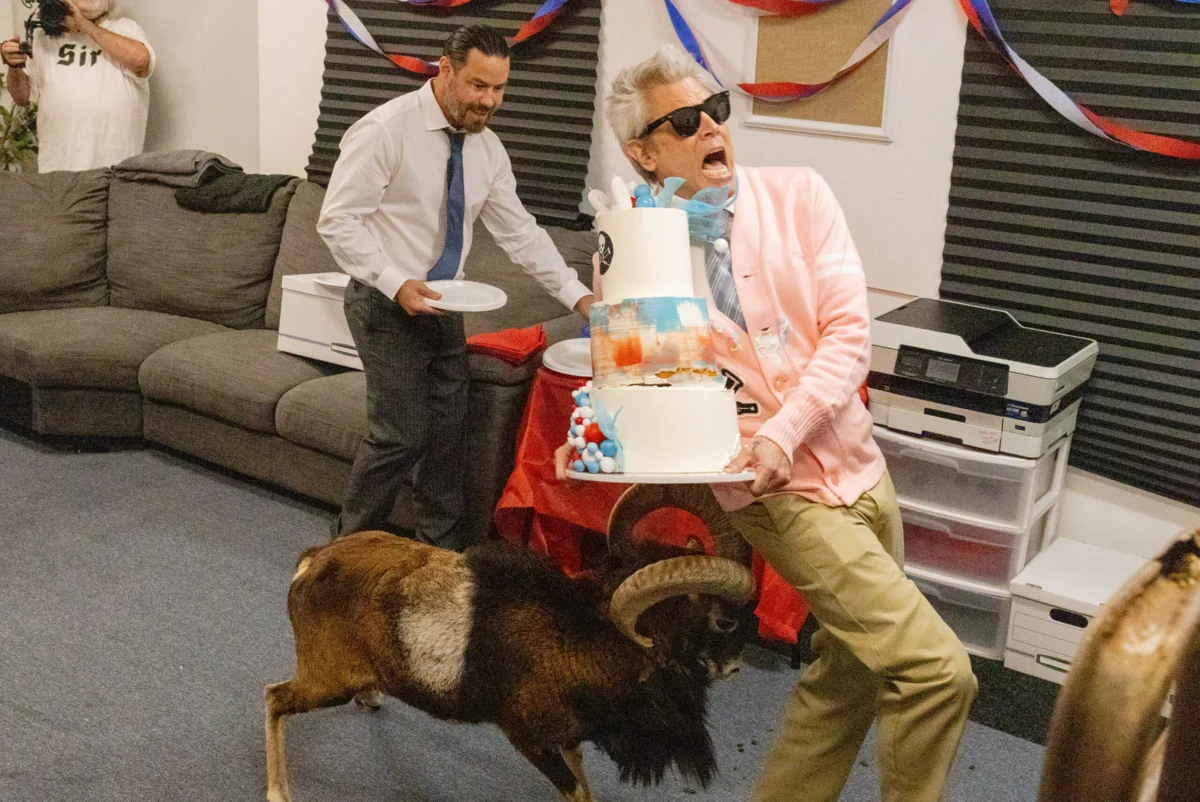
The Jackass franchise has long been defined by its high physical stakes, but as the cast entered their 50s, the risks became increasingly apparent. In Jackass: Best and Last, behind-the-scenes footage reveals the internal conflict Tremaine faced when stunts did not go as planned. A notable instance occurred during the filming of "The Magic Trick" for Jackass Forever, in which Johnny Knoxville was struck by a charging bull.
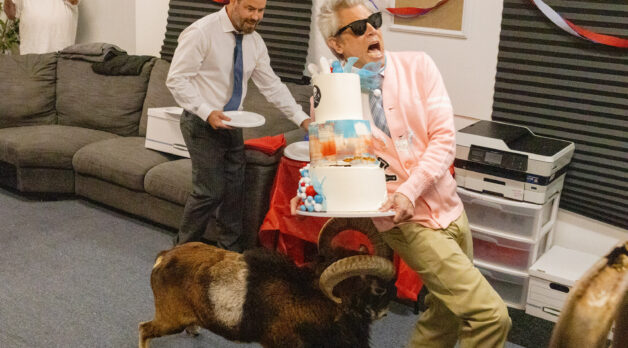
The first take resulted in Knoxville suffering two broken ribs, yet the footage was deemed insufficient for the film’s climax. Tremaine, acting as the final arbiter of quality, had to inform Knoxville that a second attempt was necessary. The subsequent take resulted in a brain hemorrhage and a broken wrist for Knoxville, sparking internal debates about the limits of physical comedy. Tremaine’s role in these moments is complex; he acts as both a protective friend and a demanding director, often stating that "getting it right is getting it wrong"—meaning the most successful stunts are often those that result in the most spectacular failures.
Critical Re-evaluation and the MoMA Gala
For much of its existence, the Jackass franchise was dismissed by critics as lowbrow entertainment. However, a significant shift in perception occurred around 2010, when the Museum of Modern Art (MoMA) in New York City hosted a gala and screening for Jackass 3D. This event marked the beginning of a critical re-evaluation, with scholars and journalists beginning to analyze the films through the lens of performance art, slapstick tradition, and the exploration of male bonding.
Tremaine has expressed a complicated relationship with this intellectualization. While he acknowledges the psychological depth of the friendships depicted on screen—notably the series’ implicit rejection of homophobia and its celebration of platonic intimacy—he remains wary of "high art" labels. He maintains that his primary motivation is the magnification of "stupidity," utilizing his fine arts degree to frame that stupidity in the most visually compelling way possible.
The Artistic Eye: From Punk Rock to Commercial Safety
Despite his reputation as a "knucklehead" filmmaker, Tremaine’s aesthetic is deeply rooted in punk rock culture and graphic design. This influence is visible in the highly stylized opening and closing sequences of the Jackass films, which often utilize slow-motion cinematography and classical music to create a sense of operatic absurdity.
This stylistic range led to one of the most unexpected chapters in Tremaine’s career: directing a safety PSA for American Airlines. The irony of a director known for reckless stunts being hired by a major airline to promote safety was not lost on Tremaine. However, the project demonstrated his ability to translate his "voice"—one characterized by clarity, rhythm, and visual engagement—into a mainstream corporate context. He has noted that whether he is painting, directing a feature film, or creating a safety video, the creative process remains identical: an attempt to find a singular, resonant voice in a world of noise.
Impact and Cultural Implications
As Jackass: Best and Last concludes the series, the franchise’s impact on the media landscape is undeniable. It pioneered the "user-generated content" aesthetic years before the rise of YouTube and TikTok, and it proved that there was a massive global market for unscripted, raw physical comedy. Financially, the franchise has been an overwhelming success for Paramount Pictures; the first film alone grossed approximately $79 million on a $5 million budget, and subsequent sequels have consistently outperformed their predecessors.
Beyond the box office, Tremaine’s work has left a lasting impression on the definition of modern masculinity. By showcasing men who are willing to be vulnerable, foolish, and physically affectionate with one another, Jackass provided an alternative to the stoic, hyper-masculine archetypes of the 20th century.
Conclusion: The Finality of the 2026 Chapter
At nearly 60 years old, Jeff Tremaine views the conclusion of Jackass as a necessary evolution. While he admits to still finding humor in the same "immature" concepts that fueled his early career, the physical realities of the cast and the changing landscape of cinema suggest that Best and Last is the appropriate stopping point. The film serves as a comprehensive archive of a brotherhood that survived two decades of self-inflicted trauma, guided by a director who successfully masqueraded as a prankster while operating as an auteur. As the franchise enters the annals of film history, Tremaine’s legacy will be defined by his ability to transform the crude into the cinematic, proving that even the most "stupid" ideas can achieve a form of immortality when captured with the right eye.