



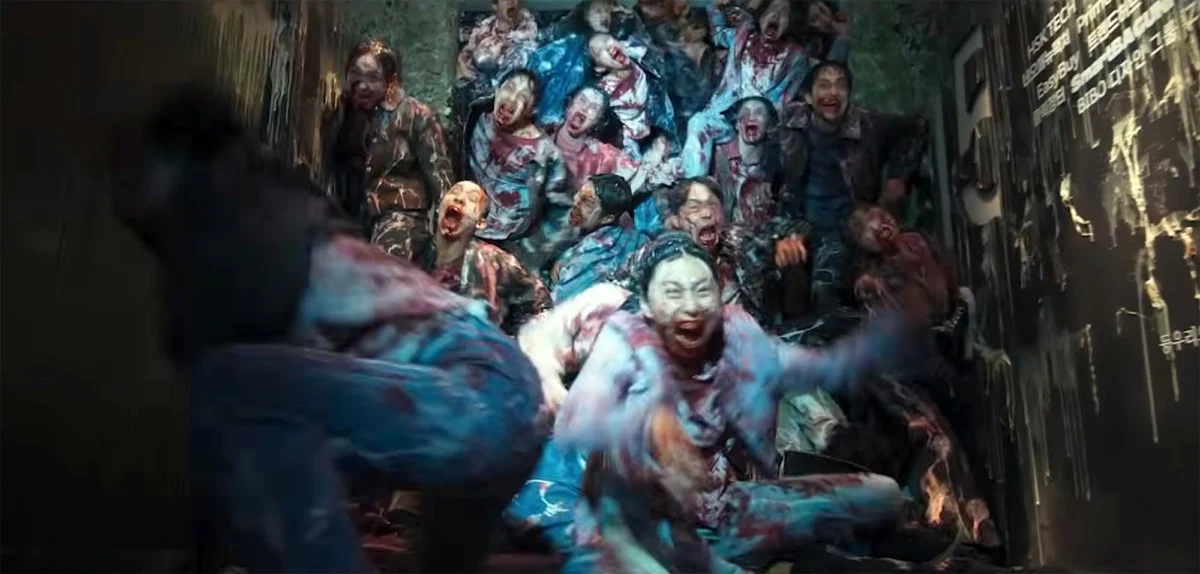
Well Go USA has released the official US trailer for Colony, the latest K-zombie horror thriller from acclaimed director Yeon Sang-ho, signaling its imminent arrival in American theaters. Scheduled for a late summer debut on August 28th, 2026, the film promises a fresh, terrifying take on the undead, featuring rapidly evolving, "information-exchanging" infected creatures that push the boundaries of the genre. This new footage offers a deeper look into the film’s unique premise, showcasing a horrifying "mega zombie" hivemind connected by a grotesque, white organic substance, a concept that immediately distinguishes Colony from its predecessors.
The Director’s Vision: Yeon Sang-ho’s Enduring Legacy in K-Horror
Yeon Sang-ho, a name synonymous with the global K-zombie phenomenon, returns to the genre he helped popularize with Colony. His filmography is a testament to his versatility and mastery of genre cinema, often blending intense action, social commentary, and psychological depth within fantastical narratives. His breakthrough live-action feature, Train to Busan (2016), was a critical and commercial triumph, captivating international audiences with its high-octane action, poignant character arcs, and claustrophobic tension aboard a speeding train amidst a zombie apocalypse. The film grossed over $92 million worldwide on a modest budget, cementing K-horror’s place on the global stage and inspiring numerous imitations and homages.
Prior to Train to Busan, Yeon had already established himself with animated features like The King of Pigs (2011) and The Fake (2013), both gritty, unflinching examinations of societal ills. He then extended the Train to Busan universe with the animated prequel Seoul Station (2016) and the live-action sequel Peninsula (2020), which explored the aftermath of the outbreak in a desolate, post-apocalyptic Korea. Beyond zombies, Yeon has delved into various other genres, including the superhero film Psychokinesis (2018), the dystopian sci-fi JUNG_E (2023), and the supernatural thriller series Hellbound (2021-present), which earned significant international acclaim for its intricate world-building and philosophical themes. His recent works also include The Bequeathed (2024), Revelations (2025), The Ugly (2025), and the acclaimed Netflix series Parasyte: The Grey (2024), an adaptation that showcased his ability to translate existing intellectual property into a distinctively Korean narrative. With Colony, Yeon Sang-ho is poised to redefine the zombie archetype once again, building upon his reputation for innovation within horror.
The Evolution of the Infected: "Colony"’s Unique Premise

The core terrifying innovation of Colony lies in its portrayal of "evolving zombies" capable of "information exchange." The trailer tantalizingly hints at a profound shift in the nature of the threat. Traditional zombies, while formidable in numbers, typically operate on primal instincts – a relentless drive to consume. Colony introduces a more sophisticated, collective intelligence, suggesting that the infected are not merely reanimated corpses but components of a larger, interconnected organism. The phrase, "First they crawled… now they seem to be evolving through information exchange," delivered with chilling gravitas in the trailer, underpins this radical departure.
This concept of a "mega zombie" or a "colony" linked by a "gross white stuff" implies a hivemind, a terrifying collective consciousness that could learn, adapt, and strategize. Such an entity moves beyond simple brute force, posing a threat that is intellectual as well as physical. This narrative choice offers rich ground for exploring themes of individuality versus collective identity, the dangers of unchecked scientific advancement, and the horrifying implications of a biological threat that can transcend the limitations of individual hosts. It pushes the boundaries of biological horror, suggesting a level of organization and adaptability previously unseen in the genre. This evolution could present survivors with unprecedented challenges, demanding not just physical prowess but also strategic thinking to combat a foe that operates as a single, distributed superorganism. The film’s title, Colony, therefore, takes on a dual meaning, referring not only to the isolated human survivors but, more chillingly, to the interconnected network of the infected themselves.
A Stellar Korean Ensemble Cast
Colony boasts an impressive ensemble cast, featuring some of South Korea’s most recognized and respected talents. Leading the charge is Gianna Jun (also known as Jun Ji-hyun), a global icon renowned for her roles in films like My Sassy Girl (2001) and The Thieves (2012), and her television dramas such as My Love from the Star (2013-2014) and Kingdom (2019-2021). Her presence brings considerable star power and a track record of strong, resilient characters. She portrays Se-jeong, a biotechnology professor whose conference becomes the epicenter of the outbreak, placing her at the heart of the unfolding crisis and likely requiring her scientific acumen to understand and combat the evolving virus.
Joining her are Koo Kyo-hwan, celebrated for his captivating performances in Peninsula (where he previously collaborated with Yeon Sang-ho), D.P. (2021-2023), and Escape from Mogadishu (2021), and Ji Chang-wook, a prominent actor known for his action roles in dramas like Healer (2014-2015) and The K2 (2016), as well as films such as Fabricated City (2017). The cast also includes Shin Hyun-been (from Hospital Playlist (2020-2021) and Reborn Rich (2022)), Kim Shin-rock (known for her roles in Hellbound (2021) and Reborn Rich (2022)), and veteran actor Go Soo (The Front Line (2011), Money Game (2020)). This powerhouse lineup suggests a film rich in character development and intense dramatic performances, elevating it beyond a mere genre exercise. The combination of established stars and critically acclaimed actors reinforces the film’s artistic ambition and its potential to deliver both visceral thrills and compelling human drama.
Journey to the Screen: Production and Festival Premiere

The journey of Colony from concept to screen has been marked by significant milestones. The screenplay, co-written by Yeon Sang-ho and Choi Gyu-seok, indicates a collaborative effort in crafting the intricate narrative and innovative zombie lore. Produced by Yoomin Hailey Yang, the film benefited from a robust production cycle, culminating in its world premiere at the prestigious 2026 Cannes Film Festival.
The selection of Colony for the Midnight Section at Cannes is noteworthy. The Midnight Section is renowned for showcasing genre films that push boundaries and offer unique cinematic experiences, often featuring horror, action, and cult cinema. Previous selections have included films that went on to achieve significant international recognition, validating their artistic merit within a genre context. For Colony, its inclusion at Cannes underscored its status as a highly anticipated genre film, capable of captivating both genre enthusiasts and broader critical audiences. The festival premiere in May 2026 generated considerable buzz, though initial reviews were mixed. Some critics lauded its audacious vision and relentless pacing, praising Yeon Sang-ho’s continued innovation within the zombie genre. Others found aspects of its execution uneven or its horror elements overly graphic, reflecting the diverse palates within film criticism and the inherent polarizing nature of ambitious horror. Despite varying opinions, the Cannes premiere undeniably elevated the film’s international profile, setting the stage for its global release. Following its festival debut, Colony also saw theatrical releases in several international territories in June 2026, building momentum for its broader distribution.
Global Distribution and US Release Strategy
Well Go USA, a prominent distributor of Asian cinema in North America, has strategically acquired the rights to Colony. The company has a strong track record of bringing critically acclaimed and commercially successful K-horror and action films to US audiences, including many of Yeon Sang-ho’s previous works. Their decision to release Colony in US theaters on August 28th, 2026, places it at the tail end of the competitive summer movie season, positioning it as a potential late-summer genre hit. This timing allows the film to capitalize on the lingering demand for exciting cinematic experiences before the autumn awards season begins to dominate.
The release of the official US trailer, direct from YouTube, serves as a crucial marketing tool, designed to generate excitement and inform potential moviegoers about the film’s unique selling points. Well Go USA’s strategy often involves a combination of theatrical releases, followed by digital and home video distribution, maximizing the film’s reach and profitability in the North American market. The success of Colony in the US will not only contribute to Yeon Sang-ho’s growing international stature but also reinforce Well Go USA’s position as a key player in the distribution of foreign-language genre cinema. The global appetite for Korean entertainment, often referred to as the "Hallyu" wave, continues to grow, encompassing not just K-pop and K-dramas but also a robust and innovative film industry. Colony is poised to ride this wave, offering a compelling addition to the canon of contemporary Korean cinema.
The Enduring Appeal of K-Horror and Zombie Cinema

The zombie genre, though often deemed saturated, consistently finds ways to reinvent itself, and Korean cinema has been at the forefront of this evolution. From George A. Romero’s foundational works exploring consumerism and societal breakdown to modern interpretations focusing on speed, contagion, and survival, zombies have served as potent metaphors for various human anxieties. K-zombies, in particular, have distinguished themselves through their unique blend of breakneck pacing, emotionally resonant character drama, intense social critique, and often, highly agile and aggressive infected.
Yeon Sang-ho’s contributions, especially Train to Busan, infused the genre with a new vitality, demonstrating that even a well-worn premise could yield fresh narratives and breathtaking action sequences. Colony continues this tradition by introducing a conceptual leap in the nature of the zombie threat. The "information exchange" and "mega zombie" hivemind are not just superficial changes; they represent a fundamental shift in the existential horror. Instead of just outrunning or outfighting individual threats, survivors might face a collective intelligence that learns from its mistakes, adapts to its environment, and operates with a chilling, unified purpose. This innovation taps into contemporary fears about pandemics, technological interconnectedness, and the potential for a loss of individual autonomy within a larger, overwhelming system.
The mixed reviews from Cannes, while indicating some critical division, often reflect the ambition of a film attempting to push boundaries. Such films frequently find their true audience and cult status in the long run, particularly within the horror community, which often values originality and intensity over universal critical consensus. Colony‘s release late in the summer of 2026 positions it to capture an audience eager for something genuinely new and terrifying in the horror landscape.
Anticipation and Future Prospects
As the US release date for Colony approaches, anticipation is high among fans of Yeon Sang-ho and K-horror alike. The film represents not just another entry in the zombie genre but a potential milestone in its evolution. By introducing a new layer of biological complexity and collective intelligence to the infected, Colony aims to redefine what a zombie threat can be, offering a blend of visceral horror and intriguing scientific speculation.
The success of Colony will undoubtedly influence future genre filmmaking, potentially inspiring other creators to explore more complex biological and sociological dimensions of their fictional threats. It also further solidifies South Korea’s reputation as a global powerhouse in producing high-quality, innovative genre cinema that resonates with diverse audiences worldwide. With its compelling cast, visionary director, and unique premise, Colony is set to deliver a non-stop thrill-ride packed with everything gross and scary, promising to leave a lasting impression on the landscape of modern horror.