
The landscape of the American television industry prepares for one of its most complex awards seasons as the 78th Primetime Emmy Awards approach on September 14, 2026. While the Academy Awards often dominate the cultural conversation regarding cinematic achievement, the Emmys represent a significantly larger logistical and categorical undertaking. The upcoming ceremony will feature the distribution of 23 awards during the main telecast, spanning the traditional pillars of comedy, drama, and limited series, alongside variety and reality competition programs. This main event is preceded by two Creative Arts Emmy ceremonies, where approximately 100 additional trophies are awarded to recognize technical crafts and specific achievements, including guest acting performances.
The 2026 awards cycle is marked by a series of significant regulatory shifts enacted by the Television Academy. These changes have already begun to reshape the field of nominees and have sparked intense debate regarding the eligibility of high-profile performers and the structural definition of variety programming. As the industry navigates a period of intense media consolidation and heightened political scrutiny, the upcoming Emmy ceremony is positioned to be as much a reflection of the current sociopolitical climate as it is a celebration of artistic merit.
Regulatory Overhauls and the Disqualification of Jon Hamm
Central to this year’s technical controversies is a new rule implemented by the Television Academy designed to clarify the distinction between recurring and guest performances. Under the new regulation, a performer is barred from receiving a nomination in a guest acting category for a role that has previously earned them a nomination in a lead or supporting category. The rule was established to prevent "category banking," where established stars could theoretically dominate guest categories for brief appearances in roles they previously played as series regulars.
A historical precedent for this issue is the 2021 win by Claire Foy for her brief appearance as a young Queen Elizabeth in the fourth season of The Crown. Foy had previously won the Emmy for Best Actress in a Drama in 2018 for the same role. While Foy’s win was legal under the rules of that time, the Academy has moved to ensure such overlaps no longer occur.
The first major casualty of this rule change in 2026 was Jon Hamm. Apple TV+ mistakenly submitted Hamm for a guest actor nomination for his work on The Morning Show. However, because Hamm had received a supporting actor nomination for the same character in 2024, the Academy disqualified his guest submission. Despite this setback, Hamm remains a formidable contender in the 2026 cycle, holding eligibility for two other Emmys for his work in separate projects.
The Re-Merger of Variety Categories
Perhaps the most impactful structural change of the season is the reunification of the variety categories. For the first time in several years, the Academy has merged variety talk series and variety sketch series back into a single entity: Outstanding Variety Series. This move reverses a 2015 decision that split the field to allow sketch shows like Inside Amy Schumer and Key & Peele to compete without being overshadowed by nightly talk shows.
The history of the variety category has been one of constant flux since its inception in 1951. In the early 1970s, the category was briefly split to prevent talk shows like The Tonight Show with Johnny Carson from competing directly with musical-sketch programs like The Carol Burnett Show. However, from the mid-1970s through 2014, the category remained a single entity, often leading to incongruous matchups. Notable examples include 1995, when The Tonight Show with Jay Leno defeated MTV Unplugged, and the late 1990s, when Politically Incorrect competed against Muppets Tonight.
By the mid-2000s, the category was dominated by late-night talk shows, specifically The Daily Show with Jon Stewart, which secured a record-breaking ten consecutive wins. The 2015 split provided a brief respite for sketch comedy, allowing Saturday Night Live (SNL) to embark on a six-year winning streak. However, following the 2023 decision to move HBO’s Last Week Tonight with John Oliver into the scripted variety category—where it earned three additional Emmys—the Academy has now opted for a total merger. This creates a high-stakes environment where John Oliver, Stephen Colbert, Jimmy Kimmel, and the ensemble of Saturday Night Live will face off in a single, consolidated field.
The Cancellation of The Late Show and the Skydance Merger
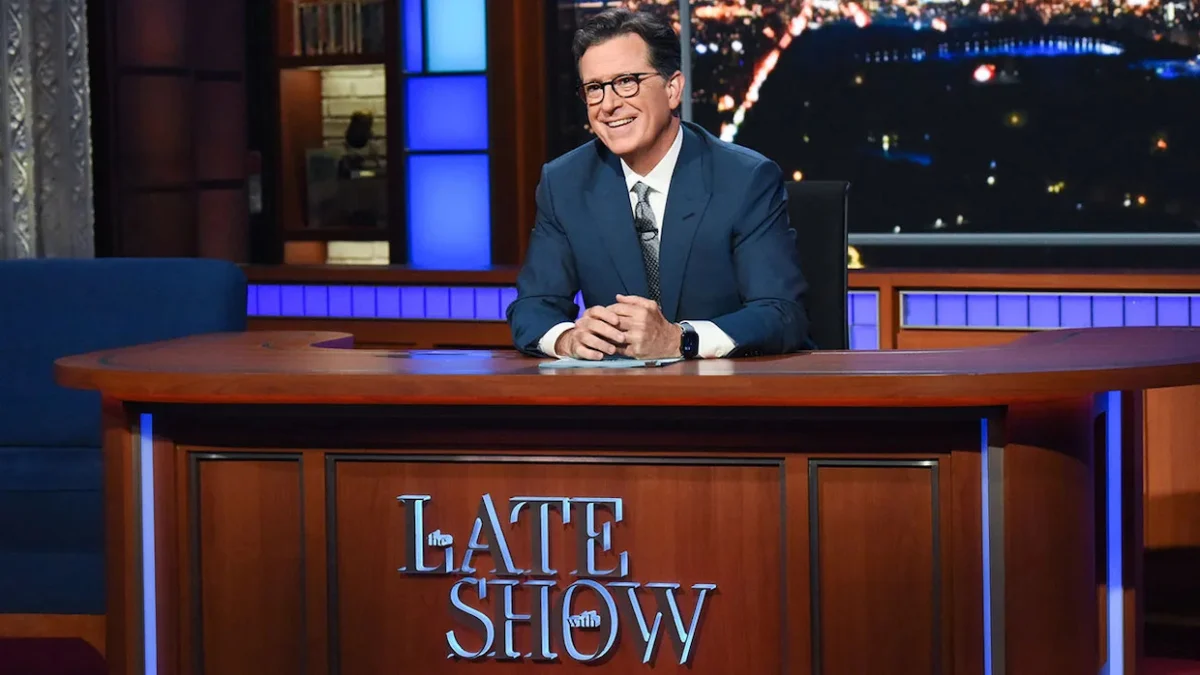
The Emmy race is further complicated by the recent upheaval at CBS. The Late Show with Stephen Colbert, a cornerstone of the network’s programming since Colbert succeeded David Letterman in 2015, aired its final episode on May 21, 2026. The cancellation brought an end to a franchise that had been a late-night staple for 33 years.
The termination of the show followed the acquisition of CBS’s parent company, Paramount Global, by Skydance Media, led by David Ellison. Corporate communications from Skydance cited financial considerations, claiming the show was incurring annual losses of $40 million. However, industry analysts and media critics have questioned this narrative, pointing to the show’s consistent ratings and its status as a prestige property for the network.
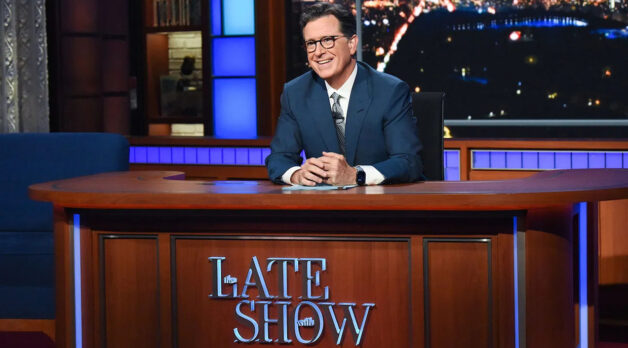
Speculation has persisted that the cancellation was influenced by Colbert’s frequent and sharp criticism of the Trump administration. Observers have noted the professional and personal ties between the Ellison family and current administrative figures, leading to theories that the cancellation was a strategic move to de-escalate political friction. Colbert’s final season was characterized by a series of high-profile guest appearances and a "swan song" atmosphere, culminating in a Talk Series Emmy win in September 2025. For many Academy voters, the 2026 ceremony represents the final opportunity to honor Colbert’s tenure, potentially turning a vote for The Late Show into a symbolic statement against corporate and political interference in media.
The Jimmy Kimmel Controversy and Broadcast Resilience
While Colbert faced cancellation, ABC’s Jimmy Kimmel dealt with direct regulatory and political pressure. On September 17, 2025, Jimmy Kimmel Live! was briefly removed from the air following a monologue in which Kimmel made controversial remarks regarding political activist Charlie Kirk. The incident drew immediate condemnation from the Trump administration and FCC Chairman Brendan Carr.
The situation escalated when major affiliate groups, including Nexstar Media Group and Sinclair Broadcast Group, reportedly threatened to pull the program from their ABC stations. The future of the show remained in jeopardy for several days until a massive public backlash and threats of viewer boycotts forced a reversal. Kimmel returned to the air on September 23, 2025, to record-breaking numbers. The return episode attracted 6.26 million viewers, a series high, while the opening monologue garnered 26 million views across various social media platforms.
Despite being a consistent nominee for the past 12 years, Kimmel has yet to secure a win in the variety series category. Analysts suggest that the recent attempts to censor the program may galvanize support among Academy members who view the Emmys as a platform for defending the First Amendment and the independence of late-night satire.
The Enduring Legacy of Saturday Night Live
Amidst the volatility of late-night talk shows, Saturday Night Live remains a formidable contender. Now in its 51st season, the program continues to benefit from the momentum of its 50th-anniversary celebrations held in 2025. While the show has historically been less focused on direct political confrontation than Colbert or Kimmel—famously hosting Donald Trump during his 2015 campaign—it remains a vital part of the cultural zeitgeist.
The 51st season saw the departure of Bowen Yang, a significant loss for the ensemble given his four previous acting nominations. However, the show has successfully pivoted toward more "absurdist" comedy in 2026, diversifying its appeal. Furthermore, the international expansion of the brand, specifically the successful launch of SNL UK broadcasting live from London, has reinforced creator Lorne Michaels’ status as a dominant force in the industry.
Historical Predictors and the Fifth Slot
While the battle between Colbert, Kimmel, Oliver, and SNL dominates the headlines, the fifth nomination slot in the variety category is likely to be filled by The Daily Show. Since the return of Jon Stewart to the Monday night desk and the implementation of a rotating host system for the remainder of the week, the program has maintained its relevance and critical standing. The Trevor Noah-hosted era previously secured a win once Last Week Tonight was moved out of the category, and the multi-host format earned a nomination in 2025. Stewart’s presence provides the show with a "legacy" appeal that resonates with older Academy members while the rotating hosts maintain a connection with younger demographics.
Broader Impact and Industry Implications
The 78th Primetime Emmy Awards serve as a barometer for the current state of American media. The merger of categories, the disqualification of major stars due to technicalities, and the shadow of political censorship all point to an industry in the midst of a significant identity crisis.
For the liberal-leaning majority of the Television Academy, the ballot represents more than just an artistic choice; it is a mechanism for political expression. The outcome of the Variety Series category, in particular, will be scrutinized for what it says about the industry’s willingness to stand behind creators who have been targeted by government officials or corporate consolidation.
As the September 14 ceremony approaches, the focus remains on whether the Academy will favor the consistent excellence of John Oliver, the legacy of the departing Stephen Colbert, or the resilience of Jimmy Kimmel. Regardless of the winners, the 2026 Emmys are set to be a definitive moment in the history of televised awards, highlighting the inextricable link between entertainment and the political landscape of the United States. Following the ceremony, the industry anticipates the usual high-volume discourse on social media platforms, further cementing the event’s role as a central fixture in the national conversation.