

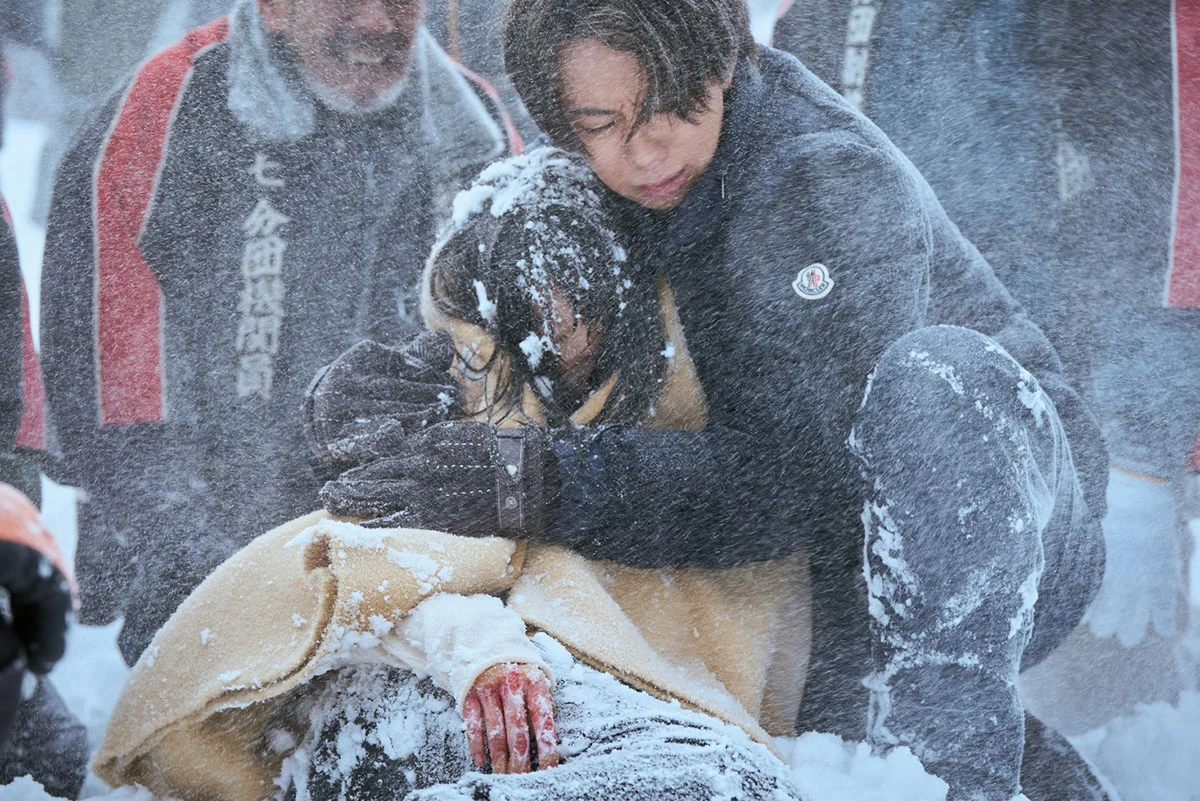
A chilling new cinematic experience is set to redefine the landscape of Japanese horror, as director Eisuke Naito, acclaimed for his innovative work on "Liverleaf," unveils his latest project, tentatively titled "The Terror of White." This highly anticipated film plunges audiences into a world consumed by an enigmatic phenomenon known as the "white presence," a spectral force that infiltrates snowy regions, distorting reality and unraveling the fabric of everyday life. The film marks a significant milestone for lead actor Hiromitsu Kitayama, his first starring role in the horror genre, while co-star Chihiro Kato, widely recognized as Cent Chihiro Chittiii, embarks on a new and demanding artistic challenge.
The narrative centers on a family whose once-idyllic existence is shattered by the insidious arrival of a "white apparition." This entity, shrouded in mystery, triggers a cascade of psychological disturbances, leading to distorted perceptions, erratic behavior, and the quiet, yet swift, disintegration of normalcy. Set against a backdrop of a world sealed off by relentless snow, "The Terror of White" promises to be a visceral exploration of encroaching dread and the fragility of human sanity when confronted by the unknown.
A Visionary Creative Team Assembles
Behind this ambitious project is a powerhouse of talent, meticulously curated to bring "The Terror of White" to life. Director Eisuke Naito has a proven track record of pushing the boundaries of J-horror, injecting fresh perspectives and unsettling atmospheres into the genre. His previous work, "Liverleaf," garnered critical acclaim for its bold visual style and psychological depth, setting a high bar for his current endeavor.
The screenplay, penned by Eriko Katagiri, is a testament to her mastery of the horror narrative. Katagiri’s previous triumph at the 3rd Japan Horror Film Awards, where she secured the Grand Prize, underscores her ability to craft compelling and genuinely frightening stories. Her contribution to "The Terror of White" is expected to be a key driver of its suspense and thematic resonance.
Further elevating the film’s aesthetic and emotional impact is the involvement of cinematographer Hidetoshi Shinomiya. Known for his evocative work on the critically lauded film "Drive My Car," Shinomiya is tasked with transforming the film’s snowy landscape into a character in itself. His lens will capture the stark beauty and inherent cruelty of the "white world," promising a visual experience that is both quiet and profoundly unsettling. The collaboration between Naito and Shinomiya is poised to create a unique visual language that amplifies the film’s themes of isolation and psychological disintegration.
The Unfolding Narrative: A Descent into the Whiteout
The core of "The Terror of White" lies in its exploration of the psychological toll of an inescapable, otherworldly presence. The film posits that the stronger the blizzard, the more it severs connections to reality, leading individuals astray. This metaphorical representation of the blizzard as a force that robs people of sight and reason is central to the film’s terror. It’s not merely a backdrop; it is an active antagonist, a relentless force that amplifies the internal struggles of the characters.
The "white presence" is described as something palpable yet elusive, a source of profound unease that infects the minds of those who sense it. The article hints at a phenomenon that doesn’t necessarily manifest as a physical monster but rather as an invasive psychological force. This approach aligns with contemporary trends in horror that prioritize existential dread and psychological unraveling over jump scares. The idea that "everyday life quietly, yet all at once, begins to collapse" suggests a creeping, insidious form of horror, one that erodes the foundations of normalcy before the full impact is realized.
The film’s promise of "the terror of a hopeless whiteout, and the strange beauty lurking beyond it" suggests a dual nature to the antagonist. While it brings dread and despair, there might be an alluring, almost hypnotic quality to its influence, a dangerous fascination that draws characters deeper into its grasp. This juxtaposition of terror and beauty is a hallmark of effective atmospheric horror, creating a complex emotional response in the audience.
Industry Buzz and Audience Anticipation
The announcement of "The Terror of White" has generated considerable excitement within the film industry and among horror aficionados. The pairing of Hiromitsu Kitayama in his first leading horror role and Chihiro Kato, an artist known for her diverse and impactful performances, is particularly noteworthy. Kitayama’s transition into the genre is seen as a significant career development, and his performance will be closely watched. Kato’s willingness to take on a "new kind of challenge" indicates a script and character that demand a departure from her previous work, hinting at a complex and potentially transformative role.
The involvement of Naito, Katagiri, and Shinomiya further solidifies the film’s potential for critical and commercial success. Their combined expertise in crafting atmospheric tension, compelling narratives, and visually stunning cinema suggests that "The Terror of White" will be more than just a standard horror film; it aims to be an artistic statement. The anticipation is fueled by the belief that this team can deliver a unique and deeply unsettling cinematic experience that resonates long after the credits roll.
Thematic Underpinnings: Isolation, Perception, and the Unknown
"The Terror of White" taps into primal fears associated with isolation, the loss of control, and the overwhelming power of nature. The relentless snow serves as a potent metaphor for entrapment, both physical and psychological. In such an environment, where visibility is limited and the familiar world is rendered unrecognizable, the mind becomes a fertile ground for paranoia and delusion.
The concept of the "white presence" can be interpreted in various ways. It could represent an external supernatural entity, a manifestation of collective fear and anxiety, or even a descent into madness brought on by extreme environmental conditions. The ambiguity surrounding its true nature is likely a deliberate choice by the filmmakers, designed to enhance the sense of mystery and dread. The fact that "no one knows for certain" what it truly is fuels the audience’s imagination and amplifies their unease.
The film’s emphasis on distorted perceptions and collapsing daily life speaks to the vulnerability of human beings when faced with forces beyond their comprehension. The idea that "everyday life quietly, yet all at once, begins to collapse" suggests a loss of structure, routine, and shared reality. This erosion of the familiar is often more terrifying than overt threats, as it challenges our fundamental understanding of the world.
Broader Implications and the Future of J-Horror
"The Terror of White" arrives at a time when Japanese horror continues to evolve, with filmmakers increasingly exploring psychological depth and atmospheric tension. The film’s focus on a localized, yet universally terrifying, phenomenon could resonate with audiences worldwide, offering a fresh take on supernatural horror. The success of this film could further solidify the international appeal of J-horror, paving the way for more ambitious and artistically driven projects within the genre.
The "terror of white" invades the viewer’s senses at a speed that freezes the breath, according to promotional material. This statement suggests a film that prioritizes an immersive and visceral experience. The filmmakers are aiming to create a sense of claustrophobia and pervasive fear, where the very atmosphere of the film contributes to the terror. This approach, combined with the strong creative team, positions "The Terror of White" as a significant release that could redefine expectations for horror cinema. The film’s exploration of the psychological impact of extreme environments and the unknown promises a deeply unsettling, yet artistically compelling, cinematic journey. As the release date approaches, anticipation for this chilling new vision of J-horror continues to mount, with audiences eager to confront the enigmatic "white presence."