

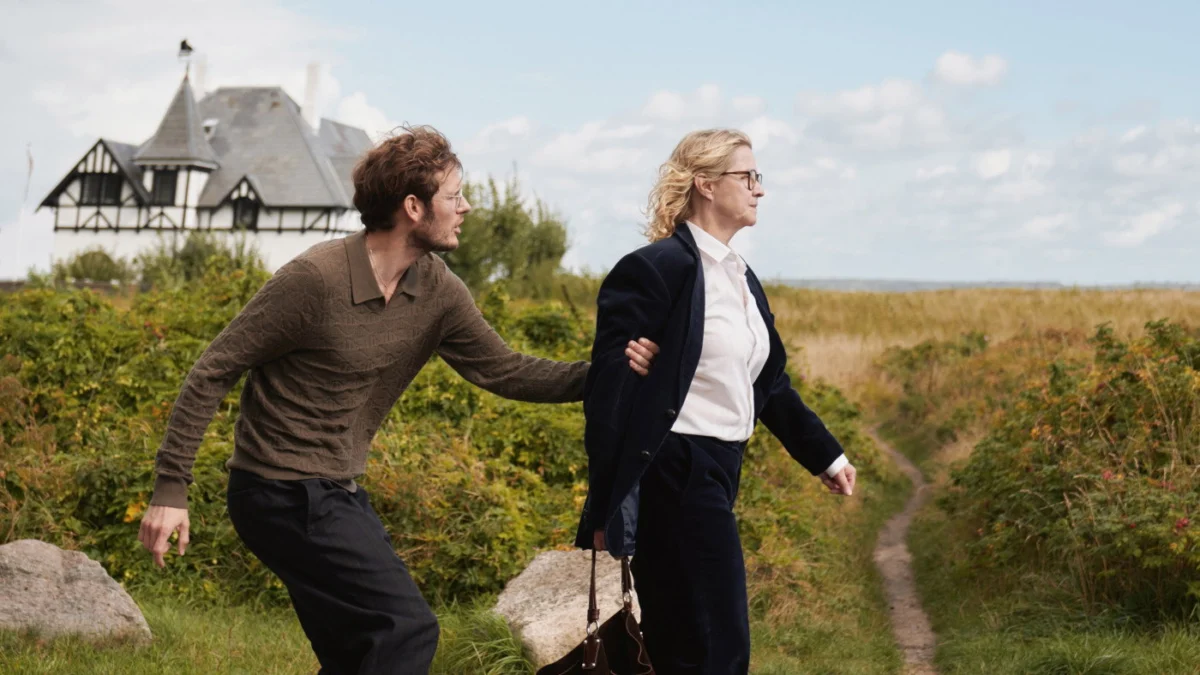
The 2026 Karlovy Vary International Film Festival (KVIFF) witnessed the triumphant world premiere of The Guest (Gæsten), a Danish family drama directed by Mads Mengel, marking a significant debut for the filmmaker on the international stage. The film, which delves into the intricate and often tumultuous dynamics of a fractured family, was lauded with two prestigious awards: the Best Director Award for Mengel himself and the Special Jury Prize, underscoring its profound narrative and artistic merit. Premiering at one of Europe’s most esteemed film festivals on July 19, 2026, The Guest immediately distinguished itself as a compelling and unflinching exploration of human relationships, resonating deeply with critics and audiences alike. This cinematic achievement further solidifies Denmark’s reputation for producing potent, character-driven dramas that challenge conventional narratives of familial bliss.
Unpacking the Narrative: A Family’s Fraught Reunion
The Guest is set against the picturesque backdrop of a Danish seaside resort, where new parents Karl and Emilie, portrayed by Simon Bennebjerg and Mette Klakstein, respectively, gather friends and family for what should be a joyous occasion: a baby shower and naming ceremony for their newborn. The event is designed to be a celebration of new life and familial bonds, complete with the intention of baptizing the baby in the sea. However, the meticulously planned tranquility is irrevocably disrupted by the belated arrival of Karl’s mother, Vibeke, played with astonishing intensity by the iconic Danish actress Trine Dyrholm. Vibeke’s presence immediately introduces a palpable tension, stemming from a deep-seated family rift. Karl and his sister, portrayed by Josephine Park, harbor significant resentment towards their mother, whose past behavior and current need for medication and constant surveillance have created enduring emotional scars within the family unit.
Mengel, alongside co-writer Christian Bengtson, crafts a narrative that oscillates between moments of tender introspection and explosive confrontation. The film bravely confronts the "ugly, rotten, uncomfortable sides" of family life, eschewing romanticized portrayals in favor of raw, unvarnished honesty. It poses fundamental questions about reconciliation and forgiveness, challenging the characters, and by extension the audience, to grapple with their differences, quirks, and problems while attempting to coexist. The central conflict arises from the difficulty of shedding deep-rooted resentments, demonstrating how even a "simple, lovely moment of celebration can turn chaotic quickly when the wrong people show up and drag other issues in." This realistic depiction, while at times "depressing overall," is hailed as an authentic portrayal of contemporary family dynamics, where underlying tensions often surface during significant life events. The film masterfully balances these intense dramatic sequences with fleeting "glimmers of hope & happiness," though these moments are often short-lived, mirroring the precarious nature of healing old wounds. It is crucial to note that this 2026 Danish drama The Guest (Gæsten) is an entirely distinct work from the cult favorite 2014 action thriller of the same name, starring Dan Stevens and Maika Monroe, emphasizing its unique thematic and stylistic identity.
Karlovy Vary: A Beacon for European Cinema
The Karlovy Vary International Film Festival, established in 1946, stands as one of the world’s oldest and most prestigious film festivals. As an A-list festival accredited by the International Federation of Film Producers Associations (FIAPF), KVIFF holds a paramount position in the global cinematic landscape, particularly for showcasing and promoting films from Central and Eastern Europe, as well as independent cinema worldwide. The festival’s rigorous selection process and discerning jury ensure that its awards are highly coveted and indicative of exceptional filmmaking. For The Guest to secure both the Best Director and Special Jury Prize at such a prominent event speaks volumes about its quality and impact.
The Best Director Award is a direct commendation of Mads Mengel’s visionary leadership, his ability to elicit powerful performances, and his skill in crafting a cohesive and emotionally resonant narrative. For a director’s debut feature, this recognition at KVIFF is an extraordinary launchpad, instantly elevating Mengel’s profile within the international film community. The Special Jury Prize, on the other hand, signifies the film’s overall artistic distinction and its unique contribution to cinema. It often highlights films that challenge conventions, possess a strong authorial voice, or tackle complex themes with particular finesse. Past recipients of KVIFF awards have frequently gone on to achieve broader critical acclaim and international distribution, suggesting a promising future for The Guest. The festival’s history is replete with examples of European dramas that have found their initial champions here, subsequently impacting global cinematic trends. This dual honor places The Guest in esteemed company, positioning it as a significant work from the 2026 festival circuit.
Mads Mengel: A Promising New Voice in Danish Filmmaking
The Guest marks Mads Mengel’s inaugural foray into feature filmmaking, following a series of successful ventures in television. This transition from episodic storytelling to the sustained narrative arc of a feature film is often a critical juncture for emerging directors. Mengel’s triumph at KVIFF demonstrates a seamless and highly accomplished leap, showcasing a mature directorial vision beyond what might be expected from a debut. Danish cinema has a rich tradition of producing acclaimed directors known for their incisive dramas and keen psychological insights, from the Dogme 95 movement pioneers like Lars von Trier and Thomas Vinterberg to contemporary masters such as Susanne Bier and Tobias Lindholm. Mengel’s work in The Guest positions him squarely within this lineage, indicating a director unafraid to tackle challenging subject matter with nuance and depth.
The Best Director award at KVIFF is not merely an accolade; it is a powerful endorsement that can significantly influence a filmmaker’s career trajectory. It opens doors to funding, collaboration with more established talent, and greater visibility for future projects. Mengel’s success suggests a thoughtful and deliberate approach to storytelling, prioritizing character authenticity and emotional truth over conventional dramatic arcs. His ability to navigate the complex emotional landscape of The Guest, drawing out raw performances while maintaining a cohesive artistic vision, is a testament to his directorial prowess. This recognition could signify a new era for Danish drama, with Mengel at the forefront of a generation of filmmakers committed to exploring the complexities of modern life.
Trine Dyrholm: The Magnetic Heart of the Drama

Central to the film’s profound impact is the performance of Trine Dyrholm as Vibeke. Described as "iconic" and a performer who "totally rocks this film once she appears," Dyrholm embodies the troubled matriarch with a fierce conviction that is both unsettling and captivating. Her portrayal is lauded as "exquisite and totally magnetic," with "never a single moment where she isn’t fiercely convincing in every scene she’s in." Dyrholm is a celebrated figure in European cinema, known for her versatility and ability to command the screen with understated power or explosive intensity. Her filmography includes acclaimed roles in films such as The Commune (for which she won the Silver Bear for Best Actress at the Berlin International Film Festival), Love Is All You Need, and Nico, 1988, showcasing her consistent ability to deliver nuanced and memorable performances.
In The Guest, Dyrholm transforms Vibeke into a multi-layered character whose complexities and nuances become the film’s vibrant character study. She navigates the delicate balance between vulnerability and defiance, illustrating the profound impact of mental health issues and unresolved conflicts on family dynamics. Her presence elevates the entire ensemble, creating a gravitational pull that centers the film’s emotional core. The intensity of her performance is instrumental in portraying the deep-rooted resentment and the difficulty of reconciliation, making her character a compelling, if at times uncomfortable, focal point. For critics and audiences alike, Dyrholm’s performance is cited as a primary reason the film is "entirely worth watching," cementing her status as one of Europe’s most formidable acting talents.
Ensemble Dynamics and Cinematic Craftsmanship
Beyond Dyrholm’s towering performance, The Guest benefits from a strong ensemble cast. Simon Bennebjerg, known for his roles in films like The Promised Land and Before the Frost, brings a nuanced portrayal to Karl, the son grappling with his mother’s presence. Mette Klakstein and Josephine Park contribute significantly to the intricate family tapestry, embodying the various reactions and emotional tolls exacted by Vibeke’s arrival. The collective performances create an authentic sense of a family unit under immense strain, where each member’s individual struggles and shared history contribute to the escalating tension. The nuanced interplay between these characters is crucial in illustrating the multifaceted nature of familial conflict, where every interaction is laden with history and unspoken expectations.
The film’s visual aesthetics are also noteworthy. The "nicely-shot Danish film" utilizes the "beautiful seaside resort" setting not merely as a backdrop but as a contrasting element to the internal turmoil unfolding. The serene natural beauty of the Danish coast often provides a stark visual counterpoint to the raw emotional chaos, enhancing the film’s thematic resonance. This interplay between setting and narrative is a hallmark of sophisticated cinematic craftsmanship, allowing the environment to subtly reflect or amplify the characters’ psychological states. The choice of a seemingly idyllic setting for such a profound unraveling of family bonds intensifies the drama, highlighting the discrepancy between outward appearances and internal realities. The collaborative efforts of the cast and crew, under Mengel’s direction, result in a film that is both aesthetically pleasing and emotionally challenging.
Thematic Resonance: Family Dysfunction in a Global Context
The exploration of fractured families and the arduous path to reconciliation is a recurring theme in global cinema, yet The Guest approaches it with a distinctly Danish sensibility – one often characterized by a direct, unvarnished realism. While the narrative acknowledges that such stories "is getting a bit cliche," it bravely asserts the continued importance of "laying it all bare and addressing all this trouble directly." In an era where perfect family facades are often presented on social media and curated public images, films like The Guest serve as vital counter-narratives, reflecting the complex realities faced by many.
The film delves into intergenerational trauma, the weight of past actions, and the societal expectations placed on families to maintain harmony, even when deep wounds persist. It suggests that while reconciliation is a noble goal, it is not always achievable, and the process itself can be fraught with conflict and pain. The film’s depiction of "yelling at each other during a special event" as an ineffective means of resolving conflict is a poignant commentary on human behavior under stress. This thematic depth makes The Guest resonate beyond its Danish context, touching upon universal experiences of family loyalty, betrayal, and the enduring quest for understanding. The ability of the film to weave in moments of humor and tenderness amidst the darkness prevents it from becoming solely a bleak exercise, instead presenting a more complete, albeit often sad, picture of life’s complexities. This balance ensures that the film, while challenging, remains deeply human and relatable.
Broader Implications and Future Outlook
The double victory at KVIFF for The Guest carries significant implications for Mads Mengel’s career, Danish cinema, and the broader landscape of European independent film. For Mengel, it positions him as a director with a clear artistic voice and the capacity to helm critically acclaimed features, potentially leading to increased international interest in his future projects and collaborations. This could see him attract larger budgets or work with more prominent international talent, further solidifying his position as a filmmaker to watch.
For Danish cinema, already a respected force globally, The Guest‘s success reaffirms its continued vitality and its ability to produce compelling narratives that resonate with international audiences and critics. It highlights a commitment to nuanced, character-driven storytelling that explores difficult truths. This recognition can boost the global marketability of Danish films, fostering further co-productions and distribution deals, and reinforcing Denmark’s status as a hub for quality cinematic drama.
The film’s exploration of family dysfunction, presented with such raw authenticity, also contributes to the ongoing evolution of the drama genre. It demonstrates that there is still fertile ground to explore within seemingly familiar narratives, provided they are approached with honesty, courage, and exceptional performances. The Guest serves as a powerful example of how a film can be both critically lauded and deeply affecting, even if it leaves the viewer with a sense of melancholy rather than saccharine resolution. Its success underscores the enduring power of cinema to reflect and interrogate the human condition in all its messy, beautiful, and sometimes heartbreaking forms. As The Guest begins its journey beyond Karlovy Vary, its impact is likely to be felt across the independent film circuit, solidifying its place as a notable achievement of 2026 and setting a high bar for future character-driven dramas.