The seemingly irreconcilable identities of being a transgender man and a Muslim in Malaysia are being boldly confronted and expressed through the music and activism of Shh…Diam!, an openly queer punk band. The Malay phrase for “shut up,” the band’s name itself is a defiant cry against societal pressures that demand silence from LGBTQ+ individuals, particularly those who also adhere to Islam. This documentary, Queer As Punk, directed by Yihwen Chen, delves into the lives of the band’s three core members – lead singer Faris, Yon, and Yoyo – as they navigate the complexities of their identities, finding their voices through punk rock anthems and participating in frequent protests advocating for LGBTQ+ rights in a nation with deeply entrenched conservative Islamic values.
A Clash of Identities in a Restrictive Landscape
Queer As Punk offers an unflinching look at the intense political landscape of Malaysia, where human rights and freedom of expression are significantly curtailed by a conservative Islamic society. The film highlights the pervasive societal perception that being both Muslim and queer is inherently forbidden, a notion further cemented by legal frameworks that make changing one’s religious affiliation bureaucratically challenging, if not impossible, for many. This creates an environment that the documentary portrays as profoundly suffocating for individuals seeking to live authentically.
The narrative captures moments of palpable hope as the band and their allies witness the end of a 60-year-old ruling party’s tenure, anticipating a potential shift towards greater inclusivity. However, this optimism is swiftly tempered by the stark realization that the fundamental societal and legal barriers remain largely unchanged, leading to a profound sense of disappointment. This dramatic arc, characterized by rising hopes and subsequent disillusionment, forms a central dramatic hypostasis that permeates every facet of the documentary, underscoring the persistent struggles faced by the LGBTQ+ community in Malaysia.
Faris: A Transgender Journey at the Forefront
Faris, the lead singer of Shh…Diam!, emerges as a central figure in the documentary. His personal journey of gender transition is depicted with significant depth and sensitivity, revealing the profound impact it has had on his life, including strained relationships with his own family. The film dedicates considerable attention to his experiences, presenting his portrait as the most thorough exploration of the challenges and triumphs associated with being a transgender Muslim in Malaysia. His willingness to openly express his identity and aspirations, even in the face of familial disapproval, serves as a powerful testament to his resilience.
While Faris occupies a significant portion of the narrative, Yon and Yoyo are also given ample space to share their stories. Director Yihwen Chen skillfully incorporates Yoyo’s marriage to Kat, a union that represents a vibrant and sometimes challenging intermingling of cultures. Additionally, the documentary focuses on Yon’s everyday life and her personal relationships, providing a broader perspective on the diverse experiences within the queer Muslim community. These individual narratives collectively build a nuanced understanding of the multifaceted lives of the band members.
The Sound of Defiance: Underground Concerts and Musical Creation
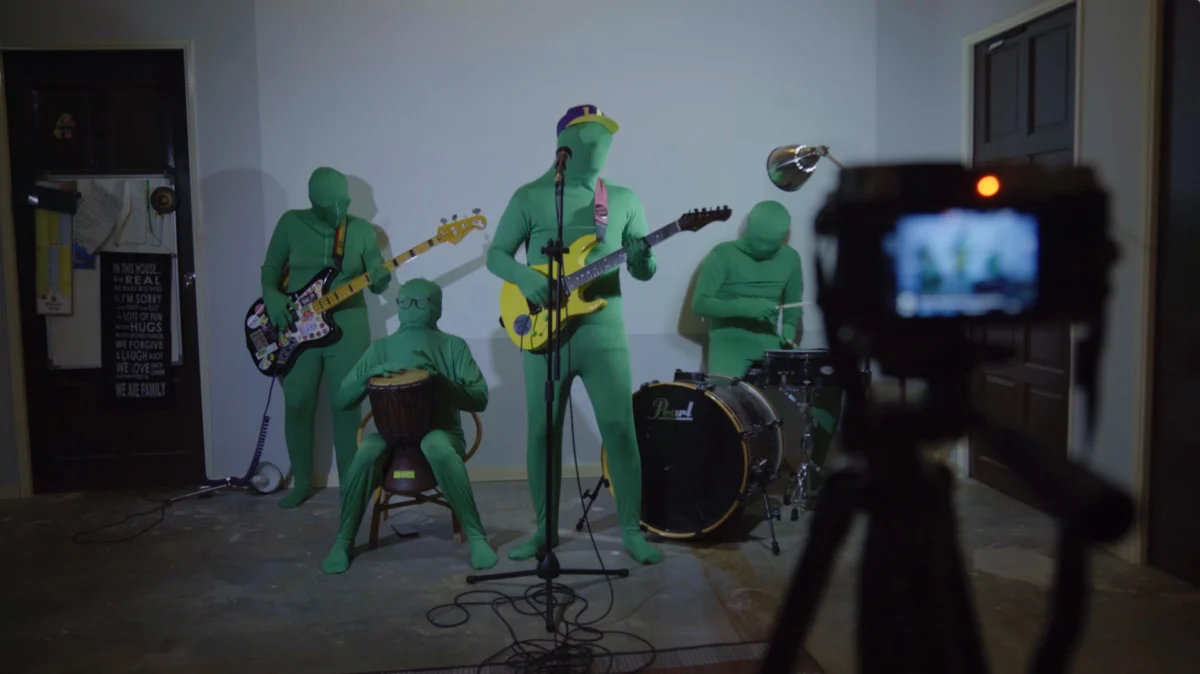
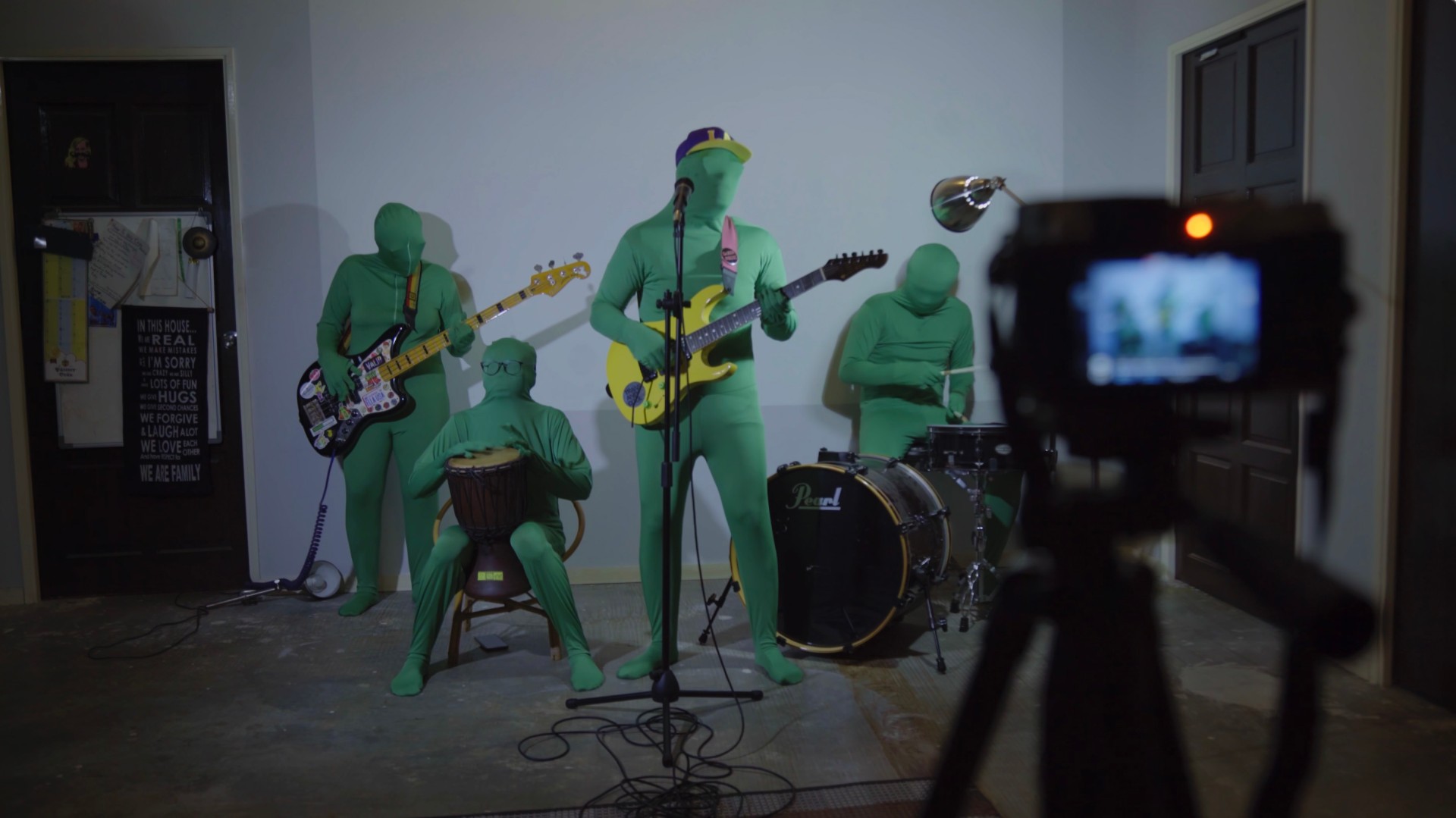
A substantial portion of Queer As Punk is dedicated to showcasing the band’s live performances. These concerts, often held in underground venues, serve as vital spaces for expression and community building. One particularly memorable performance features the band members clad in full-body green suits, a visual statement that resonates with the audience and amplifies the band’s message. Beyond the stage, the documentary also offers insights into the creative process behind Shh…Diam!’s music, detailing the preparation of their songs. This inclusion adds another layer of understanding, revealing how their punk ethos and personal experiences are translated into powerful lyrical and sonic expressions of defiance and solidarity.
Cinematic Craftsmanship: Editing and Cinematography
The editing, a collaborative effort between Angen Sodo and Yihwen Chen, is a crucial element in the documentary’s success. It competently connects the various threads of the narrative, imbuing the film with a sense of speed and urgency that mirrors the energetic style of punk music. However, the editing also judiciously incorporates moments of slower pacing, allowing for reflection and deeper emotional engagement with the subject matter.
The cinematography is notably intimate, with the camera frequently following the protagonists closely. In several instances, viewers are brought inside the band members’ car as they travel between concerts, a technique that underscores the deep trust Yihwen Chen has cultivated with her subjects. This close-up approach allows for candid moments and genuine emotional resonance, making the audience feel like they are an active participant in the band’s journey.
A Bittersweet Reality: Resilience Amidst Stagnation
The overarching sentiment that Queer As Punk leaves its audience with is a bittersweet one. While the members of Shh…Diam! demonstrate remarkable resilience and a persistent drive to move forward against all odds, the broader societal and political landscape in which they operate appears to remain largely unchanged. The documentary concludes not with a triumphant resolution, but with a realistic portrayal of ongoing struggle. Despite the challenges, the band’s commitment to their art and their activism serves as a beacon of hope for others in similar situations.
This documentary offers a compelling and often raw examination of a community navigating complex intersections of faith, gender identity, and sexual orientation in a restrictive socio-political climate. It is a testament to the power of music as a form of protest and self-expression, and a vital contribution to understanding the experiences of marginalized communities in Southeast Asia.
Background Context: Malaysia’s Legal and Social Framework
To fully appreciate the challenges faced by Shh…Diam!, it is essential to understand Malaysia’s legal and social framework. Malaysia is a Muslim-majority country, and Islam is the official religion. While the constitution guarantees freedom of religion, the application of Islamic law (Sharia law) in matters of personal status, family law, and morality significantly impacts the lives of Muslims, who constitute over 60% of the population.
Sharia courts have jurisdiction over Muslims and their laws often reflect conservative interpretations of Islamic teachings. This can lead to the criminalization of acts deemed contrary to Islamic values, including same-sex relations and gender non-conformity. While the civil courts operate alongside Sharia courts, the influence of religious conservatism often permeates public discourse and policy-making.
Timeline of Relevant Developments (Inferred and General Context):
- Pre-2018: Decades of rule by the Barisan Nasional (BN) coalition, characterized by a generally conservative approach to social issues, including LGBTQ+ rights. Limited public discourse and activism for LGBTQ+ rights.
- May 2018: A historic election sees the Pakatan Harapan (PH) coalition win, bringing hope for reform and greater freedoms. This period likely marked a surge of optimism for groups like Shh…Diam!.
- February 2020: The PH government collapses due to political maneuvering, leading to the formation of a new coalition government that is perceived as more conservative. This shift would have represented a significant setback for LGBTQ+ advocates.
- Post-2020: Continued challenges for LGBTQ+ rights under successive governments, with ongoing debates about religious freedom, moral policing, and the legal recognition of gender identity. The film’s depiction of "nothing has actually changed" likely refers to this period of perceived stagnation or regression.
- Ongoing: Persistent activism by LGBTQ+ groups, often facing legal challenges and societal backlash. The underground music scene, as depicted in the film, serves as a crucial sanctuary and platform for expression.
Supporting Data and Legal Realities
The challenges faced by transgender individuals in Malaysia are compounded by the lack of legal recognition for gender identity. There is no specific legislation that allows for legal gender recognition for transgender individuals. Changing one’s name and gender marker on official documents, such as identification cards, is extremely difficult and often requires surgical intervention, which is not always accessible or desired. Furthermore, individuals who identify as transgender can face legal repercussions under laws that prohibit "unnatural acts" or cross-dressing, depending on the state and interpretation of the law.
The film’s mention of the difficulty in changing one’s religion also points to the legal complexities surrounding apostasy and conversion. While the constitution technically allows for freedom of religion, the practicalities and societal pressures can make it challenging for individuals to formally disassociate from Islam or convert to another faith. This creates a complex situation for transgender Muslims who may feel alienated from both their religious community and the broader society.
Broader Impact and Implications
Queer As Punk serves as a powerful lens through which to examine the broader implications of religious conservatism and its impact on individual freedoms. The film highlights how the suppression of LGBTQ+ identities can stifle artistic expression, hinder social progress, and create significant mental health burdens for those living in fear of discrimination and persecution.
The documentary’s focus on the intersection of trans identity and Islam also sheds light on a nuanced aspect of the global LGBTQ+ rights movement. It challenges monolithic perceptions of both Islam and the transgender experience, demonstrating that individuals can hold multiple identities simultaneously. The resilience and activism of Shh…Diam! offer a crucial counter-narrative to the often-negative portrayals of LGBTQ+ Muslims, showcasing their agency and their determination to forge a space for themselves within their faith and society.
The film’s success in gaining a platform at festivals like Queer East Film Festival is significant. It signals a growing international interest in the stories of marginalized communities and a recognition of the importance of diverse voices in cinematic storytelling. Such platforms can amplify the voices of activists and artists like Shh…Diam!, potentially fostering greater understanding and support for LGBTQ+ rights in Malaysia and beyond.
The enduring message of Queer As Punk is one of courage and perseverance. It is a testament to the human spirit’s capacity to resist oppression and to find joy and solidarity even in the face of immense adversity. The band’s commitment to their music and their activism, even with the bittersweet reality of their circumstances, offers a vital glimpse into the ongoing struggle for self-determination and acceptance in a world that often seeks to silence those who dare to be different.