

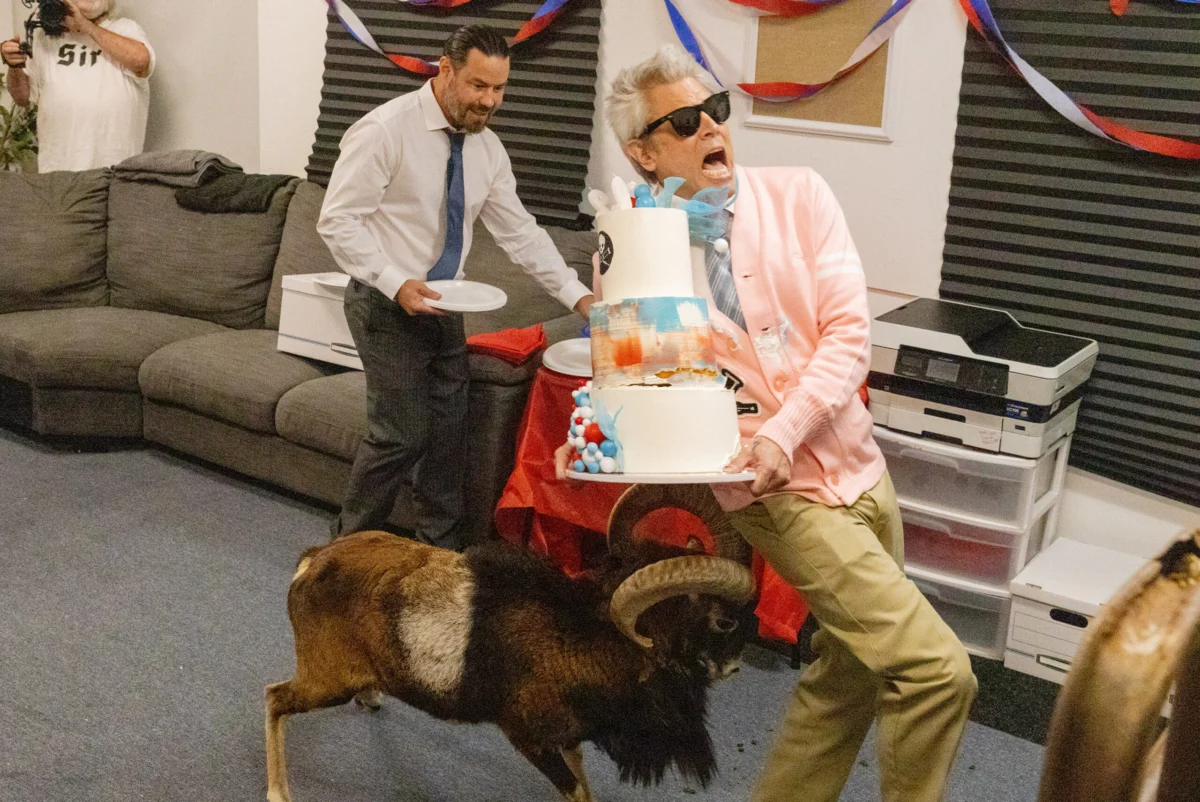
The release of Jackass: Best and Last marks what may be the final cinematic installment of a franchise that has spent more than two decades redefining the boundaries of lowbrow comedy, slapstick performance, and reality-based anarchy. At the center of this enduring cultural footprint is director Jeff Tremaine, whose transition from the pages of the independent skateboarding publication Big Brother to the helm of a multi-million-dollar Paramount Pictures enterprise represents one of the most unlikely trajectories in modern filmmaking. As the cast and crew confront the emotional reality of closing the book on the series, Tremaine reflects on the accidental longevity, the artistic constraints, and the collaborative mechanics that turned a volatile group of skateboarders and pranksters into a globally recognized cinematic institution.
The Genesis and Evolution of a Phenomenon
The origins of Jackass trace back to the late 1990s and the subculture of alternative sports publishing. Before television networks and major studios took notice, Tremaine served as the art director for Big Brother, a magazine that captured the countercultural ethos of skateboarding through aggressive visual layouts, irreverent humor, and unfiltered editorial freedom. During this period, Tremaine developed a reputation not merely as a graphic designer, but as a curator of raw, unpredictable human personalities.
Rather than seeking out elite athletes, Tremaine focused on individuals capable of extraordinary absurdity and fearlessness. The turning point arrived when Johnny Knoxville, seeking to pitch an article where he tested self-defense equipment on himself, recorded footage of shooting a handgun while wearing a bulletproof vest. The resulting material demonstrated an immediate, magnetic screen presence that extended far beyond the traditional demographic of skateboard video viewers.
When MTV launched Jackass in October 2000, executives anticipated a short-lived experiment. Instead, the series became an immediate ratings juggernaut, sparking considerable public controversy while capturing a massive youth demographic. The transition to feature films in 2002 with Jackass: The Movie eliminated broadcast censorship constraints, allowing the production team to amplify the scale, danger, and uninhibited nature of their stunts. Over the subsequent two decades, the franchise expanded through multiple sequels, including Jackass Number Two (2006), Jackass 3D (2010), and Jackass Forever (2022), consistently outperforming box office expectations on modest production budgets.
Directorial Mechanics and the Preservation of Spontaneity
Despite possessing an undergraduate degree in fine arts and an extensive background in visual design, Tremaine has consistently deflected intellectualized interpretations of his work. While critics and film historians have increasingly categorized Jackass as a form of avant-garde performance art or an anthropological study of modern masculinity, Tremaine views the endeavor through a much simpler lens: the amplification of juvenile humor executed by a group of dedicated performers.
However, behind the apparent chaos lies a rigorous directorial methodology focused on preserving authenticity. As budgets expanded and studio oversight increased, Tremaine actively fought to maintain the spontaneous energy that characterized the early days of the production. Operating large-scale film sets often requires strict safety protocols, union regulations, and exhaustive permitting processes—elements that directly counter the guerrilla filmmaking style of the original television series. To reconcile these opposing forces, Tremaine implemented a strategy of controlled containment, shrinking the immediate production environment around the cast to foster genuine interactions and reactions.
This dynamic is particularly evident in the high-risk stunts that define the later sequels. In Jackass Forever, Knoxville suffered severe injuries, including broken ribs and a concussion, during a bull-riding stunt titled "The Magic Trick." Archive footage featured in Jackass: Best and Last reveals the delicate negotiations required between director and performer when a high-stakes stunt fails to yield the necessary footage on the first attempt. Tremaine’s role frequently involves walking a fine line between maintaining absolute safety standards and encouraging the uncompromising commitment that the cast demands of themselves.
Furthermore, Tremaine’s editorial eye relies heavily on situational casting. Rather than scripting dialogue, he strategically positions performers like Chris Pontius adjacent to high-action scenarios, recognizing their capacity to elevate spontaneous moments through improvisation. This collaborative trust extends to story development, where Tremaine and Knoxville serve as the primary arbiters of proposed ideas, balancing skepticism with a willingness to execute seemingly impossible concepts, such as the elaborate animal-based interactions featured in recent films.
Institutional Recognition and the Critical Shift
The cultural perception of the Jackass franchise has undergone a significant transformation since its inception. Early critical reception was overwhelmingly hostile, with mainstream reviewers condemning the program as a destructive influence and a low-water mark for television and cinema. Cultural watchdogs frequently targeted the series for encouraging dangerous imitation among adolescent viewers, leading to advertiser boycotts and political scrutiny.
Yet, by the time Jackass 3D premiered in 2010—accompanied by a celebratory screening at the Museum of Modern Art (MoMA) in New York—the critical consensus began to shift. Reviewers and film scholars started examining the franchise through a theoretical framework, highlighting its deconstruction of traditional masculinity, the profound platonic affection shared among the cast members, and its inadvertent adoption of structuralist filmmaking techniques.
This retrospective validation has presented an internal contradiction for Tremaine. While acknowledging the humor in institutional acceptance, he remains wary of adopting an overly academic mindset toward material rooted in visceral, anti-establishment comedy. The director has noted that the evolution of critical opinion partly reflects generational shifts, as individuals who grew up watching the original series eventually entered the fields of journalism and film criticism. Nevertheless, the foundational philosophy of the production remains rooted in a defiant, punk-rock rejection of conventional cinematic decorum.
Broader Implications and Commercial Legacy
Beyond the primary filmography, Tremaine’s aesthetic influence extends into unexpected commercial spaces. Notably, his direction of an elaborate safety demonstration video for American Airlines demonstrated his ability to translate the vibrant, musical pacing of the Jackass cold opens into corporate media. Reaching millions of travelers daily, the project underscored how underground punk sensibilities could successfully infiltrate mainstream commercial frameworks without sacrificing visual style.
As the franchise potentially reaches its conclusion with Jackass: Best and Last, the broader implications of Tremaine’s career highlight a unique intersection between fine art design, documentary filmmaking, and high-risk physical comedy. By maintaining a distinct creative voice for nearly thirty years, Tremaine has overseen a rare cinematic anomaly: a long-running franchise that achieved increasing critical acclaim and financial stability while steadfastly refusing to mature in subject matter. Whether viewed as lowbrow slapstick or enduring sociological documentation, the body of work stands as a testament to a singular directorial vision that successfully weaponized stupidity into an art form.