



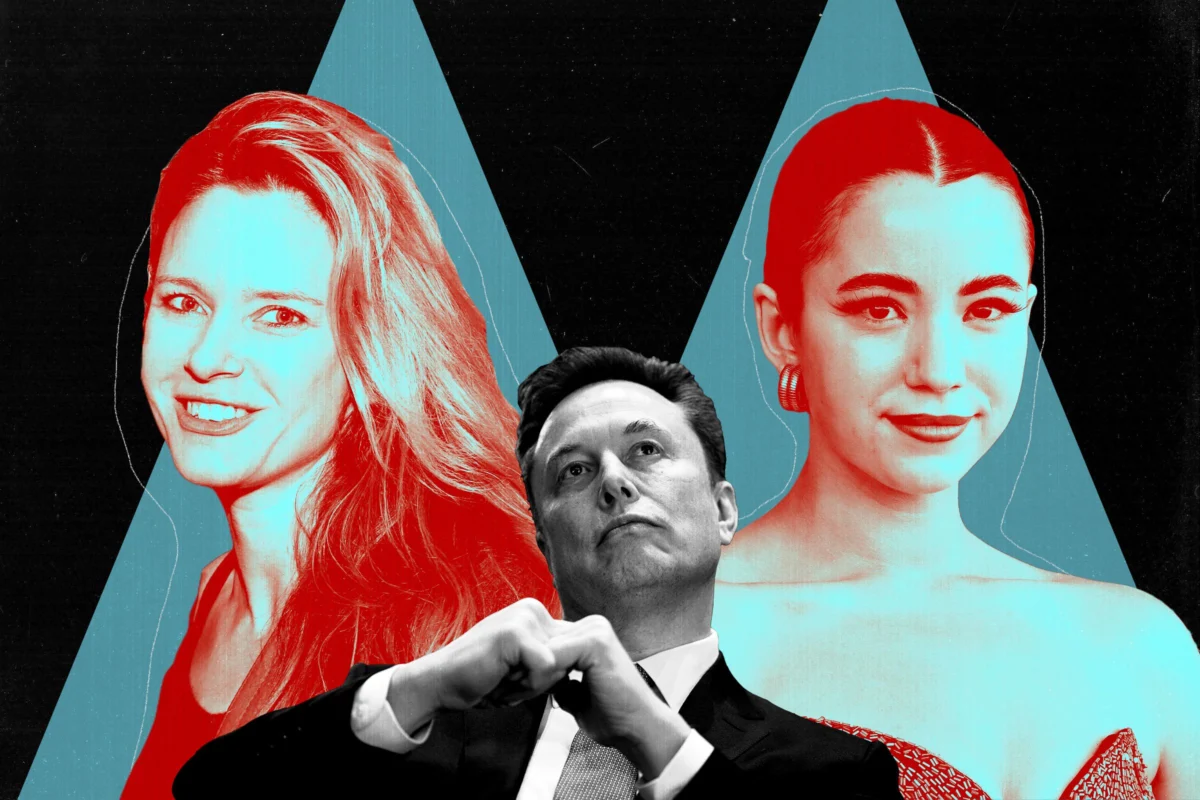
The intersection of private relationships and public corporate empires has long defined the public persona of Elon Musk, but a series of recent developments has brought the private dynamics of the world’s wealthiest individual into unprecedented scrutiny. On a Friday morning, Shivon Zilis—a senior executive at the brain-computer interface company Neuralink and the mother of four of Musk’s children—utilised the social media platform X to broadcast an abrupt and emotionally charged shift in their personal dynamic. Posting a screenshot from an automated monitoring account indicating that Musk had unfollowed her, Zilis detailed the sudden dissolution of their romantic partnership. Her public disclosure added yet another layer to an already complex family structure involving multiple partners and a staggering total of fourteen known children, while simultaneously drawing renewed attention to a sprawling, comprehensive documentary directed by Alex Gibney that casts a critical light on Musk’s personal conduct and corporate ascent.
The revelation on X highlighted not only the unorthodox nature of Musk’s personal interactions but also the fragility of relationships maintained within the orbit of high-profile technology executives. Zilis expressed both sorrow and gratitude in her post, writing that it was difficult to transition from being in love to being let go within the span of a week without warning. She reflected on her efforts to provide stability, understanding, and peaceful affection, while expressing hope that they could maintain a constructive co-parenting relationship. However, the unexpected announcement immediately sparked widespread speculation across the technology sector regarding her professional standing as a director of operations and special projects at Neuralink, though no formal departure from her corporate duties had been indicated at the time of the publication.
This public airing of domestic grievances is far from an isolated incident within Musk’s inner circle. Over the years, the four women confirmed to have fathered children with the billionaire—Shivon Zilis, author and ex-wife Justine Wilson, musician Claire Boucher (known professionally as Grimes), and former conservative influencer Ashley St. Clair—have frequently turned to public platforms to either share personal accounts of their experiences or directly challenge narratives propagated by Musk himself. These recurring disclosures have collectively painted a multifaceted and often turbulent picture of life alongside a modern industrial oligarch, contrasting sharply with the carefully curated public image of visionary genius and technological inevitability.
Chronology and Cinematic Exposé
The public discourse surrounding Musk’s private life received a significant amplification with the release of Alex Gibney’s four-hour documentary, simply titled Musk. Slated for a nationwide theatrical release on October 16 and scheduled for prominent screenings at major industry events such as the WIRED World Fair in Miami, the film serves as an exhaustive examination of Musk’s rise across Silicon Valley, his business ventures, and his increasingly visible political alignment with populist movements during the 2024 election cycle. Among the documentary’s most compelling elements are the extensive contributions of Justine Wilson and Ashley St. Clair, both of whom emerge as critical and articulate voices within a diverse ensemble of tech entrepreneurs, journalists, and former corporate insiders.
St. Clair’s involvement in the documentary is particularly notable given her allegations regarding the institutional pressures brought to bear on individuals who share a personal history with the billionaire. According to St. Clair, she declined a non-disclosure agreement valued at $40 million—an arrangement that would have legally barred her from discussing the complexities of her relationship with Musk. The documentary covers immense ground over its near four-hour runtime, prompting comparisons to an extensive multi-part television series. It traces the trajectory of Musk’s corporate empire from ambitious, capital-intensive endeavors such as SpaceX’s plans for Martian colonization and the rapid industrial expansion in Texas, to regulatory and legal confrontations including fatal collisions involving Tesla’s driver-assistance technology. Furthermore, the film examines the political implications of Musk’s involvement with the newly established Department of Government Efficiency (DOGE) and the subsequent restructuring of federal agencies at the onset of Donald Trump’s second presidential term.
Personal Testimonies and Custody Disputes
Within the framework of Gibney’s documentary, the personal testimonies provided by Musk’s former partners offer critical context that complicates the narrative of his technological achievements. Justine Wilson’s reflections provide a deeply emotional perspective on their shared history, including the profound grief surrounding the loss of their firstborn child to Sudden Infant Death Syndrome (SIDS). Wilson’s recounting of this tragedy gained additional public resonance following a prior exchange on X, where Musk stated that he had held their infant son as he passed away—a claim that prompted Wilson to publicly clarify that she was the one holding their child during those final moments, emphasizing the deeply personal nature of the memory.
Wilson also addresses the painful public fallout concerning their transgender daughter, Vivian Jenna Wilson, and takes issue with Musk’s public assertions attributing his child’s identity to ideological influences. Juxtaposing these public statements with private realities, Wilson notes that Musk informed her he would "always love" their family, only to subsequently cut off their daughter’s health insurance and maintain a strict policy of non-engagement regarding family repair. Reflecting on the broader dynamics of their marriage, Wilson recounts an environment characterized by constant critique, noting an instance where Musk remarked that if she were his employee, he would terminate her contract—an experience that led her to recognize the psychological patterns of gaslighting within the relationship.
Similarly, Ashley St. Clair details the challenges of navigating a high-profile custody dispute following a brief romance that resulted in the birth of their son, Romulus. St. Clair alleges that Musk’s engagement waned significantly during her pregnancy, a period during which investigative reporting by outlets such as The Wall Street Journal suggested he had approached other women regarding family planning. While these legal and personal battles have played out across both private mediation and public forums—including a separate custody dispute with Grimes that ultimately settled on undisclosed terms—they collectively highlight a pattern of complex interpersonal dynamics surrounding the billionaire’s approach to family life and paternal responsibility.
Broader Socioeconomic Implications and Corporate Governance
Beyond the personal narratives and tabloid intrigue, the convergence of Musk’s sprawling corporate empire and his increasingly turbulent domestic life carries tangible implications for corporate governance and public perception. As the chief executive officer of Tesla, SpaceX, and Neuralink, alongside his leadership of X and xAI, Musk occupies a singular position of economic and technological power. Decisions made within his corporate entities frequently influence global markets, defense logistics, and telecommunications infrastructure. Consequently, the stability of his internal executive team—including figures like Shivon Zilis at Neuralink—remains a subject of intense interest for investors, regulatory bodies, and industry analysts alike.
The release of Musk and the continuous public disclosures by his former partners introduce a layer of reputational risk that transcends traditional corporate governance concerns. While companies historically evaluate leadership based primarily on financial performance and strategic execution, the modern corporate landscape increasingly accounts for executive conduct and personal stability, particularly when leaders project themselves as central figures of cultural and political influence. The intersection of personal relationships, non-disclosure agreements, and public social media pronouncements creates an unpredictable operational environment for the enterprises under Musk’s command.
Furthermore, the involvement of prominent journalists and detailed investigative reporting within projects like Gibney’s documentary underscores a growing appetite for comprehensive accountability regarding the intersection of wealth, power, and personal ethics. Whether these public revelations will impact the long-term valuation or operational stability of Musk’s corporate portfolio remains to be seen. However, the willingness of individuals within his closest personal and professional circles to speak out suggests that the traditional mechanisms used by powerful figures to manage public narratives are increasingly subject to disruption by the very digital platforms and interpersonal networks that billionaires like Musk have sought to control.