

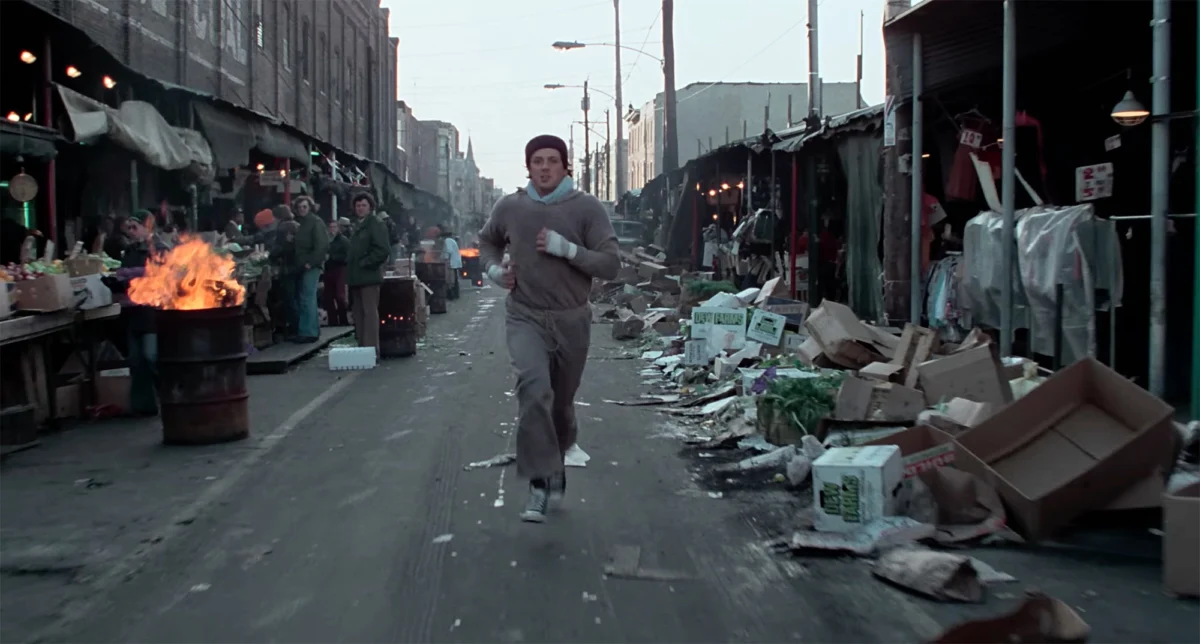
Half a century after Sylvester Stallone first bounded up the stone steps of the Philadelphia Museum of Art, the iconic cinematic underdog is returning to the silver screen. Fathom Entertainment has officially announced a nationwide theatrical re-release of John G. Avildsen’s timeless masterpiece Rocky, marking the landmark 50th anniversary of the film that transcended traditional sports drama to become a cornerstone of American pop culture. To commemorate the milestone, a series of newly minted promotional trailers and a pristine 4K restoration have been released, inviting both lifelong devotees and a new generation of filmgoers to experience the Italian Stallion’s legendary journey in high definition.
The special anniversary screenings are scheduled to run from November 7 through November 11, 2026, bringing the 1976 Best Picture winner back to participating cinemas across the country. This cinematic event arrives concurrently with growing cultural anticipation for I Play Rocky, an upcoming biographical drama exploring the turbulent, high-stakes real-world production history of how Stallone—then a struggling, unknown actor—defied insurmountable studio odds to bring his passion project to fruition.
The Genesis of an American Mastermind: Background and Production Context
To understand the enduring cultural resonance of Rocky, one must examine the precarious conditions under which it was conceived. In the mid-1970s, Sylvester Stallone was a virtually unknown, struggling actor living in New York City with meager prospects and mere dollars in his bank account. Inspired by the March 1975 heavyweight boxing match between Muhammad Ali and underdog Chuck Wepner—an unheralded contender who surprisingly managed to last fifteen rounds against the reigning champion—Stallone pounded out a screenplay in just three days.
Despite recognizing the raw potential of the script, major Hollywood studios were initially hesitant to bankroll the project with Stallone in the lead role. Producers Irwin Winkler and Robert Chartoff recognized the tenacity in the young writer-actor and fought to secure financing from United Artists, albeit on an extraordinarily frugal budget of roughly $1 million to $1.1 million. With director John G. Avildsen at the helm, the production relied on guerrilla filmmaking techniques, natural lighting, and authentic Philadelphia backdrops to capture the gritty, working-class realism of the narrative.
The gamble paid off exponentially. Upon its release in December 1976, Rocky defied modest expectations to become a runaway box office phenomenon. It grossed approximately $225 million worldwide, making it the highest-grossing film of 1976 in the United States and Canada. The cultural momentum culminated at the 49th Academy Awards in 1977, where the film earned ten nominations and secured three major Oscars: Best Picture, Best Director for John G. Avildsen, and Best Film Editing. Furthermore, Stallone earned a Best Actor nomination, cementing his status overnight as an international cinematic icon.

Plot Overview and Thematic Resonance
The narrative framework of Rocky remains a masterclass in economic storytelling and character-driven drama. Set in the working-class neighborhoods of Philadelphia, the film introduces Rocky Balboa, a small-time club fighter and debt collector for a local loan shark who lives a modest, solitary existence. Though possessing physical resilience, Rocky is viewed by his peers as a washed-up pugilist devoid of a promising future.
The inciting incident occurs when World Heavyweight Champion Apollo Creed—played with charismatic bravado by the late Carl Weathers—finds himself without an opponent for a high-profile Bicentennial exhibition bout after his original challenger suffers an injury. Seeking a promotional gimmick, Creed decides to grant a title shot to a local unknown, choosing Rocky simply because of his moniker, "The Italian Stallion."
What begins as a publicity stunt transforms into a grueling test of character. Encouraged by his burgeoning romance with the shy, introverted pet-shop worker Adrian (Talia Shire), and guided by the gruff, world-weary gym owner Mickey Goldmill (Burgess Meredith), Rocky commits himself to a rigorous training regimen. He resolves not necessarily to defeat the reigning champion, but to achieve a deeply personal victory: "going the distance" against the best in the world.
The film’s themes transcend sports, touching upon universal motifs of dignity, perseverance, self-worth, and the pursuit of the American Dream. The narrative’s emotional core, coupled with Bill Conti’s iconic musical score—anchored by the rousing theme "Gonna Fly Now"—has allowed the film to retain its motivational potency across five decades.
Chronology of the 50th Anniversary Re-Release Initiative
The road to the 50th-anniversary celebration has been carefully orchestrated by distributors, cultural historians, and archival preservationists. Below is the chronological timeline highlighting key developments leading up to the upcoming theatrical engagement:
- December 1976: Rocky premieres in United States theaters, rapidly evolving into a massive commercial and critical success.
- March–April 1977: The film dominates the 49th Academy Awards ceremony, winning three Oscars, including the coveted Best Picture statuette.
- Decades Following (1979–2023): The property expands into a multi-generational cinematic franchise, spawning multiple sequels (Rocky II through Rocky V, Rocky Balboa) and the critically acclaimed Creed spin-off series, preserving the intellectual property’s relevance in modern pop culture.
- Late 2024–2025: Production commences on I Play Rocky, generating mainstream media interest in the origins of the original 1976 motion picture and introducing a new generation of fans to the narrative behind the scenes.
- October 2026: Fathom Entertainment debuts the official 50th-anniversary trailers and opens ticket sales for the nationwide 4K remastered screenings.
- November 7–11, 2026: Designated theatrical window for Fathom’s special engagement screenings of Rocky in participating cinemas across the United States.
Supporting Data and Box Office Legacy
When evaluating the commercial impact of Rocky, the historical financial data underscores its status as one of the most profitable investments in motion picture history. Produced on a shoe-string budget that would equate to roughly $5 million to $6 million adjusted for modern inflation, the original film’s $225 million global box office gross yielded an unprecedented return on investment.

Furthermore, the longevity of the brand is reflected in the cumulative financial performance of the broader franchise. Across nine films—spanning the original Rocky hexalogy and the three Creed installments—the franchise has grossed well over $1.7 billion worldwide. The upcoming 50th-anniversary re-release is projected to draw significant attendance from both nostalgic older demographics and younger cinephiles eager to witness a cinematic milestone in a theatrical environment optimized by modern 4K restoration technology.
Industry analysts note that event-driven theatrical re-releases have experienced a significant surge in popularity over recent years. As major studios and independent distributors alike lean into repertory cinema to fill gaps in exhibition schedules, digitally restored classics have consistently proven capable of driving robust per-screen averages. Fathom Entertainment’s strategic placement of the Rocky engagement in early November capitalizes on the pre-holiday theatrical window, positioning the event as a major cultural happening of the autumn season.
Cultural Implications and Critical Analysis
The endurance of Rocky in the contemporary cultural landscape offers valuable insight into the psychology of cinematic storytelling. Film historians frequently categorize the 1970s as a golden age of American filmmaking characterized by cynical, morally ambiguous narratives reflecting post-Watergate and post-Vietnam disillusionment. In this context, Rocky served as an optimistic counter-narrative—a populist fable that revitalized traditional cinematic idealism without sacrificing gritty, naturalistic aesthetics.
The character of Rocky Balboa has come to symbolize the quintessential working-class hero. Unlike traditional action heroes endowed with superhuman abilities or extraordinary intellect, Rocky is defined by his vulnerabilities, speech patterns, and physical exhaustion. His willingness to absorb punishment and continue moving forward resonates deeply with audiences facing personal and economic adversity.
Media sociologists point out that the film’s central message—that true triumph is measured by internal perseverance rather than external validation—remains universally applicable. By bringing the film back to the big screen in a pristine 4K format, exhibitors are providing an opportunity for contemporary viewers to engage with a foundational text of modern mythology.
As theaters prepare to roll out the red carpet for the Italian Stallion this November, the legacy of Sylvester Stallone’s masterwork remains secure. Half a century after its initial debut, Rocky continues to remind audiences that no matter how steep the steps may seem, the reward lies in the attempt to climb them.