


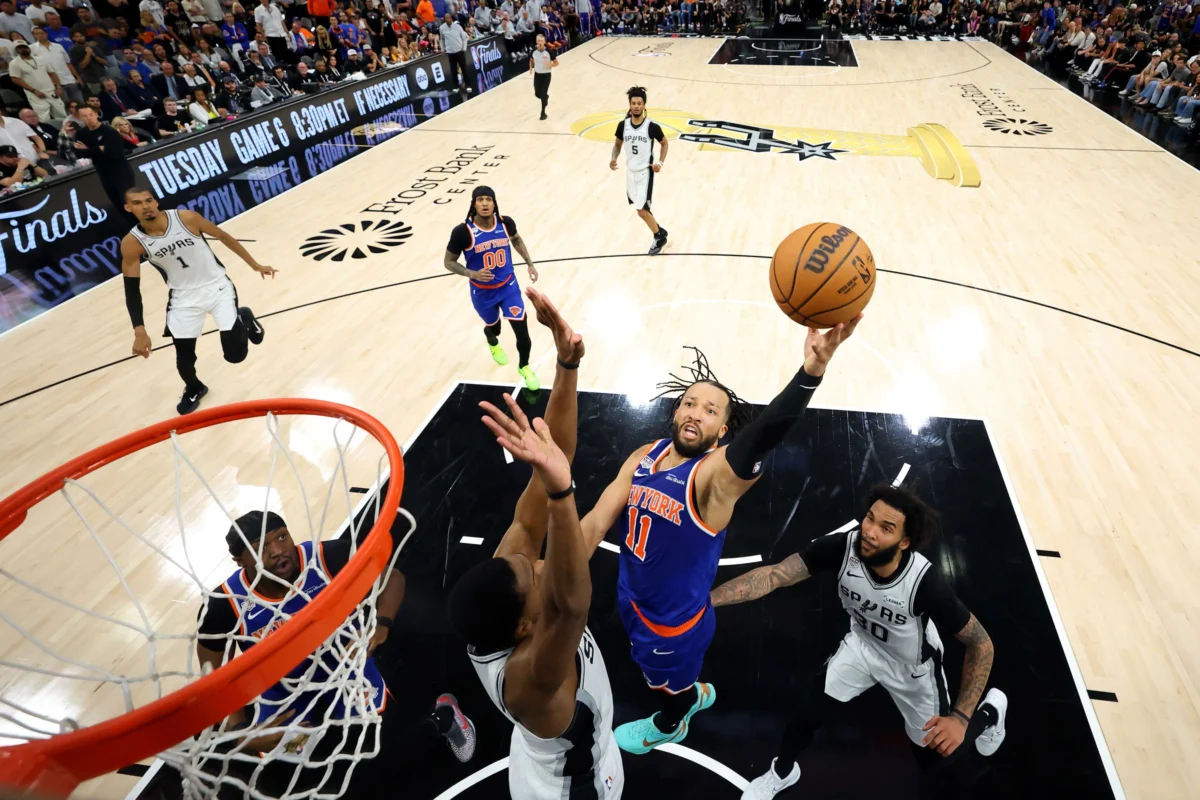
For the first time in 53 years, the streets of New York City are being prepared for a celebration five decades in the making: a ticker-tape parade honoring the New York Knicks as NBA champions. Following a grueling and historic Finals series against the San Antonio Spurs, the Knicks have secured the Larry O’Brien Trophy, ending a drought that has defined generations of New York sports culture. As lower Manhattan transforms into a sea of orange and blue for the Thursday morning procession, the city is bracing for millions of attendees. However, for those unable to navigate the dense crowds or those sequestered in offices across the globe, a unique digital window has opened. Artist Morry Kolman has launched "GardenCam," a project that utilizes the city’s own surveillance infrastructure to provide a real-time, unfiltered view of the festivities.
The project, which has live-streamed and archived traffic camera footage throughout the Knicks’ championship run, serves as both a functional tool for fans and a piece of performance art. By tapping into the New York City Department of Transportation (DOT) network, Kolman allows viewers to watch the parade route and the climactic gathering at City Hall through the grain of public security feeds. This initiative comes at a time when the intersection of public space, surveillance, and digital participation is under increasing scrutiny, yet for the fans of the Knicks, it represents a novel way to claim a piece of a historic moment.
The Genesis of GardenCam and the 2024 Championship Run
The 2024 NBA Finals will be remembered as the year the New York Knicks finally overcame their historical hurdles. Facing a formidable San Antonio Spurs lineup, the Knicks’ journey was characterized by high-stakes drama and a palpable shift in the city’s collective mood. Morry Kolman, a native New Yorker and lifelong observer of the team’s many "seasons of tragedy," sought a way to document this cultural shift. Following an emotional Game 2 victory, Kolman noted a "bigger energy rippling through the city" that standard sports broadcasting failed to fully capture.
The idea for GardenCam originated from a suggestion by a close associate, whom Kolman describes as a "handsome lawyer friend." The concept was simple yet subversive: pull public traffic camera feeds from the perimeter of Madison Square Garden (MSG) to observe the spontaneous celebrations of fans gathering outside the arena. Kolman, who characterizes his artistic methodology as "high-effort shitposting," was fascinated by the contrast between the polished, high-definition coverage of the games and the raw, low-resolution reality of the fans on the street.
As the series progressed, the project evolved from a celebratory montage into a complex observation of urban life. During Game 3, the atmosphere shifted significantly. The attendance of former President Donald Trump at Madison Square Garden necessitated a massive security overhaul, turning the traffic cameras into tools for witnessing the "live imposition of a perimeter and police state around midtown," according to Kolman. This period marked a transition for GardenCam, highlighting how public infrastructure can pivot from facilitating celebration to monitoring restricted zones in a matter of hours.
A Chronology of the New York Knicks’ Road to Glory
To understand the magnitude of the upcoming parade, one must look at the timeline of the Knicks’ 2024 campaign. The team entered the playoffs as a resilient underdog, overcoming injuries and skepticism from national pundits.
- The Regular Season Peak: The Knicks finished the season with a defensive rating that ranked in the top five of the league, a testament to the gritty culture instilled by the coaching staff.
- The Eastern Conference Finals: A six-game series against a divisional rival solidified the team’s chemistry, leading to the first Finals appearance for the franchise since 1999.
- The Finals – Game 1 & 2: The Knicks took an early lead in the series, with Game 2 serving as the catalyst for the "GardenCam" project as fans flooded 7th Avenue in celebration.
- The Finals – Game 3 & 4: The series moved to San Antonio, where the Knicks faced setbacks. Back in New York, the surveillance feeds captured a more somber, high-security atmosphere around MSG during the viewing parties.
- The Clincher: The Knicks secured the championship in a definitive Game 6 performance, sparking immediate and widespread revelry across all five boroughs.
The 53-year wait since the 1973 championship—led by legends like Willis Reed and Walt "Clyde" Frazier—has created a generational hunger for this moment. Data from local sports retailers suggests that Knicks merchandise sales have surged by over 400% in the last fortnight, and hotel bookings in lower Manhattan for the parade weekend have reached 98% occupancy.
Technical Infrastructure and the Legal Battle with NYC DOT
GardenCam is not Kolman’s first foray into the world of municipal surveillance. The project is the direct successor to his 2024 work, "Traffic Cam Photobooth." That project allowed users to locate themselves on a map of NYC traffic cameras and trigger a digital "selfie" using the city’s hardware. While the project went viral for its creativity, it quickly drew the ire of the New York City Department of Transportation.
The NYC DOT issued a formal cease-and-desist letter to Kolman, arguing that the Photobooth project "encourages and promotes the unauthorized use" of city equipment. The agency cited safety concerns, noting that individuals posing for photos in the middle of active traffic thoroughfares was "inherently unsafe." Kolman was ordered to disable all links to city-owned webpages and remove any maps associated with the project.
In a defiant act of artistic commentary, Kolman photographed the cease-and-desist letter using one of the very traffic cameras the city sought to protect, later exhibiting the work at the prestigious Art Basel in Miami. This history of friction makes the current status of GardenCam particularly noteworthy. For the championship parade, the NYC DOT has taken a different stance. A spokesperson for the agency confirmed to media outlets that the DOT "has no objection to the GardenCam project," though they declined to provide a detailed explanation for this shift in policy.
Logistics of the "Canyon of Heroes" Parade
The Thursday morning parade will follow the traditional "Canyon of Heroes" route along Broadway. This path has historically hosted celebrations for world leaders, astronauts, and championship-winning sports teams, including the New York Giants and the New York Yankees.
Parade Route and Security Measures:
- Start Point: Battery Park at 10:00 AM.
- Path: Northbound along Broadway through the Financial District.
- End Point: A grand ceremony at City Hall Plaza.
- Closures: Over 20 blocks of Broadway will be closed to vehicular traffic.
- Prohibitions: The city has banned the use of bicycles, e-scooters, and large backpacks along the primary route to ensure pedestrian safety.
The decision by the DOT to allow GardenCam to continue during this event may be linked to these stringent safety measures. Because the streets are already closed to traffic, the "inherently unsafe" conditions cited during the Photobooth project are largely mitigated. Kolman himself views the agency’s lack of interference as a pragmatic concession. "I think they’ve learned to let me have my fun, and I think that’s a good decision," he remarked.
Supporting Data: The Economic and Social Impact
The Knicks’ championship win is expected to provide a significant economic boon to New York City. Preliminary estimates from the New York City Economic Development Corporation (NYCEDC) suggest that the playoff run and the subsequent victory parade could generate upwards of $150 million in local economic activity. This includes spending at bars, restaurants, and hotels, as well as the temporary employment created for event security and sanitation.
Furthermore, the social impact of the win is visible in the city’s digital footprint. According to data from social media analytics firms, mentions of "New York Knicks" and "Canyon of Heroes" have exceeded 10 million unique engagements since the final buzzer. GardenCam contributes to this digital ecosystem by providing "high-effort" content that bridges the gap between official city data and fan-driven narratives.
Fact-Based Analysis: Surveillance as Celebration
The GardenCam project raises important questions about the nature of public surveillance in the 21st century. Traditionally, traffic cameras are viewed through the lens of utility—monitoring congestion—or security—deterring crime. Kolman’s work recontextualizes these cameras as tools for communal observation and historical archiving.
By archiving the footage of revelers, GardenCam creates a permanent record of the "bigger energy" Kolman sought to capture. It also highlights a paradox: the same cameras that monitored a "police state" environment during high-security games are now the primary vehicles for broadcasting a moment of pure civic joy. This duality reflects the modern urban experience, where citizens are constantly being watched, but have increasingly found ways to "watch back" or repurpose that gaze for their own ends.
Conclusion and Future Outlook
As the first float begins its journey up Broadway on Thursday morning, the eyes of the world will be on New York. Whether through the lens of a television camera, a smartphone, or a grainier DOT traffic feed via GardenCam, the images of the 2024 Knicks victory parade will be etched into the city’s history.
For Morry Kolman, the project is a success not just because of its technical execution, but because it provides a democratic vantage point for a moment 53 years in the making. The Knicks’ victory has unified a notoriously fractured city, and GardenCam ensures that the celebration is accessible to everyone—from the fans lining the barricades to the "begrudgingly stuck" office workers watching from their desks. In the end, the project serves as a reminder that even the most rigid systems of urban surveillance can be softened by the overwhelming power of a long-awaited victory.