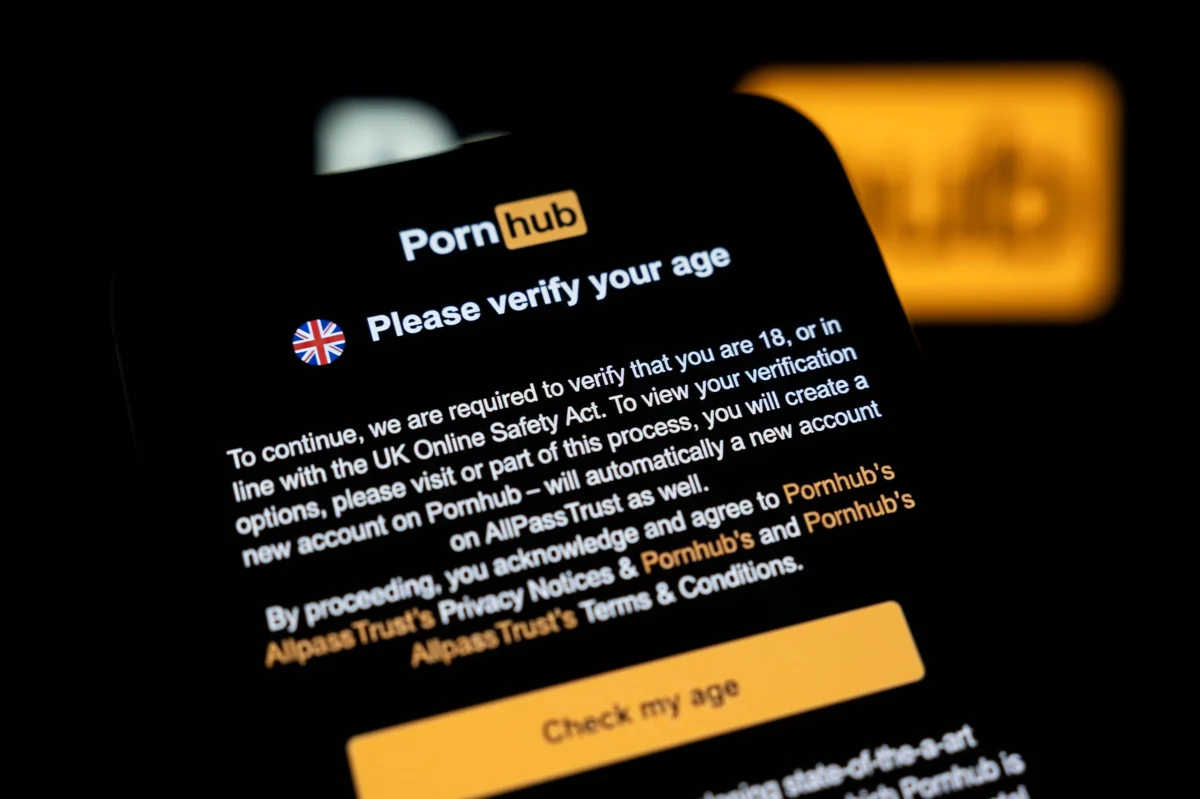
Aylo, the parent company of Pornhub, has officially announced the restoration of access to its flagship adult entertainment platform for users in the United Kingdom, provided they utilize specific Apple hardware to verify their age. This decision comes three months after the company implemented a controversial blockade on all new UK-based traffic in protest of the country’s tightening digital safety regulations. The shift marks a significant pivot in the ongoing tension between major adult content providers and national regulators, signaling a potential new standard for how age-restricted content is managed through hardware-level solutions rather than third-party software or government-mandated identification databases.
According to a statement released by Aylo on Tuesday, the re-entry into the British market is facilitated by the release of Apple’s iOS 26.4 operating system. The company characterized this update as the "first-ever device-based age-verification solution" available for its UK user base. Aylo maintains that this technological integration will better protect minors while preserving the privacy of adult users, a balance the company has long claimed was impossible under previous regulatory proposals. The new access protocol specifically applies to users on iPhones and iPads; however, users on MacBooks and other macOS-based devices remain excluded for the time being, as those systems utilize a different architectural framework for age assurance.
The Legislative Catalyst: The UK Online Safety Act
The roots of this conflict trace back to the United Kingdom’s Online Safety Act, which received royal assent in late 2023. The legislation represents one of the most robust frameworks in the world for regulating internet content, placing a "duty of care" on tech companies to protect children from harmful material. Under the provisions rolled out in July 2023, adult websites are required to implement "highly effective" age-verification measures to ensure that users are at least 18 years old.
The UK regulator, Ofcom, was tasked with enforcing these rules, which suggest various methods for verification, including credit card checks, government ID uploads, or facial age-estimation technology. Failure to comply with these standards carries severe penalties, including fines of up to £18 million or 10% of a company’s global annual turnover, whichever is higher. In extreme cases, the regulator has the authority to block non-compliant services entirely within the UK territory.
In response to these requirements, Pornhub and its parent company Aylo initially took a hardline stance. In February 2024, the platform began blocking access to all new UK users who had not previously completed a verification process. At the time, Aylo argued that the proposed methods for age verification—particularly those involving the sharing of sensitive personal identification documents with third-party sites—posed significant privacy risks to users and were easily circumvented by tech-savvy minors using Virtual Private Networks (VPNs).
Chronology of the Conflict and Resolution
The resolution announced this week is the culmination of a multi-month standoff and a strategic lobbying campaign directed at the world’s largest technology hardware manufacturers.
- July 2023: The UK government finalizes child safety provisions, mandating that adult sites implement strict age-verification protocols.
- November 2023: Aylo sends formal correspondence to Apple, Google, and Microsoft. The letters urge the "Big Tech" trio to integrate age-verification tools directly into their operating systems, arguing that device-level checks are the only way to ensure both security and universal compliance.
- February 2024: Citing the "flawed" nature of the UK’s ID-based requirements, Pornhub blocks access to new users in the United Kingdom.
- May 2024: Aylo announces that Apple’s latest software update (iOS 26.4) meets its internal standards for secure, device-based verification.
- Present: Access is restored for UK users on compatible Apple devices, while the company continues to call for similar updates from Google’s Android and Microsoft’s Windows platforms.
Technical Advantages of Device-Based Verification
The shift toward device-based verification represents a departure from the "web-first" approach that has dominated the digital safety debate for years. Aylo’s endorsement of Apple’s iOS 26.4 hinges on the belief that hardware-level protections are inherently more secure and less intrusive than traditional methods.
When a user verifies their age through an Apple device, the process typically leverages the "Secure Enclave"—a dedicated subsystem integrated into Apple’s system-on-chip (SoC) designs. This allows the device to confirm the user’s age (often based on the verified birthdate associated with an Apple ID or through biometric data) without sharing the user’s actual identity or document images with the adult website.
Aylo has argued that this method creates a "zero-knowledge" environment where the platform receives a simple "yes" or "no" confirmation regarding the user’s age status. This mitigates the risk of massive data breaches involving sensitive identification documents, a primary concern for privacy advocates and adult industry stakeholders alike. Furthermore, the company noted that Apple’s safety settings for users under 18 are "some of the strongest and hardest to circumvent," making it difficult for minors to bypass restrictions that are hardcoded into the device’s ecosystem.
Comparative Data: The Global Landscape of Age Verification
The United Kingdom is not alone in its pursuit of stricter age-gating for adult content. The issue has become a global flashpoint, particularly in the United States, where a wave of state-level legislation has fundamentally altered the accessibility of the internet.
Currently, approximately 25 U.S. states have enacted or proposed age-verification laws for adult websites. The results have been a fragmented digital landscape:
- Texas, Utah, and Virginia: In these states, Pornhub has completely disabled its services, replacing the site with a video message from an adult film star explaining the company’s opposition to the laws.
- Louisiana: The state was among the first to implement a digital ID system (LA Wallet) for age verification. While Pornhub initially complied, the company has expressed ongoing concerns about the precedent of government-linked IDs being used to track legal adult activity.
- Mississippi and Montana: Similar to the UK experience, these states have seen a total withdrawal of Aylo-owned platforms following the implementation of strict verification mandates.
Data from digital rights organizations suggests that since these blocks were implemented, there has been a significant spike in VPN (Virtual Private Network) searches in the affected regions. In Utah, for example, VPN demand reportedly surged by over 400% in the days following the Pornhub blackout. This data supports Aylo’s argument that web-based blocks are often ineffective, as they drive users toward tools that mask their location and potentially expose them to less regulated, more dangerous corners of the internet.
Official Responses and Industry Reactions
The reaction to Aylo’s announcement has been mixed, reflecting the deep divide between privacy advocates and child safety organizations.
In its official statement, Aylo emphasized its commitment to safety: "Our goal has always been to ensure that our platforms are for adults only, while protecting the privacy and security of our users. We believe that device-based solutions are the future of online safety, providing a seamless and secure experience that does not require users to hand over sensitive personal data to third-party verifiers."
While Apple has not publicly framed iOS 26.4 as a specific tool for the adult industry, the company has historically moved toward giving users more control over their digital identities. However, some child safety advocates remain skeptical. Groups such as the NSPCC (National Society for the Prevention of Cruelty to Children) in the UK have previously argued that while device-based checks are a step forward, they must be part of a "multi-layered" approach that includes robust platform-level moderation and parental controls.
Digital rights groups, such as the Open Rights Group (ORG), have expressed cautious optimism about the shift toward hardware-level verification. "The move away from centralized databases of users’ browsing habits and government IDs is a positive development for privacy," a spokesperson for the group noted in a recent brief. "However, it raises new questions about the power of ‘Big Tech’ companies to act as the ultimate gatekeepers of what content is accessible and to whom."
Broader Implications for the Digital Economy
The decision by Pornhub to re-enter the UK market through Apple’s ecosystem has profound implications for the broader tech industry. It effectively positions Apple as a primary arbiter of age-gating, a role that may eventually force other tech giants like Google and Microsoft to follow suit.
For Google, the pressure is particularly acute. As the developer of the Android operating system, which powers a significant portion of the UK’s mobile devices, Google faces a choice: implement similar device-based verification APIs or risk having its users remain blocked from a wide range of age-restricted services. If device-based verification becomes the industry standard, it could create a "walled garden" effect where the level of internet freedom a user enjoys is dictated by the brand of smartphone they carry.
Furthermore, this development highlights a shift in regulatory strategy. Rather than targeting the "pipes" (ISPs) or the "destination" (the website), the focus is moving toward the "portal" (the device). This shift could simplify compliance for content creators but consolidates immense power within the hands of hardware manufacturers.
As the UK’s Online Safety Act continues to be phased in, the success or failure of the Pornhub-Apple integration will likely serve as a blueprint for other jurisdictions. If the system proves effective at keeping minors off the site while satisfying the privacy concerns of adult users, it may provide a path forward for other states and countries currently embroiled in legal battles over internet censorship and child safety. For now, the "Pornhub blackout" in the UK has partially lifted, but the debate over who is responsible for verifying the identity of the world’s internet users is far from over.