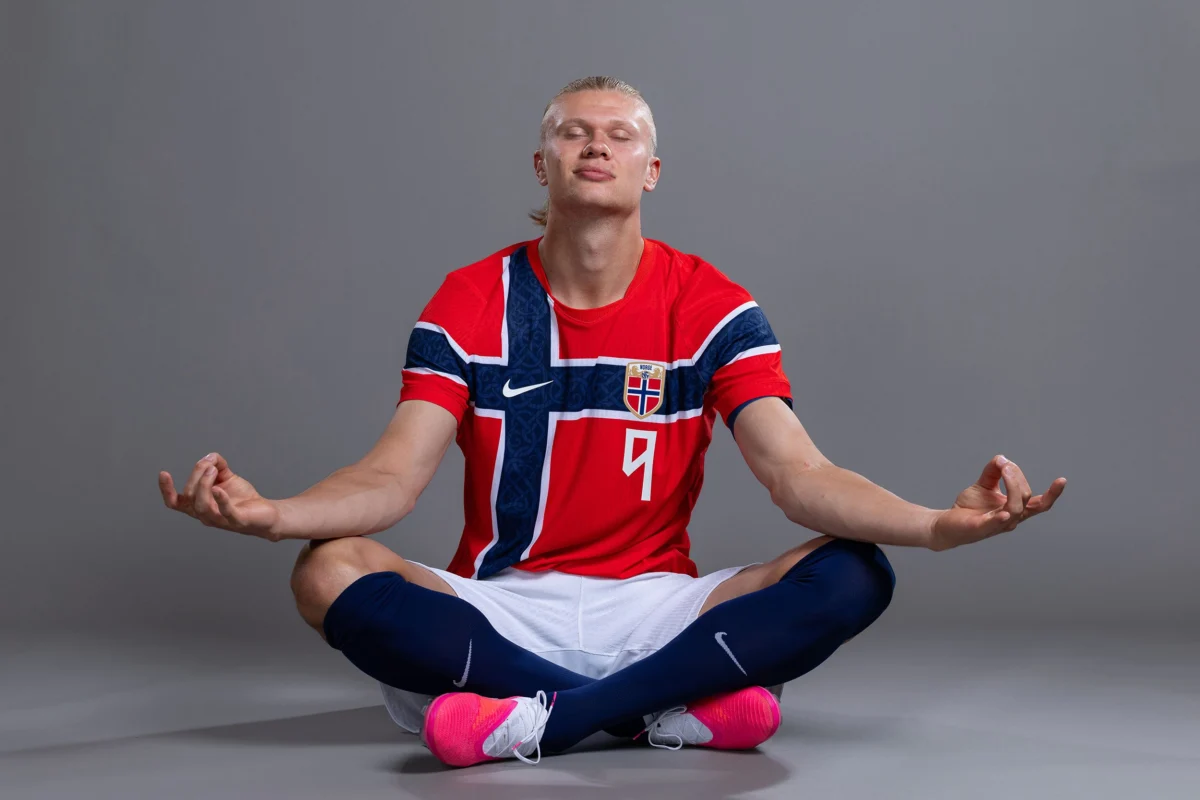
The viral proliferation of a high-fidelity video featuring Norwegian striker Erling Haaland illustrates a transformative shift in the architecture of global celebrity and the increasingly porous boundary between authentic footage and synthetic media. In the footage, which garnered more than 31 million views on the social media platform X within days of its appearance, Haaland is seen mid-meal in a restaurant, momentarily startled by his own reflection. While the clip was initially accepted by millions as a candid glimpse into the life of one of the world’s most formidable athletes, subsequent investigations by digital forensic experts and fact-checkers revealed the video was not Haaland at all. Instead, it was a sophisticated deepfake superimposed onto a slapstick comedy skit originally performed and posted to TikTok by Chinese comedian Jin Long.
The incident, occurring against the backdrop of the 2026 World Cup cycle, highlights a burgeoning era where the traditional "white-knuckle" control of a celebrity’s image is being replaced by an "open-source" model of stardom. In this new paradigm, the athlete functions less as a private individual and more as a malleable character whose narrative is co-authored by fans, algorithms, and generative artificial intelligence. As the digital footprint of sports icons expands, the authenticity of the content becomes secondary to its "meme-ability" and its alignment with established fan-created lore.
Chronology of a Digital Sensation
The trajectory of the Haaland deepfake provides a blueprint for how synthetic media travels through the modern information ecosystem. The original source material was a comedic video posted in mid-June by Jin Long, a creator known for physical comedy and situational skits. Shortly after its release, AI-driven face-swapping technology was utilized to transpose Haaland’s likeness onto Long’s body. The resulting video was then distributed across Douyin—the Chinese version of TikTok—before migrating to Western platforms like X and Instagram.
By the fourth week of the viral cycle, even as community notes and fact-checking organizations flagged the video as AI-generated, the engagement metrics continued to climb. The persistence of the video’s popularity suggests that the audience’s interest was not rooted in the video’s veracity, but rather in how perfectly it captured the "character" of Erling Haaland that has been constructed by the internet over the past several years. This "Haaland-ification" represents a shift from the deepfake as a tool of misinformation to the deepfake as a medium for fan art and character development.
The Rise of "Habao" and the Chinese Market Context
The success of the Haaland deepfake is deeply rooted in the striker’s specific cultural standing in China, where he has become a transcendent meme sensation. Over the past year, Haaland has actively cultivated a presence in the Chinese digital market, launching official accounts on Douyin and Weibo that quickly amassed millions of followers. This expansion was supported by a series of strategic commercial moves, including fronting a campaign for a popular Chinese herbal drink where he attempted Mandarin, a gesture that endeared him to local fans.
In Chinese fan circles, Haaland has been affectionately rechristened "Habao," a nickname roughly translating to "Ha Baby." This moniker reflects a perceived dichotomy that fans find endlessly entertaining: the "on-pitch destroyer" who shatters goal-scoring records versus the "off-pitch golden retriever" known for his quirky personality and occasionally awkward social interactions. The deepfake of him flinching at his own reflection fed directly into this "Habao" narrative, providing a visual confirmation of a personality trait that fans had already collectively decided he possessed. This phenomenon suggests that when an athlete’s public persona becomes sufficiently vivid, the audience will actively seek out or create content that reinforces that persona, regardless of its origin.
Supporting Data: The Gen Z Shift in Sports Consumption
The rapid adoption and celebration of the Haaland deepfake are supported by broader trends in how younger demographics engage with professional sports. Traditional loyalty to teams or geographic regions is being superseded by a deep, parasocial connection to individual athletes.
A recent report by WSC Sports, an AI-driven sports content firm, indicates that Gen Z fans feel a significantly stronger connection to individual players than they do to sports franchises. This "athlete-first" mentality is driven by the accessibility of social media, which allows fans to follow the daily lives and personalities of players in real-time. Furthermore, a survey conducted by the consulting firm Oliver Wyman found that social media content produced by or featuring athletes is the single largest driver of sports engagement for Gen Z.
These data points underscore a fundamental change in sports economics. The value of an athlete is no longer confined to their performance during the 90 minutes of a match; it is equally tied to their presence in the 24-hour digital cycle. In this environment, an AI-generated video that reinforces an athlete’s brand can be as valuable—or more so—than a traditional post-match interview.
The Concept of "Fanon" and Synthetic Lore
In media studies, the term "canon" refers to the official facts of a fictional universe, while "fanon" refers to the ideas and interpretations created by fans that are widely accepted within the community. The Haaland incident suggests that the concept of fanon is now being applied to real-life celebrities. When a footballer becomes a "character," the audience stops being mere spectators and begins to act as creative contributors.
Artificial intelligence has become the primary tool for generating this fanon. Because AI can synthesize images, videos, and voices on demand, the audience no longer requires the actual athlete to participate in the creation of new lore. If the "character" of Haaland is established as a lovable, slightly clumsy giant, the audience can use AI to place him in scenarios that highlight those traits. The authenticity of the footage is irrelevant; what matters is that the content "fits" the character. This shift allows the fan community to fill the gaps left by the athlete’s actual public appearances, creating a continuous stream of engagement that keeps the celebrity relevant even during the off-season.
Historical Context: From Tom Cruise to the Balenciaga Pope
The acceptance of the Haaland deepfake follows several high-profile instances where synthetic media was embraced by the public for its entertainment value rather than its accuracy.
- @DeepTomCruise (2021): A series of TikTok videos featuring a hyper-realistic Tom Cruise performing magic tricks and telling jokes became a global sensation. While the creator, Miles Fisher, was transparent about using AI, the videos were celebrated for their technical prowess and their ability to capture Cruise’s specific mannerisms.
- AI Drake and The Weeknd (2023): The track "Heart on My Sleeve," which used AI-generated vocals to mimic the styles of Drake and The Weeknd, racked up millions of streams across Spotify and YouTube before being removed due to copyright claims. Despite the legal controversy, the song was hailed by fans as a "bop," proving that the audience was willing to consume and enjoy music that the artists themselves never recorded.
- The Balenciaga Pope (2023): An AI-generated image of Pope Francis wearing a stylish white puffer coat fooled millions. The reaction was largely positive, with social media users praising the Pope’s "fit" and the image sparking a wave of fashion-related memes.
These examples indicate a growing "post-truth" sentiment in digital consumption. If the content is aesthetically pleasing or culturally resonant, a significant portion of the audience is willing to suspend disbelief and "opt-in" to the fiction.
Official Responses and Ethical Implications
While fans may embrace these digital recreations, the implications for athletes and their management teams are complex. The unauthorized use of a player’s likeness raises significant questions regarding intellectual property and the right of publicity. In the case of the Haaland video, there has been no official legal challenge from the player’s camp, likely because the video was perceived as harmless or even beneficial to his brand.
However, industry experts warn that the line between "fan art" and "malicious deepfakes" is razor-thin. While a video of an athlete eating in a restaurant is innocuous, the same technology can be used to place celebrities in compromising or controversial situations. Sports agencies are now reportedly investing in AI-detection software and digital reputation management firms to monitor the web for synthetic content that could damage their clients’ commercial value.
Furthermore, the rise of "open-source" celebrity challenges the traditional sponsorship model. If an AI can generate a video of Haaland drinking a specific brand of soda, what is the incentive for a company to pay millions for an official endorsement? The legal framework for protecting an individual’s "digital twin" is still in its infancy, and the Haaland case serves as a harbinger of the legislative battles to come.
Broader Impact: The Future of Sports Marketing
The "Haaland-ification" of stardom suggests that the future of sports marketing will be less about controlling a narrative and more about steering a community. Brands and athletes who resist the meme culture or attempt to strictly litigate every unauthorized use of their likeness may find themselves alienated from younger audiences. Conversely, those who lean into the "open-source" nature of their fame—perhaps by providing official assets for fans to use in AI creations—could see their global influence grow exponentially.
We are entering an era where the most successful athletes will be those who can exist simultaneously as high-performing physical beings and as highly adaptable digital avatars. Erling Haaland, through a combination of his on-field dominance and his unique, meme-ready personality, has become the prototype for this new kind of star. As AI technology continues to evolve, the "Habao" effect will likely become the standard, not the exception, in the world of global celebrity. The reflection in the restaurant window may not have been real, but the cultural impact of the millions who watched it certainly is.