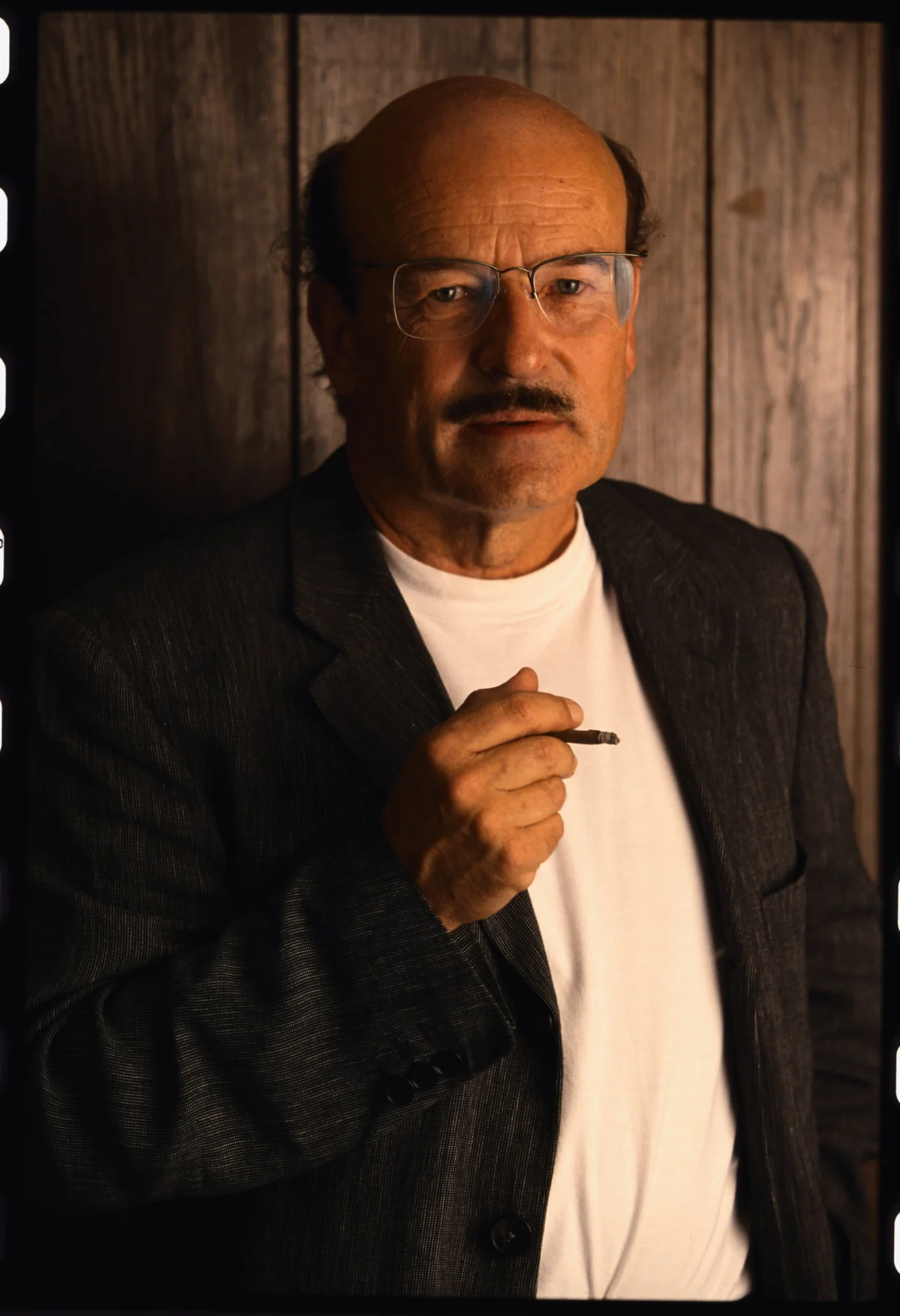
This Cannes, the legendary German filmmaker Volker Schlöndorff finds himself in a rare state of ease, present not with the anxiety of competition but the quiet joy of a seasoned master. "Go there for the fun," he recalls former Cannes chief Gilles Jacob recently advising him. "You got the Palme already." This casual counsel encapsulates a career spanning over six decades, deeply intertwined with the very fabric of European cinema and, most notably, the Cannes Film Festival itself. At 87, Schlöndorff’s presence on the Croisette is a testament to enduring artistic vision and a life lived at the intersection of history and film.
A Legacy Forged on the Croisette: The Genesis of a Master
Schlöndorff’s relationship with Cannes dates back to 1966, an epochal year for European cinema. He arrived with Young Törless (Der junge Törless), his debut feature, an adaptation of Robert Musil’s complex novel exploring themes of cruelty and authoritarianism within an Austrian military boarding school. This film was not just a personal milestone; it was one of the opening salvos of what would become known as the New German Cinema movement. This artistic surge, which also included contemporaries like Werner Herzog, Rainer Werner Fassbinder, and Wim Wenders, sought to break away from the conservative, often aesthetically stagnant German filmmaking of the post-war era, confronting the nation’s past and its contemporary identity with unflinching honesty and experimental verve.
The screening of Young Törless in Cannes was met with immediate controversy, a reaction that, in hindsight, served as invaluable publicity. Schlöndorff vividly remembers a German cultural attaché storming out mid-screening, declaring, "This is not a German film!" The filmmaker, reflecting on the incident decades later, noted with a wry smile, "For publicity, I couldn’t have asked for anything better." Despite the diplomatic outrage, the film garnered critical acclaim, setting a precedent for Schlöndorff’s career: challenging narratives rooted in German history, presented with a distinctive European sensibility. He describes his first Cannes experience, particularly the press screening, as profoundly impactful. "I remember going into the press conference with maybe 40 or 50 critics together, and that applause was probably the most enjoyable one I ever had in my life." This early validation underscored the film’s artistic merit, laying the groundwork for a career defined by both critical engagement and public discourse.

The Political Animal: Tracing European Fault Lines
Schlöndorff’s cinematic oeuvre is characterized by a calm precision, reflecting decades spent dissecting cinema, politics, and history. His films consistently trace the tumultuous fault lines of European history, addressing fascism, terrorism, war, ideological collapse, and the uneasy compromises between morality and survival. From The Lost Honor of Katharina Blum (1975), a searing critique of media sensationalism and state overreach in post-war Germany, to Coup de Grâce (1976), a stark portrayal of love and betrayal during the Russian Civil War, and later works like The Ninth Day (2004), Calm at Sea (2011), and Diplomacy (2014), his narratives have consistently probed the impact of grand historical events on individual lives. Few filmmakers of his generation navigated the realms of art-house prestige, literary adaptation, and political confrontation with such fluid command.
This deep engagement with history and politics is not merely an artistic choice but a biographical imperative. Born in Wiesbaden, Germany, during World War II, Schlöndorff’s formative years were profoundly shaped by the aftermath of conflict and the nascent reconstruction of European identity. He spent his crucial teenage and early adult years in France, attending school and beginning his cinema apprenticeship under titans of the French New Wave, such as Louis Malle and Jean-Pierre Melville. This period, from ages 15 to 25, was transformative. "Everything I am in life, as well as in my profession, in my art, it all comes from these 10 years in France," he states, emphasizing the profound influence of French intellectual rigor and cinematic innovation. The French New Wave, with its emphasis on auteur theory, personal vision, and challenging conventional narrative structures, provided a fertile ground for Schlöndorff’s emerging artistic identity.
His self-identification as a "political animal" stems from his immersion in the ideological tumult of postwar West Germany in the 1960s and 1970s. This era was marked by intense introspection about Germany’s Nazi past and the lingering presence of authoritarian ideologies within its institutions. The student movements of 1968, protesting against the Vietnam War, capitalist structures, and the perceived authoritarianism of the state, fueled a widespread radicalization. Films like The Lost Honor of Katharina Blum, the omnibus film Germany in Autumn (1978), and The Legend of Rita (2000) directly confronted these societal tensions. While Schlöndorff never justified political violence, he aimed to depict the underlying anger and the societal conditions that led groups like the Red Army Faction (RAF) to resort to extreme measures. He recalls how post-war German society was still "completely infiltrated by old Nazis, in the educational system, in the justice system, in everyday politics," necessitating a shake-up. The escalation to violence, he suggests, began with "good intentions" to serve as a "wake-up call," but became increasingly fanatical as the radicals became isolated. His nuanced exploration of these complex historical periods remains a hallmark of his filmography.
The Defining Peak: The Tin Drum and International Acclaim
Despite several returns to Cannes in the late 1960s and ’70s—some, as he humorously notes, "have fortunately been forgotten," like his second film Degree of Murder (1967) with Anita Pallenberg and music by Brian Jones, or Man on Horseback (1969)—Cannes remained a recurring stage for his evolving career. It was in 1979 that Schlöndorff’s trajectory reached its defining peak with The Tin Drum (Die Blechtrommel).

This monumental adaptation of Günter Grass’s sprawling anti-fascist masterpiece shared the Palme d’Or with Francis Ford Coppola’s Apocalypse Now. This joint award was more than just a festival triumph; it was a symbolic moment for global cinema, representing a convergence of two powerful cinematic forces: the New German Cinema meeting New Hollywood at the height of their artistic ambition. Coppola’s epic Vietnam War narrative alongside Schlöndorff’s surreal, poignant tale of a child who refuses to grow up as Europe descends into madness offered a profound commentary on the human condition in times of conflict. Schlöndorff reminisces about his friendship with Coppola and the "David versus Goliath" feeling, acknowledging Coppola’s significant financial burdens with Apocalypse Now. Though Coppola initially worried that sharing the prize might diminish its commercial impact, both films achieved significant success, cementing a lasting bond between the two directors.
The success of The Tin Drum extended beyond Cannes. It went on to win the Academy Award for Best Foreign Language Film, a historic achievement as the first German movie to do so since the end of World War II. This international recognition firmly established Schlöndorff on the global stage. He acknowledges this period as his career’s zenith: "Sometimes, you’re kissed by the Muses, as I was with The Tin Drum. That will remain, forever, my peak. As time goes by, I feel grateful to have had such a peak." This triumph provided a profound sense of tranquility, allowing him to approach subsequent projects with less pressure, knowing he had nothing left to prove. The Tin Drum not only defined Schlöndorff internationally but also clarified the thematic core that would continue to drive his work: the undeniable truth that history is never mere background, and politics inevitably infiltrates private lives, whether invited or not.
Cross-Cultural Influences and Hollywood Detours
Schlöndorff’s unique cinematic voice was shaped by a confluence of cultural influences. His formative years in France instilled in him the intellectual rigor and aesthetic adventurousness of the French New Wave, evident in his early works’ willingness to experiment and confront societal norms. His apprenticeship under Louis Malle and Jean-Pierre Melville, masters known for their distinct narrative styles and psychological depth, provided a practical foundation that balanced the theoretical underpinnings of the New Wave.
After the international acclaim of The Tin Drum, Hollywood beckoned. Schlöndorff embarked on a series of diverse projects, though he notably turned down an offer from Steven Spielberg to direct an episode of The Twilight Zone. His Hollywood ventures included critically acclaimed literary adaptations such as Swann in Love (1984) with Jeremy Irons, Death of a Salesman (1985) starring John Malkovich and Dustin Hoffman, and Voyager (1991) with Sam Shepard and Julie Delpy. He also directed the first feature film adaptation of Margaret Atwood’s dystopian novel The Handmaid’s Tale (1990), featuring a stellar cast including Natasha Richardson, Faye Dunaway, and Robert Duvall. This period saw him briefly make New York his home, navigating the complexities of American filmmaking while maintaining his European sensibilities.

During this time, he forged a significant friendship with Billy Wilder, the legendary Austrian-American filmmaker. Schlöndorff’s 2006 documentary Billy Wilder Speaks stands as a testament to their bond. From Wilder, Schlöndorff learned a crucial lesson: "Most of all, how to not let your profession entirely take over your life." Wilder, despite his immense passion for filmmaking, emphasized the importance of a well-rounded life—art collecting, social engagements, and, critically, discussing films with friends. This practical wisdom from Wilder offered a counterweight to the intense, often solitary, artistic pursuits Schlöndorff had cultivated, fostering a more balanced approach to his demanding profession.
Rebuilding a Legacy: The Studio Babelsberg Chapter
History, ever a central character in Schlöndorff’s life and work, intervened once again. The fall of the Berlin Wall in 1989 pulled him back to Germany, to a role far removed from directing. He spent several years helping to revive the legendary Studio Babelsberg, located in what was formerly East Germany. This iconic studio, with a rich history dating back to the UFA era of German Expressionism and serving as a key production hub during the Nazi and East German regimes, faced collapse after reunification. Schlöndorff took on the monumental task of preserving and modernizing it, a period he describes as necessary but frustrating.
His work at Babelsberg was less about filmmaking and more about political negotiation, infrastructure renovation, and navigating the complex transition from a state-owned enterprise to an investor-owned entity. "There were more politics than filmmaking involved," he recounts, reflecting on the arduous process that saw him shift from a creative role to a financial and commercial one. This period also presented an ideological shift, moving from what he termed a "leftist to capitalist" perspective. Despite the immense challenges and the years lost to direct filmmaking, Schlöndorff takes pride in the outcome: "But today, I’m fine with it, because otherwise Studio Babelsberg wouldn’t exist. And it does." His latest film, Visitation, even utilized the studio for interior shots and sound work, allowing him to finally "take advantage of all that investment." His stewardship ensured that one of the world’s oldest and most historically significant film studios continued to thrive, a monumental contribution to German and international cinema infrastructure.
A Contemporary Return: Visitation at Cannes
This year, Cannes brings Schlöndorff back once more, out of competition, with his latest work, Visitation (Heimsuchung). The film is an adaptation of Jenny Erpenbeck’s acclaimed novel Heimsuchung, a narrative that perfectly aligns with Schlöndorff’s enduring thematic interests. Set across several decades at a lakeside property in Brandenburg, the film chronicles the lives of successive inhabitants through the Nazi era, East Germany, and the period of reunification. It meticulously traces how sweeping political systems subtly and overtly reshape ordinary lives, regardless of whether the occupants acknowledge or resist these forces. The film features an ensemble cast including Lars Eidinger, Martina Gedeck, Susanne Wolff, and Angela Winkler, with StudioCanal handling international sales.

Schlöndorff admits he was initially unaware of how political Visitation would become. He envisioned it as a pastoral, bucolic narrative, observing the countryside through the four seasons. However, during production, he realized that even as characters believed they were enjoying private happiness and control over their lives, "politics looming in the background… will change their lives." He highlights that the Nazi period constitutes only about a third of the film, with the broader focus being "how we are all shaped by historical events, more than our own will and our own desires." The film’s exploration of the artist’s role under authoritarianism, the fragility of private happiness, and the illusion that anyone can remain untouched by history places Visitation firmly within the established territory Schlöndorff has explored throughout his illustrious career.
Enduring Philosophy: No Regrets, Only History
Looking back across six decades of Cannes triumphs, controversies, detours, and reinventions, Schlöndorff sounds remarkably unburdened. He discusses the unpredictability of a filmmaking life with the same unsentimental clarity his films bring to history itself. Asked about regrets, he echoes Edith Piaf: "Je ne regrette rien." This sentiment reflects a deep understanding that life’s trajectory is a complex interplay of personal choices and external forces.
Schlöndorff acknowledges that while one often believes they make all the choices in life, "the influence of the world on your private life is enormous." He cites the fall of the Berlin Wall as an example of an event that thrust him into an unforeseen role as studio boss. However, he identifies one conscious choice that determined everything: deciding, at age 16 or 17, to attend boarding school in France and then committing to become a filmmaker. "I labored, with intense will and energy, and 10 years later, I became a filmmaker. Everything else came from that." This singular decision set in motion a career that would not only leave an indelible mark on German and international cinema but also consistently hold a mirror up to the profound and often challenging relationship between humanity and its history.
Volker Schlöndorff remains a towering figure, a chronicler of the European soul whose work continues to resonate. His return to Cannes, in this relaxed and reflective capacity, underscores not just his personal journey but also the enduring power of cinema to engage with, interpret, and reflect the world’s most pressing historical and political narratives. His legacy is one of unwavering commitment to artistic integrity, intellectual curiosity, and a profound belief in the power of film to provoke thought and illuminate the human condition.