The Walt Disney Company reported fiscal second-quarter earnings on Wednesday that surpassed Wall Street’s expectations, fueled by robust performances in its direct-to-consumer streaming business and its sprawling theme park empire. Following the announcement, the entertainment giant’s shares surged approximately 7%, signaling investor confidence in the company’s strategic direction under the newly appointed Chief Executive Officer, Josh D’Amaro. The report, which covers the period ending March 28, represents a critical milestone for Disney as it navigates a complex transition away from traditional linear television toward a digital-first future, all while managing macroeconomic headwinds and a changing leadership structure.
For the quarter, Disney reported total revenue of $25.17 billion, a 7% increase compared to the same period in the previous fiscal year. Net income stood at $2.47 billion, or $1.27 per share. While this was a decrease from the $3.4 billion, or $1.81 per share, recorded a year earlier, the company’s adjusted earnings per share—which account for one-time items such as the acquisition of the NFL Network and other media assets—reached $1.57. This figure provided a clearer picture of the company’s underlying operational strength, particularly as it integrates new sports assets and optimizes its content delivery platforms.
The Experiences Segment: Growth Amidst Domestic Softness
Disney’s Experiences segment, a cornerstone of the company’s revenue model that includes its domestic and international theme parks, Disney Cruise Line, and consumer products, reported revenue of nearly $9.5 billion. This marked a 7% year-over-year increase, driven largely by higher guest spending and the continued recovery of international markets. Global guest attendance saw a modest 2% rise, though the internal metrics revealed a slight divergence between domestic and international performance.
In the United States, park visitation declined by 1% compared to the prior year. Management attributed this dip to a softening in international visitation to domestic sites, a trend that has persisted for two consecutive quarters. Despite this decline in foot traffic, Disney successfully increased its per-guest spending, a testament to the company’s pricing power and the popularity of premium offerings such as Genie+ and high-end dining experiences.
CFO Hugh Johnston addressed the potential impact of macroeconomic volatility, specifically citing the geopolitical tensions and the surge in oil prices following the U.S.-Israel military actions in late February. Despite these external pressures, Johnston noted that consumer demand remains "healthy."
"We continue to see a strong consumer," Johnston told CNBC. "While there may be some concerns around the macros and specifically around the price of fuel, we have not seen any evidence of that in our booking data. Bookings for the second half of the year are quite strong."
A New Era of Leadership: The D’Amaro Strategy
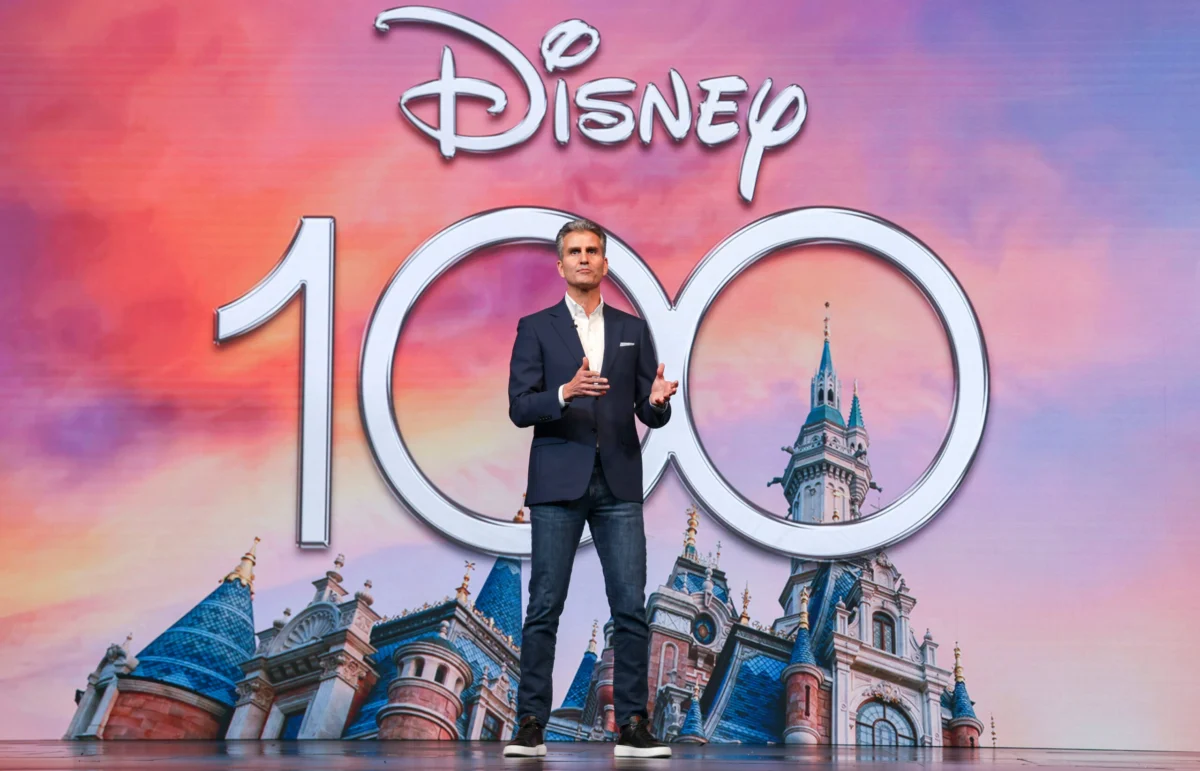
This earnings report is the first under the leadership of Josh D’Amaro, who took the helm as CEO in March 2026. D’Amaro, a longtime Disney veteran who previously led the Parks and Experiences division, succeeded Bob Iger. Iger’s departure marked the end of an era that spanned two decades, during which he transformed Disney into a global powerhouse through the acquisitions of Pixar, Marvel, Lucasfilm, and 21st Century Fox.
D’Amaro’s first months in office have not been without challenges. The company recently underwent a significant round of layoffs aimed at streamlining operations and reducing costs. Furthermore, Disney has faced external political scrutiny, particularly regarding its ABC network and the monologues of late-night host Jimmy Kimmel. During the earnings call, D’Amaro sought to pivot the conversation toward long-term growth, emphasizing a strategy rooted in intellectual property (IP) and technological innovation.
"Much of our focus is on investing in our core intellectual property and advancing the technology around our storytelling," D’Amaro stated. He highlighted that these two pillars are the primary engines for the theme parks and the streaming business. By leveraging advanced robotics, augmented reality, and data-driven personalization, Disney aims to deepen guest engagement and create "frictionless" experiences across its physical and digital properties.
Entertainment and the Streaming Marketplace
The Entertainment segment, encompassing Disney’s traditional television networks, streaming services (Disney+, Hulu, Star+), and theatrical releases, saw its revenue climb 10% to $11.72 billion. A significant portion of this growth was attributed to the recent closure of the Fubo deal, which added 4% to the segment’s top line.
Subscription and affiliate fees grew by 14% to $7.8 billion, a result of aggressive price hikes implemented across its streaming platforms over the past year. While price increases often lead to "churn" (subscribers canceling their service), Disney reported an overall increase in engagement. D’Amaro acknowledged the competitive nature of the market but remained optimistic. "It’s a competitive streaming marketplace out there right now," he said. "Despite that, we saw an increase in engagement in the quarter, and our key drivers for growth include upcoming content and product enhancements."
The theatrical side of the business also provided a much-needed boost. Recent box-office successes, including "Avatar: Fire and Ash" and "Zootopia 2," reinforced the value of Disney’s theatrical window in driving revenue before titles move to streaming. However, in a shift toward opacity that has become common among tech-leaning media companies, Disney has stopped providing granular details for its linear TV networks and has ceased reporting quarterly streaming subscriber counts, focusing instead on financial metrics and engagement levels.
Sports and the Digital Transformation of ESPN
Disney’s Sports segment, dominated by ESPN, reported a 2% revenue increase to $4.61 billion. This growth was largely driven by higher subscription fees and the inclusion of revenue from the NFL media assets acquired earlier in the year. However, the segment also faced rising costs associated with the skyrocketing price of sports broadcasting rights.
The highlight of the sports report was the performance of the ESPN direct-to-consumer (DTC) streaming app, which launched in August 2025. According to the company, the revenue generated from digital subscribers more than offset the losses incurred from the continued "cord-cutting" trend in traditional cable television.
The future of Disney’s relationship with the NFL was also a topic of discussion. Following reports that the NFL is looking to renegotiate its media rights deals earlier than planned—potentially eliminating an opt-out clause in the 2029-30 season in exchange for higher payments—Johnston indicated Disney’s willingness to talk. "We haven’t engaged yet with the league on early renewal conversations, but we’re not dogmatic about the process," Johnston said. He emphasized that Disney would evaluate any potential deal with "discipline and a focus on driving value for shareholders."
Financial Guidance and Shareholder Returns
In a move that likely contributed to the stock’s 7% jump, Disney updated its fiscal 2026 guidance. The company now expects full-year adjusted earnings growth of approximately 12%. Additionally, Disney increased its share repurchase target for the fiscal year to at least $8 billion, up from the previously announced $7 billion.
Looking further ahead, the company projected double-digit growth in adjusted earnings for fiscal 2027. Despite the optimism, Johnston remained cautious about the "macro uncertainty" facing consumers. He noted that while the company has "levers in place" to offset pressures such as rising fuel prices, a significant and sustained increase in energy costs could eventually lead to a shift in consumer behavior.
Timeline of Recent Events and Context
The current financial standing of Disney is the result of a series of strategic pivots and external challenges over the last 24 months:
- Late 2024: Disney+ and Hulu implement significant price increases to reach profitability.
- August 2025: The launch of the ESPN standalone streaming service, marking a major shift in the company’s sports strategy.
- February 2026: Geopolitical tensions in the Middle East lead to a spike in global oil prices, raising concerns about travel and tourism costs.
- March 2026: Josh D’Amaro officially takes over as CEO; Disney announces a strategic acquisition of NFL Media assets.
- April 2026: A new round of corporate layoffs is initiated to meet margin targets.
- May 2026: Q2 earnings report shows revenue beat and increased share buybacks.
Implications and Market Analysis
Disney’s latest results suggest that the company is successfully navigating the "messy middle" of the media industry’s transformation. By focusing on "Experiences" as a cash-flow engine, Disney is able to fund the expensive transition of its media business into a purely digital entity.
The decline in domestic park attendance, while small, indicates that the "revenge travel" surge following the pandemic may finally be cooling. However, Disney’s ability to extract more revenue from fewer visitors suggests that its brand remains premium enough to withstand inflationary pressures. The real test for D’Amaro will be maintaining this balance as fuel prices impact the cost of travel for the average family.
Furthermore, the integration of the NFL assets and the potential for an early renewal with the league underscore Disney’s belief that live sports remain the only "must-watch" content in a fragmented media landscape. By moving ESPN toward a DTC model, Disney is attempting to secure its future before the traditional cable bundle disappears entirely.
As the company moves into the second half of fiscal 2026, the focus will remain on the execution of D’Amaro’s IP-heavy strategy and the continued profitability of its streaming platforms. With $8 billion earmarked for share repurchases, the message to Wall Street is clear: Disney believes in its long-term trajectory, even as the global economic environment remains unpredictable.