
The landscape of the 78th Primetime Emmy Awards, scheduled for broadcast on September 14, 2026, has been fundamentally reshaped by a series of high-profile cancellations, regulatory interventions, and a significant consolidation of competitive categories. While the Academy of Television Arts & Sciences (Television Academy) traditionally navigates the complexities of honoring excellence across dozens of genres, this year’s ceremony faces unprecedented scrutiny. With 23 awards slated for the primary telecast and approximately 100 additional honors distributed during the Creative Arts ceremonies a week prior, the logistics of the event remain a massive undertaking. however, the narrative of the 2026 season is increasingly defined by the convergence of shifting industry regulations and a volatile political climate that has directly impacted some of late-night television’s most prominent figures.
Strategic Shifts in Eligibility and Guest Performer Regulations
The Television Academy has introduced several pivotal rule changes for the current cycle, most notably regarding the eligibility of guest performers. Under the new guidelines, any performer previously nominated in a lead or supporting category for a specific role is now barred from seeking a nomination as a guest actor for that same character in subsequent seasons. This adjustment was designed to prevent "category padding," where established stars return for brief cameos to sweep the guest categories, a phenomenon exemplified by Claire Foy’s 2021 victory for her brief appearance in The Crown after having already won Best Actress for the same role in 2018.
The practical application of this rule led to the high-profile disqualification of Jon Hamm in 2026. Hamm, who earned a supporting actor nomination earlier this year for his work on Apple TV+’s The Morning Show, was submitted by the streamer for a guest acting Emmy for a separate appearance in the same series. The Academy’s disqualification of Hamm highlights a tightening of standards intended to provide more opportunities for true "one-off" guest performances, though Hamm remains eligible for two other awards for different projects this year.
The Consolidation of Variety Categories
Perhaps the most impactful change for the 2026 ceremony is the reunification of the variety categories. For the first time in over a decade, the Television Academy has merged Variety Talk Series and Variety Scripted (formerly Sketch) Series into a single competitive field. This move effectively pits traditional nightly talk shows against weekly sketch programs and satirical news broadcasts, creating a "super-category" that many industry analysts believe is the most competitive in the history of the medium.
The evolution of this category reflects the broader history of the Television Academy’s attempts to categorize non-narrative programming. Initially established in 1951, the category was briefly split in the early 1970s to separate talk shows like The Tonight Show Starring Johnny Carson from musical variety programs like The Carol Burnett Show. By the mid-1970s, however, the categories were merged again, leading to decades of mismatched competition. During the 1990s, the lack of distinction resulted in disparate programs like MTV Unplugged competing against Dennis Miller Live and The Tonight Show with Jay Leno.
In 2015, the Academy again split the field into "Variety Talk" and "Variety Sketch" to acknowledge the different production demands of the two formats. This era saw the dominance of The Daily Show with Jon Stewart and later Last Week Tonight with John Oliver, the latter of which won seven consecutive Emmys in the talk category before being moved to the scripted variety category in 2024. The 2026 merger brings John Oliver back into direct competition with the network stalwarts, including The Late Show, Jimmy Kimmel Live!, and Saturday Night Live.
The Cancellation of The Late Show and the Skydance Acquisition
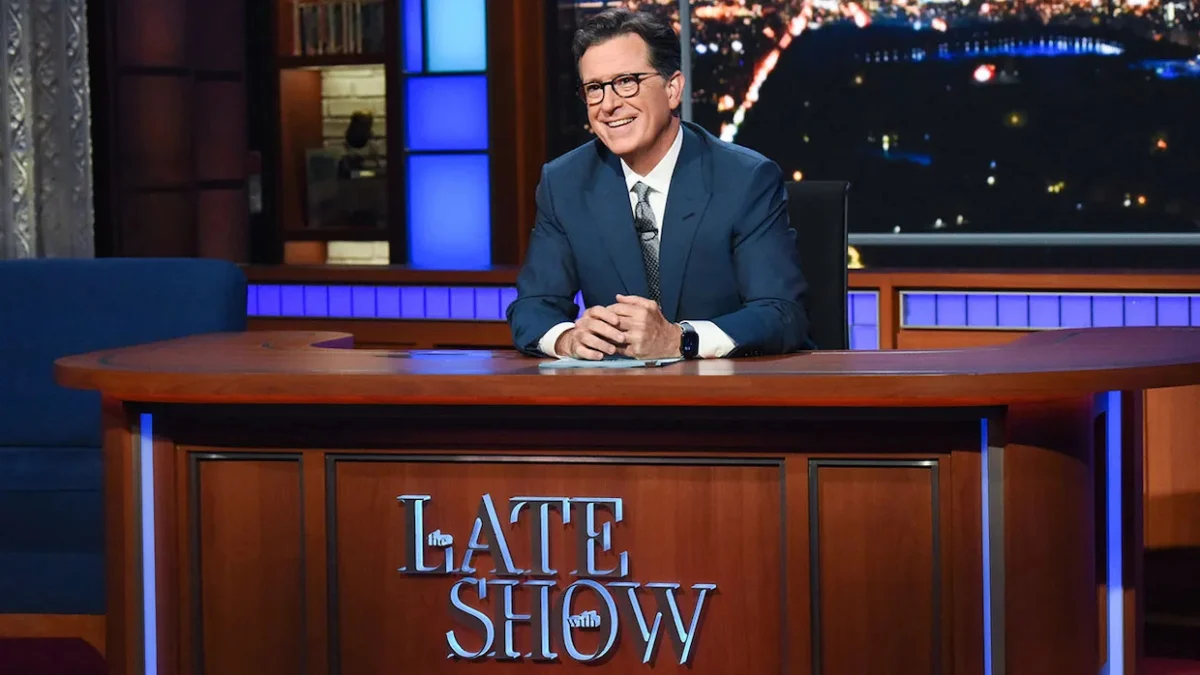
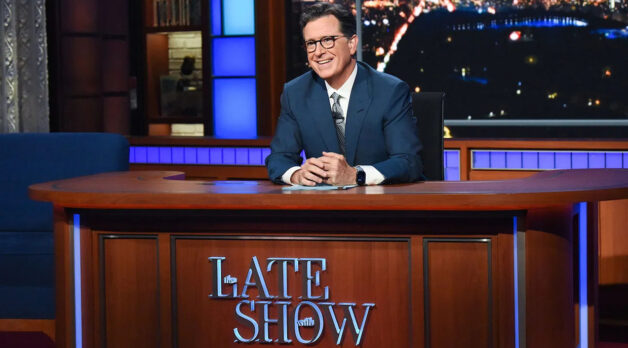
The 2026 Emmy race is heavily colored by the sudden conclusion of Stephen Colbert’s tenure at CBS. The Late Show with Stephen Colbert, a cornerstone of the network’s programming since David Letterman’s departure in 2015, aired its final episode on May 21, 2026. The cancellation followed the acquisition of Paramount Global, CBS’s parent company, by Skydance Media, led by David Ellison.
The official justification provided by the new management cited a projected annual loss of $40 million for the franchise. However, industry observers and media critics have questioned the transparency of these figures, suggesting that the decision may have been influenced by political optics. Colbert has been a consistent and sharp critic of the current presidential administration, and the relationship between the Ellison family and the executive branch has been a subject of significant public discourse.
Despite his termination, Colbert’s final season has been hailed as a creative triumph. During the 2025 ceremony, Colbert received a standing ovation from his peers, and The Late Show secured its first win in the talk series category. For the 2026 awards, Colbert is viewed as a sentimental and political favorite. Voters may view a win for The Late Show not only as a career achievement award for Colbert but as a symbolic gesture of support for editorial independence in late-night television.
Regulatory Pressure and the Brief Suspension of Jimmy Kimmel Live!
Parallel to the upheaval at CBS, ABC’s Jimmy Kimmel Live! faced its own existential crisis in late 2025. Following an opening monologue on September 17 in which Kimmel made controversial remarks regarding political activist Charlie Kirk, the show was temporarily pulled from the air. The suspension followed public criticism from the Trump administration and a formal statement from FCC Chairman Brendan Carr regarding broadcast standards.
The situation escalated when major affiliate groups, including Nexstar Media Group and Sinclair Broadcast Group, reportedly threatened to pull the program from their local stations. The standoff resulted in a one-week hiatus, but the subsequent public backlash against the perceived censorship led to a swift reversal. Kimmel returned to the air on September 23, 2026, to record-breaking numbers. The return episode drew 6.26 million linear viewers—the highest in the show’s history—while the monologue generated over 26 million views across various social media platforms.
This surge in popularity and the narrative of Kimmel as a survivor of political pressure have positioned him as a primary contender for the Variety Series Emmy. Despite 12 consecutive years of nominations, Kimmel has never won the top prize in this category, and the current momentum may provide his strongest path to victory to date.
Saturday Night Live and the Institutional Factor
While the talk shows dominate the political headlines, Saturday Night Live (SNL) remains a formidable institutional force in the merged category. Coming off its landmark 50th-anniversary season, the show has entered its 51st year with a focus on absurdist humor over direct political satire. The departure of Bowen Yang in December 2025 marked the end of an era for the show’s current ensemble, yet the program has maintained its relevance through a successful international expansion.
The debut of SNL UK, broadcasting live from London, has outperformed internal projections and solidified Lorne Michaels’ influence on the global comedy landscape. While SNL has historically been less targeted by the current administration than Colbert or Kimmel—notably having hosted the president during his 2015 campaign—it remains a critical favorite. However, in a year defined by the "swan song" of Colbert and the "resurgence" of Kimmel, SNL may find itself in the role of the respected incumbent rather than the frontrunner.
Comparative Analysis: The Daily Show and Last Week Tonight
The 2026 race is further complicated by the continued excellence of Last Week Tonight with John Oliver and the revitalized The Daily Show. John Oliver’s HBO series has been a perennial Emmy favorite, prized for its deep-dive investigative comedy. Having won three consecutive Emmys in the scripted variety category before the merger, Oliver is the most decorated contemporary in the field.
Meanwhile, The Daily Show has successfully navigated its post-Trevor Noah transition by utilizing a rotating host model, supplemented by the return of Jon Stewart on Monday nights. This hybrid approach has allowed the show to maintain its topicality while showcasing a diverse range of comedic voices. History suggests that The Daily Show is almost certain to secure a nomination, but the winner’s circle may be reserved for the shows that have become central to the year’s First Amendment debates.
Broader Impact and Industry Implications
The outcome of the September 14 ceremony will likely serve as a barometer for the relationship between the entertainment industry and the federal government. The Television Academy, composed of thousands of industry professionals, has a history of using the Emmy stage to make collective statements on the value of artistic freedom.
The merger of the variety categories, while ostensibly an administrative move to simplify the telecast, has inadvertently created a high-stakes arena where the industry’s most prominent voices will be judged against one another. Whether the Academy chooses to reward the investigative rigor of John Oliver, the institutional longevity of Lorne Michaels, or the political resilience of Colbert and Kimmel, the 2026 Emmys will be remembered as a pivotal moment in the history of American broadcast comedy. As the industry awaits the final tally, the potential for a polarized reaction—both within the Dolby Theatre and across social media platforms—remains high, ensuring that the 78th Primetime Emmys will be one of the most closely watched cultural events of the decade.