



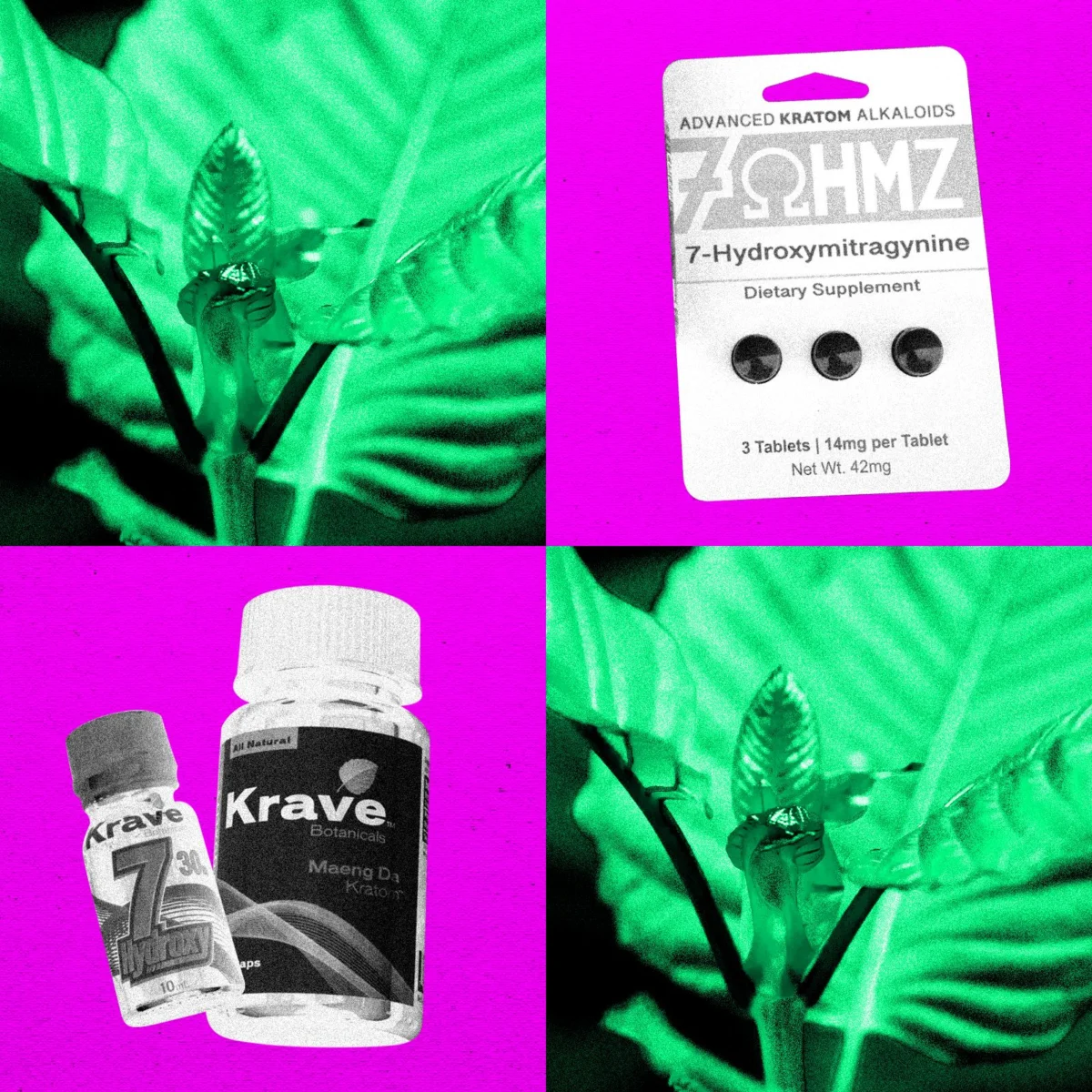
The United States Drug Enforcement Administration (DEA) has formally announced its intent to temporarily place 7-hydroxymitragynine, a potent alkaloid derived from the kratom plant, into Schedule I of the Controlled Substances Act. This regulatory move, detailed in a draft notice of intent scheduled for publication in the Federal Register, signifies a major shift in the federal government’s approach to the rapidly evolving market of kratom-based extracts and concentrates. By categorizing 7-hydroxymitragynine, commonly referred to as 7-OH, as a Schedule I substance, the DEA is placing it in the same restrictive legal category as heroin and LSD, asserting that the compound has a high potential for abuse and no currently accepted medical use in the United States.
The proposed ban targets products that exceed a specific concentration threshold of 7-OH, a compound that has become increasingly prevalent in gas stations, smoke shops, and convenience stores across the country. Sold in the form of flavored gummies, energy-style shots, and concentrated capsules, these products have drawn the ire of public health officials and even segments of the traditional kratom industry. The DEA’s temporary scheduling order is slated to remain in effect for two years, with a provision allowing for a one-year extension while the Department of Health and Human Services (HHS) conducts a permanent scientific and medical evaluation.
The Pharmacological Context of 7-OH and Kratom
To understand the DEA’s urgency, one must distinguish between traditional kratom leaf and the concentrated 7-OH products currently flooding the market. Kratom (Mitragyna speciosa) is a tropical evergreen tree native to Southeast Asia, particularly Thailand, Malaysia, and Indonesia. For centuries, its leaves have been used in traditional medicine to combat fatigue and manage pain. The primary alkaloid in the leaf is mitragynine, which generally acts as a mild stimulant in low doses and produces opioid-like effects in higher doses.
7-hydroxymitragynine is also naturally present in the kratom leaf, but only in trace amounts—typically accounting for less than 0.02% of the leaf’s total alkaloid content. However, 7-OH is significantly more potent than mitragynine. It is a partial agonist at the mu-opioid receptors, the same receptors targeted by morphine and fentanyl. Research suggests that 7-OH may be up to 13 times more potent than morphine and 46 times more potent than mitragynine in terms of its analgesic properties.
The "kratom civil war" referenced by industry analysts stems from the emergence of products that are "chemically manipulated" to increase 7-OH concentrations far beyond what is found in nature. While natural kratom powder contains a complex profile of over 40 alkaloids that may mitigate some addictive properties, isolated 7-OH products are designed for maximum potency. The DEA contends that these concentrated forms present "severe risks to public health," citing reports of rapid tolerance, physical dependence, and severe withdrawal symptoms.
A Chronology of Regulatory Tension
The path to the current DEA proposal has been marked by a decade of legal and political maneuvering.
- 2016: The DEA first attempted to place the entire kratom plant into Schedule I. This move was met with unprecedented public backlash, including a protest at the White House and a bipartisan letter signed by dozens of members of Congress. The DEA eventually withdrew the proposal, a rare retreat for the agency.
- 2017–2021: The FDA issued multiple public health warnings regarding kratom, citing concerns over heavy metal contamination and salmonella, as well as its potential for opioid-like addiction. During this period, the market for kratom extracts began to expand.
- 2023: Federal authorities conducted a raid on Botanic Tonics, the manufacturer of "Feel Free," a popular kratom-based drink. The FDA noted at the time that the company was marketing its products as dietary supplements without adequate safety evidence.
- Late 2023 – Early 2024: The "7-OH" specific market exploded. Brands began selling tablets containing 15mg to 30mg of 7-OH, dosages that critics argue are equivalent to high-strength prescription opioids.
- May 2024: Former President Donald Trump entered the fray, endorsing "natural 7-OH" (referring to the whole leaf kratom) and suggesting that his administration would look into formalizing its approval, distinguishing it from the "synthetic" or manipulated versions of the alkaloid.
Political Alliances and Economic Interests
The DEA’s move is being viewed as a significant victory for the "mainstream" kratom industry, represented largely by the American Kratom Association (AKA). The AKA has long advocated for the "Kratom Consumer Protection Act," a state-level regulatory framework that permits the sale of natural kratom leaf while banning adulterated or highly concentrated synthetic alkaloids.
The political landscape surrounding this ban is notably complex. High-profile figures within the incoming or current political sphere have documented ties to the industry. Robert F. Kennedy Jr., recently tapped for a leadership role in Health and Human Services, and Department of Homeland Security Secretary Markwayne Mullin have both been linked to the sector. Mullin, in particular, has faced scrutiny for holding an investment of up to $1 million in Botanic Tonics.
In response to these links, a spokesperson for the Department of Homeland Security stated that Mullin has adhered to all ethics standards and has not lobbied for individual companies. Instead, the spokesperson emphasized that Mullin and Kennedy have sought to regulate 7-OH specifically because it is "a synthetic drug marketed to kids at convenience stores via deceptive packaging."
The financial stakes are equally high. The kratom industry is estimated to be worth billions of dollars, with millions of American consumers using the plant for chronic pain, anxiety, and as an alternative to traditional opioids. By backing the ban on 7-OH, mainstream vendors hope to preserve the legality of the raw leaf product by distancing it from the "gas station heroin" label that has tarnished the plant’s reputation.
Public Health Data and the "Gas Station Heroin" Label
The term "gas station heroin" has been increasingly applied to 7-OH by medical professionals and law enforcement. This nomenclature stems from the product’s availability in unregulated retail spaces and its ability to produce a "high" that users describe as indistinguishable from pharmaceutical opioids.
Toxicological data has played a pivotal role in the DEA’s decision. While deaths associated solely with natural kratom are rare and often involve polydrug use, the rise of 7-OH concentrates has correlated with an uptick in emergency room visits. Reports from poison control centers indicate that users of high-potency 7-OH products often present with respiratory depression, seizures, and extreme agitation—symptoms more commonly associated with synthetic opioid overdoses than with traditional herbal tea consumption.
Furthermore, a growing online community of former users has documented the "crippling withdrawal" associated with 7-OH. These accounts describe a withdrawal syndrome characterized by intense muscle aches, insomnia, and suicidal ideation, which they claim is significantly more severe than the withdrawal from standard kratom powder.
Reactions from Stakeholders
The proposed ban has divided the botanical supplement community. Mac Haddow, a senior fellow at the American Kratom Association, praised the DEA’s intervention. "This DEA action should end the debate," Haddow stated. "Chemically manipulated 7-OH opioids are not kratom. They are dangerous products that exploited the reputation of natural kratom leaf."
Conversely, the 7-OH industry and its advocates argue that the DEA is overreaching and ignoring the potential benefits of the alkaloid. Jeff Smith, executive director of the Holistic Alternative Recovery Trust (HART), argued that the compound provides a lifeline for those for whom traditional medicine has failed. "Hundreds of thousands of consumers are eager to share how 7-OH has helped them manage pain, return to work, care for their families, and reclaim their life," Smith said.
Advocates for 7-OH argue that a ban will simply drive the market underground, leading to the production of even more dangerous, unregulated analogs, similar to the "whack-a-mole" scenario seen with synthetic cannabinoids (K2/Spice).
Broader Impact and Future Implications
The DEA’s move to schedule 7-OH represents a sophisticated "surgical strike" in drug policy. Rather than banning the entire Mitragyna speciosa plant—which would likely trigger another massive public outcry—the agency is targeting a specific molecule that it deems the most dangerous.
If the ban is finalized after the 30-day public comment period, it will have immediate effects on the retail landscape. Thousands of products will need to be pulled from shelves, and manufacturers could face federal trafficking charges for continued distribution.
For the broader kratom industry, this move may provide a path toward federal legitimacy for natural leaf products. By removing the most potent and controversial elements from the market, proponents of kratom hope the FDA will eventually establish a "New Dietary Ingredient" (NDI) pathway for the plant. However, for the millions of Americans who have turned to 7-OH for potent pain relief, the ban marks the end of a legal loophole and a return to a more restricted therapeutic landscape.
The DEA will now accept public comments for 30 days before the temporary scheduling order takes effect. This period is expected to see a flurry of activity from both consumer advocacy groups and industry lobbyists, as the federal government attempts to balance the demands of public safety with the growing movement for botanical health alternatives.