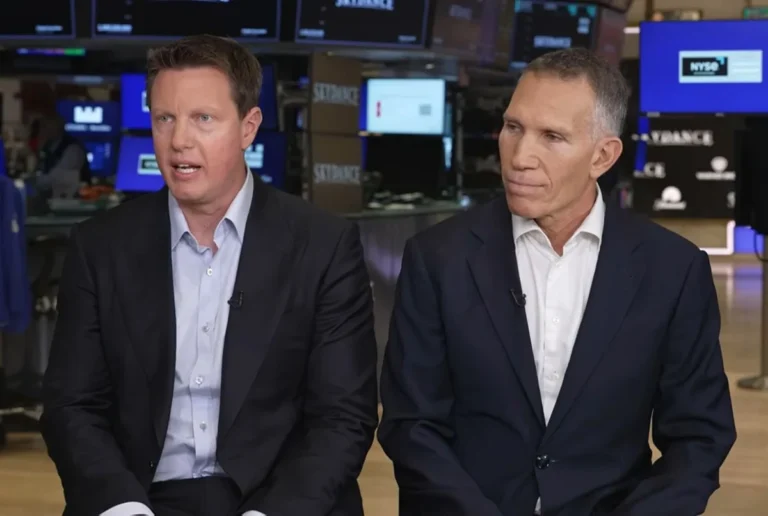
Netflix reported a complex set of first-quarter financial results for 2026, characterized by a significant revenue beat and a massive surge in net income, even as shares tumbled 9% in after-hours trading. The market reaction appeared to be a response to a combination of cautious forward-looking guidance and the announcement of a major leadership transition. While the company’s top-line growth remains robust, investors are closely scrutinizing the streaming giant’s pivot away from massive mergers and acquisitions toward a more disciplined, advertising-supported growth model. The quarter was also marked by the finalization of a $2.8 billion termination fee from the collapsed Warner Bros. Discovery (WBD) deal, which heavily skewed the company’s bottom-line figures and made year-over-year comparisons challenging for analysts.
Financial Performance and the Impact of the WBD Termination Fee
For the quarter ending March 31, 2026, Netflix reported revenue of $12.25 billion, surpassing the $12.18 billion projected by analysts polled by LSEG. This represents a 16% increase over the $10.54 billion reported in the first quarter of 2025. The company’s net income reached a staggering $5.28 billion, or $1.23 per share. This figure is nearly double the $2.89 billion (66 cents per share) reported in the same period a year ago. However, these earnings-per-share (EPS) figures were not directly comparable to Wall Street’s consensus estimate of 76 cents due to the inclusion of the $2.8 billion termination fee Netflix received after walking away from its proposed acquisition of Warner Bros. Discovery’s streaming and film assets in February.
Despite the influx of cash from the failed deal, Netflix maintained its full-year revenue guidance between $50.7 billion and $51.7 billion. The decision to maintain rather than raise guidance suggests that management expects some headwinds or a normalization of growth in the latter half of the year. Chief Financial Officer Spencer Neumann noted that while some costs associated with the WBD deal would not materialize, other expenses originally slated for 2027 have been pulled forward into 2026. This accounting shift ensures that total merger-and-acquisition-related expenses for the year remain within the company’s previous projections.
The End of an Era: Reed Hastings to Exit the Board
In a move that signals the final stage of a multi-year leadership transition, Netflix announced that co-founder and current chairman Reed Hastings will exit the board in June 2026 when his term expires. Hastings, who co-founded the company in 1997 as a DVD-by-mail service, has been the primary architect of the streaming revolution. His departure follows his 2023 decision to step down as CEO, a role now shared by Greg Peters and Ted Sarandos.
In his final shareholder letter, Hastings reflected on the company’s global impact, citing the January 2016 global launch—which brought Netflix to nearly every country simultaneously—as his favorite memory. Hastings indicated he will pivot his focus toward philanthropy and other personal ventures. Addressing concerns that his departure might be linked to the collapsed WBD acquisition, Co-CEO Ted Sarandos clarified that Hastings was a vocal champion of the deal and that the board’s decision to pursue it had been unanimous. The exit is being framed by the company as a natural conclusion to his decades-long tenure, allowing the new leadership duo to fully steer the ship.
Strategic Shift Toward Advertising and Monetization
Netflix’s long-term growth strategy is now firmly rooted in its advertising-supported tier and more aggressive monetization of its existing user base. The company reiterated its goal to reach $3 billion in advertising revenue by the end of 2026, which would represent a 100% increase year-over-year. Since introducing the cheaper, ad-supported tier in late 2022, Netflix has successfully converted price-sensitive viewers and captured a new segment of the marketing spend that was previously reserved for linear television.
This shift is accompanied by a continued crackdown on password sharing and a new round of price increases across all streaming plans. Last month, Netflix raised prices globally, a move that Co-CEO Greg Peters described as a calculated step to align the service’s cost with the "strong value" it provides. Peters noted that while some churn is expected whenever prices rise, the initial data from the rollout suggests that member retention remains within historical norms. The strategy is clear: maximize Average Revenue Per User (ARPU) while using the ad tier to maintain a high floor for total subscriber counts.
Content Amortization and the Live Sports Evolution
A critical component of Netflix’s 2026 fiscal outlook is the timing of its content spending. The company warned that content expenditures would be heavily weighted toward the first half of the year. This front-loading of costs is expected to result in the second quarter of 2026 having the highest year-over-year content amortization growth rate of the year. As these costs are recognized, Netflix expects profit margins to stabilize in the third and fourth quarters.
The company is also diversifying its content library to include more "appointment viewing" events. The first quarter saw record engagement metrics, driven in part by the expansion into video podcasts and the successful streaming of the World Baseball Classic. Perhaps most significant is Netflix’s deepening relationship with the NFL. While the company has avoided the multi-billion-dollar "Sunday Ticket" style packages favored by competitors like Amazon and YouTube, it has found success with its Christmas Day game broadcasts. Ted Sarandos confirmed that Netflix is in active discussions with the NFL to "expand the relationship," suggesting that live sports will become a permanent, if selective, fixture on the platform.
Historical Context: From DVD to Global Dominance
To understand Netflix’s current position, one must look at the timeline of its evolution. Founded in 1997, the company spent its first decade disrupting the video rental industry. In 2007, it launched its streaming service, which eventually led to the 2013 debut of House of Cards, signaling the company’s entry into original programming. By 2022, facing its first subscriber loss in a decade, the company abandoned its long-standing opposition to advertising and launched its "Basic with Ads" plan.
The 2026 Q1 report represents the "Third Act" of Netflix: a mature media conglomerate that prioritizes free cash flow and diversified revenue streams over raw subscriber growth. By no longer providing quarterly updates on membership numbers—a policy shift that began in early 2025—Netflix is forcing investors to focus on revenue, operating margin, and engagement rather than the volatile "subscriber count" metric that defined the previous decade of the streaming wars.
Implications for the Streaming Industry
The failure of the Netflix-WBD deal and Netflix’s subsequent financial performance have significant implications for the broader media landscape. The $2.8 billion termination fee paid by Warner Bros. Discovery highlights the high stakes of consolidation in the streaming era. For Netflix, the decision to walk away suggests a confidence in its organic growth and its ability to build a sports and advertising infrastructure without the need for a massive, debt-heavy acquisition.
Industry analysts suggest that Netflix’s focus on live events and ad revenue will force competitors like Disney+, Hulu, and Max to further refine their own ad-tech stacks. As Netflix moves toward a more traditional media model—mixing subscription fees with advertising and live broadcasts—the distinction between "streaming" and "broadcast television" continues to blur.
Market Reaction and Analyst Perspectives
The 9% drop in share price despite beating revenue expectations highlights a "whisper number" phenomenon where investors likely expected a more aggressive upward revision of the full-year guidance. Some analysts expressed concern over the CFO’s comments regarding the acceleration of costs into 2026, fearing that margin expansion might stall in the near term.
However, many institutional investors remain bullish on the company’s ability to scale its ad business. The $3 billion target for 2026 is seen as an attainable milestone that provides a high-margin buffer against content production costs. The focus now shifts to the second-quarter results, where the impact of the recent price hikes and the amortization of the spring content slate will provide a clearer picture of the company’s fiscal health heading into 2027.
As Reed Hastings prepares to exit the board, he leaves behind a company that has fundamentally changed how the world consumes entertainment. Under the leadership of Peters and Sarandos, Netflix is no longer just a tech disruptor; it is a global media powerhouse navigating the complexities of a mature market with a focus on disciplined growth, diversified content, and shareholder value.