


As the ballots continue to be tallied in California’s pivotal primary elections, initial returns have painted a surprising picture, highlighting a potent blend of celebrity appeal and anti-establishment sentiment disrupting traditional political landscapes in both the Los Angeles mayoral race and the state’s gubernatorial contest. The early results suggest a dramatic shift in voter preferences, setting the stage for what promises to be an exceptionally colorful and hard-fought general election season later this year.
Los Angeles Mayoral Race: From Reality TV to City Hall Contender
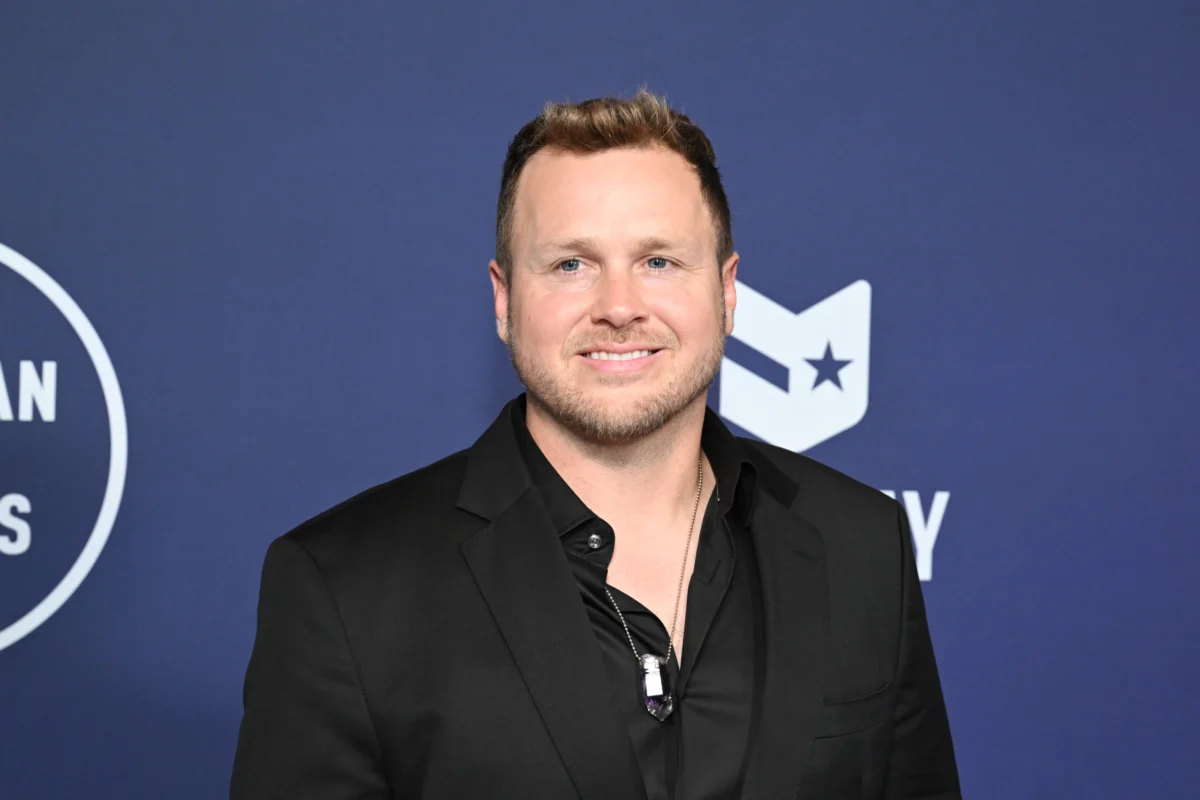
The race for Los Angeles mayor has taken an unexpected turn, with Spencer Pratt, a prominent figure from the long-running reality show The Hills, demonstrating a remarkably strong performance. With approximately half of the votes counted, Pratt has secured a comfortable second place, capturing 30% of the electorate. This places him nine points ahead of his third-place rival, progressive City Council member Nithya Raman, and positions him as a formidable challenger to incumbent Mayor Karen Bass, who currently leads with 37% of the vote. If these preliminary totals hold, the city is headed for a general election showdown that many are already labeling a "made-for-vintage-MTV" spectacle.
The Unexpected Contender: Spencer Pratt’s Maverick Campaign
Spencer Pratt, known for his often controversial persona on reality television, has successfully leveraged his public profile into a significant political force. His campaign has largely been characterized by an unconventional, media-savvy approach, frequently utilizing social media to directly engage with voters and bypass traditional media gatekeepers. Pratt’s platform, while not always explicitly detailed in conventional policy papers, has broadly resonated with an anti-establishment sentiment, critical of the city’s handling of pressing issues such. His consistent attacks on Mayor Bass, including the reposting of videos depicting her as "The Joker" and deriding her administration’s response to the city’s pervasive homelessness crisis, escalating housing costs, and recent wildfires, illustrate a confrontational style that has clearly struck a chord with a segment of the electorate weary of conventional politics.
The reality star’s unexpected ascent has also drawn national attention, including a highly publicized endorsement from former President Donald Trump. While Pratt publicly rebuffed the endorsement, citing his focus on local issues rather than national political alignments, the very offer underscores the broader phenomenon of celebrity figures crossing over into the political arena, a trend that has seen varying degrees of success across the United States. Pratt’s decision to reportedly ban media from his election-night party at Don Antonio’s in Sawtelle, a move in contravention of longstanding election-night practice, further solidified his image as an outsider willing to defy norms and challenge the political establishment. This tactic aligns perfectly with his anti-elite messaging, suggesting a candidate more interested in direct communication with his base than in courting traditional press narratives.
The Frontrunner: Karen Bass’s Establishment Appeal and Challenge
Mayor Karen Bass, a seasoned politician with a distinguished career in the U.S. House of Representatives before her mayoral tenure, entered the race as the presumptive favorite, representing the more traditional Democratic establishment. Her campaign has focused on her experience and her commitment to addressing Los Angeles’s complex challenges with pragmatic solutions. Bass initially largely ignored Pratt’s provocations, focusing instead on her record and vision for the city. However, as Pratt’s numbers surged, Bass shifted her strategy, directly confronting her unexpected rival. She publicly characterized Pratt as a "TV reality star villain," a clear attempt to define him negatively and highlight the perceived lack of seriousness in his candidacy.
On election night, Bass delivered a speech to her supporters that sought to firmly position her as the candidate of Hollywood and the creative industries, a crucial economic pillar of Los Angeles. She declared L.A. "the creative capital of the world" and lamented an "industry that was leaving but we are bringing it back." This messaging not only aimed to rally support from a significant demographic but also subtly contrasted her with Pratt, suggesting a more substantive understanding of the city’s economic engines and a commitment to fostering its core industries. Her challenge in the coming months will be to consolidate the diverse Democratic and progressive vote, which is currently fragmented, and to articulate a compelling vision that can withstand the unconventional and often aggressive tactics of her potential general election opponent.
The Progressive Challenge: Nithya Raman and the Split Vote Dilemma
The primary results present a significant setback for the progressive movement in Los Angeles, as City Council member Nithya Raman, a prominent progressive voice, finds herself trailing Pratt. Raman’s campaign centered on addressing systemic inequalities, advocating for robust social programs, and pushing for more aggressive policies on housing and homelessness. Her current third-place standing, nine points behind Pratt, raises questions about the efficacy of progressive strategies in a city often perceived as a progressive stronghold.
One immediate area of "Monday-morning quarterbacking" among political observers is the impact of Rae Huang, a Democratic Socialist of America candidate, remaining in the race. Huang’s presence likely siphoned off a portion of the progressive vote that might otherwise have gone to Raman. In California’s "top-two" primary system, where the two candidates with the most votes, regardless of party affiliation, advance to the general election, such vote splitting can have profound consequences. Had Raman been able to consolidate more of the progressive vote, she might have been within "striking distance" of Pratt as later ballots, which historically tend to skew Democratic, are counted. The eventual outcome for Raman will be a crucial indicator of the progressive movement’s current strength and strategic challenges in Los Angeles.
The Road to the Runoff: An Unpredictable General Election
Under California’s unique top-two primary system, if no candidate secures more than 50% of the vote in the primary, the top two vote-getters advance to a general election runoff. With Mayor Bass currently at 37% and Pratt at 30%, it is "all but impossible" for Bass to achieve the 50% threshold necessary to avoid a runoff. This virtually guarantees a second round of voting, transforming what might have been a predictable contest into a potentially unprecedented political battle. The prospect of a Bass-Pratt general election promises to be one of the most fiercely contested and colorful mayoral races Los Angeles has witnessed in decades, drawing national media attention and forcing both candidates to refine their messages and campaign strategies for a broader electorate.
California Gubernatorial Primary: Conservative Surprises and Progressive Setbacks
The political tremors extend beyond Los Angeles, with the California gubernatorial primary also delivering significant surprises. Another prominent television personality with no prior elected office experience, former Fox News host Steve Hilton, has remarkably inched into the lead in the race to challenge incumbent Governor Gavin Newsom. With approximately half of the ballots counted, Hilton holds a narrow one-point lead over moderate Democrat Xavier Becerra and a substantial seven-point lead over progressive billionaire Tom Steyer.
The Upset Leader: Steve Hilton’s Populist Conservative Challenge
Steve Hilton, a British-born political commentator and former advisor to then-Prime Minister David Cameron, has emerged as a potent force in California’s often-liberal political landscape. Like Pratt, Hilton has successfully tapped into an anti-incumbent sentiment, particularly targeting Democratic Governor Gavin Newsom. His campaign has been built on a traditional conservative platform advocating for lower taxes, reduced regulations, and a more business-friendly environment. Hilton’s populist appeal has resonated with voters frustrated by California’s high cost of living, perceived over-regulation, and progressive policies.
A significant plank of Hilton’s platform, designed to appeal to a crucial state industry, is his proposal to raise the film tax credit ceiling to as high as 60%. This move aims to stem the tide of film and television production leaving California for states with more attractive incentives, positioning him as a champion for Hollywood’s economic health, albeit from a conservative perspective. Hilton’s campaign has also benefited from the endorsement of Donald Trump, an endorsement he appears to have embraced, unlike Pratt. During his election-night speech, Hilton directly addressed his "funny accent" and foreign birth, cleverly referencing Arnold Schwarzenegger’s successful path from foreign-born celebrity to California governor, declaring, "Change is coming." This invocation of a successful Republican predecessor underscores his aspiration to break the Democratic Party’s long-standing dominance in the state.
The Establishment Moderate: Xavier Becerra’s Steady Ascent
Xavier Becerra, a long-serving Democrat with a distinguished career as a U.S. Congressman and former California Attorney General, represents the more moderate wing of the Democratic Party. Becerra has been riding a "late-season wave" of support, steadily climbing from single digits in early polls to now contending for the top spot. His campaign has focused on his extensive experience in public service, his pragmatic approach to governance, and his commitment to upholding Democratic values while appealing to a broad coalition of voters.
Becerra’s ascent is particularly significant as he aims to become the state’s first Latino governor, a historic achievement in a state with a large and influential Latino population. His moderate stance could position him as a unifying figure for Democrats in the general election, capable of attracting votes from across the ideological spectrum within the party. A general election contest against Hilton would represent a stark ideological contrast between an experienced Democratic establishment figure and a populist conservative outsider.
The Billionaire’s Bet: Tom Steyer’s Progressive Setback
The primary election has delivered a noticeable "rebuff of progressives in California" with the disappointing performance of billionaire entrepreneur Tom Steyer. Despite spending an unprecedented sum of over $200 million of his own money on the campaign—the most of any candidate nationwide this primary season—Steyer appears to be "sputtering with voters in the early going," falling significantly behind Hilton and Becerra.
Steyer’s campaign was built on an ambitious and activist progressive agenda, advocating for more aggressive climate regulations, enhanced worker protections, and novel economic proposals such as a "token tax" on AI usage, with revenues earmarked for displaced workers. While some polls had placed the billionaire in second place in the days leading up to the primary, the early results indicate that his extensive financial investment did not translate into proportional voter support. This outcome raises critical questions about the effectiveness of self-funded campaigns, the resonance of highly progressive policy proposals with the broader California electorate, and the current strategic challenges facing the state’s progressive movement.
Analysis and Implications: Shifting Political Tides and the Power of the Outsider
The California primary results collectively signal a fascinating and potentially transformative election cycle. The strong showings of Spencer Pratt and Steve Hilton underscore a growing appetite among a segment of the electorate for non-traditional candidates and an anti-establishment message. This phenomenon, while distinct in its local and state manifestations, echoes broader national trends where celebrity and direct, often confrontational, communication styles are increasingly effective in political campaigns.
For the Democratic Party in California, these results present both challenges and opportunities. While candidates like Karen Bass and Xavier Becerra maintain significant leads, the emergence of viable "outsider" challengers suggests that traditional campaign playbooks may need recalibration. The fragmentation of the progressive vote, particularly evident in the Los Angeles mayoral race with the impact of Rae Huang’s candidacy and Steyer’s poor performance, highlights the need for strategic unity and clear messaging within the progressive movement to avoid inadvertently empowering more conservative or unconventional candidates.
The general elections for both Los Angeles mayor and California governor are poised to be high-stakes contests, drawing intense media scrutiny and potentially reshaping the political landscape of one of the nation’s most populous and influential states. The contrast between establishment experience and outsider appeal, moderate pragmatism and populist conservatism, and traditional campaigning versus social media-driven engagement promises a series of debates that will define California’s political future. The coming months will reveal whether these early primary surprises represent a temporary ripple or a more enduring shift in voter preferences.
More to come…