Netflix has officially announced the commencement of production for The Generals (working title), a highly anticipated political period thriller from acclaimed South Korean director Yoon Jong-bin. This new feature film is set to chronicle the complex rise of Roh Tae-woo, who ascended from military strongman Chun Doo-hwan’s second-in-command to become South Korea’s president, navigating a volatile era of political transition and social upheaval. The project underscores Netflix’s robust and ongoing investment in high-quality Korean content, particularly dramas that delve into the nation’s authoritarian past, a genre that has recently captivated both domestic and international audiences.
A Deep Dive into a Pivotal Era: The Historical Backdrop of The Generals
The Generals is poised to immerse viewers in a critical juncture of South Korean history, specifically the turbulent years following the assassination of President Park Chung-hee in October 1979. This event created a power vacuum that Chun Doo-hwan, then a major general and head of the Defense Security Command, swiftly exploited. On December 12, 1979, Chun orchestrated a military coup, consolidating power and sidelining the transitional government. This period, known as the "Seoul Spring," was quickly stifled by Chun’s authoritarian grip.
Roh Tae-woo, the central figure of the film, was a crucial accomplice in Chun Doo-hwan’s seizure of power. A fellow graduate of the Korea Military Academy (Class 11), Roh was Chun’s trusted confidant and played an integral role in the 12.12 coup. His character in The Generals is depicted as publicly presenting himself as an "ordinary man" while strategically maneuvering behind the scenes, alongside Chun Doo-hwan, who wields absolute authority. This portrayal promises a nuanced exploration of a figure who was instrumental in one of South Korea’s most contentious political transitions.
The historical context extends to the brutal suppression of the Gwangju Democratization Movement in May 1980, where Chun’s military regime violently quashed pro-democracy protests, resulting in hundreds of civilian deaths. This event remains a deeply traumatic scar on the national psyche and a critical backdrop to the political landscape Roh Tae-woo operated within. Despite the repressive environment, the 1980s saw a burgeoning pro-democracy movement that intensified throughout the decade, culminating in the widespread June Democracy Movement of 1987. Facing immense public pressure and widespread demonstrations, Chun Doo-hwan was forced to accept direct presidential elections and a constitutional amendment, signaling an end to direct military rule.
It was in this crucible that Roh Tae-woo, despite his military background and close ties to Chun, strategically positioned himself. He issued the "June 29 Declaration" in 1987, promising democratic reforms and free elections, a move that surprised many and was seen as a pragmatic concession to the popular will. Roh subsequently won the presidential election later that year, becoming the first democratically elected president after decades of military or authoritarian rule. His presidency, while marking a transition towards democracy, was still deeply scrutinized for its origins and the lingering influence of military figures. The Generals is expected to dissect this complex journey, exploring the alliances, rivalries, and personal agendas that shaped Roh’s bid for the nation’s top seat. The film promises to be more than a historical recount, aiming to delve into the psychological underpinnings of power and survival within a rigid, politically charged environment.
Yoon Jong-bin: A Master of Power Dynamics Returns
The Generals marks a significant return for director Yoon Jong-bin, whose last feature film, The Spy Gone North, premiered to critical acclaim at Cannes in 2018. After an eight-year hiatus from the feature directorial chair, Yoon brings his signature thematic depth and taut narrative style back to the big screen. This project also marks his second collaboration with Netflix, following the successful limited series Narco-Saints (2022), which garnered substantial viewership and critical praise.
Yoon Jong-bin is widely recognized as one of South Korea’s most respected mid-career filmmakers, celebrated for his incisive dissections of how individuals navigate and survive within rigid hierarchies and systems. His breakthrough film, The Unforgiven (2005), offered a stark and unsparing look at the psychological toll of South Korea’s compulsory military service, establishing his reputation for exploring uncomfortable truths within institutional structures. He continued this exploration with the Busan mob movie Nameless Gangster: Rules of the Time (2012), a gritty portrayal of crime syndicates and the shifting loyalties within them, further cementing his ability to craft compelling narratives around power struggles. The Spy Gone North (2018) ventured into the perilous world of espionage, examining the moral ambiguities and personal sacrifices involved in high-stakes political intrigue between the two Koreas.
With The Generals, Yoon Jong-bin returns to these enduring themes, as Netflix explicitly states, "once again exploring the human thirst for power and the mechanisms of survival against a backdrop of political turbulence." His filmography consistently demonstrates a fascination with the corrupting influence of power, the compromises individuals make to attain or retain it, and the moral grey areas that define historical and personal narratives. Given his track record, audiences can anticipate The Generals to be a meticulously researched and psychologically rich drama, providing a nuanced perspective on a highly sensitive period in South Korean history without shying away from its complexities. His ability to blend character-driven storytelling with intricate political machinations makes him an ideal choice to helm a project of this magnitude and historical significance.
The Powerhouse Cast: Son Suk-ku and Ha Jung-woo Lead an All-Star Ensemble
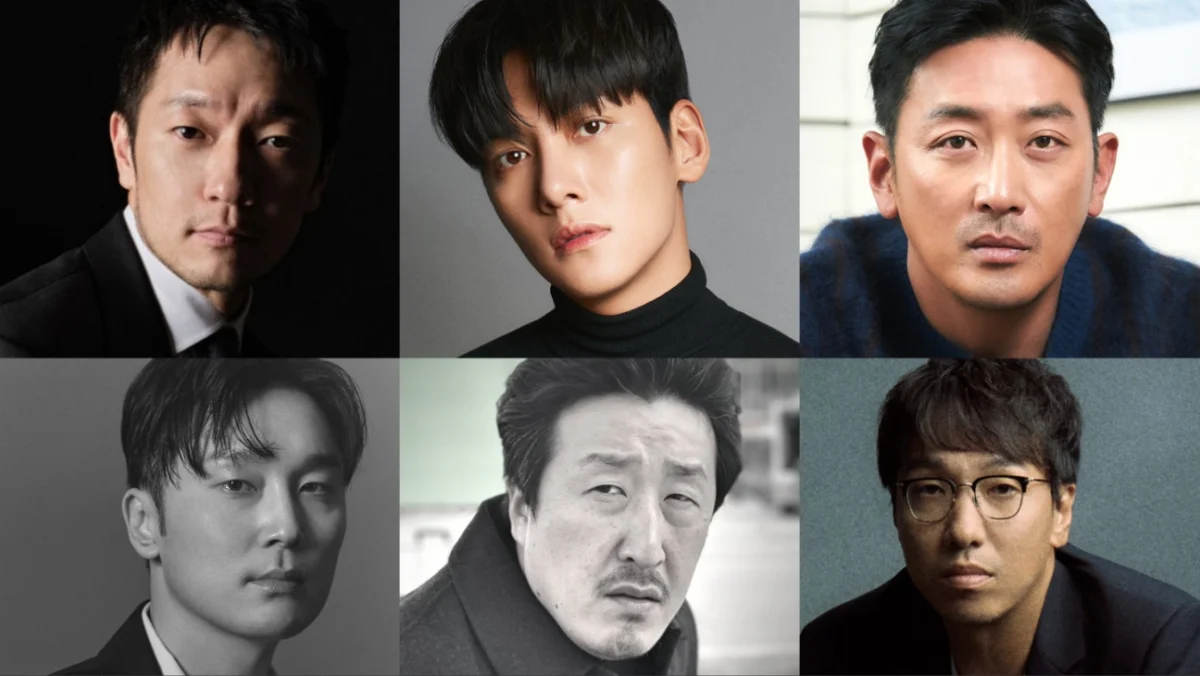
The casting for The Generals is a major draw, bringing together two of South Korea’s most in-demand leading men, Son Suk-ku and Ha Jung-woo, opposite each other for the first time. This pairing alone is set to create significant buzz, promising a formidable on-screen dynamic between the actors portraying Roh Tae-woo and Chun Doo-hwan.
Son Suk-ku, who will embody Roh Tae-woo, has experienced a meteoric rise in popularity in recent years. His breakthrough came with the critically acclaimed Netflix military-drama series D.P. (2021), where his portrayal of Captain Im Ji-seop showcased his nuanced acting capabilities. He further solidified his status by headlining the Netflix mystery thriller A Killer Paradox (2024) and the recent Disney+ mystery hit Nine Puzzles. Son Suk-ku is celebrated for his versatility, often portraying complex characters with a subtle intensity, a trait that will be crucial in depicting Roh Tae-woo’s public persona as an "ordinary man" masking shrewd political ambition. His growing global recognition through streaming platforms makes him an ideal choice for a Netflix original film with international aspirations.
Opposite him, portraying the formidable Chun Doo-hwan, is Ha Jung-woo, one of Korea’s most decorated and respected actors. Ha Jung-woo’s illustrious career spans various genres and has seen him collaborate frequently with director Yoon Jong-bin, including in Nameless Gangster, Kundo: Age of the Rampant, and Narco-Saints. Beyond Yoon’s projects, he is renowned for his work with leading auteurs such as Na Hong-jin in the acclaimed thrillers The Chaser and The Yellow Sea, and with Park Chan-wook in the globally celebrated film The Handmaiden. Ha Jung-woo is known for his ability to command the screen with powerful, often intense performances, making him perfectly suited to portray the authoritarian figure of Chun Doo-hwan, a character requiring both gravitas and an underlying ruthlessness. His extensive experience in depicting morally ambiguous and powerful characters positions him to deliver a compelling performance as the absolute authority figure.
The supporting ensemble further strengthens the film’s star power and narrative depth. Ji Chang-wook, known for his roles in The Sound of Magic, The Worst of Evil, and the upcoming Revolver, takes on the role of Heo Hak-seong, a junior officer who becomes a persistent thorn in Roh’s side. His presence suggests a dynamic subplot of internal resistance or challenge within the military hierarchy. Hyun Bong-sik, a familiar face from Narco-Saints, A Killer Paradox, and Aema, plays Jung Ho-joong, a classmate and friend to both Roh and Chun, indicating a role that could explore the personal relationships and loyalties that underpinned their rise. Finally, Seo Hyun-woo, recognized for his work in Decision to Leave and My Name Is Loh Kiwan, portrays Park Cheol-woong, a prosecutor and Roh’s trusted chief of staff. This character is likely to shed light on the legal and political machinations behind Roh’s ascent. The collective talent assembled promises a rich, multi-layered portrayal of the political landscape and the individuals who shaped it.
Netflix’s Strategic Vision: K-Content’s Global Dominance
Netflix’s decision to "double down" on Korea’s appetite for political period thrillers is not an isolated move but a calculated expansion of a highly successful global strategy. Over the past few years, Netflix has invested billions in Korean content, recognizing its immense appeal and potential for global viewership. Data from various industry reports consistently highlights K-content as a primary driver for subscriber acquisition and retention across Asia, and increasingly, in Western markets.
The success of titles like Squid Game, which became Netflix’s most-watched series of all time, paved the way for a broader appreciation of Korean storytelling. However, Netflix’s strategy extends far beyond phenomenon-level hits. The streamer has cultivated a diverse portfolio of K-dramas and films across genres, including the zombie historical drama Kingdom, the gritty military series D.P. (which helped launch Son Suk-ku to prominence), the star-studded crime drama Narco-Saints (another Yoon Jong-bin collaboration), and the dystopian thriller Sweet Home. This diversification ensures that K-content appeals to a wide array of tastes, from romantic comedies to complex historical narratives.
Industry analysts suggest that by investing in films like The Generals, Netflix aims to solidify its position as a premier destination for prestige Korean dramas. A representative from a media analytics firm, speaking on background, noted, "Netflix’s continued investment in high-quality, culturally specific yet universally resonant Korean narratives indicates a long-term strategic commitment. They’re not just chasing trends; they’re actively shaping the global perception of Korean cinematic excellence." This strategy involves empowering established directors and actors, providing them with the resources and global platform to tell stories that might traditionally have a more regional reach. The exclusive streaming model for The Generals further reinforces Netflix’s competitive edge, ensuring that this highly anticipated historical drama is accessible solely through their platform to a worldwide audience.
The Resurgence of Historical Political Thrillers in South Korea
The genre of politically charged dramas engaging with South Korea’s authoritarian past has always been a staple of the local film industry. However, it has struck an especially strong commercial and critical chord of late, indicating a renewed societal interest in reflecting on national history through the lens of cinematic storytelling.
A prime example is 12.12: The Day, the Kim Sung-su-directed political drama that transformed the December 1979 coup d’état into a riveting, ticking-clock thriller. Released in 2023, the film became the top-grossing Korean film of the year, revitalizing the country’s ailing post-pandemic theatrical business and demonstrating a profound public appetite for well-crafted historical narratives that resonate with contemporary societal discussions about democracy, power, and justice. The film’s success highlighted that historical events, even those painful and controversial, can be brought to life in an engaging and thought-provoking manner for modern audiences.
Similarly, Woo Min-ho’s Harbin, a sweeping period thriller about a 1909 plot to assassinate Japan’s first prime minister and resident-general of Korea, also dominated the Korean box office for a month at the end of 2024. While set earlier and focused on anti-colonial resistance, Harbin reinforced the commercial viability of meticulously produced historical dramas that explore pivotal moments in national identity and struggle.
The success of these films, coupled with Netflix’s greenlighting of The Generals, suggests several converging factors. Firstly, a new generation of South Koreans is engaging with their nation’s complex history, often seeking to understand the foundations of their current democratic society. Secondly, filmmakers are increasingly adept at transforming historical documents and events into compelling, character-driven narratives that transcend mere historical recounting. Finally, these films often serve as a form of collective memory and catharsis, allowing audiences to process and reflect upon periods of immense national sacrifice and political turmoil. The Generals is poised to contribute significantly to this trend, offering a fresh perspective on a highly debated figure and a critical period of transition.
Production Teams and Anticipated Impact
The Generals (WT) is a joint production between two prominent Korean production houses: Moonlight Film and Sanai Pictures. Moonlight Film boasts a strong track record, having been involved in projects such as Karma, Narco-Saints (another collaboration with Yoon Jong-bin), The Match, and Nine Puzzles. Sanai Pictures is also known for its high-quality productions, including Mission: Cross, Revolver, and the critically acclaimed Hunt. The collaboration of these experienced teams, combined with Yoon Jong-bin’s directorial vision and a stellar cast, sets a high bar for the film’s production values and narrative execution.
The decision for The Generals to stream exclusively on Netflix underscores the platform’s commitment to delivering premium, globally appealing content. This distribution model ensures immediate worldwide access, allowing the film to bypass traditional theatrical release patterns and directly reach Netflix’s vast subscriber base. This is particularly advantageous for a historical drama, as it can foster international discourse around a pivotal moment in South Korean history, potentially sparking interest in the nation’s past among global viewers.
The implications of The Generals are multifaceted. For Netflix, it represents a continued strengthening of its K-content library with a high-profile, prestige project that can attract both critical acclaim and new subscribers. For the Korean film industry, it further solidifies its reputation for producing compelling, well-crafted dramas that tackle complex subjects with sophistication. Moreover, the film holds the potential to reignite public discussion about Roh Tae-woo’s legacy and the broader historical period, offering a cinematic lens through which to examine leadership, power, and the challenging path toward democracy. As production gets underway, anticipation will undoubtedly build for what promises to be a powerful and insightful addition to the global slate of historical political thrillers.