
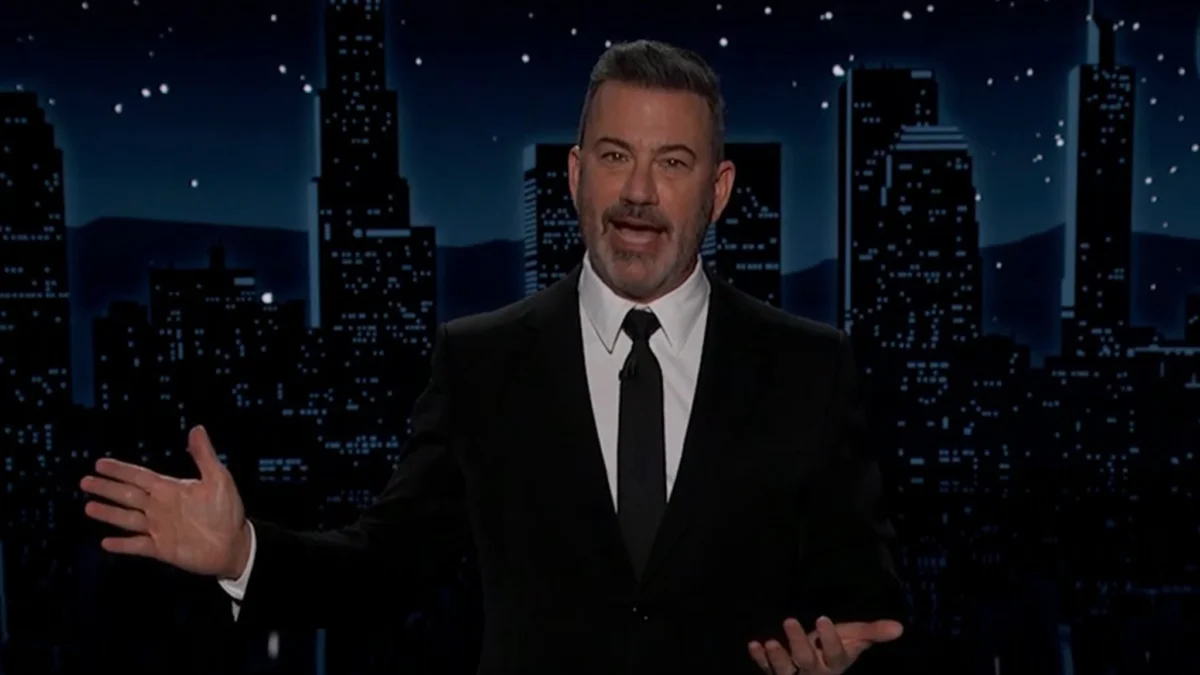
Late-night host Jimmy Kimmel delivered a sharp retort to former President Donald Trump and First Lady Melania Trump on Monday night, April 27, 2026, after the couple publicly demanded his dismissal from ABC following a controversial joke. The comedian, known for his acerbic wit and frequent political commentary, responded to the Trumps’ call for his firing by suggesting that the First Lady should first address the issue of "violent rhetoric" with her husband, underscoring a deepening chasm in the ongoing feud between the two prominent public figures.
The Genesis of the Latest Controversy
The latest flashpoint in the protracted dispute erupted over a segment on Jimmy Kimmel Live! last week, during which Kimmel made a joke that was widely interpreted by the Trumps and their allies as highly offensive. While the exact phrasing of the joke has been a subject of intense debate, reports indicate it involved a "pretend roast" scenario, with Kimmel humorously alluding to the age difference between Donald Trump, who is nearing 80, and Melania Trump, who is significantly younger. Specifically, sources close to the production suggest the joke involved a hypothetical scenario about Melania becoming an "expectant widow," a remark that quickly drew ire for its perceived insensitivity, especially in the wake of a recent, unrelated shooting incident that Melania Trump had experienced over the weekend.
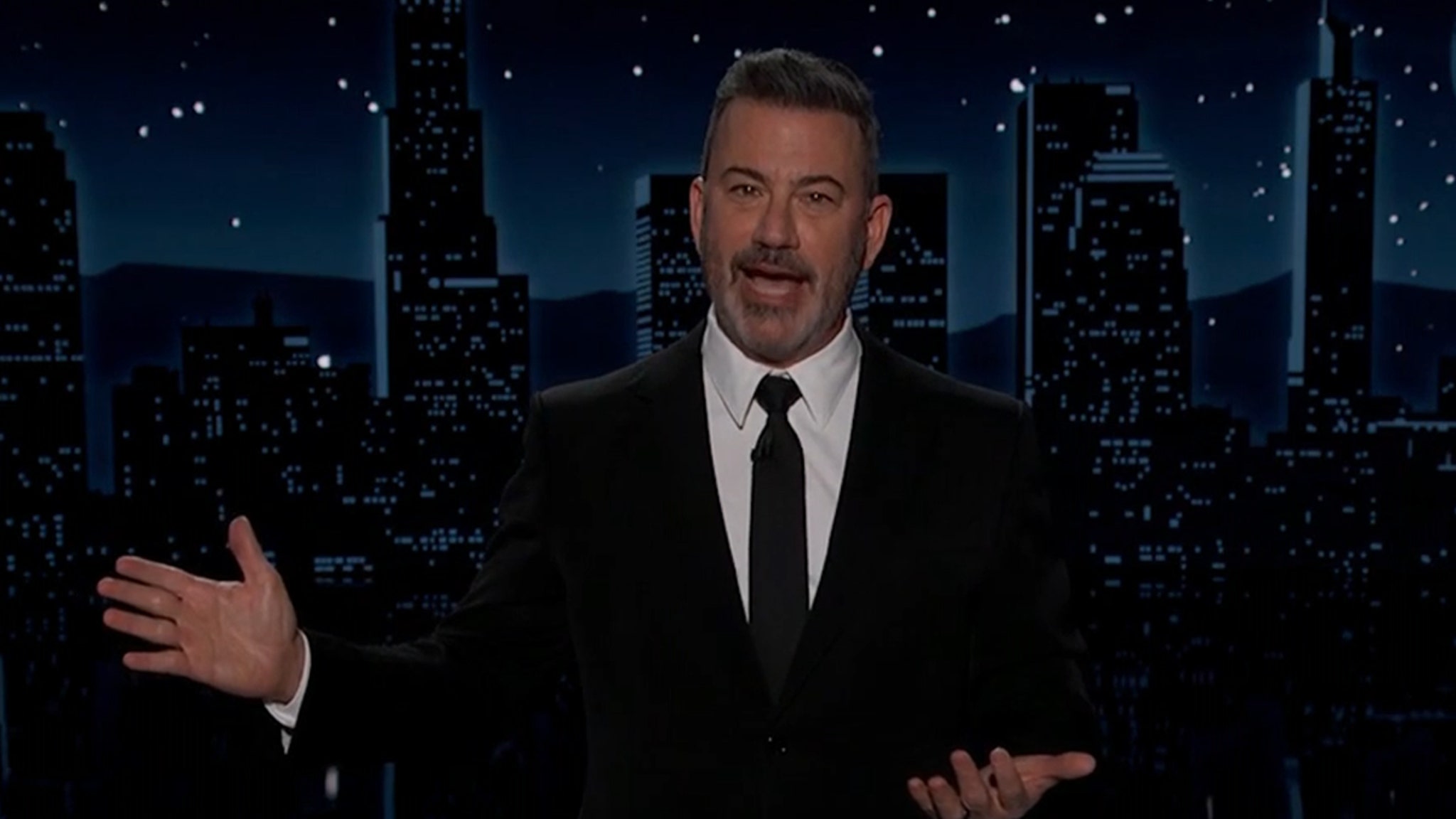
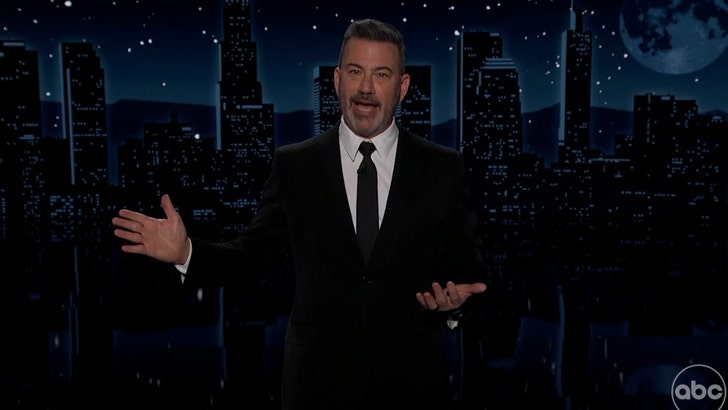
Kimmel, during his Monday night monologue, sought to clarify the intent behind his remark. He insisted that the joke was a "very light roast" and was purely satirical, targeting the age gap and not intended to promote violence or malice. "Sometimes you wake up and the First Lady puts out a statement demanding you be fired," Kimmel quipped to his audience, adding, "Yeah, we’ve all been there." This opening set the tone for a segment that blended characteristic humor with a pointed defense against the Trumps’ accusations.
The Trumps’ Swift and Forceful Response
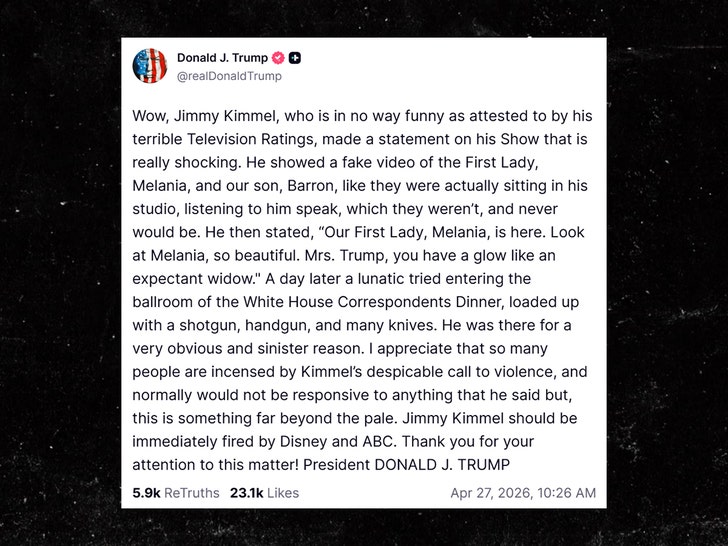
The Trumps’ reaction was both swift and unequivocal. On Monday, prior to Kimmel’s rebuttal, both Donald and Melania Trump, joined by prominent Republican figure Karoline Leavitt, publicly denounced Kimmel and called for his immediate termination from ABC. The former President took to his Truth Social platform to lambaste Kimmel, asserting that he was "in no way funny" and deriding his "terrible Television Ratings." Trump further accused Kimmel of airing a "fake video" of Melania and their son Barron during his monologue, though details of this alleged video remain sparse.
Melania Trump, through a statement released by her office, expressed profound disappointment and outrage, characterizing Kimmel’s joke as "disgusting" and "irresponsible." Her statement emphasized the need to tone down violent rhetoric, particularly in the current political climate, and highlighted her recent "stressful experience over the weekend" – an apparent reference to the aforementioned shooting incident, which, while not directly related to Kimmel, reportedly heightened her sensitivity to violent or aggressive language. Karoline Leavitt echoed these sentiments, publicly supporting the Trumps’ demand for Kimmel’s firing and condemning what she described as the growing trend of media personalities using their platforms to incite division and hatred.
Kimmel’s Measured Counter-Punch and Broader Context
While acknowledging Melania Trump’s "stressful experience," Kimmel masterfully pivoted the conversation, redirecting the criticism back to the Trumps. He stated that he agreed with the sentiment that violent rhetoric should be toned down but suggested that the First Lady might want to "have a conversation" with her husband about it first. This thinly veiled jab highlighted a common criticism leveled against Donald Trump throughout his public career: his own frequent use of inflammatory language, personal attacks, and aggressive rhetoric, which many commentators and critics have often linked to increased political polarization and even real-world violence.
This particular exchange is not an isolated incident but rather the latest chapter in a long-standing and often acrimonious feud between Jimmy Kimmel and Donald Trump. Trump has, on numerous occasions, publicly called for Kimmel’s firing, criticizing his comedic style, his political leanings, and his show’s ratings. These calls have typically intensified following any segment where Kimmel has satirized or criticized the former President. For instance, in late 2024, Trump publicly demanded Kimmel’s removal after a sketch mocking his stance on a national security issue, and again in early 2025, following a segment dissecting Trump’s public speaking style. This consistent pattern has established a clear dynamic: Kimmel uses his platform for satire, and Trump responds with demands for professional repercussions, often leveraging his significant social media presence to amplify his complaints.
The Broader Debate on Rhetoric and Responsibility
The incident reignites a crucial debate about the boundaries of satire, the responsibility of public figures, and the pervasive nature of political rhetoric in contemporary society. Late-night comedy has historically served as a vital outlet for political commentary and satire, often pushing boundaries to critique power and provoke thought. Comedians like Kimmel often argue that their role is to challenge, to lampoon, and to hold figures of authority accountable, even if it means using pointed or provocative humor. The "roast" tradition, in particular, thrives on exaggerated, often personal, jokes, understood within a specific comedic context.
However, critics, including the Trumps, contend that such humor can cross a line, especially when perceived as promoting violence or disrespect, or when it targets individuals who are not directly involved in the political fray, such as a First Lady or her family. Melania Trump’s reference to her "stressful experience" underscores the argument that words can have real-world impacts, particularly in an environment already charged with political tension and division. The question then becomes where the line between legitimate satire and harmful rhetoric lies, and who gets to draw it.
The Trumps’ repeated calls for Kimmel’s firing also raise questions about freedom of speech and the role of corporate entities like ABC and its parent company, Disney, in mediating these conflicts. While public figures are often subject to intense scrutiny and criticism, demands for their professional termination can be seen as attempts to stifle dissent or control media narratives. Historically, networks have largely stood by their late-night hosts, recognizing the importance of comedic freedom, but they also operate under the pressure of public opinion, advertiser concerns, and potential political backlash.
Implications for Late-Night and Political Discourse
The ongoing clash between Kimmel and the Trumps carries several significant implications. For late-night comedy, it reinforces the genre’s increasingly politicized nature. Shows like Jimmy Kimmel Live! have evolved from general entertainment to significant platforms for political commentary, often mirroring and influencing public discourse. This makes them frequent targets for political figures, particularly those who feel unfairly represented or attacked. The incident also highlights the challenge for comedians to navigate an increasingly sensitive public landscape, where jokes can be quickly taken out of context or interpreted through a highly polarized lens.
For political discourse, the incident further exemplifies the "cancel culture" phenomenon, where calls for professional consequences are increasingly common responses to perceived offenses. It also underscores the weaponization of "rhetoric" as both a shield and a sword in political battles. While calls for toning down violent rhetoric are generally welcomed, the selective application of such calls – as Kimmel implied – can be perceived as hypocritical and self-serving, further eroding trust in public figures.
Ultimately, this latest confrontation between Jimmy Kimmel and the Trumps serves as a potent reminder of the volatile intersection of celebrity, politics, and media in contemporary America. It highlights the deeply personal nature of political disagreements, the persistent struggle to define the boundaries of acceptable public discourse, and the enduring power of both humor and outrage in shaping public opinion. As long as these figures remain in the public eye, and as long as late-night hosts continue to wield their comedic influence, further chapters in this long-standing beef are all but guaranteed. The incident ensures that the conversation about accountability for rhetoric, from all sides of the political spectrum, will continue to resonate across the media landscape.