

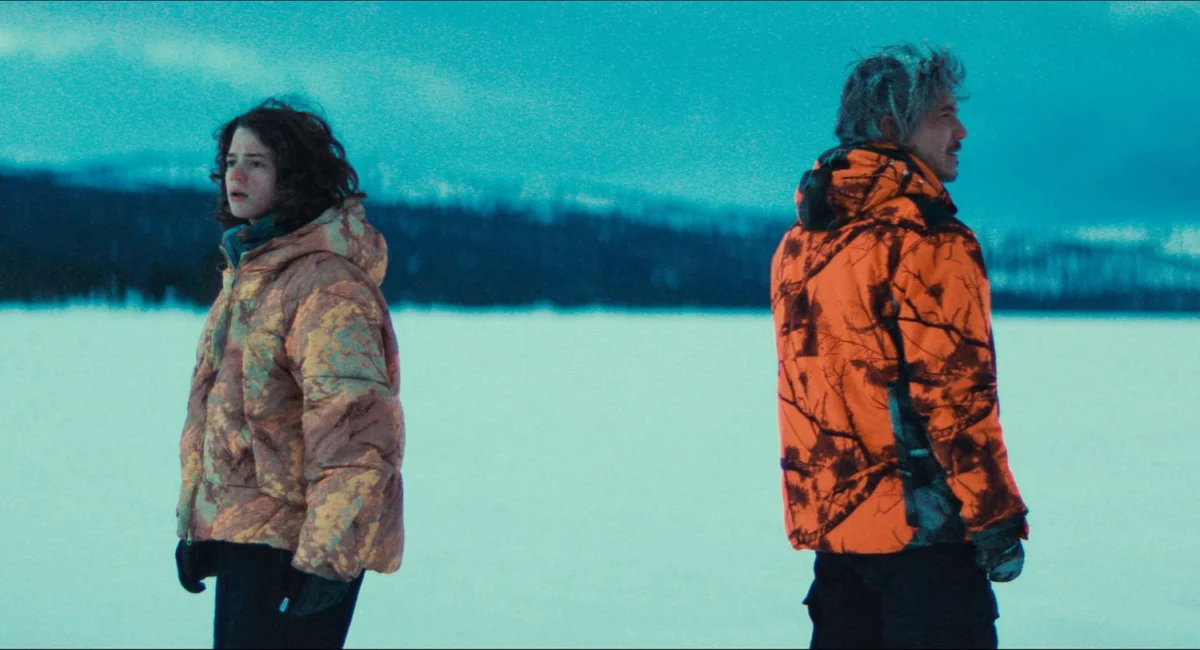
Curzon has officially unveiled the trailer for My Father’s Island, an independent father-son drama helmed by acclaimed French filmmaker Vladimir de Fontenay, set to debut in UK cinemas on July 3rd, 2026. This highly anticipated film, also known by its source material title Sukkwan Island, promises a harrowing yet visually stunning exploration of familial estrangement, survival, and the enduring weight of past trauma, set against the breathtakingly stark backdrop of the Norwegian fjords. The film previously made its premiere at the prestigious 2025 Sundance Film Festival and subsequently screened at the San Francisco Film Festival, garnering significant attention for its ambitious narrative and powerful performances, despite receiving a mixed critical reception.
A Deep Dive into the Narrative and Themes
My Father’s Island centers on the complex and fractured relationship between a father and his 13-year-old son, Roy, portrayed with compelling depth by Woody Norman. The narrative unfolds as Roy, a Londoner, agrees to embark on a transformative year living on a remote Norwegian island with his estranged father, played by the formidable Swann Arlaud. What initially begins as a desperate attempt to mend a decade-old rift and reconnect after a shared traumatic experience quickly devolves into a grueling test of survival. The unforgiving natural environment of the fjords becomes an external manifestation of their internal turmoil, forcing both father and son to confront not only the harsh realities of their isolated existence but also the unresolved psychological wounds that have shaped their relationship.
The film delves into profound themes of reconciliation, the psychological impact of isolation, and the indelible scars left by trauma. The remote island setting is more than just a scenic backdrop; it acts as a crucible, stripping away societal conventions and forcing the characters to face their rawest emotions. The narrative, adapted from David Vann’s acclaimed novel "Sukkwan Island," explores the thin line between love and resentment, dependency and independence, and the desperate human need for connection even in the face of profound hurt. The tagline, "I would never leave you again…", hints at the deep-seated emotional undercurrents and the characters’ struggle with abandonment and attachment, suggesting a journey fraught with emotional peril as much as physical danger.
The Visionary Behind the Lens: Vladimir de Fontenay
French indie filmmaker Vladimir de Fontenay takes the directorial reins, bringing his distinct artistic vision to this challenging material. De Fontenay is known for his nuanced approach to character-driven stories and his ability to craft atmospheric, emotionally resonant narratives. His previous works include the critically noted films Memoria and Mobile Homes, as well as his involvement in the television series "Vampires." These projects often showcase a keen eye for human vulnerability and a willingness to explore complex psychological landscapes, traits that are evidently central to My Father’s Island. His filmography demonstrates a consistent interest in themes of displacement, identity, and the search for belonging, often framed within compelling dramatic contexts.
For My Father’s Island, de Fontenay’s direction promises to be both harrowing and beautifully wrought, balancing the stark realities of survival with the intricate emotional tapestry of a broken family. His choice to shoot on location in the stunning, yet formidable, Norwegian wilds underscores a commitment to authenticity and an understanding of how environment can powerfully amplify a story’s themes. The visual language of the film is expected to be integral to its impact, using the vast, untamed beauty of the fjords to reflect the characters’ inner struggles and the immense scale of their emotional journey.

From Page to Screen: The Literary Foundation of "Sukkwan Island"
The film’s narrative draws its potent power from David Vann’s novel "Sukkwan Island," a work renowned for its unflinching portrayal of human darkness, trauma, and the destructive nature of certain relationships. Published in 2008, Vann’s novel is part of a collection of stories titled "Legend of a Suicide," which explores the devastating legacy of a father’s suicide. "Sukkwan Island" specifically chronicles the ill-fated year a father and his teenage son spend in isolation in the Alaskan wilderness, a story deeply rooted in Vann’s own traumatic family history. The novel is characterized by its raw, often brutal honesty, its exploration of mental fragility, and its stark depiction of man versus nature.
Adapting such an intense and psychologically charged novel presents both immense opportunities and significant challenges. Vann’s prose is visceral and uncompromising, delving into the very depths of human despair and the complexities of dysfunctional family dynamics. The film adaptation, produced by Eliott Khayata and Carole Scotta, must carefully navigate the novel’s dark themes while translating its internal psychological struggles into a compelling visual narrative. The shift from the Alaskan wilderness of the novel to the Norwegian fjords in the film, while geographically distinct, maintains the core thematic resonance of isolation and an awe-inspiring, yet indifferent, natural world. De Fontenay’s task was to capture the essence of Vann’s literary vision – its exploration of inherited trauma and the desperate quest for connection – while making it accessible and impactful for a cinematic audience. This often involves careful editing of the original narrative, potentially softening some of its more extreme elements, or finding visual metaphors to convey the novel’s intense psychological states.
A Stellar Ensemble Cast
The success of My Father’s Island heavily relies on the caliber of its cast, and Vladimir de Fontenay has assembled a remarkable ensemble to bring this complex story to life. Leading the cast are Swann Arlaud and Woody Norman, whose performances are central to the film’s emotional core.
Swann Arlaud, a celebrated French actor, is known for his intense and nuanced portrayals. He gained international recognition and won a César Award for Best Actor for his role in Bloody Milk (Petit Paysan), where he delivered a powerful performance as a farmer grappling with a mysterious illness affecting his cows. His filmography is rich with roles that demand deep psychological commitment, making him an ideal choice for the troubled father figure in My Father’s Island. Arlaud possesses a unique ability to convey vulnerability, desperation, and suppressed rage, qualities essential for a character haunted by past trauma and struggling to reconnect with his son amidst harsh conditions. His presence lends a gravitas and raw authenticity to the father’s role, promising a performance that will resonate with audiences long after the credits roll.
Woody Norman, despite his young age, has already established himself as a formidable talent. He captivated critics and audiences alike with his breakout role in Mike Mills’ C’mon C’mon (2021), where he starred opposite Joaquin Phoenix. His performance in that film was lauded for its naturalism, emotional intelligence, and ability to hold his own against a seasoned actor. As the 13-year-old Roy, Norman faces the significant challenge of portraying a character navigating profound emotional distress, physical hardship, and the complex dynamics of a strained father-son relationship. His prior work suggests he possesses the maturity and range required to convey the nuanced emotions of a boy caught between a yearning for connection and the painful realities of his circumstances. The chemistry and tension between Arlaud and Norman will undoubtedly be a cornerstone of the film’s impact.
The supporting cast further strengthens the ensemble, with Alma Pöysti, Ruaridh Mollica, and Tuppence Middleton also featuring. Alma Pöysti, a Finnish actress, recently garnered critical acclaim for her leading role in Aki Kaurismäki’s Fallen Leaves, showcasing her talent for understated yet impactful performances. Tuppence Middleton is a British actress known for her diverse roles across film and television, including The Imitation Game, Downton Abbey, and Sense8, bringing a wealth of experience to the production. While their specific roles are not detailed, their involvement suggests a commitment to strong supporting characterizations that will enrich the film’s overall fabric.

The Norwegian Fjords: A Character in Itself
The decision to film My Father’s Island on location in the stunning, yet formidable, Norwegian fjords is more than a mere aesthetic choice; it is a fundamental aspect of the film’s storytelling. The fjords, with their towering cliffs, deep blue waters, and often harsh, unpredictable weather, embody both immense beauty and overwhelming isolation. This environment serves as a powerful metaphor for the characters’ internal landscapes – beautiful yet scarred, vast yet confining. The visual grandeur of Norway’s wilderness will undoubtedly contribute significantly to the film’s atmosphere, evoking a sense of awe, vulnerability, and the sheer scale of the challenges faced by the father and son.
Filming in such remote and demanding locations presents considerable logistical and creative challenges. Production teams must contend with extreme weather conditions, limited access, and the complexities of maintaining equipment and cast comfort in isolated settings. However, the benefits far outweigh these difficulties, as the authentic, untamed nature of the fjords lends an unparalleled sense of realism and immersion to the survival aspect of the narrative. The cinematography, as suggested by the trailer, promises to capture the raw majesty of these landscapes, using wide shots to emphasize the characters’ smallness against nature’s might, and close-ups to highlight their emotional intensity. The environment acts as an additional, silent character, constantly testing their resolve and mirroring their internal struggles. The visual narrative of the film is thus deeply intertwined with the geographical narrative, reinforcing the themes of human resilience and the profound impact of isolation.
Festival Acclaim and Critical Reception
My Father’s Island made its world premiere at the 2025 Sundance Film Festival, an esteemed platform globally recognized for showcasing independent cinema and launching the careers of innovative filmmakers. A premiere at Sundance signals a film’s artistic ambition and its potential to resonate with discerning audiences and critics. Following its Sundance debut, the film also screened at the San Francisco Film Festival, another prominent festival known for its diverse programming and celebration of international cinema. These festival selections underscore the film’s significant artistic merit and its ability to capture the attention of the independent film circuit.
However, the film’s initial critical reception at Sundance was described as "mixed." Reports indicated that while some critics lauded its performances and visual ambition, others found it to "meander" and leave "viewers more confused than moved." This type of reaction is not uncommon for challenging independent dramas that delve into complex psychological themes. A film described as "meandering" might imply a narrative that prioritizes mood and character introspection over a conventional plot structure, potentially leading to a slower pace that some viewers find less engaging. The sentiment of leaving viewers "more confused than moved" could stem from the film’s deliberate ambiguity regarding certain character motivations, or its exploration of trauma in a way that resists easy interpretation or resolution.
Despite these mixed reviews, festival screenings are crucial for independent films, providing invaluable exposure, generating buzz, and often paving the way for distribution deals. The critical discourse, even if divided, contributes to the film’s profile and encourages deeper engagement with its themes. Such reactions often highlight a film’s daring nature, pushing boundaries rather than adhering to commercial expectations. It suggests that My Father’s Island is not a film that offers easy answers but instead invites contemplation and discussion, appealing to audiences who appreciate cinema that challenges rather than simply entertains.
The Path to Distribution: Curzon and the Global Market

The announcement of Curzon handling the UK release of My Father’s Island, scheduled for July 3rd, 2026, marks a significant step for the film. Curzon is a highly respected independent film distributor and exhibitor in the United Kingdom, known for its curated selection of arthouse, foreign-language, and critically acclaimed independent films. Their decision to acquire My Father’s Island suggests a belief in its artistic merit and its potential to find an audience within the UK’s discerning independent cinema market. Curzon’s distribution strategy often involves a combination of theatrical releases in their own cinemas and partnerships with other independent venues, along with a strong emphasis on their digital platform, Curzon Home Cinema. This multi-platform approach ensures broad accessibility for films that might not receive wide mainstream distribution.
The July 2026 release date positions the film during a period typically less crowded with major blockbusters, allowing it to carve out its niche and attract its target demographic. However, the article notes that there is "still no US release for this one yet – stay tuned." The absence of a confirmed US distributor at this stage, particularly after its Sundance premiere, is not uncommon for independent foreign-language films. Several factors could contribute to this, including the mixed critical reception, the film’s niche genre, or distributors carefully evaluating its commercial viability in the highly competitive North American market. Often, US distribution deals materialize later, perhaps after successful runs in other territories or after further festival appearances. Alternatively, a smaller, specialized distributor might pick up the film for a limited release, catering to arthouse audiences. The global market for independent cinema is complex, with films often finding staggered releases across different regions based on local distribution partnerships and audience appetites.
Broader Implications and Anticipation
My Father’s Island represents a significant entry into the landscape of contemporary independent cinema, underscoring the enduring power of character-driven dramas that tackle profound human experiences. In an era often dominated by franchise films and spectacle, films like de Fontenay’s offer a vital counter-narrative, prioritizing emotional depth, psychological realism, and artistic integrity. The film’s exploration of themes such as inherited trauma, the complexities of father-son bonds, and the human struggle for survival against overwhelming odds resonates deeply with universal anxieties and desires for connection.
The anticipation surrounding its UK release is a testament to the continued appetite for challenging, thought-provoking cinema. Despite the mixed reviews, the very nature of the criticism—highlighting its "meandering" quality or potential for "confusion"—suggests a film that dares to defy conventional narrative structures and offers a more contemplative, perhaps even ambiguous, viewing experience. For audiences seeking more than just escapism, My Father’s Island promises an immersive journey into the heart of human resilience and vulnerability, amplified by the breathtaking yet brutal beauty of the Norwegian fjords. It invites viewers to grapple with difficult emotions and to consider the profound impact of our environments and our pasts on who we become. As the UK release approaches, all eyes will be on how this ambitious and visually striking drama navigates the cinematic landscape, solidifying its place as a poignant exploration of the human condition.