




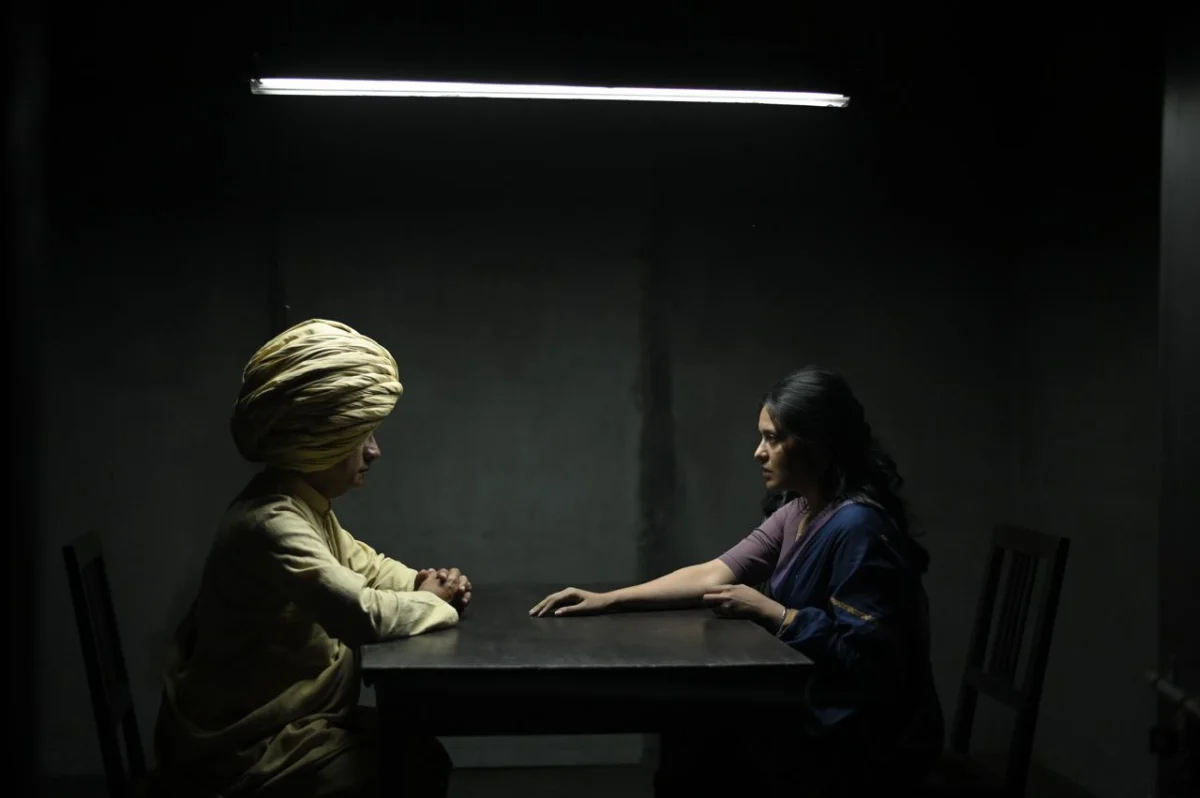
Samik Roy Choudhury’s ambitious Bengali production, "Maya Satya Bhram," a cinematic endeavor that masterfully weaves together threads of crime thriller, mystical drama, social critique, and philosophical meditation, has been garnering attention following its completion in 2025 and its presentation at the prestigious Bishkek International Film Festival. During the festival, director Choudhury elaborated on the genesis of the project, revealing that the film’s conceptualization was directly influenced by the unexpected theatrical success of his debut film in 2024, which resonated strongly with audiences after its festival circuit run. This prior success provided the impetus and confidence to embark on a more complex and thematically rich narrative.
The Genesis of a Mystical Narrative
The core philosophical underpinnings of "Maya Satya Bhram" were conceived during a solitary retreat to the mountains. It was here, amidst the serenity and introspection of the natural landscape, that Choudhury began to crystallize his central thesis: the human tendency to dwell on the past or obsess over the future, thereby forfeiting the profound contentment that can only be found in the present moment. This profound realization found a tangible anchor in a personal encounter with a shaman, an experience that, even years later, remained shrouded in an almost inexplicable mystique for the director. This enigmatic figure became the symbolic conduit through which Choudhury intended to articulate his philosophical insights. The narrative itself was reportedly penned within a remarkably short span of seven days amidst the mountainous terrain. Upon his return to the more conventional setting of the plains, Choudhury actively sought out producers and financiers to bring his vision to fruition, subsequently developing the detailed screenplay. "Maya Satya Bhram" is slated for a pan-Indian release towards the end of August, contingent upon the successful completion of the censor board’s review process.
A Kolkata Mystery Unfolds
The narrative of "Maya Satya Bhram" plunges viewers into the heart of a perplexing mystery that grips the Prafulla Nagar police station in Kolkata. The story ignites with the simultaneous disappearance of two individuals: Totoro, the young son of Inspector Sanjay, and Sara Nielsen, a Swedish researcher engrossed in the study of shamanism. Nielsen’s vanishing act is particularly linked to her recent interview with the enigmatic Trilokadarshi Baba, a spiritual figure who rapidly ascends to the epicenter of both the unfolding mystery and the film’s profound philosophical inquiries. As Inspector Sanjay Konwar meticulously follows the trail left by Nielsen’s recorded interviews, a disquieting truth gradually emerges, one that skillfully blurs the demarcating lines between deeply held faith, calculated deception, enduring trauma, and an element far more chilling and potentially terrifying than initially perceived.
Addressing Societal Blind Spots Through Cinema
A significant and poignant aspect of "Maya Satya Bhram"’s narrative is its deliberate connection to a real-life crime case that originated in Jharkhand. This particular arc of the story centers on a child molester whose heinous crimes were eventually brought to light by the authorities. Director Choudhury has articulated that while smaller media outlets did provide some coverage to this incident, the larger, mainstream Indian media failed to accord it the level of visibility he believed it warranted. Consequently, Choudhury’s decision to integrate this sensitive issue into his film serves a dual purpose: to imbue the fictional narrative with a stark sense of realism and, more importantly, to act as a cinematic platform for raising critical public awareness. The intention is to underscore the paramount importance of vigilance among parents and society at large in safeguarding children from such insidious dangers. This deliberate inclusion highlights cinema’s potential as a tool for social commentary and advocacy, pushing for greater attention to overlooked societal issues.
An Ambitious Tapestry: Strengths and Challenges
The film’s overarching ambition to encompass such a wide spectrum of themes and genres is undeniably its most compelling strength, yet it also presents the primary challenge to its overall coherence. "Maya Satya Bhram" endeavors to incorporate a multitude of narrative arcs, a diverse cast of characters, and a sequence of distinct episodes, to a degree that can, at times, induce a sense of narrative overload or even bewilderment in the viewer. Critics and observers suggest that a more judicious level of restraint in certain areas could have significantly amplified the film’s impact. Specifically, some scenes, including a foray into science fiction, have been identified as potentially dispensable, suggesting that their inclusion may have detracted from the central thematic thrust.
Despite these potential excesses, the fundamental quality of storytelling within "Maya Satya Bhram" remains evident. The film’s deliberate non-linear structure, which adeptly navigates through different temporal planes and shifts in perspective, imbues the narrative with a distinctive identity. This fragmented approach also allows the story to function as an intricate puzzle, pieced together through a mosaic of testimonies, audio recordings, fragmented memories, and deeply held beliefs, thereby enhancing viewer engagement and encouraging active interpretation. This complex structure, while demanding, is also a testament to Choudhury’s innovative approach to cinematic narrative.
The Enigmatic Figure of Babaji
Arguably the most captivating element of "Maya Satya Bhram" is the character of Babaji. Choudhury skillfully sidesteps the conventional portrayal of a purely benevolent or malevolent figure. Instead, Babaji is presented as a living, breathing philosophical question, a figure whose presence incites contemplation rather than providing definitive answers. Simultaneously, the character serves as a potent and ironic commentary on the pervasive societal tendency in contemporary India to unquestioningly revere and place faith in "Godmen" without subjecting their pronouncements or actions to any meaningful scrutiny. This particular observation stands out as one of the film’s most incisive critiques, effectively imbuing its mystical elements with a potent sociopolitical dimension, prompting audiences to consider the dynamics of faith, authority, and critical thinking in their own lives.
Performances Under the Spotlight
The acting performances within "Maya Satya Bhram" are, at times, characterized by a certain intensity that mirrors the heightened tone of the narrative. However, on the whole, the cast delivers performances that effectively serve the film’s ambitious scope. Paran Banerjee, in his portrayal of Babaji, makes a particularly strong impression. His performance relies heavily on nuanced expressions and a captivating presence, transcending the need for extensive dialogue to convey the character’s enigmatic nature. Soham Majumdar provides a grounded anchor for the investigative aspects of the story as the police officer, skillfully navigating the procedural elements of the plot. Priyanka Sarkar brings a crucial emotional depth to her role as the distraught mother, adding a layer of maternal anguish that resonates with the audience. Alexandra Taylor, as the Swedish researcher Sara Nielsen, capably embodies the curious foreign academic whose insatiable quest for knowledge leads her into increasingly perilous and uncertain territory.
Visual Storytelling and Cinematographic Prowess
From a visual perspective, "Maya Satya Bhram" is undeniably a strong production. The film employs a sophisticated use of color grading, with distinct palettes allocated to represent different temporal periods and narrative strands. This deliberate chromatic approach significantly aids the viewer in navigating the film’s fragmented structure and discerning the various layers of the story. Prosenjit Koley’s cinematography is equally commendable, particularly in sequences that demand atmospheric tension and visual intrigue, such as the depiction of a hidden room within a house or the claustrophobic intensity of interrogation scenes. The strategic use of wider frames allows certain moments to breathe and absorb, while tighter, more intimate shots are employed effectively during the investigative segments and the film’s more suspenseful junctures, enhancing the overall cinematic experience.
The Art of Editing and Pacing
Sanglap Bhowmik’s editing plays a crucial role in shaping the film’s unique rhythm and flow. The non-linear structure was an intrinsic part of the screenplay from its inception, and Bhowmik’s editing allows the various narrative threads to intermingle with a sense of organic freedom, rather than being rigidly bound by a conventional plot progression. The film’s relatively brisk pace is well-suited to its style, especially considering the sheer volume of narrative elements it juggles. Nevertheless, the inherent density of scenes, characters, and tonal shifts occasionally leads to pacing challenges, resulting in moments where the movie can feel somewhat overstuffed. This is a common hurdle for films attempting such ambitious multi-genre fusions, requiring a delicate balance between narrative momentum and thematic exploration.
A Compelling, Though Imperfect, Vision
In summation, "Maya Satya Bhram" is a film that, while not entirely a masterclass in controlled filmmaking, powerfully showcases its director’s ambition. At times, this ambition can manifest as narrative excess. Certain character arcs could have benefited from further refinement or trimming, and some thematic ideas might have been more effectively conveyed through subtle suggestion rather than explicit exposition. A few added elements could arguably have been omitted without diminishing the film’s core message.
Despite these critiques, Samik Roy Choudhury has undeniably crafted a genuinely intriguing and thought-provoking film. It stands as a testament to his emerging storytelling prowess, demonstrating a remarkable ability to synthesize disparate genres—crime, mysticism, philosophy, and social commentary—into a cohesive, albeit complex, cinematic language. Even when the narrative feels crowded, the film retains its inherent magnetism, utilizing the enigmatic figure of Babaji and the surrounding narrative chaos to pose fundamental questions about human belief systems: what we actively choose to accept, and what we consciously or unconsciously refuse to question. The film’s exploration of these themes, particularly in the context of contemporary Indian society, offers a compelling and often unsettling reflection on faith, doubt, and the pervasive influence of charismatic figures. The film’s engagement with these complex issues, coupled with its distinctive visual and narrative style, positions "Maya Satya Bhram" as a significant contribution to contemporary Bengali cinema, prompting dialogue and introspection long after the credits roll.