


Versant Media Group (VSNT), the newly independent entity comprising the former cable networks and digital assets of Comcast’s NBCUniversal, released its inaugural earnings report on Tuesday, providing the first comprehensive look at the financial health of the spinout as it navigates a rapidly evolving media landscape. The report, which covers the full fiscal year of 2025 and the final quarter ending December 31, details a company in the midst of a significant structural transition. While the traditional linear television business continues to face secular headwinds, Versant executives signaled a robust commitment to shareholder returns and a strategic pivot toward digital and platform-based revenue streams.
The company reported full-year revenue of approximately $6.69 billion for 2025, representing a 5% decline compared to the previous year. This figure serves as a baseline for the company’s performance during its final twelve months under the ownership of Comcast, a period during which management was already working behind the scenes to decouple these assets from the broader NBCUniversal ecosystem. Despite the decline in top-line revenue, Versant maintained strong profitability, reporting a net income attributable to the company of $930 million and a stand-alone adjusted EBITDA (earnings before interest, taxes, depreciation, and amortization) of $2.18 billion for the full year.
A Deep Dive into the Financial Metrics
The fourth-quarter results highlighted the specific challenges facing the traditional media sector. For the period ended December 31, 2025, Versant’s total revenue fell nearly 7% year-over-year to $1.61 billion. The decline was driven primarily by the linear distribution and advertising segments, which have long been the bedrock of the cable television industry. Linear distribution revenue, which includes the fees paid by cable and satellite providers to carry Versant’s networks, dropped nearly 6% to $997 million. Meanwhile, advertising revenue saw a more pronounced contraction, falling 9% to $370 million.
In contrast, the company’s "platforms" segment—which includes digital-first assets and transactional services—remained a bright spot, holding roughly flat at $202 million for the quarter. On a full-year basis, the platforms business was the only segment to demonstrate growth, contributing to the $826 million in non-pay TV revenue that now accounts for 19% of the company’s total intake.
Stand-alone adjusted EBITDA for the fourth quarter was reported at $521 million, a 19% decrease from the same period in 2024. This contraction reflects the high fixed costs associated with traditional broadcasting and the impact of declining ad spend across the industry. However, Versant’s management emphasized that the company’s lean debt profile provides a level of financial flexibility that many of its more leveraged peers in the media space lack.
Strategic Capital Allocation and Shareholder Returns
In a move designed to bolster investor confidence during this period of transition, Versant’s board of directors declared a quarterly dividend of 37.5 cents per share. This represents an annualized dividend of $1.50 per share, signaling a high-yield profile for the newly listed stock. Furthermore, the board authorized a $1 billion share repurchase program, reinforcing the company’s intention to return excess cash to its shareholders.
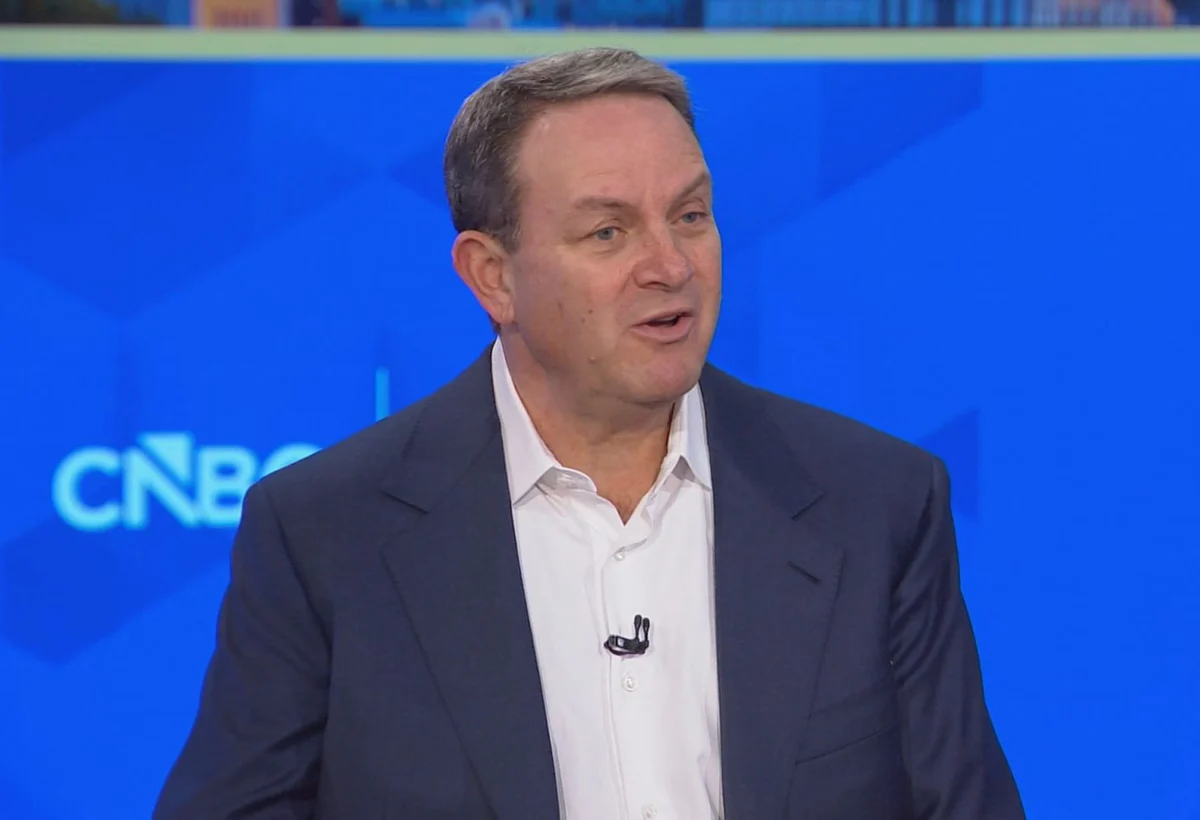
"Returning capital to shareholders remains a top priority for us, alongside disciplined investing to support long-term growth," said Versant COO and CFO Anand Kini during the company’s earnings call. Kini noted that the company’s high-margin business model and relatively low debt obligations allow for a dual-track strategy: rewarding investors in the short term while funding the technological and content pivots necessary for the next decade.
The decision to launch an aggressive buyback and dividend program so early in the company’s independent life is seen by analysts as a defensive measure against the volatility of the "cord-cutting" era. By positioning itself as a "value play" with consistent cash flow, Versant aims to attract a different class of investors than those chasing the high-growth, high-burn profiles of standalone streaming services.
The Path to 2026: A Year of Transition
Versant’s leadership team, headed by CEO Mark Lazarus, has been transparent about the fact that 2026 will serve as a foundational "transition year." Currently, more than 80% of the company’s revenue is derived from the legacy pay TV business. However, the long-term roadmap involves a radical rebalancing of the portfolio. The company has set an ambitious goal to reach a point where 50% of its revenue comes from digital, platform, subscription, ad-supported, and transactional businesses.
To achieve this, Versant is looking to leverage its diverse portfolio of assets, which includes household names like USA Network, Golf Channel, Syfy, E!, and Oxygen, alongside the business news leader CNBC and the rebranded MS Now. The strategy also relies heavily on its digital and transactional properties, such as Fandango, Rotten Tomatoes, GolfNow, and Sports Engine.
"In the next three to five years, we are looking to increase the share of platform and digital revenue to 33%, with the ultimate goal of getting closer to 50%," CEO Mark Lazarus stated. He identified several key growth drivers that are expected to accelerate this shift, including:
- MS Now Direct-to-Consumer (DTC): An upcoming standalone product for the news brand formerly known as MSNBC, designed to capture audiences migrating away from traditional cable news consumption.
- CNBC Expansion: Growth in the "CNBC Pro" subscription service and the launch of a new retail investor product aimed at the burgeoning community of individual traders.
- Fandango at Home: The scheduled 2026 launch of a new ad-supported version of the Fandango at Home service, which aims to monetize the company’s vast library of content and transactional data.
Chronology of the Spinoff
The road to Versant’s independence began in late 2024 when Comcast announced its intention to spin off its cable networks into a separate, publicly traded entity. The decision was viewed by the industry as a strategic "slimming down" for Comcast, allowing the parent company to focus on its core connectivity business (Xfinity) and its high-growth streaming (Peacock) and theme park (Universal Destinations & Experiences) divisions.
Throughout 2025, management worked to disentangle the networks from NBCUniversal’s corporate structure. This involved creating independent financial reporting systems, establishing a new corporate identity, and ensuring that the networks could operate without the direct cushion of Comcast’s massive balance sheet. Versant officially began trading on the Nasdaq in early January 2026 under the ticker VSNT.
The debut of this first earnings report marks the completion of that separation phase and the beginning of Versant’s life as a standalone market participant. The company remains headquartered in New York, maintaining close ties with its former parent through various transition service agreements, though it now operates with full fiduciary independence.
Industry Context and Market Implications
The challenges facing Versant are not unique; they are emblematic of a broader crisis in the American media industry. For decades, the "cable bundle" provided a reliable and lucrative revenue stream through affiliate fees and advertising. However, the rise of Netflix, Disney+, and other streaming giants has led to a steady decline in cable subscriptions.
Versant’s strategy differs from peers like Disney or Warner Bros. Discovery in that it is not attempting to build a "Netflix-killer" streaming service. Instead, it is focusing on niche, high-value verticals—business news (CNBC), sports-adjacent services (GolfNow, Sports Engine), and transactional entertainment (Fandango). By focusing on these specialized areas, Versant hopes to maintain higher margins than general-interest streaming services that require billions of dollars in annual content spend to retain subscribers.
Market analysts have noted that Versant’s success will likely depend on its ability to manage the decline of its linear assets while simultaneously scaling its digital platforms. The 19% revenue contribution from non-pay TV sources is a significant starting point, but the "bridge" to 50% remains steep.
Looking Ahead: The 2026 Roadmap
As Versant moves deeper into its first year as a public company, investors will be watching for the execution of its digital roadmap. The upcoming launch of the ad-supported Fandango at Home service in 2026 is viewed as a critical test of the company’s ability to monetize its digital audience. Furthermore, the performance of CNBC Pro will serve as a bellwether for the company’s ability to convert viewers into paying subscribers for specialized content.
"We’re going to continue to report… good visibility in the platforms revenue line, which we think provides a good, meaningful indicator of how that business is scaling," Kini told investors.
While the linear distribution decline of 5.4% and the 9% drop in ad revenue are sobering reminders of the industry’s trajectory, Versant’s leadership remains optimistic. The combination of a debt-light balance sheet, a portfolio of iconic brands, and a clear mandate to return capital to shareholders suggests that Versant is positioning itself to be a survivor—and potentially a consolidator—in a fragmented media world.
The market’s reaction to the earnings report was one of cautious observation. While the revenue declines were expected given the state of the industry, the $1 billion buyback and the dividend yield provided a floor for the stock price. As the media landscape continues to shift, Versant Media Group stands as a prominent case study in whether a legacy cable portfolio can successfully reinvent itself for the digital age without the safety net of a massive corporate parent.