


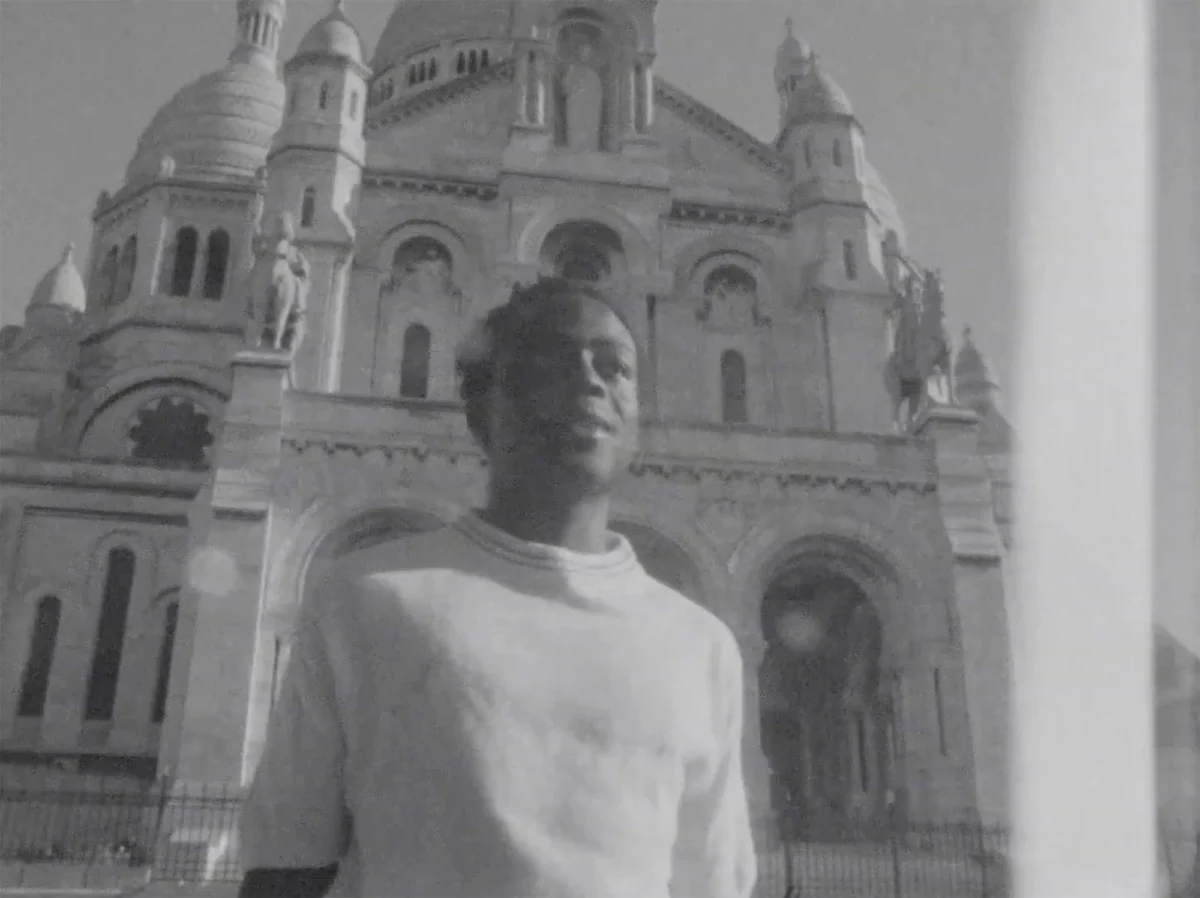
Strand Releasing has officially debuted the trailer for Jimmy, an impressionistic and intimate cinematic exploration of James Baldwin’s formative experiences upon his arrival in Paris in November 1948. Directed by Yashaddai Owens in his feature film debut, this unique 67-minute black-and-white 16mm production, described as a "jazzy, French New Wave-esque portrait," first garnered attention at the 2024 Telluride Film Festival before making its way to the New York Film Festival in the same year. Starring Benny O. Arthur as a young James Baldwin, the film is slated for a theatrical release in select US cinemas on July 31st, 2026, promising a distinct and artful dive into the life and words of one of the 20th century’s most profound literary figures. The announcement comes with a distinct differentiation from another film also titled Jimmy, focusing on James Stewart during WWII, highlighting the unique subject matter and artistic intent of Owens’ vision.
The Genesis of Jimmy: Yashaddai Owens’ Vision
Yashaddai Owens, primarily known for his work as a photographer, makes a significant transition into feature filmmaking with Jimmy. This background as a visual artist is evidently a cornerstone of the film’s aesthetic and narrative approach. Rather than pursuing a conventional biographical structure, Owens opts for an "impressionistic fashion," utilizing the tactile and evocative qualities of 16mm black-and-white film to capture the mood and subjective experience of Baldwin’s early days as an expatriate. This choice aligns Jimmy with a tradition of art-house cinema that prioritizes visual poetry and emotional resonance over strict chronological recounting.
The decision to shoot on 16mm film, a format celebrated for its rich texture and inherent grain, lends a timeless quality to the narrative, immediately placing it within a historical context while simultaneously allowing for a contemporary artistic interpretation. Black-and-white cinematography further enhances this effect, stripping away the distractions of color to focus on form, light, shadow, and the nuanced expressions of its protagonist. This stylistic choice is not merely an aesthetic preference but a deliberate artistic statement, aiming to immerse the audience in a world that feels both authentic to the era and universal in its emotional landscape. Owens’ directorial debut is marked by its ambition to interpret, rather than simply document, a pivotal moment in Baldwin’s life, using cinematic language to articulate internal states and nascent artistic stirrings.
James Baldwin: The Exile and the Artist
To fully appreciate the significance of Jimmy, one must understand the context of James Baldwin’s decision to leave New York for Paris in 1948. Born in Harlem in 1924, Baldwin grew up amidst the harsh realities of racial segregation and discrimination in America. Despite early literary promise and critical acclaim for his essays, Baldwin found the racial and social climate in the United States stifling for his artistic and personal development. He articulated a profound sense of alienation, stating that he "could not hope to become a writer" in America because of the pervasive racial prejudice that demanded he write solely as a "Negro writer," rather than simply "a writer."
In November 1948, armed with a fellowship grant, Baldwin boarded a ship for France, seeking a space where he could breathe, think, and write without the constant pressure of racial identity defining his every interaction. He was just 24 years old. Paris at that time was a vibrant hub for American expatriates, particularly African American artists and intellectuals who sought refuge from Jim Crow laws and artistic freedom in a city renowned for its cultural liberalism and intellectual ferment. Figures like Richard Wright, Chester Himes, and Josephine Baker had already paved the way, creating a supportive community for Black artists abroad.

Baldwin’s initial years in Paris were marked by both profound struggle and immense growth. He often lived in poverty, enduring cold and hunger, but he found an intellectual liberation that allowed him to examine his American experience with a critical distance. It was during this period that he began to craft some of his most seminal works, including his first novel, Go Tell It on the Mountain (published in 1953), which drew heavily on his Harlem upbringing and religious background, and early essays that would form Notes of a Native Son (1955). His time in Paris was instrumental in shaping his voice as an essayist, novelist, and orator, transforming him into a fearless critic of American society, race relations, and sexuality. Jimmy seeks to capture the essence of this transformative period, focusing on the very first impressions and internal shifts that would define his future trajectory.
A Cinematic Homage: Style, Substance, and Sound
The description of Jimmy as "jazzy" and "French New Wave-esque" points to a deliberate stylistic choice that deeply informs the film’s substance. The French New Wave, emerging in the late 1950s and early 1960s, was characterized by its rejection of traditional filmmaking conventions, embracing instead jump cuts, non-linear narratives, handheld camera work, and a sense of improvisation. This aesthetic sought to capture a raw, immediate reality, often reflecting existential themes and individual alienation. Applying this style to Baldwin’s arrival in Paris is particularly fitting, given the era and the intellectual currents flowing through the city.
A "jazzy" sensibility further enhances this impressionistic approach. Jazz music, with its improvisational nature, complex rhythms, and profound emotional depth, mirrors the film’s intention to explore Baldwin’s internal landscape and the fluid, often uncertain, nature of his new environment. Paco Andreo’s score is therefore not just background music but an integral narrative element, contributing to the mood, pace, and emotional texture of the film. The interplay between visuals and sound is designed to create a sensory experience that transcends mere factual recounting, inviting the audience to feel Baldwin’s journey rather than just observe it.
The synopsis highlights "energetic & sweeping handheld camera work" and the blurring of "consciousness of time and place." This suggests a dynamic and subjective visual language, designed to convey the disorientation and exhilaration of Baldwin’s experience. By weaving his starting point in Harlem 1948 into a "modern narrative," Owens implies a thematic bridge between past and present, underscoring the timeless relevance of Baldwin’s struggles and insights. The film’s exploration extends beyond Paris, with mentions of "rich landscapes of Istanbul," suggesting a broader journey of self-discovery and an artist’s navigation of the world, echoing Baldwin’s later travels and intellectual curiosity. This brevity of the film, at just 67 minutes, suggests a focused, intense character study rather than an expansive biopic, demanding the audience’s full engagement with its dense artistic vision.
Festival Acclaim and Distribution
The journey of Jimmy through the festival circuit underscores its artistic merit and critical appeal. Its premiere at the 2024 Telluride Film Festival is a significant indicator of its quality. Telluride is one of the most prestigious film festivals globally, known for its curated selection of independent and international cinema and its role as a launching pad for award-season contenders and critically acclaimed works. A debut at Telluride often signals a film’s potential for broader recognition and a strong critical reception.
Following its Telluride premiere, Jimmy was screened at the New York Film Festival (NYFF) later in 2024. The NYFF is another highly respected platform, celebrated for its discerning curatorial approach and its focus on films that push artistic boundaries and engage with significant cultural themes. The New York Film Festival’s introduction, describing Owens’ work as imagining Baldwin’s "first experiences in Paris in impressionistic fashion," validated the director’s unique approach and the film’s intellectual depth. Such early festival success likely contributed to its acquisition by Strand Releasing.

Strand Releasing is an independent film distributor with a reputation for championing art-house, international, and LGBTQ+ cinema. Their catalog includes films from acclaimed directors and emerging talents, often with a strong emphasis on artistic integrity and thematic resonance. Strand’s decision to distribute Jimmy signals their belief in the film’s capacity to connect with an audience appreciative of sophisticated storytelling and unconventional cinematic forms. Their involvement ensures that Jimmy will reach its intended audience of "cinephiles and experimental cinema fans" across the United States. The July 31st, 2026, release date positions it as a significant summer offering for those seeking an alternative to mainstream blockbusters.
The Cast and Creative Team
At the heart of Jimmy‘s narrative is Benny O. Arthur, tasked with the challenging role of portraying a young James Baldwin. Embodying a figure as iconic and intellectually formidable as Baldwin, particularly in his formative years, requires a nuanced performance that conveys both vulnerability and nascent brilliance. Arthur’s portrayal will be critical in translating Baldwin’s internal struggles and burgeoning artistic identity to the screen in a manner that resonates with Owens’ impressionistic vision. While specific details about Arthur’s prior roles are not provided in the original text, the selection for such a pivotal character in a critically acclaimed festival film suggests a performance of considerable depth and sensitivity.
Paco Andreo’s contribution as the film’s composer is equally vital. As noted, the "jazzy" description of the film implies a score that is not merely incidental but deeply woven into the narrative fabric. Andreo’s music will be instrumental in establishing the film’s mood, rhythm, and emotional arc, enhancing the "French New Wave-esque" qualities and underpinning the impressionistic storytelling. The synergy between Owens’ visual direction and Andreo’s sonic landscape is expected to be a defining characteristic of Jimmy, creating an immersive experience that transports viewers into Baldwin’s subjective world.
The broader creative team, though not fully detailed, would have worked to realize Owens’ ambitious vision. This includes cinematographers who skillfully executed the 16mm black-and-white aesthetic, editors who crafted the impressionistic narrative flow, and production designers who evoked the period of 1948 Paris and Harlem without resorting to overt historical literalism. The collaborative effort behind such an artful and unique film is crucial to its success and its ability to capture the essence of James Baldwin’s early expatriate experience.
Navigating the Cinematic Landscape: A Unique Offering
In an era often dominated by traditional biopics and historical dramas, Jimmy stands out for its deliberate embrace of experimental cinema. The film’s short runtime, specific aesthetic choices, and impressionistic narrative distinguish it from more conventional portrayals of historical figures. This approach offers a different kind of engagement, inviting viewers to experience Baldwin’s journey through mood, atmosphere, and subjective interpretation rather than a linear recounting of events. For "cinephiles and experimental cinema fans," this offers a refreshing and intellectually stimulating alternative, valuing artistic exploration over factual exhaustive detail.
The potential for confusion with another film titled Jimmy, this one about James Stewart’s experiences in WWII, underscores the necessity of clearly communicating the distinct identity of Owens’ film. While both might share a title, their subjects, historical periods, and artistic intentions are vastly different. The Jimmy focused on James Baldwin is a contemplative, art-house piece designed to delve into the intellectual and emotional awakening of a literary giant, appealing to an audience interested in cultural history, literary figures, and innovative filmmaking. This distinction is crucial for the film to find its dedicated audience.

Broader Cultural Resonance
The timing of Jimmy‘s release in 2026 also holds broader cultural resonance. James Baldwin’s work and ideas have seen a significant resurgence in recent years, particularly in discussions surrounding race, identity, and social justice. His eloquent critiques of American society, written decades ago, remain strikingly relevant today. A film exploring his early experiences of self-exile and artistic formation in Paris offers a powerful lens through which to re-examine themes of belonging, freedom, and the artist’s role in confronting societal injustices.
By focusing on Baldwin’s initial steps into a new world, Jimmy implicitly touches upon universal themes of seeking identity, overcoming adversity, and finding one’s voice. His journey from the racial confines of America to the relative freedom of Paris is a testament to the human spirit’s quest for liberation and self-expression. Owens’ film, through its unique artistic language, invites audiences to reflect on these enduring questions, providing an intimate glimpse into the making of a literary icon whose insights continue to challenge and inspire. The film serves as a reminder of Baldwin’s profound legacy and the enduring power of his story, rendered through a cinematic vision as distinct and thought-provoking as Baldwin himself.
As July 31st, 2026, approaches, Jimmy is poised to offer a compelling and artfully crafted cinematic experience, deepening our understanding of James Baldwin’s pivotal European sojourn and celebrating the artistic vision of Yashaddai Owens. It promises to be a significant addition to the canon of films exploring the lives of influential figures, particularly those who have shaped our understanding of race, identity, and the human condition.