


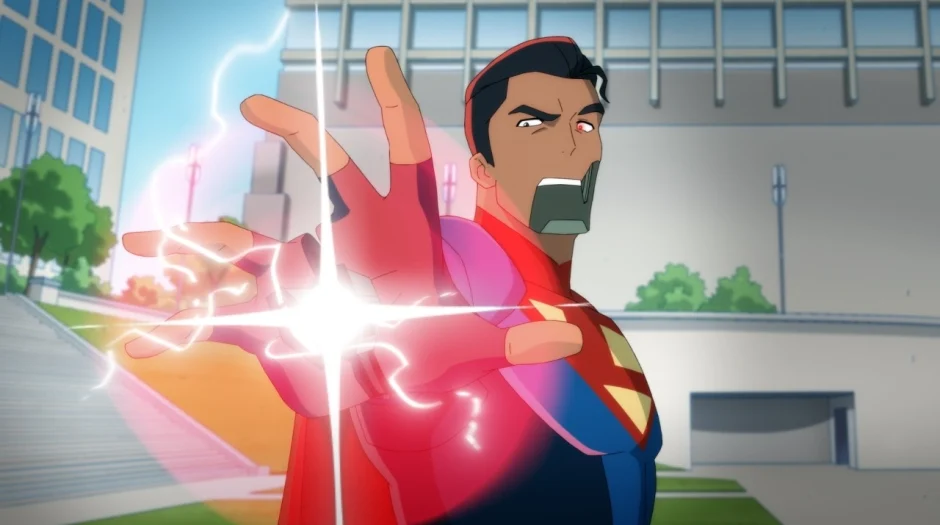
The latest season of the acclaimed animated series My Adventures with Superman, which premiered on June 13th on Adult Swim’s Toonami block at midnight ET/PT and became available the following day on HBO Max, delves deeper into the complexities of superhero relationships, pushing the boundaries of both narrative and character development. Produced by DC Studios and Warner Bros. Animation, the series continues to follow the youthful iterations of Clark Kent (Jack Quaid), Lois Lane (Alice Lee), Jimmy Olsen (Ishmel Sahid), and Kara Zor-El (Kiana Madeira) as they navigate their burgeoning careers at The Daily Planet and their evolving personal lives. This season, in particular, has been characterized by its ambitious approach to character arcs and narrative challenges, as revealed in a recent interview with co-executive producers and showrunners Jake Wyatt and Brendan Clogher.

A Season of Unprecedented Challenges
Season 3 finds Clark Kent fully embracing his identity as Superman and coming to terms with his Kryptonian heritage, reaching a point where he feels ready to settle down. However, this desire for stability starkly contrasts with Lois Lane’s unwavering ambition, as she solidifies her position as The Daily Planet’s star reporter. Meanwhile, Jimmy Olsen has transitioned from a freelance photographer to a recognized celebrity journalist, yet he finds himself unexpectedly flustered by the romantic advances of Kara Zor-El, who is still finding her footing on Earth. The season’s premise hinges on this found family unit confronting formidable new adversaries, testing Superman’s powers, jeopardizing their collective future, and straining the very bonds that hold them together. The central question posed by the season is whether these heroes can secure their tomorrow before it succumbs to the pressures of today.
The series, which also boasts James Gunn, Peter Safran, and Sam Register as executive producers, with Kimberly S. Moreau serving as producer, has consistently explored the intersection of extraordinary abilities and relatable human struggles. Co-executive producers and showrunners Jake Wyatt and Brendan Clogher, who previously discussed the show’s origins in an interview concerning Season 2, shared insights into the ambitious undertakings of Season 3.

Embracing Extremes: The "Limits Test" of Storytelling
Jake Wyatt elaborated on the creative philosophy guiding Season 3, referencing a quote from an earlier interview with writer Josie Campbell that highlighted the series’ ability to oscillate between "zany, goofy, and chibi-style shenanigans" and moments of profound emotional intensity, even featuring "everybody crying and blood on the floor." Wyatt confirmed that this duality has been amplified in the current season, stating, "We brought that more to the writing. We were joking that the two Supermans we love are the ’90s Superman who’s like, ‘Oh man, it’s so dark. And they killed him,’ or whatever, and then the Silver Age Superman where it’s Clark Kent over Lois Lane’s knee with a binky in his mouth, getting spanked, and is like, ‘I’ve been reincarnated as Lois’ baby.’ We love that and definitely pushed those two extremes of Superman crying, broken on the ground, and the giant King Kong-like Jimmy Olsen carrying women to the top of the Daily Planet. We pushed those ideas as far as we could." This approach, described by one of their character designers as a "limits test," signifies a deliberate effort to explore the full spectrum of emotional and narrative possibilities within the Superman mythos.
Navigating the Treacherous Waters of Relationships
A recurring theme in My Adventures with Superman has been the examination of relationships under extreme pressure, a facet that Wyatt and Clogher intentionally deepened in Season 3. Brendan Clogher highlighted the specific challenge and excitement surrounding the romantic entanglement between Jimmy Olsen and Kara Zor-El. "Jake sort of cracked it with Jimmy and Kara dating," Clogher explained. "He will always tell us how the anime Ranma inspired that. It’s romantic chaos. So being able to do that and keep them likable was a great and exciting challenge for the season."

Wyatt further elaborated on the delicate balance required when depicting relationships, particularly those as iconic as Clark and Lois. "We had a lot of notes. We had a lot of scared executives when we started rolling that out. The Clark and Lois relationship is a little bit sacred in pop culture. You don’t want to screw with that too much. Once you have them stable, you only want to destabilize them so much or it stops being fun to watch."
In contrast, the dynamic between Jimmy and Kara offered more creative latitude. "With Jimmy and Kara, we had more room to play," Wyatt noted. "We were like, ‘Let’s see how far we can take this without breaking it.’ Obviously, people are going to feel differently. Everybody has a different tolerance for those kinds of shenanigans and that sort of romantic tension, but we tried to keep it in an authentic place. Jimmy is frightened by this thing he’s worried might not be real with his inexperienced friend who’s kind of U-Hauling him. And he fumbles. Then, he’s punished for it for a whole season." Clogher chimed in with a definitive "As he should be," underscoring the narrative’s commitment to exploring the consequences of character actions. Wyatt added, "Yeah. Jimmy should be punished for hurting Kara’s feelings. That was really fun for us to try. And we tried to be authentic to where both characters were coming from. Kara has this simple, straightforward mindset of, ‘You’re the boy I know, who I like, and Kal-El did it. So, what’s your problem?’"

Thematic Exploration and Narrative Pushing
Beyond romantic entanglements, the season also tackled broader relational dynamics, including the complexities of parenthood and the impact of family history. The exploration of Lois Lane’s relationship with her son, Jon, provided a fertile ground for examining contrasting perspectives on upbringing. Wyatt described intense writerly exchanges, drawing on the diverse experiences within the writing room. "One of the interesting exchanges was in Episode 4. The first Superboy episode was written by Saric ‘Sari’ Cooper, who has a perspective on parenting from being a child who had a unique and difficult time with parents. And our head writer, Karen Graci, is the mother of teenagers. So, there was a lot of those two working out how we needed to show that experience between Lois and her son, Jon. There’s a line to walk there. You don’t want to tip too far in either direction because then we’re either not being authentic to the character or we’re making the character a monster. We really just decided to do everything hard all season long, and it was all very difficult."
This commitment to portraying challenging situations extended to the action sequences as well. The decision to dedicate an entire episode to a single, extended confrontation, a concept Wyatt described as a "Naruto fight," exemplifies the season’s drive to push narrative and directorial boundaries. "Our in-house term for it was, ‘This episode is going to be a Naruto fight.’ This is a full episode fight. I mean, Naruto fights are like five episodes long, and this was going to be just one, but we’ve never done that before where an episode doesn’t have a B-plot, where it’s just knock-down, drag-out." This ambitious undertaking, along with the intense focus on character relationship arcs, contributed to what the creative team described as an exceptionally demanding production cycle.

Production Realities and Lessons Learned
The ambitious nature of Season 3 presented significant production challenges. Wyatt admitted to feeling a sense of apology towards viewers after experiencing the season’s dense narrative. "We talked to a guy who watched the whole last half of the season more or less in one sitting and the first words out of my mouth were, ‘I’m so sorry,’ because so much happens. So, yeah. It’s exhausting at pretty much every step. I think story and post were the most exhausting steps." Clogher concurred, stating, "It was a tough season to make. But we made it. We did it. I think it was worth the push. But it was very ambitious. And I think Jake and I have learned a lot about our ambitions."
This learning process involved confronting the practicalities of animation production. Wyatt reflected, "We really did find the limits. I started saying about halfway through, ‘Well, we touched the stove. And now we’re going to keep touching it for like 16 months.’" The team encountered situations where the scope of their storytelling outpaced their production capacity, leading to significant script revisions and the removal of entire plotlines.

Streamlining for Future Success
A key takeaway from Season 3 was the importance of focusing narrative energy. "The first two seasons were us just trying to land a story," Wyatt explained. "By Season 3, we were a little overconfident. We ended up cutting whole arcs out of the season in script." He cited the example of planned appearances by Connor and Karen from the future in episodes 9 and 10, which were ultimately removed. "No, that genuinely doesn’t fit in the episode," Wyatt recalled. "One of the things you learn as a writer and as a producer is that if you can cut a whole thing out and it doesn’t change much, it probably shouldn’t have been there. And it didn’t change those episodes too much to have those characters gone." This rigorous editorial process, while difficult, ultimately strengthened the season by allowing the core cast and their essential character arcs to take center stage.
The lessons learned from this ambitious season are already being applied to upcoming projects. "We really did find the limits," Wyatt stated. "And we already have some of those in practice on My Adventures With Green Lantern. It’s like, ‘Okay, scripts can only be this length, and then we only plan to have X number of character arcs per episode,’ because, man, we have some Superman episodes, like in the last two, where we have almost nine arcs in each one charted for every character." This focus on "doing more with less" reflects a mature understanding of production realities and a commitment to efficient storytelling.

Seeds for the Future
Despite the rigorous cutting process, the creative team acknowledged the practice of preserving discarded ideas for potential future use. "The things that hit the cutting room floor, do you save them on a shelf for future seasons?" Davis inquired. "Always," Clogher affirmed. Wyatt expressed continued interest in exploring specific narrative threads, such as the concept of a "Lex-Clark hybrid baby," noting its unique significance within the show’s character dynamics.
Expanding the Universe: My Adventures with Green Lantern
Looking ahead, the team also offered a glimpse into My Adventures with Green Lantern, a spin-off series that will build upon the established sensibilities of My Adventures with Superman. While maintaining the same core ethos, the new series will adopt a distinct aesthetic and narrative focus. "It’s going to be a little bit different, but it builds off what we’ve got," Wyatt explained. "Green Lantern has a lot of the same staff, but Stephanie Gonzaga is the other co-EP on it and she and the art director who’s come on both have shoujo storytelling backgrounds. So, it’s the same ethos, but it’s pushed into a more colorful, sparkly territory. The art team on Lantern has done a good job of being like, ‘It’s Jessica’s story. So, it’s going to be more girl-coded. And we’re doing it in a way that will be hard for you to trivialize.’" Clogher added, "It is beautiful. I’m jealous." This indicates a thoughtful evolution of the animation style and storytelling approach, promising a fresh yet familiar experience for audiences. The successful navigation of Season 3’s extensive narrative and production challenges suggests a team well-equipped to continue expanding the My Adventures universe with innovative and compelling content.