

The vibrant tapestry of 17th-century France, a period rife with political intrigue and burgeoning artistic expression, serves as the backdrop for Michel Leclerc’s ambitious historical comedy, "Molière, Cyrano and the Young King." Premiering at the Cannes Film Festival, the film boldly reimagines a pivotal, albeit fictionalized, moment in French history, weaving together the destinies of a young monarch in peril and two of the nation’s most celebrated cultural icons. Director Leclerc, known for his contemporary French comedies, expressed a desire to pivot from his usual fare, aiming to create a historical epic that he playfully described as a "17th-century equivalent of The Avengers." While the film may not achieve the global reach of Marvel’s superhero ensemble, Leclerc’s comparison effectively captures the intricate character dynamics and the enduring cultural significance of its protagonists within French society. The recent success of Martin Bourboulon’s "The Three Musketeers" duology further underscores the persistent fascination with these legendary figures.
The film opens with a declaration on screen: "This is a true story. Except to historians." This tongue-in-cheek preface immediately signals Leclerc’s embrace of creative license, setting the stage for a narrative that prioritizes dramatic flair and comedic timing over strict historical accuracy. The year is 1649, and Paris is engulfed in the throes of rebellion. Amidst the unrest, Anne of Austria, the Queen Regent, faces a grave dilemma: the safety of her young son, the future Louis XIV, is paramount. Tasked with this perilous mission is the aging D’Artagnan, a figure whose legend has long been cemented in French lore. Recognizing the monumental nature of the undertaking, D’Artagnan enlists the aid of his trusted friend, Savinien de Cyrano de Bergerac, a swordsman renowned for his wit and poetic prowess.
A Royal Secret and a Traveling Troupe
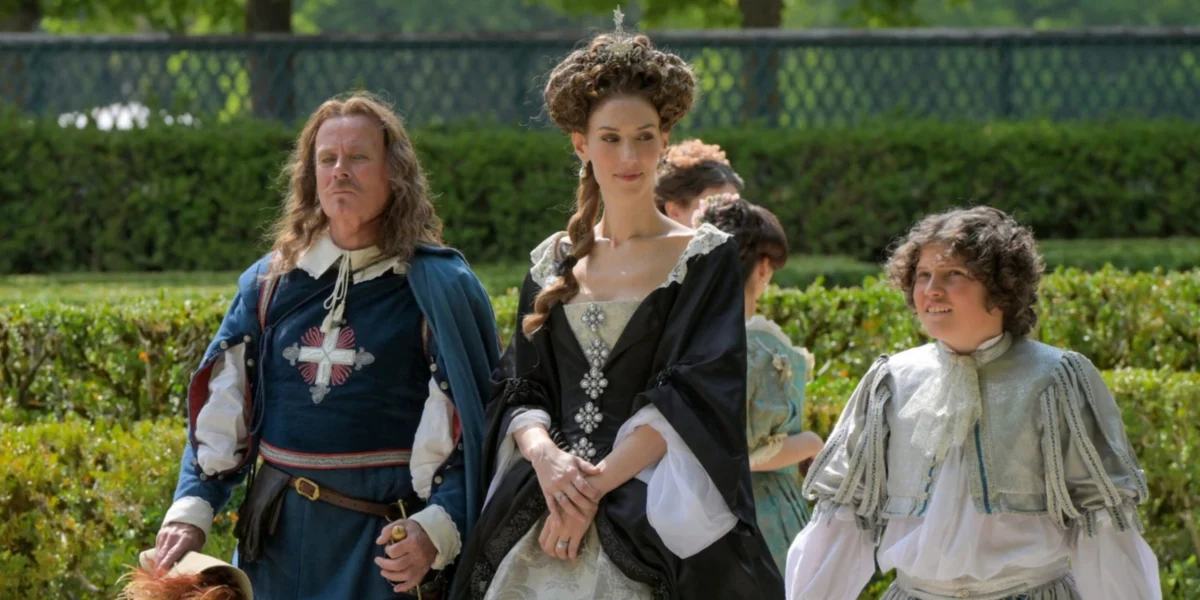
Cyrano devises a daring plan to spirit the young Dauphin, Louis XIV, away from the volatile Parisian streets. His solution: to conceal the future king within the ranks of an itinerant theater troupe, managed by his friend Madeleine Béjart. Unbeknownst to the players, their newest recruit is none other than the soon-to-be Sun King, a secret that fuels much of the film’s comedic tension and dramatic unfolding. Adding another layer of historical significance, the troupe has recently welcomed a budding actor and aspiring playwright, Jean-Baptiste Poquelin, who would later achieve immortal fame as Molière. The young Louis, accustomed to the privileges and expectations of royalty, finds the transition to a life of theatrical anonymity fraught with challenges. His inherent arrogance and clumsy nature clash directly with Cyrano’s attempts to maintain order and secrecy, creating a dynamic ripe for both conflict and unexpected camaraderie.
Meanwhile, back at court, the deception is far from seamless. Anne of Austria’s efforts to maintain the illusion of Louis’s presence are complicated by the substitute chosen to impersonate her son. This stand-in, a mere look-alike, proves to possess a distinct lack of regal decorum, requiring significant efforts to shed his inherent vulgarity before he can convincingly pass as royalty. This parallel narrative thread at the court highlights the precariousness of the royal family’s position and the high stakes of the ruse.
The Birth of a Play and Budding Genius
The core of the narrative unfolds within the confines of Madeleine Béjart’s traveling theater. Cyrano, burdened by the responsibility of safeguarding the young king and grappling with the chaotic energy of his troupe, channels his frustrations and experiences into the creation of a new play. His initial efforts, however, are soon transformed by the arrival of Molière. The young playwright, brimming with creative fervor and a keen understanding of comedic timing, injects the work with a wit and heart that elevate it beyond Cyrano’s original vision. This collaboration marks a pivotal moment in Molière’s development, awakening his latent genius for comedy and foreshadowing the theatrical innovations that would define his career.
Simultaneously, the immersion in the theatrical world begins to subtly transform the young Louis. Stripped of his royal trappings and forced to engage with the realities of the troupe’s existence, he discovers the profound joy of performance and the unexpected warmth of genuine friendship. His interactions with the actors, particularly with the burgeoning Molière and the supportive Madeleine, offer him a glimpse into a life unburdened by the weight of a crown, fostering a sense of belonging and personal growth. The film subtly explores the burgeoning, unspoken feelings between Molière and Madeleine, adding a romantic undercurrent to the theatrical endeavors.
Historical Context and Creative Interpretation
The period depicted, the mid-17th century in France, was a time of significant upheaval. The Fronde, a series of civil wars and political conflicts that took place between 1648 and 1653, saw widespread discontent with the monarchy and its policies. This unrest created a climate of instability, making the royal family’s vulnerability a tangible concern. Anne of Austria, as regent for her young son Louis XIV, found herself navigating a treacherous political landscape, attempting to consolidate power amidst internal dissent and external threats. The historical record indicates that during the Fronde, members of the royal family did indeed face periods of confinement or forced relocation for their safety. However, the specific scenario of Louis XIV being hidden among a theater troupe and replaced by a look-alike is a product of fictional invention, a narrative device employed by Leclerc to explore the thematic interplay between power, identity, and art.
The film’s narrative cleverly intertwines the historical context with its fictional premise. The rebellion in Paris provides the catalyst for the king’s clandestine journey, while the inherent theatricality of the era, with its elaborate court rituals and the burgeoning professional theater scene, offers a plausible environment for such a story. The presence of Cyrano de Bergerac and Molière, two towering figures of French literature and theater, adds a layer of historical resonance, even as their interaction in this specific context is purely imaginative. Cyrano de Bergerac, a contemporary of the early years of Louis XIV’s reign, was known for his flamboyant personality and his significant literary works, including the play "Cyrano de Bergerac," though this fictional portrayal predates the writing of that famous play. Molière, a generation younger, would rise to prominence later in Louis XIV’s reign, becoming the king’s favored playwright. Leclerc’s decision to place them together in this fictionalized scenario allows for a compelling exploration of their respective artistic sensibilities and their potential impact on the young monarch.
A Cinematic Ensemble and Standout Performances
The cast of "Molière, Cyrano and the Young King" features a collection of talented French actors. Artus embodies the complex character of Cyrano de Bergerac, navigating the demands of his secret mission and his creative endeavors. Julia Piaton portrays Madeleine Béjart, a central figure in the theatrical troupe and a confidante to both Cyrano and Molière. Franck Dubosc brings his considerable comedic talent to the role of D’Artagnan, offering a charming, albeit brief, presence. Nemo Schiffman delivers a noteworthy performance as the young Molière, capturing the burgeoning genius and romantic inclinations of the future comedic master. The supporting cast, including Xavier Robic, further enriches the ensemble.
However, it is the young actor Niels Hamel-Brochen who commands significant attention for his dual role as the young Louis XIV and the butcher’s boy. Hamel-Brochen’s performance is particularly lauded for its nuanced portrayal of the "prince and the pauper" archetype, infusing the character with a captivating blend of childlike innocence and regal arrogance. His ability to shift between these distinct personas, particularly his slightly more coarse interpretation of the classic switcheroo, is a testament to his burgeoning talent. While the film’s English title emphasizes the collective nature of the story, the original French title, "Les caprices de l’enfant Roi" ("The Whims of the Child King"), more accurately reflects the central arc of the young monarch and his transformative journey.
Humour and Theatricality: A Blend of Styles
Leclerc masterfully employs a variety of comedic styles to keep the audience engaged. The humor ranges from the overt, such as the well-known physical characteristic of Cyrano’s nose, to more subtle allusions to theatrical history. The film delves into the intricacies of Commedia dell’arte, an Italian theatrical tradition that heavily influenced Molière’s early career. Discussions between Molière and Madeleine Béjart about the pros and cons of this improvisational style offer insights into the development of French theater. A certain level of linguistic understanding is beneficial for fully appreciating the verbal wit, as the nuances of wordplay can be challenging to translate perfectly, even with subtitles. The script’s pairing of Cyrano and Molière, two figures celebrated for their mastery of language, inherently lends itself to intricate dialogue.
Beyond verbal comedy, the film incorporates substantial physical humor, including swordfights that are described as exaggerated, even in comparison to the comedic duels in the "Pirates of the Caribbean" franchise. Franck Dubosc, despite his limited screen time, injects D’Artagnan with enough charisma and energy to leave a memorable impression, prompting a wish for more of his character’s adventures. The chemistry among Artus, Piaton, and Schiffman effectively sells the image of a cohesive, albeit unconventional, theatrical troupe.
Critical Reception and Thematic Resonance
Despite its many strengths, including a strong ensemble cast and adept comedic direction, some critics suggest that "Molière, Cyrano and the Young King" might not achieve the intellectual depth it aspires to. Nevertheless, the film is generally regarded as an enjoyable and entertaining experience. Director Michel Leclerc demonstrates a keen understanding of comedic timing, ensuring that the gags land effectively and that the nearly two-hour runtime feels lively and engaging. The film’s dedication to producing quality entertainment, even within the realm of big-star comedies, is noted, perhaps stemming from the presence of a rising star in the form of the young Louis XIV.
The film’s thematic exploration of art, identity, and the transformative power of experience resonates throughout. By placing the future absolute monarch in the unvarnished world of the theater, Leclerc probes questions about leadership, the development of character, and the influence of creative expression on shaping an individual’s destiny. The narrative suggests that these formative experiences, far removed from the gilded cage of royalty, may have played an unseen role in shaping the complex legacy of Louis XIV. The inclusion of humorous post-credit scenes further adds to the film’s commitment to delivering an engaging and complete cinematic experience. The film stands as a testament to the enduring appeal of historical figures and the imaginative possibilities of fictionalized narratives that bring them to life in unexpected ways, all while highlighting the prodigious talent of a young actor poised for a bright future in the spotlight.