



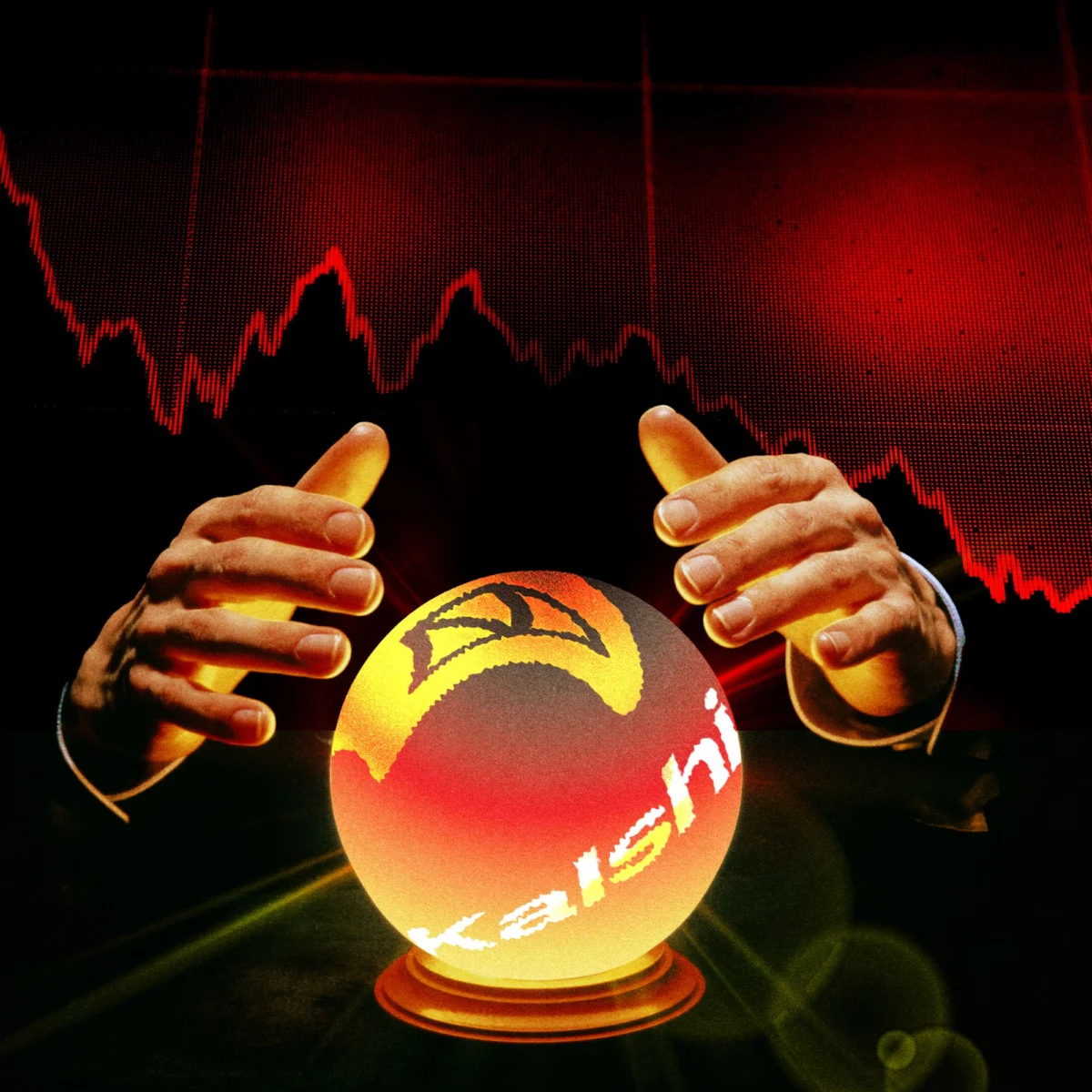
On June 11, 2024, the prediction market platform Kalshi released a high-production advertisement featuring Timothée Chalamet, the Academy Award-nominated actor and noted New York Knicks enthusiast. The marketing campaign was designed to be a zeitgeist-capturing moment for the industry, drawing immediate comparisons to the 2022 Super Bowl commercials that saw a parade of A-list celebrities endorsing various cryptocurrency exchanges. For proponents of prediction markets, the Chalamet spot signaled a transition from a niche academic interest to a mainstream financial phenomenon.
However, the reception of this cultural milestone was markedly different at Manifest, a recent festival for prediction market enthusiasts held in Berkeley, California. When the advertisement was discussed among attendees—a diverse cohort of academics, startup founders, institutional traders, and "rationalist" philosophers—it was frequently met with blank stares. Many of the conference-goers were unaware the ad even existed. This disconnect served as a poignant illustration of a deepening schism within the industry: a battle between those who view prediction markets as revolutionary tools for the "greater good" and a public that increasingly views them as a high-tech alternative to traditional sports betting.
The Rationalist Epicenter: Manifest 2024
The 2024 iteration of Manifest took place at Lighthaven, a picturesque campus in Berkeley that serves as a central hub for the rationalist movement. This community, which emphasizes logic, probability, and the mitigation of existential risks, has long championed prediction markets as a way to aggregate the "wisdom of crowds" to produce more accurate forecasts than traditional pundits or polling.
The atmosphere at Lighthaven was eclectic, blending high-level intellectual discourse with the eccentricities of a subculture. While clusters of young professionals huddled over laptops in Tudor-style buildings, the schedule of events juxtaposed sessions on market liquidity with discussions regarding the probability of artificial intelligence causing human extinction. The festival featured watch parties for the NBA Finals and the U.S. World Cup matches, yet many attendees remained aloof toward the gambling aspect of these events. Instead, they focused on "play-money" markets hosted on platforms like Manifold, where users bet on whether a specific attendee would break a bone during the festival or whether Caroline Ellison, the former CEO of Alameda Research, would make a surprise appearance.
This year’s event, however, was notable for its absences. In previous years, major industry players like Kalshi and Polymarket were primary sponsors. In 2024, both companies were conspicuously missing from the official roster. This absence comes at a time when both platforms are experiencing unprecedented growth, facilitating billions of dollars in trades, but also facing increased scrutiny over their business models.
The Evolution of the Market: From Academia to Sportsbooks
Prediction markets have their roots in the "efficient market hypothesis," suggesting that if people are allowed to bet on the outcome of an event, the resulting market price will reflect the most accurate probability of that event occurring. Historically, this was applied to geopolitics, economic indicators, and scientific breakthroughs.
The chronology of the modern prediction market can be traced back to the early 2000s, with projects like the DARPA-funded Policy Analysis Market, which was ultimately canceled due to political backlash over the idea of "betting on terrorism." In the subsequent decades, platforms like Intrade and the Iowa Electronic Markets proved that these tools could accurately predict elections. However, the current era is defined by a pivot toward mass-market appeal.
According to recent data, sports trading has become the dominant driver of volume for the industry’s leaders. Since July 2024, sports-related contracts have accounted for approximately 80 percent of trading volume on Kalshi and 39 percent on Polymarket. While Kalshi representatives note that these figures fluctuate—citing a 53 percent volume for the week of June 8—the trend is undeniable. The platforms have moved away from being purely "truth-seeking" mechanisms and toward becoming competitors for established sportsbooks like FanDuel and DraftKings.
The "Degenerate Gambling" Critique and Public Health Concerns
The shift toward sports has alarmed the "philosopher-forecasters" who believe the industry is losing its way. Dan Schwarz, the co-founder and CEO of FutureSearch and a former architect of Google’s internal prediction market, has been vocal about the risks. He characterizes the current focus on sports as "degenerate gambling" and expresses concern that the platforms are fueling addiction.
"We were all waiting for so long to be in the world we’re in now," Schwarz noted, referring to the legalization and mainstreaming of the industry. However, he argues that for prediction markets to outweigh the social harms of gambling, they must deliver significantly more societal value than they currently do.
The concerns are not merely anecdotal. A study published in the journal Science in April 2024 highlighted that the design of many prediction markets mimics the psychological triggers of gambling, raising significant public health concerns. Furthermore, the study suggested that these markets could be susceptible to "democratic manipulation," where wealthy actors move market prices to create a false sense of inevitability around a political candidate or policy.
Regulatory Pressure and the Crypto Playbook
The industry is currently navigating a precarious legal landscape. The Commodity Futures Trading Commission (CFTC) has historically taken a skeptical view of prediction markets, particularly those involving elections or "contrary to the public interest" events. Polymarket, for instance, reached a $1.4 million settlement with the CFTC in 2022 for operating an unregistered facility.
To combat this, the industry appears to be adopting the "crypto playbook"—building a robust lobbying presence in Washington, D.C., to forestall restrictive regulations. A newly formed trade group, the Coalition for Prediction Markets, is currently advised by former Democratic lawmakers and includes leadership from major crypto exchanges. The goal is to frame prediction markets as financial innovation rather than gambling, emphasizing their utility in hedging risk and providing data signals.
Kalshi, in particular, has sought to distance itself from the "casino" label. Company spokesperson Jacki McGavick emphasized that Kalshi operates like a stock market where customers trade against one another, rather than a sportsbook where the "house" wins when the customer loses. Despite these distinctions, state-level lawsuits continue to challenge the legality of these platforms based on consumer protection concerns.
Searching for the "Greater Good": Alternative Applications
Despite the dominance of sports and political betting, a faction of the industry remains dedicated to the original vision of prediction markets as specialized information tools. At Manifest, the "biggest news" was not the NBA Finals, but the geopolitical implications of a deal between the United States and Iran regarding the Strait of Hormuz.
David Bensoussan, a prominent trader who has realized over $1.6 million in profits, argues that the true value of these markets lies in high-stakes decision-making. "If you’re a policymaker in DC and you have to do something about Israel or Iran, a betting market is plausibly useful," he stated.
Beyond geopolitics, new platforms are emerging to tackle specific scientific and economic hurdles. One such example is Endpoints Arena, a market that offers contracts on the success rates of clinical drug trials. Michael Fischer, the company’s founder, argues that while a sports market offers little social utility, providing a clear probability for the success of a new cancer drug could be "extremely useful" for researchers, investors, and even patients.
Implications for the Future of Forecasting
The tension observed at the Manifest festival suggests that the prediction market industry is at a crossroads. The influx of venture capital and the demand for high trading volumes have pushed platforms toward the lucrative world of sports and entertainment. Yet, this path brings the industry into direct conflict with regulators and public health advocates concerned about the proliferation of gambling.
If the "philosophers" of the movement prevail, the future of prediction markets may involve a "bifurcation" of the industry. In this scenario, the U.S. government might move to ban sports-related prediction contracts while providing a regulated "safe harbor" for markets that offer genuine informational value, such as those focused on climate change, public health, or economic policy.
However, such a shift would require a radical restructuring of current business models. With sports accounting for the lion’s share of activity, the removal of these contracts would result in a significant contraction of the market. For now, the industry remains in a state of uneasy transition—celebrating its arrival in the mainstream with celebrity endorsements while quietly grappling with the ethical and regulatory consequences of its own success. As the rationalists at Lighthaven would argue, the probability of a smooth resolution remains uncertain.