The 28th edition of the Short Shorts Film Festival & Asia (SSFF & ASIA) officially commenced on May 25, 2026, at MoN Takanawa: The Museum of Narratives in Tokyo, marking the opening of one of Asia’s most prestigious Academy Awards-accredited international short film festivals. This year’s festival, running across multiple Tokyo venues until June 9, with a global online component available until June 30, is set against the compelling theme of "Cinema Engineering." This theme signifies a profound exploration of the multifaceted architectural and technological underpinnings of filmmaking, from the foundational elements of cameras, lighting, and sound to the rapidly evolving landscape of artificial intelligence.
With an impressive submission pool of approximately 5,000 entries hailing from over 100 countries and regions, the festival will showcase around 250 meticulously selected short films. This robust selection underscores SSFF & ASIA’s escalating commitment to technological innovation, fostering international creative collaborations, and championing novel approaches to cinematic storytelling. The festival’s trajectory over its 28 years reflects a consistent adaptation to the evolving global film industry, solidifying its position as a crucial platform for emerging and established talent alike.
AI Takes Center Stage: "Cinema Traveler" and the Future of Creation
A pivotal moment during the Opening Ceremony was the premiere of "Cinema Traveler," a groundbreaking short film entirely crafted by artificial intelligence and directed by Yamaguchi. The film features "AI Tetsuya Bessho," a sophisticated digital avatar meticulously developed using the personal data and expressive nuances of Tetsuya Bessho, the festival’s founder, a respected actor, and producer. This pioneering work is positioned as a critical examination of coexistence, digital rights, and the authenticity of copyright within the contemporary entertainment sector. It provocatively suggests that AI should be viewed not as a threat to human creators but as a transformative collaborative partner, capable of unlocking new creative potentials.
The genesis of "Cinema Traveler" can be traced back to the festival’s ongoing exploration of technological advancements in filmmaking. In recent years, SSFF & ASIA has actively sought out and highlighted films that push the boundaries of what is technologically possible, and this year’s AI-centric programming represents a significant leap forward. The creation of "AI Tetsuya Bessho" involved extensive data processing and machine learning, aiming to capture the essence of the individual while exploring the ethical and creative implications of digital replication. This endeavor aligns with a broader global discourse on AI’s role in artistic production, raising important questions about authorship, originality, and the future of creative industries.
Esteemed Awards and Emerging Voices Recognized
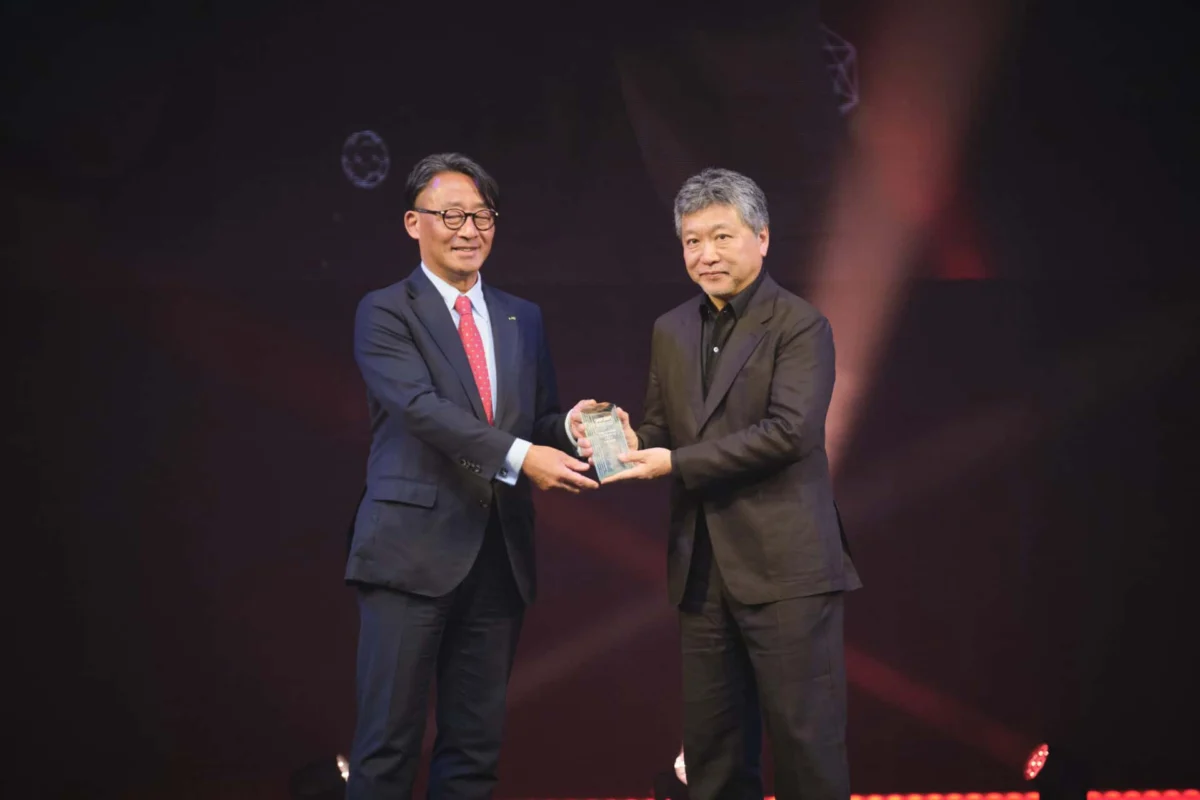
The Opening Ceremony also served as a platform for the announcement of several prestigious awards, celebrating significant contributions to the art of cinema. The TAKANAWA GATEWAY CITY AWARD was bestowed upon the internationally celebrated director Hirokazu Koreeda. Renowned for his poignant and socially resonant films such as "Shoplifters" and "Broker," Koreeda was honored for his enduring impact on cinema, his profound ability to sensitively portray human lives and societal complexities, and his dedicated efforts in nurturing young talent and advocating for improved working conditions within the film industry. This award acknowledges Koreeda’s consistent dedication to humanistic storytelling and his role as a mentor figure for a new generation of filmmakers.
The J-WAVE SOUND OF CINEMA AWARD recognized "Samia," a collaborative effort by Belgian directors Selma Alaoui and Bruno Tracq. This short film was lauded for its distinctive and highly effective utilization of sound design, demonstrating how auditory elements can profoundly shape the narrative and emotional impact of a cinematic experience.
The Special Contribution Award was presented to Toshimasa Kuroyanagi for his Japanese animation, "The World is Dancing." This evocative work delves into the origins of traditional Noh theater by exploring the formative years of Zeami, a pivotal figure in Japanese dramatic arts. The DCP Award, a peer-voted accolade by creators, was given to Sorami Habu for her Japanese short film, "DOCOOK," highlighting the appreciation for her work within the filmmaking community.
Red Carpet Unveils New Narratives and Directorial Debuts
The festival’s red carpet also played host to the unveiling of several new programs and projects, further diversifying the cinematic landscape. Actor and producer Takumi Saito, alongside director Takumi Koyama and actor Hiroshi Asahina, presented "Ramen Maro: Where Our Paths Crossed." This youth-ensemble drama centers on themes of food and human connection, with Saito hinting at potential future expansions of the project into a feature-length film. The presentation underscored the festival’s commitment to supporting diverse genres and narrative forms.
In a significant moment, Kuruma Takahira, a member of the popular comedy duo Reiwa Roman, made his directorial debut with "BREAK SHOT." This short film represents an ambitious attempt to seamlessly integrate the precise timing of stand-up comedy with the expressive potential of cinematic storytelling, signaling a new avenue for comedic exploration in short film.
AI-Generated Entertainment: A Growing Frontier
SSFF & ASIA 2026 is making a significant commitment to showcasing AI-generated entertainment. In addition to "Cinema Traveler," the festival is featuring award-winning works from the World AI Film Festival 2026, including "Rewrite" and "This is Me." This emphasis on AI extends to the newly launched "Generative Tokyo Project," a collaborative initiative developed in partnership with the Tokyo Metropolitan Government.
The "Generative Tokyo Project": Weaving Technology and Emotion
The "Generative Tokyo Project" aims to explore the creative, innovative, and generative spirit of Tokyo by presenting works that harmoniously blend cutting-edge technologies with profound human emotion. The inaugural short film from this project, "So Far Away, So Close," directed by Tekko Nogami, stars Yuki Saito and Kohei Shoji. Set in a futuristic Tokyo, this 21-minute drama tells the story of a young man grappling with grief who is granted a unique opportunity to spend 24 hours with an AI consciousness meticulously reconstructed from the brain data of his deceased partner. This narrative delves into themes of loss, memory, and the evolving nature of human connection in an increasingly digital world, reflecting anxieties and hopes surrounding advanced AI technologies.
Tokyo’s Cinematic Heart: Governor’s Award and Local Talent
In a prelude to the festival’s opening, Tetsuya Bessho, accompanied by the festival’s official Gen-Z navigators Hirona Nagahama and Ayaka Honmou, met with Tokyo Governor Yuriko Koike at the Tokyo Metropolitan Government Building. During this impactful meeting, Governor Koike announced "TOKYO SUBMARINE" as the winner of the "Cinematic Tokyo Competition" Best Short Award, also known as the Governor’s Award.
The "Cinematic Tokyo Competition," held under the theme "Tokyo’s Diverse Charms," attracted a substantial 478 entries from across the globe. "TOKYO SUBMARINE" captivated the jury with its unique perspective, venturing into the often-unseen subterranean world beneath the metropolis. The film follows a young man working within Tokyo’s vast underground drainage system, whose daily routine is disrupted by the discovery of a miniature submarine navigating the water channels. The director will be formally recognized at the SSFF & ASIA 2026 Award Ceremony on June 10, where they will receive the Governor’s Trophy and a cash prize of 1 million yen, acknowledging their innovative vision and contribution to the celebration of Tokyo’s multifaceted identity.
Bridging Continents: A New Partnership with Africa
This year’s festival significantly expands its international reach through a new strategic partnership between Visual Voice Inc., the operating body of SSFF & ASIA, and the Japan Africa Entertainment Business Council (JAEBC). This collaboration is designed to foster stronger cultural exchange and enhance content distribution between Japan and Africa, a region recognized by the organizers as one of the world’s youngest and most dynamic creative markets. The strategic alliance aims to leverage the burgeoning talent pool in Africa and introduce a wider global audience to its unique storytelling traditions and cinematic innovations.
As a direct outcome of this partnership, SSFF & ASIA 2026 is presenting a special "Focus on Africa" program, commencing on May 25. This curated selection features short films from five African nations, including Egypt, Algeria, and Senegal, offering a glimpse into the continent’s diverse cinematic voices. Among the highlighted films are Nada Bedair’s "Salt of Our Sea," a US/Egypt co-production set in Alexandria that explores themes of heritage and belonging, and Valentin Guiod’s "Patience (Sabali)," an Algerian music video that powerfully addresses migration, resilience, and hope. The inclusion of these films underscores SSFF & ASIA’s commitment to global inclusivity and its recognition of Africa’s growing importance in the international film community.
Tetsuya Bessho, CEO of Visual Voice Inc. and founder of SSFF & ASIA, articulated the growing significance of African short cinema. He noted a discernible increase in submissions from across the African continent in recent years, signaling a burgeoning creative output. Through the partnership with JAEBC, the festival organizers aspire to not only bring African works to a broader international audience but also to cultivate future initiatives, potentially including a dedicated "Africa Award" and expanded programs for talent and technological exchanges. This initiative represents a forward-thinking approach to global cinema, acknowledging the rich cultural tapestry of Africa and its potential to contribute significantly to the global film narrative.
Global Spotlight Award Finalists: Pushing Cinematic Boundaries
SSFF & ASIA 2026 has also unveiled the finalists for the 6th Annual Global Spotlight Award. This esteemed award celebrates international creators who leverage short-form cinema to address pressing contemporary issues, explore innovative technologies, and redefine the boundaries of visual expression. The distinguished lineup of nominees this year represents a remarkable convergence of major figures from cinema, sports, animation, and music, highlighting the versatile and impactful nature of short films.
Among the distinguished finalists is Quentin Tarantino’s "Yuki’s Revenge." This 10-minute animated work is presented as a "lost chapter" from the iconic "Kill Bill" universe, having originally premiered within the immersive environment of "Fortnite." Its inclusion signifies the evolving platforms for short-form content and its integration into interactive digital spaces. Sean Baker and Michelle Yeoh are nominated for "Sandiwara," an 11-minute comedy-drama set in Penang, Malaysia. This film is a vibrant celebration of cultural identity, the universal language of food, and the enduring spirit of independent cinema. Further diversifying the nominees, Stephen Curry and Ben Proudfoot are recognized for "The Baddest Speechwriter of All," a 29-minute documentary that sheds light on the sacrifices and newly uncovered historical significance surrounding Martin Luther King Jr.’s close advisor and speechwriter.
The impressive list of finalists also includes Charlie Kaufman’s "How to Shoot a Ghost." This 27-minute drama unfolds in Athens, following a recently deceased translator and a photographer as they navigate the profound themes of isolation and the enduring traces of existence. Additionally, Jong-gyun Park’s "4:44: Time of Fear" is nominated. This horror omnibus, featuring ONEW of SHINee, was originally conceived as an OTT series comprising eight episodes, each precisely 4 minutes and 44 seconds long, before being compiled into a cohesive 44-minute cinematic version. The nomination of these diverse works underscores the festival’s broad definition of short film and its commitment to showcasing groundbreaking storytelling across various genres and formats.
Three of the finalist titles – "How to Shoot a Ghost," "Sandiwara," and "4:44: Time of Fear" – will be available for viewing at physical venues in Tokyo as well as through the festival’s comprehensive online platform. The winner of the Global Spotlight Award will be announced on June 4, coinciding with the global observance of "Short Film Day," a fitting tribute to the power and artistry of short-form cinema.
Festival Schedule and Venues
SSFF & ASIA 2026 is scheduled to run from May 25 to June 9, 2026, in Tokyo. The highly anticipated Award Ceremony will take place on June 10, bringing the festival to a celebratory close. For those unable to attend in person, the online platform will remain accessible until June 30, extending the festival’s reach to a global audience. Key screening venues for the festival include MoN Takanawa: The Museum of Narratives, Akasaka Intercity Conference, Euro Live, WITH HARAJUKU HALL, and LIFORK HARAJUKU, offering diverse cinematic experiences across the city. The festival’s extensive programming promises a dynamic and thought-provoking showcase of global short filmmaking talent.