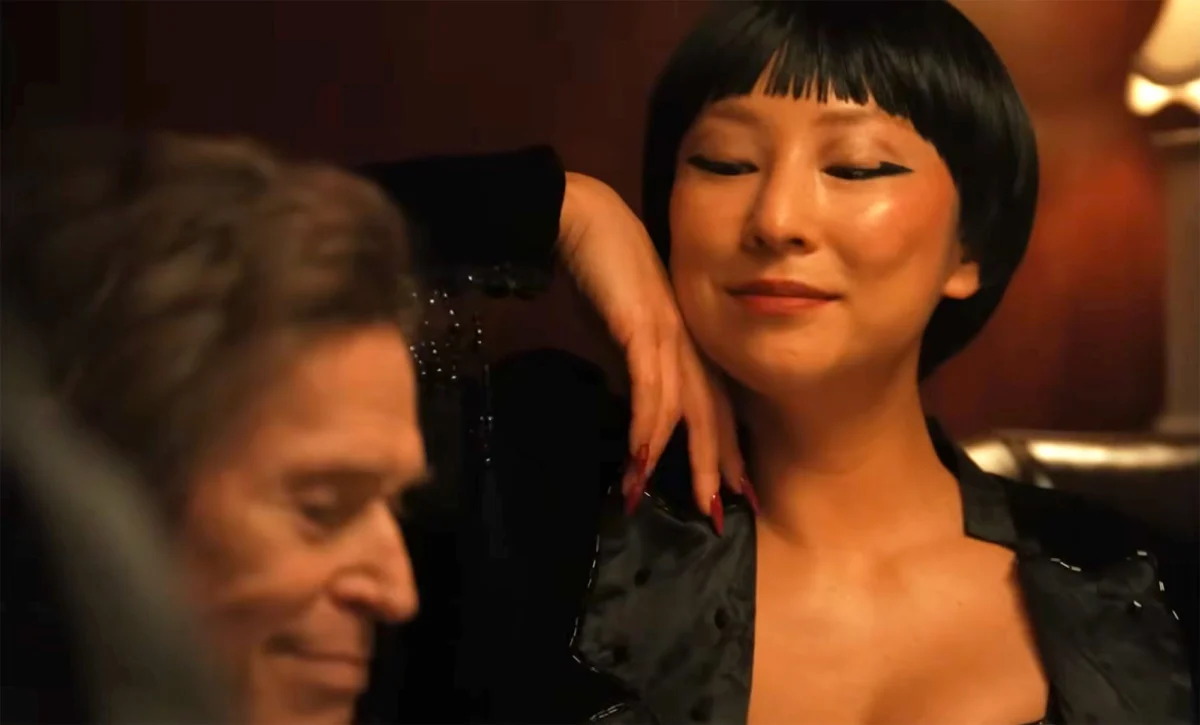
Magnolia Pictures has officially released the trailer for Late Fame, the latest independent drama from acclaimed filmmaker Kent Jones, slated for a theatrical debut on August 7th, 2026. This highly anticipated film, which garnered significant buzz during its 2025 festival circuit run, features an compelling ensemble cast led by Willem Dafoe, Greta Lee, and Edmund Donovan. The narrative delves into the complex dynamics of artistic rediscovery, intergenerational admiration, and the often-elusive nature of authenticity within the bohemian enclaves of New York City.
A Glimpse into Artistic Revival and Urban Intrigue
The trailer, released on June 25, 2026, offers a compelling preview of a film that promises to be both thoughtful and sharply witty. At its core, Late Fame centers on Ed Saxberger, a forgotten New York poet, portrayed with "delicate gravitas" by the venerable Willem Dafoe. Saxberger’s quiet existence working in the post office is upended when a zealous young admirer, played by Edmund Donovan, appears on his doorstep. This encounter propels Saxberger into an eccentric coterie of ambitious young creatives, primarily in their twenties, who swiftly anoint him as a rediscovered genius.
The intrigue deepens with the introduction of Gloria, a bewitching actress and the group’s self-styled "tragic heroine," brought to life by the nuanced performance of Greta Lee. Her "sinuous, Kurt Weill-crooning" presence adds a layer of allure and complexity to the burgeoning artistic circle, further intoxicating Saxberger with the newfound attention. As the poet navigates this unexpected surge of recognition and the intoxicating presence of Gloria, he is forced to confront the authenticity of his new poetic circle and, by extension, his own artistic identity.
The film, described by festival critics as a "witty drama" offering "amusingly accurate observations about the pretensions of ambitious artists," suggests a keen examination of the performative aspects of artistic life and the shifting landscape of cultural validation. It promises a "wistful yet unromantic look at a lost idea of downtown New York," hinting at themes of nostalgia, gentrification, and the enduring spirit of artistic rebellion in a city constantly reinventing itself.
The Visionary Behind the Lens: Kent Jones’ Directorial Journey

Kent Jones, the director of Late Fame, brings a distinctive perspective to this exploration of art and identity. Prior to his work as a filmmaker, Jones established himself as a highly respected film critic, essayist, and programmer. His tenure as the Director of the New York Film Festival (NYFF) and his significant contributions to Film Comment magazine underscore his profound understanding of cinematic history and theory. This background as a critic often informs his directorial style, imbuing his films with a meticulous attention to narrative structure, character development, and thematic depth.
His previous feature films, such as the critically acclaimed Diane (2018), which starred Mary Kay Place as an aging woman grappling with her past and the demands of caring for her drug-addicted son, demonstrated Jones’s ability to craft intimate, character-driven dramas that resonate with emotional honesty. Before Diane, he directed the documentary Hitchcock/Truffaut (2015), an insightful look into the legendary conversations between Alfred Hitchcock and François Truffaut, and A Letter to Elia, a personal tribute to filmmaker Elia Kazan. This filmography highlights a director deeply invested in the human condition, memory, and the intricate connections between individuals and their environments.
Late Fame appears to be a natural progression in Jones’s thematic interests, further exploring the lives of artists and the urban milieu that shapes them. His transition from critic to creator offers a unique lens, allowing him to dissect the very world of art and its reception with an insider’s understanding and a critic’s discerning eye. This perspective is likely to contribute to the film’s nuanced portrayal of artistic pretension and genuine passion.
Crafting the Narrative: Samy Burch and the Schnitzler Legacy
The screenplay for Late Fame is penned by Oscar-nominated screenwriter Samy Burch, known for her sharp wit and incisive characterizations. Burch’s recent critical success with May December (2023), which earned her an Academy Award nomination for Best Original Screenplay, showcased her talent for crafting complex, morally ambiguous narratives that explore the darker facets of human relationships and societal expectations. Her ability to weave humor and pathos into a single tapestry makes her an ideal collaborator for a film described as both witty and wistful.
Burch’s script for Late Fame is an adaptation of the classic novel of the same title (originally Späte Berühmtheit) by Arthur Schnitzler. Schnitzler, a prominent Austrian writer and physician from the fin-de-siècle Vienna, was a master of psychological realism, renowned for his explorations of identity, desire, and the societal masks worn by individuals. His works often delved into the subconscious motivations of his characters, dissecting themes of love, death, and the fleeting nature of reputation.
Adapting Schnitzler’s work for a contemporary New York setting presents a fascinating challenge. The core themes of artistic validation, the allure of novelty, and the often-unreliable nature of fame, originally explored within the specific social and intellectual climate of late 19th-century Vienna, find potent resonance in the modern-day art scene. Burch’s skill in transposing these timeless questions into a contemporary context, coupled with Jones’s directorial vision, suggests a rich and layered narrative that speaks to both historical literary tradition and current cultural anxieties. The choice of Schnitzler’s novel as source material underscores the film’s intellectual depth and its intention to engage with profound philosophical questions about art and life.

A Stellar Ensemble: Dafoe, Lee, and Donovan Bring Characters to Life
The casting of Late Fame is a testament to the film’s artistic ambitions, bringing together a trio of actors celebrated for their distinct talents and compelling screen presence.
Willem Dafoe: The Poet Rediscovered
Willem Dafoe, in the role of Ed Saxberger, is poised to deliver another career-defining performance. With a career spanning over four decades, Dafoe is an actor of immense versatility and gravitas, renowned for his ability to inhabit complex, often tormented, and always memorable characters. From his early work in independent cinema to his more recent, acclaimed roles in films like The Lighthouse, Inside, and Poor Things, Dafoe consistently brings a unique blend of intensity, vulnerability, and intellectual depth to his performances. His selection for Saxberger, a forgotten poet grappling with newfound attention, perfectly leverages his capacity to convey internal struggle and a profound sense of self. The description of his performance as lending "delicate gravitas" suggests a nuanced portrayal that avoids caricature, instead focusing on the poet’s emotional journey and the subtle shifts in his perception of himself and his art.
Greta Lee: The Enigmatic Muse
Greta Lee, as Gloria, is set to further solidify her status as a rising star in independent cinema. Following her widely acclaimed leading role in Past Lives (2023), which earned her significant critical praise and numerous accolades, Lee has demonstrated an exceptional ability to portray intricate female characters with subtlety and power. Her role as Gloria, described as a "tragic heroine" who croons Kurt Weill, hints at a character steeped in theatricality and an enigmatic allure. Lee’s capacity to command attention while simultaneously conveying inner complexity will undoubtedly make Gloria a captivating figure, central to the dynamics within Saxberger’s new artistic circle and a key driver of the film’s emotional landscape. Her performance is expected to be a highlight, adding a layer of sophisticated charm and potential danger to the narrative.
Edmund Donovan: The Catalyst of Admiration
Edmund Donovan, cast as the eager young admirer who initiates Saxberger’s rediscovery, represents the catalyst for the film’s central conflict. Donovan, an emerging talent, has been making a name for himself in both theater and film, often portraying characters with an earnest intensity. His role in Late Fame is crucial, as his character’s admiration, initially flattering, gradually forces Saxberger to "reckon with the authenticity of his newfound poetic circle." Donovan’s performance will be key in exploring the generational divide within the art world, the sometimes-blurry line between genuine appreciation and opportunistic flattery, and the transformative power of external validation.
Thematic Undercurrents: Art, Authenticity, and Downtown New York
Late Fame appears to be rich with thematic depth, offering a multi-layered commentary on the contemporary art world and the human condition.

Authenticity Versus Illusion in the Art World
A central theme of the film revolves around the concept of authenticity in art and the precarious nature of fame. Is Saxberger’s newfound recognition a genuine appreciation of his long-forgotten genius, or is it merely a fleeting trend, a projection of the young creatives’ own aspirations and insecurities? The film’s critical reception, noting its "amusingly accurate observations about the pretensions of ambitious artists," suggests a satirical edge, scrutinizing the performative aspects of artistic identity and the social currency attached to being "discovered." This theme resonates particularly strongly in an era dominated by social media and viral trends, where recognition can be instantaneous but often superficial.
A Wistful Ode to a Lost Era
The description of the film as a "wistful yet unromantic look at a lost idea of downtown New York" evokes a sense of nostalgia for a bygone era of bohemianism and artistic freedom. Downtown New York has historically been a crucible for avant-garde art, music, and literature, a haven for struggling artists and counter-cultural movements. The film seems to explore how this landscape has evolved, potentially grappling with themes of gentrification, commercialization, and the struggle to maintain artistic integrity in an increasingly commodified world. This wistfulness is likely tempered by an "unromantic" realism, acknowledging the inherent struggles and imperfections of even the most idealized artistic communities. The film may offer a poignant reflection on how the city itself shapes artistic endeavors and how artists adapt, or fail to adapt, to its relentless transformation.
Intergenerational Dynamics and Mentorship
The relationship between Saxberger and his young admirers also provides fertile ground for exploring intergenerational dynamics. The film can delve into questions of mentorship, the transfer of artistic knowledge, and the potential for both genuine connection and exploitation between older, established (or re-established) artists and eager, ambitious newcomers. This dynamic adds a layer of complexity, raising questions about who benefits most from such relationships and whether the admiration is truly for the art or for the idea of the artist.
Festival Circuit Acclaim and Critical Reception
Late Fame has already established a strong reputation within the international film community, beginning its journey at the prestigious 2025 Venice Film Festival. Premiering at such a high-profile event is a significant indicator of a film’s artistic merit and its potential to garner critical attention. The Venice Film Festival, one of the "Big Three" alongside Cannes and Berlin, is renowned for showcasing groundbreaking international cinema and often serves as a launchpad for films that go on to receive significant awards recognition.
Following its Venice debut, Late Fame continued its successful festival run, featuring at the New York Film Festival (NYFF), the Vienna International Film Festival (Viennale), and the Stockholm International Film Festival, among others. This extensive festival circuit not only broadens the film’s exposure but also validates its critical appeal across different cultural contexts. Reviews emerging from these festivals have consistently highlighted the film’s intellectual rigor and its engaging narrative. The consensus points to a "witty drama" that offers "amusingly accurate observations about the pretensions of ambitious artists," suggesting that Jones and Burch have successfully crafted a film that is both entertaining and incisive in its social commentary. This positive reception from a diverse array of international festivals positions Late Fame as a significant independent release for the upcoming year.
Magnolia Pictures: A Champion of Independent Voices

Magnolia Pictures, the distributor bringing Late Fame to U.S. audiences, has a well-established reputation for championing independent, foreign, and documentary films that challenge conventional narratives and offer unique artistic visions. Their catalog includes numerous critically acclaimed works that have resonated with both critics and discerning audiences. The acquisition of Late Fame by Magnolia underscores the film’s perceived quality and its alignment with the distributor’s commitment to thought-provoking cinema. For a film like Late Fame, which combines literary adaptation, a strong ensemble, and a director with a critical background, Magnolia provides the ideal platform to reach an audience that appreciates intelligent, character-driven dramas. The strategic release in select US theaters starting August 7th, 2026, reflects a targeted approach to build momentum through critical reviews and word-of-mouth, typical for acclaimed independent features.
Anticipating the Release: Implications for Independent Cinema
The impending release of Late Fame carries broader implications for the landscape of independent cinema. In an industry increasingly dominated by large franchises and spectacle-driven blockbusters, films like Late Fame reaffirm the enduring appeal and necessity of character-focused storytelling and intellectual engagement. The collaboration between a critically respected director like Kent Jones, an Oscar-nominated screenwriter like Samy Burch, and a cast of such caliber as Willem Dafoe and Greta Lee, serves as a powerful testament to the vitality of independent filmmaking.
This film also contributes to the ongoing conversation about the role of the artist in society, the definition of success, and the generational shifts within creative communities. As audiences continue to seek out diverse narratives and authentic portrayals of the human experience, Late Fame is poised to captivate those interested in the intricacies of artistic life, the cultural history of New York, and the timeless questions of identity and recognition. Its thoughtful approach to these themes, combined with its strong critical backing, suggests it will be a notable entry in the 2026 film calendar, potentially sparking further discussion and analysis within film circles and beyond.
Conclusion: A Timely Reflection on Fame and Artistic Identity
Late Fame is positioned to be more than just a film; it is a cultural commentary, a character study, and a nostalgic ode wrapped into one. With its compelling premise, stellar cast, and the combined talents of Kent Jones and Samy Burch, the film offers a timely and incisive reflection on the often-fragile nature of artistic identity and the intoxicating, yet sometimes illusory, pursuit of fame. As it makes its way to select theaters in August 2026, Late Fame promises to be a significant addition to the canon of independent cinema, inviting audiences to ponder the true meaning of artistic legacy and the enduring spirit of creation in a constantly evolving world.