


At a time when the entertainment industry is grappling with a profound identity crisis, caught between the existential threat of automation and the relentless pressure to reduce overhead, a new production paradigm is emerging in Southern California. Innovative Dreams, a hybrid production services company, has officially launched with a mandate to integrate high-end generative artificial intelligence into the traditional filmmaking workflow. Backed by the technological infrastructure of Amazon Web Services (AWS) and the generative capabilities of the AI startup Luma, the studio represents a strategic attempt to modernize a sector currently reeling from labor disputes, job losses, and a significant contraction in content spending.
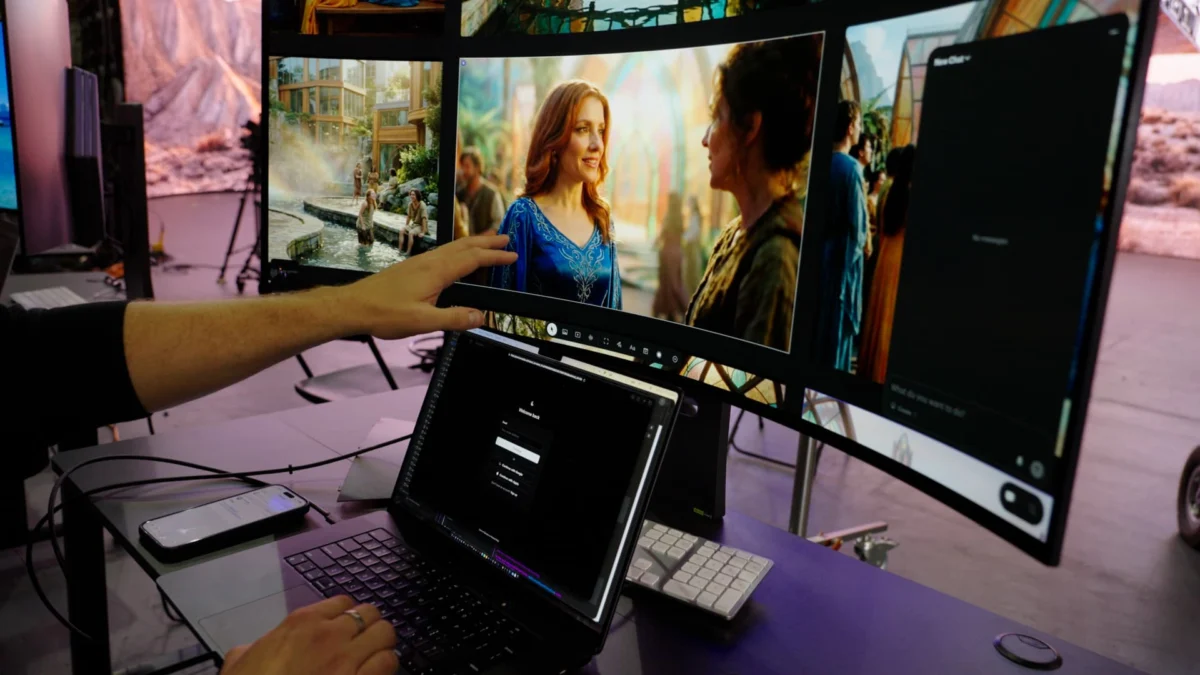
The studio operates out of a state-of-the-art soundstage that synthesizes several cutting-edge technologies: massive LED walls for virtual production, precision motion capture systems, and a suite of AI-driven post-production tools. By combining these elements, Innovative Dreams aims to provide a "middle path" for an industry that has viewed AI with skepticism. Rather than replacing human actors and cinematographers with text-to-video prompts, the company utilizes AI to enhance physical performances, digitally construct complex environments, and automate the more tedious aspects of visual effects (VFX).
The Genesis of Innovative Dreams and the Hybrid Workflow
The inspiration for Innovative Dreams originated during the production of "House of David," a large-scale historical epic produced by CEO Jon Erwin’s original studio, Wonder Project. During filming, Erwin and his team utilized AI to recreate ancient historical settings and expansive crowds, allowing them to achieve a level of visual scale typically reserved for nine-figure blockbusters. The success of this integration on a project slated for Amazon Prime Video led Erwin to realize that the industry lacked a dedicated facility capable of scaling these efficiencies for other creators.
The core philosophy of the studio is what Erwin describes as "fusing a performance." In a traditional VFX pipeline, adding digital costumes or altering a background can take months of labor by dozens of artists. At Innovative Dreams, the workflow is compressed. Actors perform on a soundstage equipped with motion capture sensors and surrounded by LED screens displaying real-time digital environments. AI tools, including Luma’s generative models, Google’s Nano Banana, and ByteDance’s SeeDream, are then used to map digital assets—such as intricate period-accurate wardrobe or fantastical makeup—directly onto the actor’s performance in a fraction of the time.
This approach ensures that the fundamental elements of cinema—the actor’s nuanced performance, the director’s lens choice, and the cinematographer’s lighting—remain the driving forces of the narrative. The AI serves as a digital "department head," handling the heavy lifting of environmental rendering and asset mapping that would otherwise require massive budgets and lengthy travel to remote locations.
Chronology of Technological Evolution in Film Production
The launch of Innovative Dreams is the latest chapter in a decades-long evolution of film technology. To understand the significance of this hybrid model, one must look at the timeline of production shifts:
- The Rise of Blue/Green Screens (1980s-2010s): For decades, actors performed in front of monochromatic backgrounds, with environments added in post-production. This often led to "disconnection" for actors and lighting mismatches.
- The Volume and Virtual Production (2019): Popularized by the Disney+ series The Mandalorian, the use of LED "Volumes" allowed for real-time backgrounds, solving the lighting issues of green screens but still requiring massive pre-built digital assets.
- The Generative AI Integration (2023-Present): Innovative Dreams represents the third wave, where generative AI is used not just to show a background, but to actively modify the foreground, the characters, and the textures in real-time or near-real-time.
The studio’s first major test case under this new workflow is the upcoming three-part series "The Old Stories: Moses." Starring Academy Award winner Ben Kingsley, the production achieved a feat that would be impossible under traditional constraints: filming scenes across 40 different global locations within a single week. By utilizing the virtual soundstage and AI-generated environments, the production avoided the logistical nightmare of international travel and the astronomical costs of location scouting and permits. Erwin estimates that a traditional production would have required at least six weeks of filming and a budget several times larger to achieve the same visual variety.
Strategic Partnerships: The Role of AWS and Luma
The computational demands of real-time AI video generation are immense, necessitating partnerships with major technology providers. Amazon Web Services (AWS) has joined Innovative Dreams as both an investor and an infrastructure partner. For AWS, this collaboration is part of a broader strategy to become the backbone of the "Cloud Studio." By providing the necessary GPU (Graphics Processing Unit) power and cloud-based collaborative tools, AWS enables filmmakers to process terabytes of AI-enhanced footage without the need for massive on-site server farms.

Samira Bakhtiar, General Manager of Media, Entertainment, Games, and Sports at AWS, noted that the goal is to accelerate production cycles at scale. The collaboration allows for a level of real-time feedback that was previously impossible; a director can see a near-final version of a scene while still on set, rather than waiting months for the "dailies" to be processed by a VFX house.
Simultaneously, the partnership with Luma, an AI startup valued at over $4 billion, provides Innovative Dreams with access to proprietary "agent" tools. these tools allow multiple AI services to work in tandem within a collaborative workspace. This relationship is symbiotic; as Erwin’s team uses the tools on professional film sets, they provide direct feedback to Luma’s engineers, effectively "training" the AI to meet the specific aesthetic and technical standards of Hollywood professionals.
Economic Context: A Battered Industry Seeking Stability
The emergence of Innovative Dreams comes at a critical juncture for the Los Angeles economy. The entertainment industry has been besieged by a series of "black swan" events over the last four years. The COVID-19 pandemic first halted production, followed by a period of aggressive "streaming wars" spending that eventually proved unsustainable. In 2023, the dual strikes by the Writers Guild of America (WGA) and the Screen Actors Guild (SAG-AFTRA) brought the industry to a standstill for nearly half a year.
The economic data paints a sobering picture:
- Job Losses: Los Angeles County has seen a decline of over 40,000 entertainment-related jobs since 2022.
- Production Volume: Local production activity in Los Angeles has dropped to its lowest level since 1995, excluding the pandemic years.
- Contraction: Industry analysts report that overall content spending and production starts are down by 25% to 35% compared to pre-pandemic levels.
Labor unions have expressed deep-seated fears that AI will serve as the final blow to many middle-class entertainment careers. The 2023 strikes were largely defined by the fight for protections against "digital replicas" of actors and the use of AI to generate scripts. There is a palpable concern that as AI takes over sets, the need for costumers, makeup artists, set builders, and prop masters will dwindle.
Implications for the Workforce: Displacement vs. Augmentation
The debate over AI in Hollywood is often framed as a binary: either AI will destroy jobs or it will save the industry. Jonathan Handel, a prominent entertainment attorney and industry analyst, suggests the reality is more complex. While AI may create efficiencies that allow more projects to be "greenlit," it also threatens the traditional "on-ramps" for entry-level workers. Assistant roles in makeup, wardrobe, and set design are often where the next generation of talent learns the craft; if those roles are automated, the talent pipeline could be severed.
However, Jon Erwin argues that the current trajectory of Hollywood is already unsustainable. With production moving to tax-incentive-heavy regions like Georgia, London, or Eastern Europe, Los Angeles is losing its status as the world’s production hub. By lowering the cost of production through AI, Erwin believes he can keep "cameras rolling" in Southern California. His argument is one of survival: if the cost of filming in LA remains prohibitive, the jobs will leave regardless of whether AI is used. If AI makes LA competitive again, it may preserve the core creative roles that are currently being exported.
Fact-Based Analysis of the Future Landscape
As Innovative Dreams prepares for the spring debut of "The Old Stories: Moses," the industry will be watching closely to see if the quality of the final product meets the high expectations of modern audiences. The implications of this model extend beyond just cost-cutting:
- Democratization of Visual Effects: Smaller independent studios may soon have access to "blockbuster" visuals, potentially breaking the monopoly that major studios hold over high-spectacle cinema.
- Intellectual Property and Ethics: The use of AI to "dress" actors or change their appearance raises new questions regarding the ownership of an actor’s likeness and the digital assets created by AI models trained on existing human work.
- New Skill Sets: The "traditional" filmmaker of the next decade will likely need to be "AI-literate," moving away from manual oversight of every frame toward a more directorial role over automated systems.
While the "fairy tale" transformation of a CNBC correspondent into a digital sprite in under an hour serves as a flashy demonstration of the tech’s speed, the true test for Innovative Dreams will be its ability to handle the rigors of long-form storytelling. If successful, the hybrid model could provide the blueprint for a leaner, more resilient Hollywood—one that uses the silicon of the future to preserve the celluloid dreams of the past. For now, the studio stands as a high-tech laboratory for an industry that is desperately trying to reinvent itself before the credits roll on its traditional era.