

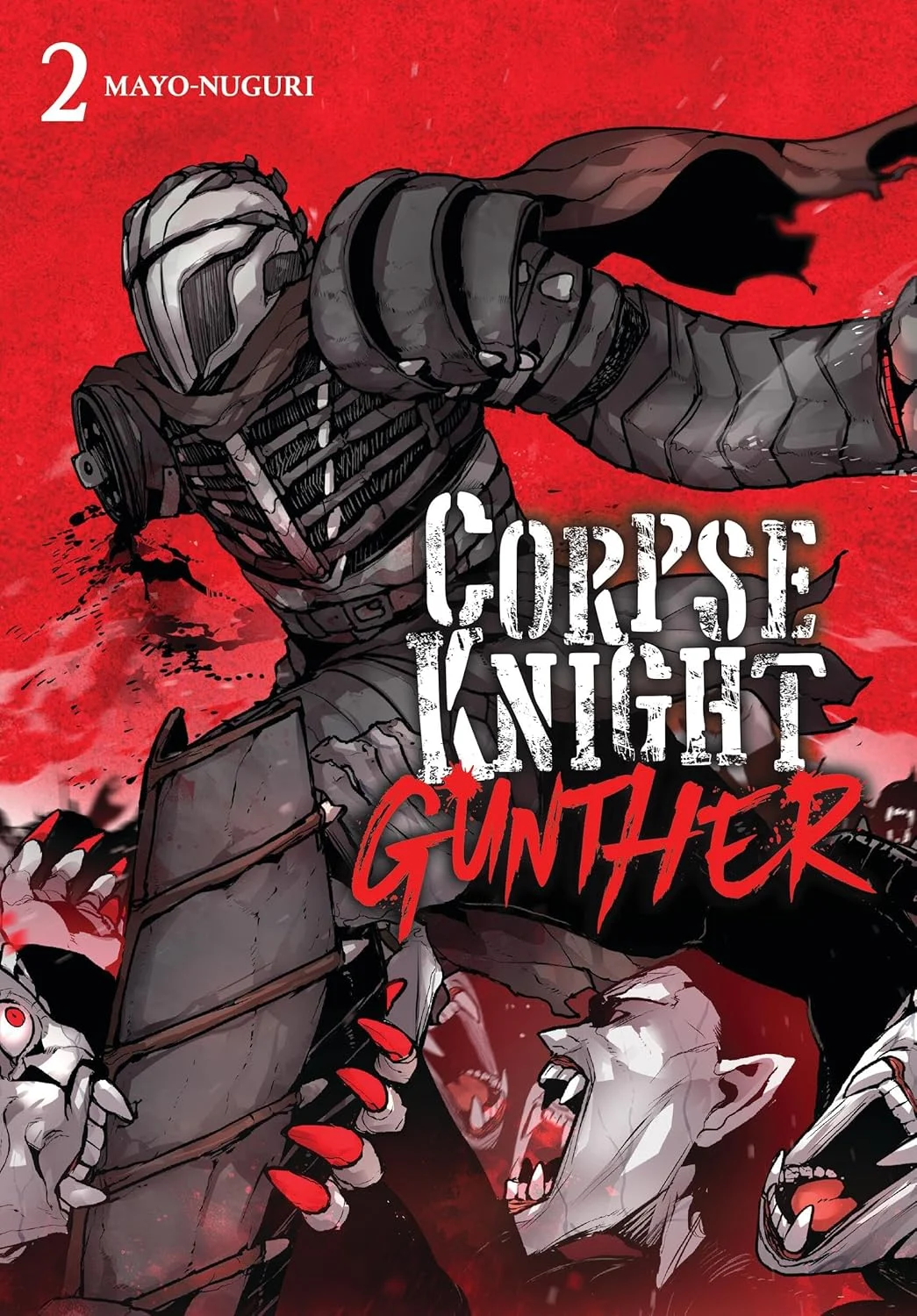
The second volume of Mayo Nuguri’s "Corpse Knight Gunther" plunges readers back into a visceral world of undeath and societal critique, expanding upon the foundations laid in its predecessor. While the inaugural volume, which opened with the titular Corpse Knight, Gunther, already engaged in a brutal confrontation with a cadre of vampires, later rewound to detail his genesis as a resurrected warrior and his initial, often reluctant, integration into a clandestine project overseen by General Rainer, the second installment immediately thrusts him into the thick of a desperate siege. This new volume, presented as a 290-page epic, pivots from the introspective origins of the first to an external struggle marked by a severe deficiency in vital resources, amplifying the inherent desperation of Gunther’s precarious existence.
A Siege Under Duress: Resource Scarcity as a Central Conflict
Volume two situates Gunther and his emergent faction within a beleaguered stronghold, facing an overwhelming onslaught. The narrative’s immediate focus is not merely on the physical battle against monstrous foes but on the critical scarcity of resources that threatens to undermine their very survival. This lack of provisions, ammunition, and potentially even manpower, serves as a potent metaphor for the precariousness of their situation and the systemic challenges faced by those on the fringes of a decadent society. The relentless pressure of the siege, coupled with the dwindling supplies, creates an atmosphere of escalating tension, forcing characters to make difficult choices and pushing Gunther’s unique abilities to their absolute limits.
Encountering the Horrors: A Gallery of High Vampires
The central conflicts of this volume are framed by Gunther’s direct confrontations with two formidable higher vampires. The first is Evelyn, a character described as a "circus freak" both literally and metaphorically, whose grotesque appearance and disturbing nature embody a twisted form of entertainment for the elite. Her defeat, as with many encounters in this series, is depicted with a blend of the spectacular and the repellent. Following Evelyn’s demise, Gunther faces Miranda, a colossal vampire whose design is explicitly stated to draw inspiration from the iconic titans of "Attack on Titan." This colossal foe presents a vastly different kind of threat, one that emphasizes sheer scale and destructive power.
These two major battles, alongside the ongoing efforts of the Corpse Knight and his small support group to maintain their operational capacity and simply survive, form the narrative backbone of Volume 2. The artistry employed in depicting these encounters is consistently impressive, characterized by a level of gore and absurdity that has become a hallmark of the series. Specific visual elements, such as a "biting hand" and a "lizard hand" weapon, exemplify the dark, often blackly humorous, tone that permeates the manhwa. Gunther’s own stoic and often cynical demeanor further contributes to this unique brand of humor, providing a counterpoint to the overwhelming horror.
Beyond the Battlefield: A Scathing Critique of the Aristocracy
While the action-packed battles are a primary draw, "Corpse Knight Gunther Vol. 2" significantly deepens its social commentary, directing a pointed critique towards the ruling class. Gunther’s interactions with Queen Olivia Hound of Bahal offer a particularly sharp lens through which to examine this theme. His disregard for courtly etiquette, while amusing, serves to highlight the stark contrast between his brutal pragmatizing and the superficiality of aristocratic life.
The manhwa delves into the depravity of the aristocracy through the disturbing practice of collecting and exhibiting "the ugliest and smallest individuals." This macabre competition, where nobles vie for ownership of the most "horrid" specimens, serves as a direct indictment of their moral bankruptcy and their detachment from genuine human suffering. Queen Olivia herself emerges as a character embodying cruelty, cowardice, and a general burden to those around her, further cementing the series’ commentary on the corrupting influence of power.
This critique extends beyond the confines of the narrative, suggesting a meta-commentary on real-world societal structures. The stark dichotomy between the daily sacrifices of ordinary people and the self-serving inaction of the wealthy and powerful is a central theme. This disparity is shown to be eroding the faith of many, including Gunther himself, prompting introspection about the inherent worth of humanity and whether it is truly deserving of his arduous fight. This growing disillusionment hints at significant shifts and potential rebellions in future installments, as the moral foundations of the world begin to crumble.
The Ambiguity of the Protagonist: A Self-Centered Savior?
Amidst the societal decay and the existential battles, the personal relationships within the narrative provide a crucial counterpoint. Gunther’s evolving connection with Arien, and General Rainer’s complex relationship with his own daughter, offer glimpses of genuine human connection and highlight the presence of "good people" in this bleak landscape. However, Gunther himself remains a figure of profound ambiguity. His willingness to endure immense pain and face overwhelming odds is juxtaposed with his often self-centered motivations and his generally abrasive personality. This inherent contradiction – a reluctant, flawed hero who is simultaneously a protector – is presented as one of the most compelling and darkly comedic aspects of the series. His internal struggles and his capacity for both immense violence and nascent empathy create a character that is both fascinating and unpredictable.
Artistic Excellence: A Symphony of Red and Black
The artistic execution of "Corpse Knight Gunther Vol. 2" continues to be a significant strength. The quality of the edition, from the vibrant, intense coloring to the tactile feel of the high-quality paper and the striking cover art, enhances the immersive experience. The dominant color palette of red and black, employed once more, is particularly fitting for the series’ themes of blood, death, and the grim struggle for survival.
Mayo Nuguri’s mastery in depicting grotesque imagery is on full display, with an exceptional level of detail evident in character designs and anatomical renditions. The dynamic portrayal of movement during the action sequences is fluid and impactful, drawing the reader into the chaos of battle. The unique and often nightmarish designs of the various vampires remain one of the series’ most memorable and defining traits, contributing significantly to its overall atmosphere and impact.
Conclusion: A Series Poised for Further Impact
"Corpse Knight Gunther, Vol. 2" solidifies its status as an exceptional series, demonstrating a consistent ability to blend intense action with incisive social commentary. The volume not only delivers on the visceral thrills promised by its premise but also expands upon the thematic depth introduced in its predecessor. The narrative’s exploration of societal corruption, the moral ambiguity of its protagonist, and the sheer artistic brilliance of its execution make it a standout title. The personal sentiment expressed by the reviewer, highlighting a desire for an anime adaptation, underscores the series’ broad appeal and its potential to captivate a wider audience. The continued success and critical reception of this volume suggest that "Corpse Knight Gunther" is a series with significant narrative momentum, poised to explore even darker and more complex themes in its forthcoming installments. The implications of Gunther’s growing doubt and the societal fissures widening under the weight of aristocratic indifference are significant, suggesting that the future of this world, and the very concept of humanity within it, hangs precariously in the balance. The journey of the Corpse Knight, from a resurrected gladiator to a reluctant symbol of a potentially dying world, promises to be a compelling and thought-provoking exploration of survival, morality, and the enduring fight against both external monsters and internal decay.