

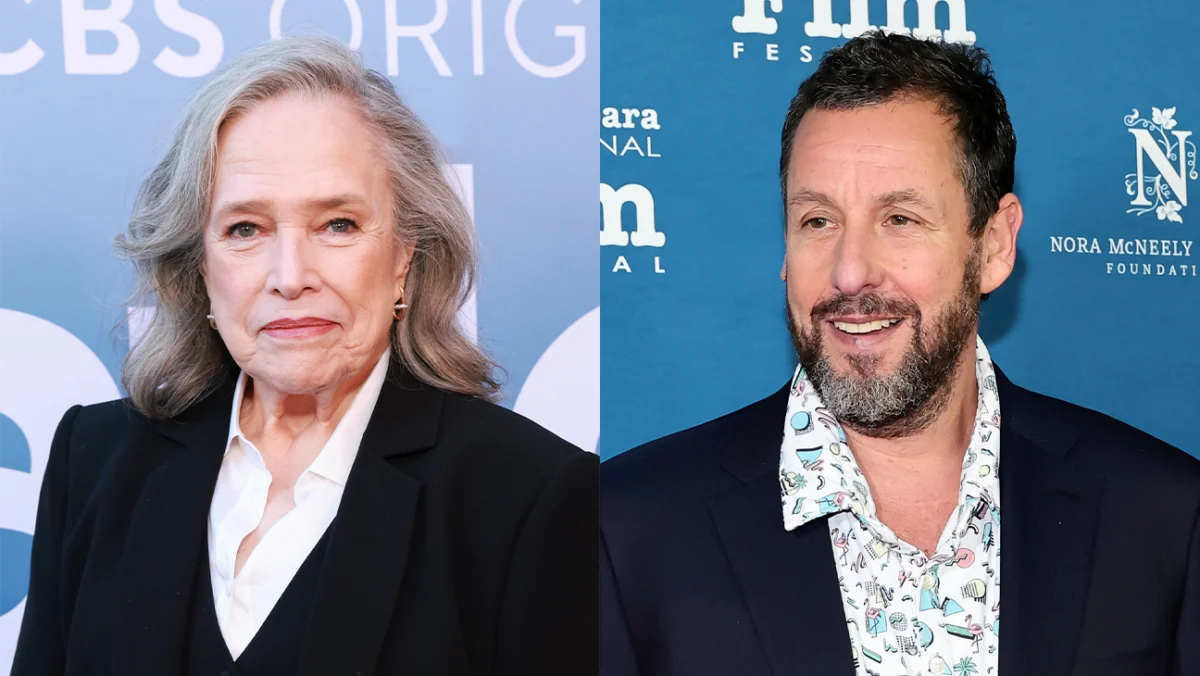
In a candid revelation that offers a glimpse into the often-unpredictable world of Hollywood script assessment, Oscar and Emmy-winning actress Kathy Bates recently disclosed that she initially dismissed the screenplay for the 1998 hit comedy The Waterboy, a film that would go on to gross over $188 million worldwide. Bates, known for her formidable range and impactful performances, admitted to a lack of familiarity with then-rising comedic star Adam Sandler, leading her to initially relegate the script to the trash. This surprising anecdote, shared during a video interview with The Hollywood Reporter, underscores how crucial second looks, and even external interventions, can be in shaping an actor’s career and cinematic history. Her story serves as a compelling reminder that even seasoned veterans can misjudge potential gems, further complicated by the sheer volume of material circulating in the industry.
The Adam Sandler Anomaly: A Script Nearly Lost to the Wastebasket
The year was 1998, and Adam Sandler was rapidly transitioning from a beloved Saturday Night Live (SNL) alumnus to a burgeoning box office draw. Films like Billy Madison (1995) and Happy Gilmore (1996) had cemented his unique brand of absurdist, often childlike, comedy with a devoted fanbase. Yet, for an actress of Kathy Bates’ esteemed dramatic and character-driven background, Sandler’s particular brand of humor and his burgeoning stardom were not immediately on her radar.
Bates recounted the moment the script for The Waterboy landed on her desk, describing it simply as "a football script." Her initial foray into the material, a mere twelve pages, left her unconvinced. "I thought, ‘Oh man, I can’t do this thing. This is ridiculous,’" she recalled, leading her to unceremoniously toss it into a wastebasket. This snap judgment, while perhaps understandable given the stylistic differences between her previous acclaimed work (such as her Oscar-winning turn in Stephen King’s Misery in 1990) and Sandler’s emerging genre, almost cost her a role that would become iconic.
The pivotal turning point arrived courtesy of her niece, who also worked with Bates. Discovering the discarded script, her niece inquired about its contents. Bates offhandedly identified it as "a script that some kid Adam Sandler [wrote]." It was her niece’s immediate and incredulous response – "Adam Sandler! You don’t know the Hanukkah song?" – that sparked Bates’ reconsideration. "The Chanukah Song," a novelty tune Sandler debuted on Saturday Night Live in 1994, had become a cultural phenomenon, particularly among younger audiences and those familiar with his comedic stylings. Its popularity highlighted the generational and cultural divide in entertainment consumption, illustrating how easily even widely recognized figures can be unknown to those outside their primary demographic.
This intervention proved serendipitous. Bates decided to give the script another chance, initially motivated by her niece’s enthusiasm. What followed was a transformative experience. "Turns out we had the most fun. He’s brilliant. He’s a genius," Bates enthused, reflecting on her time working with Sandler. She described "diving in the deep end" and having "a great time," enjoying the collaborative and uninhibited atmosphere on set. The film, directed by Frank Coraci, saw Bates embody Mama Boucher, the fiercely overprotective and devoutly Christian mother of Sandler’s socially awkward water boy, Bobby Boucher. Her portrayal was a masterclass in comedic timing and character depth, adding an unexpected layer of gravitas and heart to the zany sports comedy. The Waterboy was not only a commercial success but also further solidified Sandler’s status as a bankable star, and Bates’ participation lent the film an additional layer of critical legitimacy.
A Recurring Pattern: The Matlock Miracle and the Value of Perseverance
Interestingly, Bates’ initial dismissal of The Waterboy script was not an isolated incident. She revealed a similar near-miss with her current television project, the reimagined legal drama Matlock, in which she stars as the titular character, Madeline Matlock. This anecdote further illustrates the challenges actors face in evaluating scripts, particularly when feeling disillusioned or exhausted by the industry’s demanding pace.
Bates confessed to The Hollywood Reporter that she "had one foot out the door" regarding Matlock. Her reluctance stemmed from a recent "heartbreaking disappointment" with a prior film project, which had left her feeling unfulfilled and questioning her career path. Approaching her 80s, Bates articulated a sentiment common among veteran actors: a desire for meaningful work that provides genuine happiness, rather than just another credit. "At my age, I’m going to be 80 in two years, I just thought, this is not working out, it’s not giving me any happiness," she shared. This period of introspection highlights the emotional toll the entertainment industry can take, even on its most decorated talents.
When the Matlock script arrived, Bates’ initial reaction was again lukewarm. She described it as "just a procedural," a genre often criticized for its formulaic nature. It was another trusted voice, her friend Billy in New York, who intervened this time. He pressed her: "Did you read it? Did you finish it? Read it to the end." This insistence proved crucial. Bates followed his advice, and the latter half of the script unveiled a "great twist at the end." This narrative turn fundamentally altered her perception of the project.
For Bates, the appeal of Matlock lay beyond its procedural framework. She sought a project "to be about something," to tackle real-world issues and provide a platform for meaningful storytelling. The twist in the script revealed a deeper purpose, aligning with her desire to portray a character with "a real mission" addressing struggles relevant to contemporary society. The series, which has since been renewed for a third season, sees Bates’ Madeline Matlock rejoining the workforce at a prestigious law firm, leveraging her sharp intellect and unconventional tactics to win cases and expose systemic wrongdoing. Her character’s journey resonates with themes of ageism, resilience, and the pursuit of justice, giving Bates the substantive role she craved.
Broader Implications: Navigating Scripts in a Changing Industry
These two anecdotes from Kathy Bates’ storied career offer several compelling insights into the dynamics of the entertainment industry.
The Evolving Landscape of Stardom and Discovery: Bates’ initial unfamiliarity with Adam Sandler, a prominent figure on Saturday Night Live and a rising film star, underscores how vastly different entertainment consumption and celebrity recognition were prior to the ubiquitous internet and social media. In the 1990s, audiences were more segmented by genre, age, and media platform. A celebrated dramatic actress like Bates, who might have spent her evenings immersed in theater or more serious cinematic fare, could genuinely be unaware of a comedic star’s burgeoning popularity, especially if their work largely circulated in different cultural spheres. Today, with pervasive social media and constant digital updates, such a blind spot is increasingly rare, illustrating a significant shift in how talent is discovered and perceived across diverse demographics.
The Subjectivity of Script Assessment: Even for an actor of Bates’ caliber and experience, evaluating scripts remains a highly subjective and often fallible process. The sheer volume of material, coupled with the pressure to make quick decisions, can lead to overlooked opportunities. Her experiences highlight the critical role of trusted advisors – whether family members or close friends – in offering fresh perspectives and encouraging a deeper engagement with potential projects. It also speaks to the importance of reading a script in its entirety, as crucial plot developments, character arcs, or thematic depth might only reveal themselves in later pages.
The Resilience and Evolving Roles for Veteran Actors: Bates’ candid reflection on her age and desire for "happiness" in her work is particularly poignant. Hollywood has historically been challenging for older actresses, often limiting their roles or relegating them to supporting parts. However, the success of Matlock and Bates’ acclaimed performance indicate a potential shift, where networks and streaming platforms are increasingly recognizing the value of seasoned talent and complex narratives centered around older protagonists. Bates’ commitment to finding roles that are "about something" reflects a broader trend among veteran performers who prioritize artistic integrity and social relevance over mere commercial appeal. Her gratitude for Matlock is also deeply rooted in the current economic realities of the industry. Her comment, "times are hard. A lot of people in this industry are out of work," directly references the recent WGA and SAG-AFTRA strikes that halted production across Hollywood, leaving thousands unemployed. For Bates and her colleagues, having a steady, meaningful project like Matlock is not just a career highlight but a source of stability and creative fulfillment in an often tumultuous environment.
Kathy Bates’ Enduring Legacy and the Power of Second Chances
Kathy Bates’ career is a testament to her versatility, commanding presence, and ability to imbue even the most seemingly outlandish characters with humanity and depth. From her terrifying portrayal of Annie Wilkes in Misery to her comedic turn as Mama Boucher in The Waterboy, and now her nuanced performance as Madeline Matlock, she has consistently defied categorization. Her willingness to share these candid anecdotes not only demystifies the script selection process but also humanizes a legendary figure, showing that even the most accomplished artists are susceptible to initial misjudgments.
The stories of The Waterboy and Matlock are more than just behind-the-scenes trivia; they are illustrative parables about the importance of open-mindedness, the value of external perspectives, and the enduring quest for meaningful work in a challenging industry. They remind us that sometimes, the greatest opportunities lie hidden, waiting for a second glance, or perhaps, a nudge from a perceptive niece or a wise friend, to pull them from the wastebasket and into the annals of cinematic and television history. In Bates’ case, these second chances have enriched her already illustrious career and provided audiences with unforgettable performances.