

The cinematic landscape of the mid-1990s was defined by a burgeoning independent movement that sought to dismantle traditional biographical narratives, and few films achieved this with as much provocative precision as Mary Harron’s debut feature. Originally released in 1996, the film provided a gritty, naturalistic window into the life of Valerie Solanas, the radical feminist whose 1968 attempt on Andy Warhol’s life became a defining, if often misunderstood, moment in American counterculture. Now, nearly three decades after its premiere at the Sundance Film Festival, a new 4K restoration is bringing Harron’s work back to the forefront of cultural conversation, highlighting its enduring relevance in an era marked by renewed debates over gender, power, and the limits of artistic expression.
The 4K Restoration and Visual Reimagining
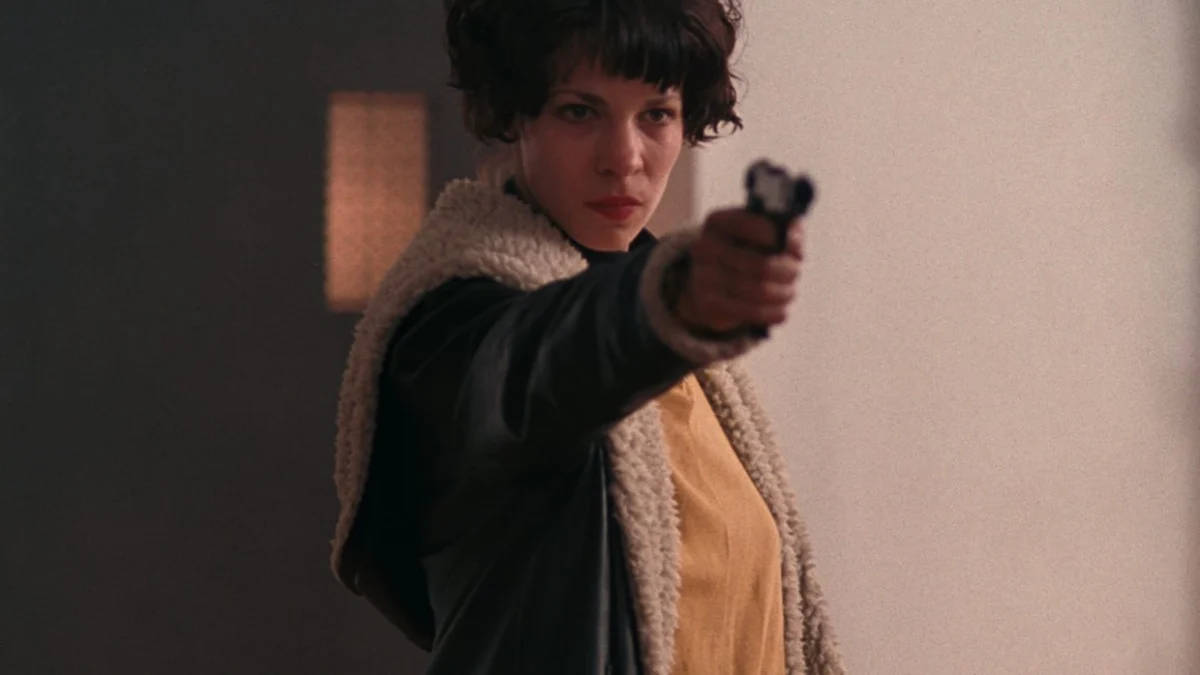
The restoration of the film was supervised by its original cinematographer, Ellen Kuras, whose work on the project helped define the visual language of 1990s independent cinema. The process involved a meticulous 4K scan of the original film elements, aiming to preserve the "grungy yet beautiful" aesthetic that Harron and Kuras originally envisioned. During the color grading process, the team focused on maintaining the naturalistic lighting of the New York City streets and the stark, hotel-room isolation that Solanas inhabited, while simultaneously heightening the "dreamlike" quality of Warhol’s Silver Factory.
Harron has noted that viewing the restoration without sound allowed her to appreciate the "poetic realism" of the imagery. The visual palette was heavily influenced by the photography of Diane Arbus and the documentary style of the 1960s. By utilizing available light and negative space, Kuras created a world that felt lived-in rather than a mere period reconstruction. The restoration ensures that the film’s specific texture—a blend of 16mm-style grittiness and high-art sophistication—is preserved for modern digital projection standards.
Historical Chronology: From the SCUM Manifesto to the Silver Factory
To understand the weight of Harron’s film, one must examine the historical timeline of its subject. Valerie Solanas arrived in New York City in the mid-1960s, a period of immense social upheaval. In 1967, she self-published the SCUM Manifesto (Society for Cutting Up Men), a document that remains one of the most polarizing texts in radical feminist history.
- 1967: Solanas writes and sells copies of the SCUM Manifesto on the streets of Greenwich Village, charging one dollar for women and two dollars for men. During this time, she encounters Andy Warhol and gives him a copy of her play, Up Your Ass.
- June 3, 1968: After Warhol claims to have lost her manuscript and fearing he is attempting to steal her work, Solanas enters the Factory at 33 Union Square West. She shoots Warhol, nearly killing him, as well as art critic Mario Amaya.
- 1969-1971: Solanas is diagnosed with paranoid schizophrenia and serves a three-year sentence for "reckless assault with intent to harm."
- 1988: After years of living in obscurity and struggling with homelessness and mental illness, Solanas dies in a welfare hotel in San Francisco at the age of 52.
- 1996: Mary Harron’s film premieres, starring Lili Taylor in what is widely considered a career-defining performance.
The film serves as a bridge between these historical facts and the psychological interiority of a woman who felt systematically erased by the male-dominated structures of the art world.
The Production Landscape of 1990s Indie Cinema
The journey of the film to the screen was a five-year endeavor that mirrored the "outsider" status of its protagonist. Mary Harron, who began her career as a researcher for the BBC, faced significant hurdles in securing funding for a project centered on a "unlikable" female lead and an explicitly radical feminist ideology. The production eventually found a home through the collaboration of producers Christine Vachon and Tom Kalin, key figures in the "New Queer Cinema" movement.
With a modest budget and a commitment to authenticity, the production assembled a cast of then-rising stars who would go on to define the decade’s independent scene. Lili Taylor’s deadpan, swaggering portrayal of Solanas was complemented by Jared Harris’s vulnerable, elusive take on Andy Warhol. The supporting cast featured Martha Plimpton, Michael Imperioli, and Stephen Dorff, who played the transgender icon Candy Darling.
The soundtrack also played a crucial role in establishing the film’s atmosphere. When Lou Reed famously denied permission for the use of Velvet Underground tracks—reportedly due to his lingering resentment over the shooting of Warhol—Harron turned to John Cale, another founding member of the band, to compose the score. Cale’s contribution, alongside tracks by indie stalwarts Yo La Tengo and Pavement, anchored the film in a specific New York sensibility that transcended simple nostalgia.
Supporting Data: Feminist Discourse and Cultural Reception
The cultural reception of the SCUM Manifesto and Harron’s film has evolved through several distinct phases of feminist thought. In the late 1980s, when Harron began her research, Solanas was often dismissed as a "lunatic outlier." However, the film’s release coincided with the "Third Wave" of feminism, which sought to reclaim complex and even "difficult" historical figures.
Data from academic citations and republication histories show a marked increase in interest in Solanas’s writing following the film’s release. While the SCUM Manifesto was initially viewed as a fringe document, it has since been analyzed by scholars as a sophisticated work of satire akin to Jonathan Swift’s A Modest Proposal. Harron’s film deliberately leaves this interpretation open, asking the audience to decide whether Solanas was a visionary satirist, a victim of systemic misogyny, or a woman lost to mental illness.
In the current climate, the film has found a new audience among Gen Z viewers. Harron has observed that the modern "creator economy" and the rise of internet-based radicalism provide a framework where a figure like Solanas might have found a more direct—and perhaps more successful—path to an audience than she did in the 1960s.
Analysis of Implications and Broader Impact
The re-release of the film comes at a time when "feminist rage" has become a central theme in contemporary media and politics. The film’s exploration of how power is brokered in creative spaces remains strikingly relevant. Harron’s Warhol is not a traditional villain, but rather a "passive-aggressive gatekeeper" whose power lies in his ability to bestow or withdraw attention. For Solanas, this withdrawal was a form of existential erasure.
Furthermore, the film’s handling of gender identity has sparked renewed discussion. While Solanas’s philosophy was biologically essentialist—arguing that men were "biological accidents" due to a missing chromosome—the film depicts her within the diverse, gender-fluid ecosystem of the Factory. Modern critics have debated whether the manifesto should be read through a contemporary trans-inclusive lens or as a product of its specific historical moment. Harron maintains that the film’s goal was not to impose modern ideologies onto the past, but to present the "whole package" of Solanas’s brilliance and her flaws.
The legacy of the film also lies in its subversion of the biopic genre. Rather than following a "rise and fall" trajectory, it functions as a character study of a loner. It avoids the sentimentalism often found in Hollywood depictions of mental illness, opting instead for a gritty, unsentimental look at the intersection of poverty and ambition.
Official Responses and Legacy
Upon its initial release, the film received critical acclaim, particularly for Lili Taylor’s performance. The New York Times described it as a "cool, shrewd, and surprisingly funny" look at a dark chapter in art history. However, some contemporary critics at the time struggled with the film’s refusal to provide a clear moral judgment on Solanas’s actions.
Decades later, the film is recognized as a foundational text of 1990s independent cinema. Its influence can be seen in the subsequent wave of female-directed films that center on "unmetabolizable" subjects—characters that society cannot easily categorize or forgive. As Harron transitioned to projects like American Psycho (2000), she continued to explore the themes of pathology and social satire that were first established in her debut.
The 4K restoration serves as more than a technical upgrade; it is a re-assertion of the film’s place in the canon. In an industry that often prioritizes digestible narratives, the film remains a testament to the power of the "outsider" perspective. By returning to screens, it invites a new generation to grapple with the legacy of Valerie Solanas and the complex, often violent, intersections of art, gender, and the American dream.