

The 55th edition of Visions du Réel (VdR), held in Nyon, Switzerland, concluded its ten-day run by solidifying its reputation as a premier global hub for creative nonfiction, even as it navigates a significant leadership transition. Artistic Director Emilie Bujés, who has steered the festival through seven influential years, presided over this year’s event just weeks after announcing her upcoming departure in August to lead the Geneva International Film Festival (GIFF). Her final program at Nyon was characterized by an expansive international scope, delving into the complexities of global borders, the persistent impact of conflict on personal lives, and the evolving economic landscape of the documentary film industry.
Under the direction of Bujés, Visions du Réel has grown into a vital platform for films that challenge traditional narrative structures. The 2024 selection featured a diverse array of works, ranging from experimental animations to rigorous observational documentaries, all anchored by a shared concern for how geography and political control dictate the human experience. This year, the festival felt particularly attuned to the current geopolitical climate, serving as a crossroads for filmmakers and industry professionals directly affected by ongoing global crises, including those in Palestine, Iran, and the United Arab Emirates.
Geopolitical Realities and the Cinema of Displacement
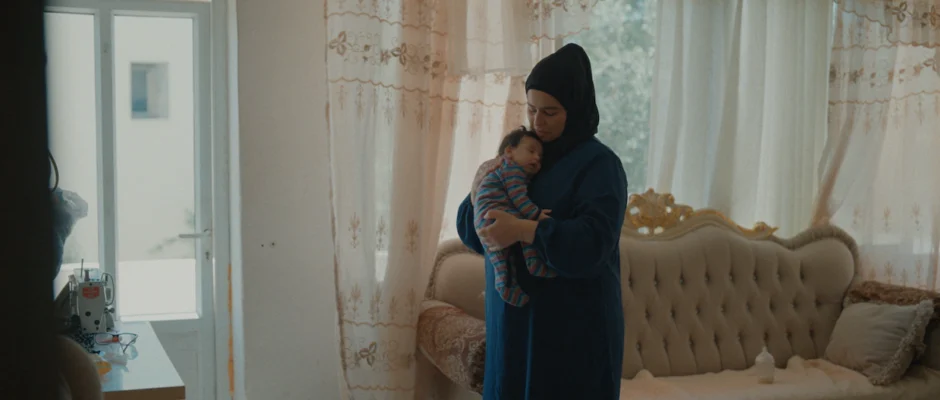
A significant portion of the 2024 program was dedicated to exploring the intersection of personal life and state-imposed restrictions. Among the most discussed works was For Life (Ömür Boyu), directed by Ömür Boyu. This vérité-style documentary provides a harrowing yet intimate look at Hind, a Palestinian woman attempting to conceive through IVF using the smuggled sperm of her husband, who is currently incarcerated in an Israeli prison. The film functions as both a human drama and a high-stakes thriller, illustrating the bureaucratic and physical hurdles—ranging from closed border crossings to the time-sensitive nature of medical procedures—that define Palestinian life under occupation.
The festival also highlighted other works in dialogue with the Middle Eastern crisis. American Doctor by Poh Si Teng and the short film Muddy Currents by Shadi Habib Allah offered bracing perspectives on the human toll of the conflict in Gaza. Similarly, Faezeh Nikoozad’s In Between, a Place explored the long-term effects of political repression in Iran. The feature follows three childhood friends, all filmmakers, who have been scattered across the globe due to the instability of their homeland. The film examines the evolving contours of their relationships, serving as a meditation on the permanence of displacement and the resilience of creative bonds.
These films were screened in a high-stakes environment where the real-world implications were palpable. Throughout the festival, attendees shared accounts of personal impact: jurors stranded by regional bombings, filmmakers working to evacuate teams from conflict zones, and freelancers facing communication blackouts in their home countries. The presence of these artists in Nyon underscored the festival’s role as a sanctuary for voices that are often silenced or marginalized by geopolitical barriers.
Environmentalism and the Legacy of Scientific Inquiry
The 2024 edition also placed a heavy emphasis on environmental narratives, moving beyond traditional climate reporting to explore the philosophical and historical dimensions of the natural world. G. Anthony Svatek’s Humboldt, USA, which received its world premiere in Nyon, emerged as a standout for its exploration of interconnectedness and legacy. The film uses the 19th-century scientist Alexander von Humboldt as a lens to examine contemporary American environmentalism. By braiding together the stories of museum educators, community activists in East Buffalo, and AI enthusiasts in Silicon Valley, Svatek and editor Kaija Siirala create a poetic narrative that questions how we categorize and value the environment today.
Further exploring the volatility of the natural world, Nikolaus Geyrhalter’s Melt presented a stark visual record of melting glaciers and the human activities that accelerate their decline. The film juxtaposes images of ice-workers attempting to preserve what remains with the excess of high-altitude tourism in the Alps. Geyrhalter’s work suggests that the landscapes captured on film are already historical artifacts, archived before their time due to human intervention.
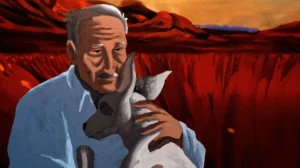
In a more textural and interpersonal vein, Hassen Ferhani’s Alea Jacarandas utilized the jacaranda trees of Algiers as a focal point for exploring memory and the father-son dynamic. The film encourages audiences to reflect on their own symbolic languages of space and time, demonstrating the festival’s commitment to films that operate on an emotional and sensory level rather than purely informational one.
Urban Decay and Institutional Observations
Visions du Réel has long been a champion of the medium-length film, a format that often struggles to find a home in commercial theaters or major streaming platforms. This year’s Special Youth Jury Award winner, The Building Site by Tiziano Locci and Tito Puglielli, exemplifies the strength of this programming. Set in a decaying palazzo in Palermo, Italy, the film documents the tension between historical preservation and the encroaching demands of tourism and capitalism. As tenants are displaced and investors assess the property, the film captures the physical resistance of the architecture itself, portraying a community in transition.

Similarly, Sophie Schrago’s What Comes From Sitting in Silence offers an observational look at the first female Islamic court in Mumbai. Stationed within the court, Schrago captures the mediation efforts of Judge Khatoon as she navigates the grievances of families in distress based on interpretations of the Quran. The film’s formal restraint—characterized by a largely static lens—is reframed mid-way through the narrative when the filmmaker shares a personal confession about her own past relationship. This shift transforms the viewer’s perspective, turning the camera’s distance into an act of resilience and empathy.
The Shifting Landscape of the Documentary Market
Beyond the screening rooms, the Visions du Réel Industry market has seen a notable rise in status. Led by Sabine Fayoux Cantillo, formerly the Vice President of Chicken & Egg Pictures, the market has become an increasingly vital hub for European and international documentary financing. Throughout the festival, industry whispers suggested a shift in the hierarchy of European markets, with some attendees indicating a preference for Nyon over the long-dominant International Documentary Film Festival Amsterdam (IDFA).
The 2024 market highlights included:
- Trade by Todd Chandler: An atmospheric exploration of capitalism and human nature that garnered multiple awards.
- Hello?! by Sofie Benoot: A follow-up to her 2024 selection Apple Cider Vinegar, focusing on the symbolic and physical presence of cranes.
- To My Dearest by Grace Hsia: A tender 8mm feature exploring the intersections of fertility and friendship.
- The Vortex of Extinction by Ljubomir Stefanov: A unique project interpreting toxic masculinity through the study of Macedonian turtles.
The robustness of the VdR market is supported by Switzerland’s strong infrastructure for the arts. Unlike the contracting budgets and market-driven pressures currently facing many American documentary filmmakers, the Swiss model—bolstered by state funding and organizations like the Federal Office of Culture (OFC)—provides a more stable foundation for creative nonfiction. This financial security allows the festival to remain an "active and attentive marketplace," prioritizing artistic merit over algorithmic trends.
Economic Context and Strategic Implications
The success of Visions du Réel is inseparable from its geographic and economic context. Nyon, a town of approximately 22,000 residents on the shores of Lake Geneva, provides a compact and "utopic" setting for the festival. The proximity of venues—all within a ten-minute walk—facilitates the kind of spontaneous networking and deep reflection that larger, more spread-out festivals often lack.
However, the high cost of living in Switzerland remains a barrier for some. With the average meal price exceeding 22 CHF (approximately $25 USD), the festival’s accessibility is often mitigated by the regional economy. Despite this, the festival attracts a high caliber of international guests, including this year’s prominent attendees Laura Poitras and John Wilson.
The creative ambition on display in Nyon serves as a counter-narrative to the prevailing sentiment of a "dying" documentary industry. While US-based festivals are increasingly grappling with shrinking budgets and a focus on celebrity-driven content, Visions du Réel continues to showcase films that push formal boundaries. The 2024 edition demonstrated that there remains a significant global audience—and a viable funding model—for work that is challenging, obscure, and deeply human.
Conclusion and Future Outlook
As Emilie Bujés prepares to transition to the Geneva International Film Festival, she leaves behind a festival that has expanded its global footprint while maintaining its core commitment to creative risk. The 2024 edition of Visions du Réel proved that the nonfiction landscape is not merely surviving but evolving into a more international and politically engaged form of cinema.
The festival’s ability to foster a parallel reality—one where state funding strengthens the landscape and audience curiosity outweighs algorithmic impulses—remains its greatest strength. For the filmmakers who screen their work in Nyon and the industry professionals who negotiate its deals, the festival provides a vital reminder of the value of the documentary form. As the search for a new Artistic Director begins, the 2024 edition stands as a testament to the enduring importance of Nyon as a site of cinematic resistance and discovery.